Damage Restoration in Guadalupe County, TX
- Damage Restoration Services Overview
- Common Damage Restoration Issues in Guadalupe County, Texas
- Neighborhoods We Serve in Guadalupe County
- Seasonal Damage Patterns in Guadalupe County
- Housing Characteristics & Restoration Considerations
- Environmental Conditions & Damage Implications
- Flood Response Standards Along the Guadalupe River Corridor
Damage Restoration Services Overview

Water that sits for a weekend in a Seguin ranch house does not simply dry out - it wicks into bottom plates, swells subfloor seams, and seeds mold colonies inside wall cavities that stay hidden until drywall stains appear months later. Smoke residue left on painted surfaces continues etching finishes long after the flames are out, and untreated sewage contamination leaves bacteria embedded in porous materials.
Guadalupe County property owners face a full spectrum of loss events, and each one calls for a different technical approach:
- Water Damage Restoration - extraction, structural drying, and moisture mapping after pipe breaks, appliance failures, and roof leaks
- Flooded Basement - pump-out and dry-down for basements, storm cellars, crawl spaces, and below-grade utility rooms
- Sewage Cleanup - containment and disinfection following septic backups and municipal line failures
- Fire Damage Restoration - emergency board-up, tarping, debris removal, and structural rebuild
- Smoke Damage Restoration - soot removal, surface cleaning, contents care, and odor neutralization
- Mold Removal - containment, affected material removal, and moisture source correction
Acting quickly protects framing, salvages belongings, supports cleaner insurance documentation, and keeps a manageable loss from becoming a full reconstruction project.
Common Damage Restoration Issues in Guadalupe County, Texas
Guadalupe County sits where Hill Country runoff meets the coastal plain, and that geography drives most of the emergency calls we handle.
Local Causes of Loss
- Guadalupe River and Blanco River flash flooding pushing water into low-lying properties along the corridor
- Burst supply lines and split hose bibs after Texas freeze events, especially in homes with uninsulated attic runs
- Septic system and lift station backups on rural acreage after saturating rains
- Hail and straight-line wind damage that opens roof decking to repeated water intrusion
- Kitchen fires, electrical faults, and outbuilding fires that push smoke through central HVAC systems
- Well, cistern, and pressure tank failures at properties outside city water service
Warning Signs Worth Acting On
- Musty odors that intensify when the air conditioner cycles on
- Cupping or gapping in wood and laminate flooring near exterior walls
- Tape seams lifting, nail pops, or discolored ceiling rings after a storm
- Gurgling drains or slow toilets - often the first hint of a septic or sewer problem
- Soot film on window glass, light fixtures, or HVAC registers following a small fire
- Condensation on ductwork or persistent humidity in closed rooms
Because so much of the county blends older farmhouses with fast-growing suburban subdivisions, the same storm can produce a crawl space mold problem on one street and a slab-level water loss on the next.
Neighborhoods We Serve in Guadalupe County
Crews respond throughout the county and into the surrounding Hill Country and I-35 corridor communities, including:
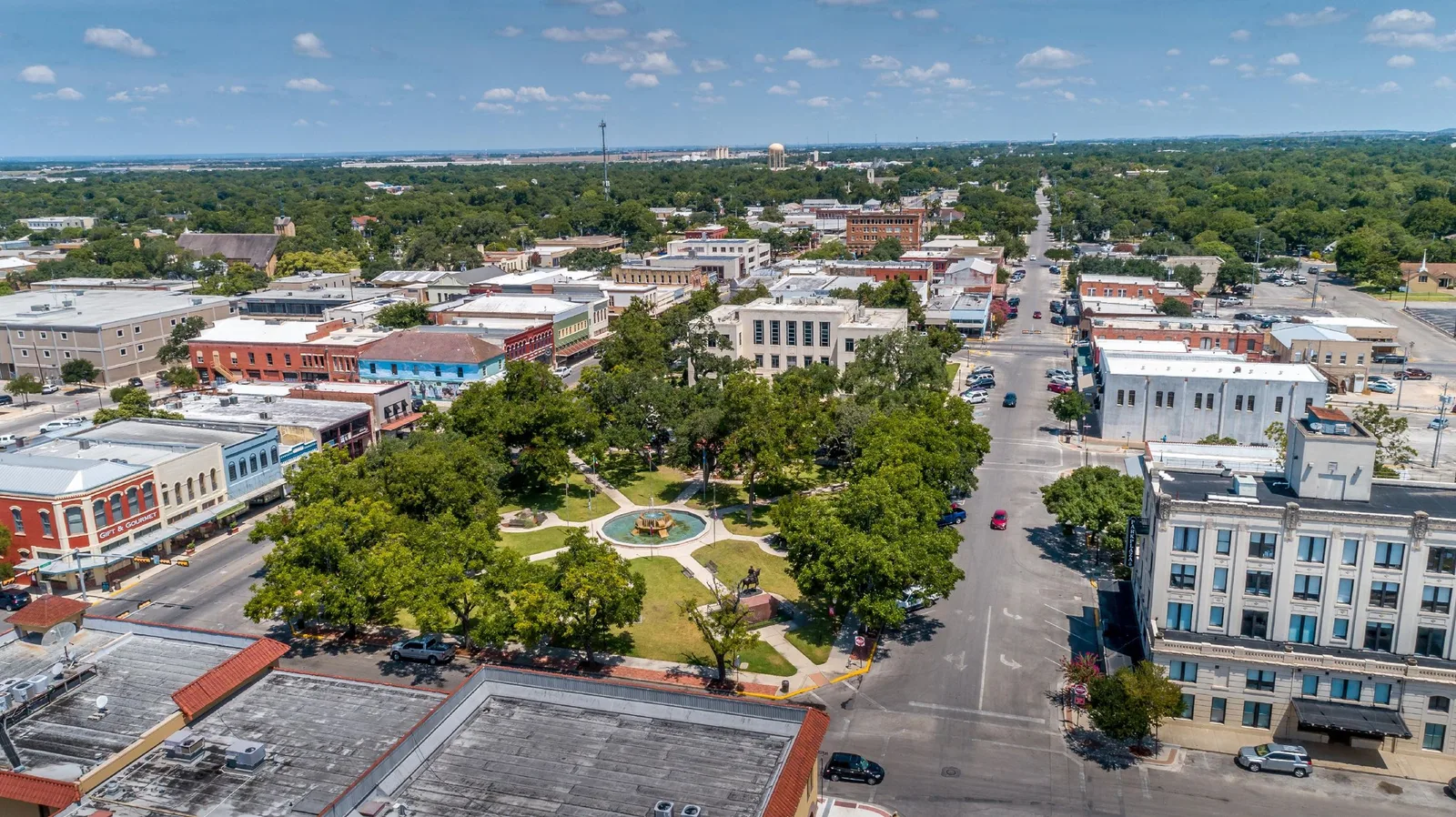
- Seguin - historic downtown properties, riverside homes, and newer developments off SH 46
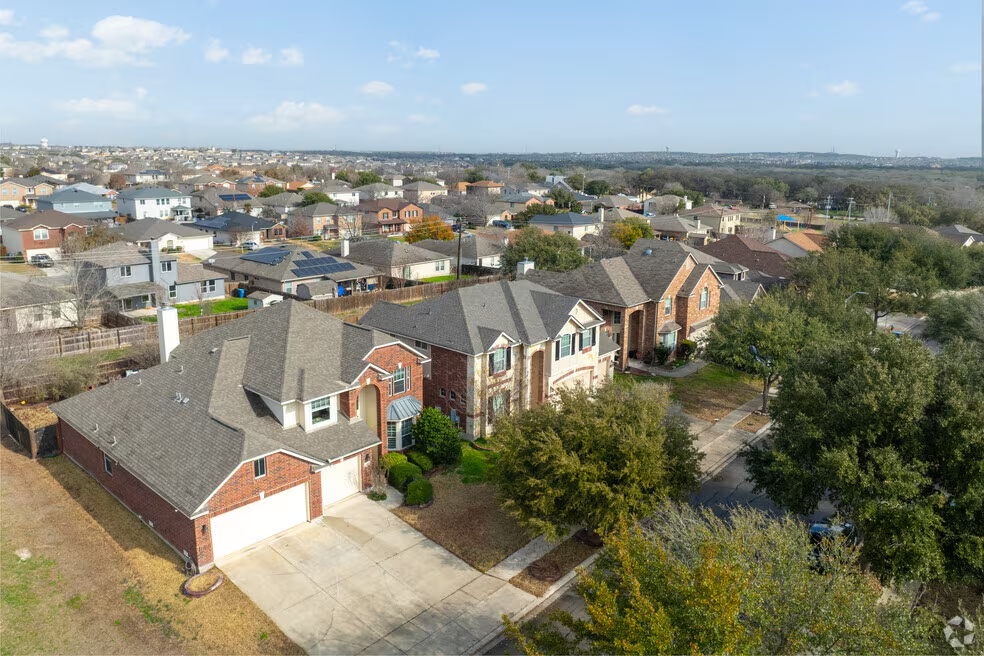
- Schertz and Cibolo - suburban subdivisions with slab-on-grade construction and attached garages
- New Braunfels - properties along the Guadalupe and Comal river corridors
- Marion, Santa Clara, and Staples - rural acreage with septic systems and well water
- McQueeney and Lake Dunlap areas - waterfront and short-term rental properties
- Selma, Universal City, and Garden Ridge edges - mixed residential and light commercial
- Kingsbury, Geronimo, Zuehl, and unincorporated stretches along US 90 and FM 725
Coverage extends outward toward Wimberley, Comfort, Kerrville, and San Marcos for larger loss events and reconstruction work.
Seasonal Damage Patterns in Guadalupe County
- December through February - Freeze events dominate. Burst pipes at vacation homes, unoccupied rentals, and rural properties produce widespread water damage. Heating equipment and fireplace misuse raise fire and smoke damage calls.
- March through May - Spring storm season brings hail, wind-driven rain, and flash flooding along the Guadalupe. Flooded basements, crawl spaces, and storm cellars peak here, along with sewage backups from overwhelmed septic fields.
- June through August - Heat and humidity accelerate mold growth in any structure that was not dried properly in spring. HVAC condensate line clogs cause slow ceiling and closet leaks. Drought conditions elevate grass and outbuilding fire risk.
- September through November - Tropical moisture surges can dump heavy rain quickly. Roof leaks discovered during cooler weather often reveal months of hidden saturation, and mold remediation requests climb.
Restoration needs rarely arrive alone - a single spring hailstorm can generate water intrusion, mold growth, and eventual reconstruction on the same property.
Housing Characteristics & Restoration Considerations
Guadalupe County housing stock spans more than a century of building practice, and that mix shapes every restoration plan.
Common Construction Types
- Pre-1950 farmhouses and Seguin historic homes - pier-and-beam foundations, shiplap sheathing, plaster walls, and knob-and-tube remnants
- 1960s-1980s ranch homes - slab-on-grade, wood paneling, and original cast iron or clay drain lines prone to failure
- 1990s-2010s subdivisions in Schertz and Cibolo - engineered trusses, vinyl-wrapped windows, attached garages, and tight building envelopes
- New construction along the I-10 and SH 46 corridors - spray foam attics and multi-story framing that traps moisture differently than vented designs
- Rural manufactured and modular homes - skirted crawl spaces and belly board insulation that hold water after flooding
How Construction Affects the Work
- Pier-and-beam crawl spaces require dedicated drying and often framing or subfloor replacement after mold takes hold
- Plaster and lath in older homes absorb smoke odor deeply and need specialized cleaning rather than simple wiping
- Slab foundations push water horizontally under flooring, so moisture mapping matters more than visible pooling
- Tight modern envelopes hold humidity, making dehumidification a longer, more monitored process
- Septic-served properties call for stricter containment protocols during sewage cleanup
Matching materials on historic properties also influences reconstruction sequencing after fire or major water loss.
Environmental Conditions & Damage Implications
The local climate and soil profile actively work against drying and in favor of microbial growth.
- Humid subtropical climate - Summer dew points frequently sit high enough that opening windows adds moisture rather than removing it. Mechanical dehumidification is the only reliable path.
- Blackland Prairie clay soils - Expansive clay swells when saturated and shrinks during drought, stressing foundations, cracking slabs, and creating new entry points for groundwater.
- Karst limestone in the western county - Water moves fast through fractured rock, so flooding arrives quickly and drains unpredictably into crawl spaces and cellars.
- Hard well water - Mineral scale accelerates corrosion in older galvanized supply lines, contributing to sudden pipe failures.
- Seasonal pollen, cedar, and dust loads - Airborne particulates settle into ductwork, and when combined with smoke residue, they compound odor and air quality complaints.
- Wide daily temperature swings - Repeated expansion and contraction opens roof flashing and window seals, allowing slow leaks that feed hidden mold.
What This Means for Restoration
- Moisture readings are taken at multiple depths, not just at surface level
- Drying equipment placement accounts for clay soil moisture migrating upward through slabs
- Air scrubbing and HVAC cleaning are standard after fire, smoke, and mold work
- Post-remediation verification confirms conditions before rebuilding begins
Flood Response Standards Along the Guadalupe River Corridor
Properties near the Guadalupe, Blanco, and Cibolo waterways face a category of loss that behaves differently from a broken supply line. River floodwater carries silt, agricultural runoff, fuel residue, and septic contamination, which places it in the highest contamination category from the moment it enters a structure.
How Category 3 Flood Losses Are Handled
- Safety and utility assessment - Power, gas, and structural stability are evaluated before entry, particularly in homes with saturated pier-and-beam framing.
- Documentation - Moisture readings, photographs, and material inventories are recorded for insurance and adjuster review.
- Bulk water removal - Truck-mounted extraction and submersible pumps clear standing water from basements, cellars, and crawl spaces.
- Containment and controlled demolition - Saturated drywall, insulation, and flooring exposed to contaminated water are removed and bagged inside sealed containment.
- Cleaning and antimicrobial application - Remaining framing and hard surfaces are washed and treated to address bacterial load.
- Structural drying - Air movers and dehumidifiers run under daily monitoring until materials reach documented dry standards.
- Verification and rebuild - Independent readings confirm results before insulation, drywall, trim, and finishes are restored.
Standards That Guide the Work
- IICRC S500 protocols for water damage and structural drying
- IICRC S520 principles for mold remediation, containment, and clearance
- IICRC S700 guidance for fire and smoke restoration, including soot classification and odor treatment
- EPA-registered antimicrobial products applied at labeled dilution rates
- Negative air machines and HEPA filtration during demolition and cleaning phases
Round-the-clock dispatch matters here because Hill Country flooding rises and recedes within hours - the crews who arrive first determine how much framing, flooring, and cabinetry survives the event.