Damage Restoration in Ector County, TX
- Damage Restoration Services Overview
- Common Damage Restoration Issues in Ector County, Texas
- Neighborhoods We Serve in Ector County
- Seasonal Damage Patterns in Ector County
- Housing Characteristics & Restoration Considerations
- Environmental Conditions & Damage Implications
- Emergency Response, Documentation, and Insurance Clarity in the Permian Basin
Damage Restoration Services Overview
You come home from a weekend in the Hill Country, open the front door, and hear water running where no water should be. A slab leak has pushed across the living room, under the baseboards, and into the kitchen cabinets. That scenario plays out regularly across Odessa and the rest of Ector County - and how fast the drying starts determines whether it stays a flooring problem or becomes a mold problem.
Property owners here rely on a connected set of restoration disciplines, each addressing a different failure mode:
- Water Damage Restoration - extraction, structural drying, and moisture mapping after supply line breaks, slab leaks, appliance failures, and roof intrusion
- Flooded Basement Cleanup - dewatering of below-grade rooms, storm shelters, cellars, and sunken utility spaces
- Sewage Cleanup - contaminated water removal, disinfection, and safe disposal of porous materials after backups
- Fire Damage Restoration - stabilization, debris removal, and rebuilding of charred structural assemblies
- Smoke Damage Restoration - soot removal from surfaces and HVAC systems plus odor neutralization
- Mold Removal - containment, controlled removal, and correction of the moisture source feeding growth
The benefit of one team handling all six is continuity. Water losses turn into mold jobs, and fire losses always carry water damage from suppression - separating them across vendors slows recovery and complicates insurance documentation.
Common Damage Restoration Issues in Ector County, Texas
Ector County's semi-arid climate misleads people into thinking water damage is rare here. In practice, expansive clay soils, aging pressurized plumbing under slabs, and violent short-duration storms create a steady stream of interior water losses.
Leading Causes of Loss Locally
- Slab leaks - soil shrink-swell cycles stress copper lines under concrete foundations, and leaks often run undetected for days
- Flash flooding - hard-packed caliche soil sheds rainfall rather than absorbing it, sending water toward low doorways and below-grade rooms
- Freeze events - unprotected hose bibs, attic supply lines, and exposed pipes on the north side of homes rupture during hard freezes
- Hail and wind - torn shingles and displaced roof flashing admit rain that saturates insulation and ceiling assemblies
- Sewer backups - grease buildup, root intrusion, and heavy stormwater surcharge in older municipal lines
- Kitchen and electrical fires - the most frequent residential fire origins across the Permian Basin
Warning Signs Worth Acting On
- Warm spots on floor tile or an unexplained jump in the water bill
- Sound of running water when every fixture is off
- Musty odor in closets, under sinks, or near HVAC returns
- Bubbling paint, cupping wood planks, or separating baseboards
- Slow drains in multiple fixtures at once - often the first hint of a main line issue
- Persistent smoke odor that returns when the air conditioning cycles, signaling soot in ductwork
Neighborhoods We Serve in Ector County
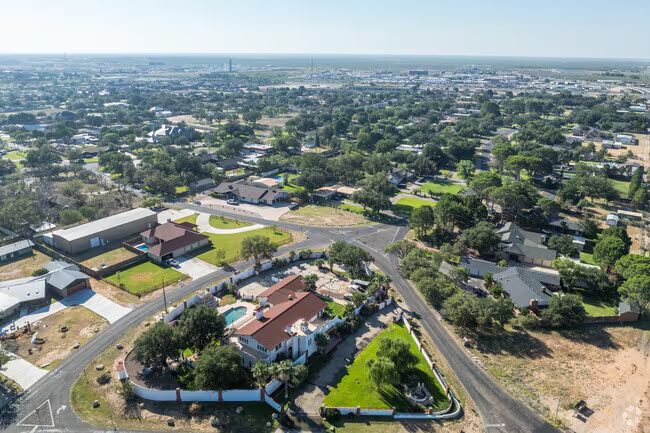
Crews cover the full county, from dense in-town blocks to properties on unincorporated county roads.
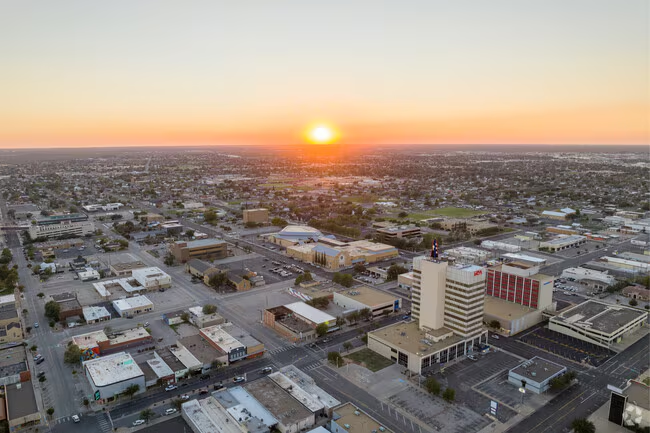
- Odessa - downtown, Original Townsite, and surrounding older residential blocks
- West Odessa - a large unincorporated area with many manufactured and site-built homes on septic systems
- Gardendale and the northern county corridor along Highway 385
- Goldsmith and Notrees in the western reaches of the county
- Parks Legado, Mission Estates, and Woodlands newer subdivisions on the city's east and south edges
- Neighborhoods near UTPB and Odessa College, including rental and student housing
- Commercial and industrial properties along Interstate 20, Andrews Highway, and East 42nd Street
Service extends into adjacent Midland County and the surrounding Permian Basin communities when regional storm events stretch local capacity.
Seasonal Damage Patterns in Ector County
Each season brings a distinct dominant loss type, and knowing the pattern helps property owners prepare before the call becomes an emergency.
- December - February: Hard freezes drive burst pipes, attic line ruptures, and sudden whole-house water damage. Heating equipment, space heaters, and fireplace use push fire and smoke damage calls to their annual peak.
- March - May: Spring storm season delivers hail, straight-line winds, and roof breaches. Wind-driven rain saturates attic insulation, and the first mold growth from winter leaks becomes visible.
- June - August: Heat stresses HVAC systems, producing condensate overflow and drain pan failures. Air conditioning condensation inside sealed homes creates hidden humidity pockets behind cabinets and vinyl flooring.
- September - October: Remnants of Gulf tropical systems occasionally reach West Texas, dropping heavy rain on dry soil. Flash flooding, flooded below-grade rooms, and sewer surcharge backups cluster here.
- November: The first cold snap catches unprotected plumbing, and dry brush plus grid demand raise wildfire and electrical fire exposure.
Mold removal requests trail water events by roughly two to six weeks, since colonization follows unresolved moisture rather than the storm itself.
Housing Characteristics & Restoration Considerations
Ector County housing stock reflects boom-cycle construction - large clusters of homes built during the 1950s-60s oil expansion, another wave in the late 1970s and early 1980s, and rapid newer construction during recent Permian growth. Each vintage restores differently.
Construction Types and Their Impact
- Post-tension and conventional slab foundations - dominant countywide, making slab leaks a leading water loss cause and requiring careful drying beneath flooring rather than simple surface extraction
- Mid-century homes with pier-and-beam sections - crawl spaces trap standing water and support mold growth on subfloor framing
- Brick veneer over wood framing - moisture wicks behind veneer and hides in wall cavities, requiring thermal imaging and probe meters to locate
- Manufactured homes, common in West Odessa - belly wrap holds water against the underside of the floor and must be opened for effective drying
- Older galvanized and cast iron plumbing - corrosion produces both leaks and sewage backups in homes over fifty years old
- Popcorn ceilings and pre-1980 flooring adhesives - may contain asbestos, requiring testing before demolition on fire and water losses
Practical Restoration Effects
- Full basements are uncommon, so "flooded basement" work locally means storm cellars, sunken dens, and below-grade mechanical rooms that need pump-out and sanitizing.
- Tight newer construction holds smoke odor and humidity longer, making ducted deodorization and dehumidification more involved.
- Blown-in attic insulation absorbs both water and soot and typically needs removal rather than cleaning.
Environmental Conditions & Damage Implications
The Permian Basin environment shapes how damage behaves after the initial event - low humidity helps drying but hides moisture in ways that fool homeowners.
Climate and Air
- Average relative humidity stays low much of the year, so surfaces dry while cavities, subfloors, and insulation stay wet.
- Blowing dust and caliche particulate bond with soot residue after fires, creating a gritty film that requires different cleaning agents than soot alone.
- Regional oil and gas activity contributes to particulate and odor loads that complicate post-fire air quality restoration.
- Wide daily temperature swings drive condensation inside wall assemblies during cool nights following hot days.
Soil and Water
- Caliche and expansive clay - poor infiltration sends runoff toward slabs and doorways, and shrink-swell movement cracks foundations and shears buried pipe.
- Hard, mineral-rich water - scale accelerates corrosion in supply lines and water heaters, a frequent origin point for interior flooding.
- Shallow perched water after heavy rain - saturates the soil ring around foundations and keeps below-grade rooms damp for days.
- Septic systems in unincorporated areas - saturated drain fields back up into homes, creating category three sewage losses that demand full disinfection.
Because ambient dryness masks trapped water, moisture meters, hygrometers, and thermal imaging drive decisions - not appearance. That same dryness means mold here usually grows in confined, protected pockets: under vinyl plank, behind vanities, inside exterior wall cavities, and around HVAC plenums.
Emergency Response, Documentation, and Insurance Clarity in the Permian Basin
Response speed and clear documentation determine both the cost and the outcome of a loss. Local homeowners describe crews arriving within about ninety minutes of a call after discovering a slab leak - that window matters, because material damage and microbial risk climb sharply in the first 24 to 72 hours.
What a Well-Run Response Looks Like
- Stabilization - stop the source, cut power to affected circuits, board or tarp openings, and make the structure safe to enter.
- Assessment and mapping - identify water category (clean, gray, or sewage), define affected classes, and photograph conditions before anything is moved.
- Extraction and controlled demolition - remove standing water and unsalvageable porous materials, with containment on sewage and mold work.
- Drying and monitoring - place air movers and dehumidifiers, then log daily moisture readings until materials reach dry standard.
- Cleaning and deodorization - soot removal, HVAC cleaning, antimicrobial application, and odor treatment appropriate to the residue type.
- Reconstruction - rebuild flooring, drywall, cabinetry, and finishes to pre-loss condition.
Transparency Through the Claim
- Photo and video records captured before, during, and after each phase
- Written moisture logs showing daily readings by room and material
- Itemized scope written in the estimating format adjusters use, reducing back-and-forth
- Separation of perils - wind versus hail, storm water versus plumbing failure - because carriers apportion those differently
- A single point of contact who explains what is being removed, what is being saved, and why
Ask questions early: which materials are coming out, how drying progress will be verified, and what the reconstruction sequence looks like. Clear answers up front prevent surprises when the walls open up.