
Damage Restoration in Odessa, TX
- Damage Restoration Services Overview
- Common Damage Restoration Issues in Odessa, Texas
- Neighborhoods We Serve in Odessa
- Seasonal Damage Patterns in Odessa
- Housing Characteristics & Restoration Considerations
- Environmental Conditions & Damage Implications
- Storm Claim Documentation and Multi-Trade Coordination in Odessa
Damage Restoration Services Overview
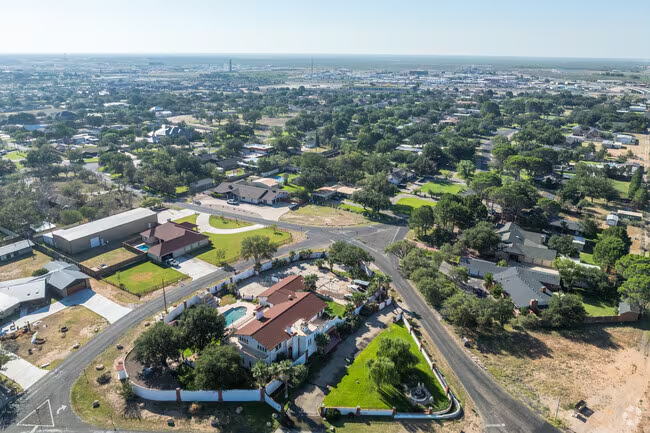
What happens to a West Texas home in the hours between a supply line failing at 2 a.m. and someone noticing the water at breakfast? In Odessa, that gap is where most of the real loss occurs - inside wall cavities, under flooring, and in the framing you cannot see.
Restoration work in Ector County covers a wide range of property emergencies, and each one demands its own equipment, documentation, and sequence of work.
- Water Damage Restoration - burst supply lines, roof leaks, appliance failures, and slab leaks affecting drywall, flooring, and framing
- Flooded Basement - cellars, storm shelters, sunken garages, and below-grade utility rooms that collect runoff and groundwater
- Sewage Cleanup - main line backups and septic failures involving contaminated water and biohazard handling
- Fire Damage Restoration - structural cleanup, debris removal, and rebuilding after kitchen, electrical, or exterior fires
- Smoke Damage Restoration - soot removal, odor neutralization, and cleaning of contents and HVAC systems
- Mold Removal - containment, removal of colonized materials, and correction of the moisture source feeding growth
The benefit for Odessa property owners is straightforward: faster stabilization, documented moisture readings, and a scope of work detailed enough to hold up during an insurance review.
Common Damage Restoration Issues in Odessa, Texas
Odessa's damage patterns trace back to two forces - aging infrastructure from decades of boom and bust building, and weather that swings hard in both directions.
Local Causes We See Repeatedly
- Original galvanized plumbing in 1950s-1970s homes across Sherwood Park, Mission Estates, and the Andrews Highway corridor, corroding from the inside until joints fail
- Winter freeze events catching uninsulated pipes in garages, exterior walls, and manufactured homes throughout Ector County
- Flat-roof drainage failures on commercial buildings along 8th Street and Andrews Highway during summer downpours
- Hail and wind damage to stucco, roofing, gutters, and fencing that opens the envelope to water intrusion
- Sewer main backups where old clay or cast-iron laterals have shifted or filled with root and grease buildup
- Grease fires and electrical faults in kitchens and older panel systems that were never upgraded
Warning Signs Worth Acting On
- Water pressure that has dropped gradually over months - a marker of narrowing galvanized pipe
- Musty odor in closets, under sinks, or near baseboards after a storm
- Staining or bubbling paint along the bottom eight inches of drywall
- Warm spots on the slab or the sound of running water with all fixtures off
- Gurgling drains or slow toilets in multiple fixtures at once, pointing to a main line issue
- Persistent smoke odor that returns when the HVAC cycles, indicating soot in the ductwork
Moisture rarely stays where you find it. It migrates under flooring, wicks up drywall, and settles in wall cavities well beyond the visibly wet area.
Neighborhoods We Serve in Odessa
Crews respond across Odessa and the surrounding Ector County communities, with familiarity in the specific construction styles found in each area.
- Sherwood Park - mid-century homes with original plumbing and slab foundations
- Mission Estates - established residential streets with mature landscaping and older sewer laterals
- Parkland Estates and Northridge - single-family properties across a range of build years
- Andrews Highway corridor - mixed residential and commercial, including flat-roof retail and office space
- South Odessa - carports, patio covers, and manufactured housing exposed to storm runoff
- Downtown and the 8th Street business district - commercial buildings with rooftop drainage systems
- West Odessa, Gardendale, Goldsmith, and Penwell - outlying properties, many on septic systems
Service also extends toward Midland, Notrees, and the unincorporated stretches of Ector County where response distance matters.
Seasonal Damage Patterns in Odessa
Restoration call volume in Odessa follows a fairly predictable annual rhythm.
- December through February - Freeze events drive burst pipes in garages, attics, exterior walls, and manufactured homes. Space heaters and overloaded circuits push fire and smoke damage calls to their annual peak.
- March through May - Hail and high wind season. Roof punctures, cracked stucco, and window breaks lead directly into water intrusion claims. Blowing dust compounds cleanup after any opening in the envelope.
- June through August - Localized thunderstorm downpours overwhelm flat-roof drains and low-lying entries. Flooded basements, cellars, and sunken garages spike. Heat plus trapped moisture accelerates mold growth in days rather than weeks.
- September through November - Residual storm activity, plus sewage backups as root intrusion peaks in older laterals. HVAC changeover season surfaces smoke and soot odors that were dormant.
Mold removal requests trail water events by roughly two to four weeks, which is why documented drying at the time of loss matters so much.
Housing Characteristics & Restoration Considerations
Odessa's building stock reflects decades of oil-driven expansion, and the era a home was built shapes how a loss unfolds inside it.
Common Construction Types
- 1950s-1970s slab-on-grade homes - galvanized supply lines, cast-iron drains, and limited wall insulation
- Stucco and brick veneer exteriors - durable but prone to hail pitting and hairline cracking that admits water
- Manufactured and mobile homes - common throughout Ector County, with exposed underbelly plumbing and vulnerable skirting
- Newer subdivision builds - PEX plumbing and tighter envelopes that trap moisture longer once wet
- Multi-family and converted rentals - shared walls and stacked plumbing that spread a single failure across units
How Age Affects the Restoration Scope
- Slab foundations mean water travels laterally under flooring, requiring flooring removal or specialized mat drying rather than surface extraction alone
- Homes built before the late 1970s may contain asbestos-bearing textures or flooring, which changes demolition handling
- Original ductwork in older homes holds soot and spores, so smoke and mold work almost always includes HVAC cleaning
- Manufactured home floor systems absorb water quickly and often need full sub-floor replacement
- Overcrowded or multi-family occupancy - a reality given the local housing crunch - increases contamination spread during sewage events
Documenting these conditions before demolition begins protects the claim and keeps the rebuild scope accurate.
Environmental Conditions & Damage Implications
The Permian Basin environment changes how damage behaves, and how it should be treated.
Climate and Air
- Low ambient humidity speeds surface drying but masks moisture still trapped in wall cavities and under flooring
- Airborne dust and caliche particulate bond with soot residue, making smoke cleanup more abrasive and labor-intensive
- Extreme summer heat accelerates microbial growth in any enclosed wet space within 24 to 48 hours
- Wide day-to-night temperature swings create condensation inside cooled wall assemblies
Soil, Water, and Drainage
- Caliche and clay-heavy soils shed water rather than absorb it, sending runoff toward foundations, cellars, and low entries
- Soil movement stresses slabs and buried drain lines, contributing to slab leaks and sewer lateral separations
- Hard mineral-rich water accelerates scale buildup and internal corrosion in older galvanized supply lines
- Septic systems in West Odessa and outlying areas can surcharge during heavy rain, creating sewage backup conditions
What This Means for the Work
- Drying plans need moisture meter verification, not visual assessment, because dry surfaces hide wet substrates
- Mold containment must account for dust already present in the structure
- Sewage cleanup requires full removal of porous materials and antimicrobial treatment of remaining surfaces
- Fire and smoke work includes duct cleaning and odor neutralization rather than surface wiping alone
Storm Claim Documentation and Multi-Trade Coordination in Odessa
Odessa storm claims get shorted in predictable ways. Recognizing the pattern before an adjuster's report is finalized changes the outcome.
Where Odessa Claims Commonly Fall Short
- Granule loss categorized as normal wear rather than hail impact damage
- Stucco damage misread - hail spiderweb cracking, pitting, and chipping look similar to settlement or age-related cracking at a glance
- Code upgrade provisions omitted from the initial scope
- Fence, gutter, and outbuilding damage never making it onto the first assessment
- Interior water intrusion from a roof breach documented separately from the storm event that caused it
These misclassifications happen when adjusters move quickly through a heavy post-storm caseload. The remedy is a single, complete report covering every damaged surface on the property.
The Coordination Problem After a Whole-Property Event
A significant Odessa storm loss routinely spans five or six trades. Left unmanaged, the property owner becomes the project manager by default.
- Roofing crew scheduled independently of everyone else
- Window contractor working from a separate scope
- Stucco or siding repair waiting on roof completion
- Fencing crew unable to start until siding work clears the perimeter
- Interior water mitigation and mold remediation running on their own clock
- Final rebuild and paint held up by any one of the above
Every handoff between trades is a gap where something gets missed, delayed, or disputed later. Single-source coordination closes those gaps.
What Complete Documentation Includes
- Photographic record of every elevation, roof slope, and exterior surface
- Moisture mapping and readings recorded throughout the drying period
- Material and condition notes taken before any demolition begins
- Line-item scope covering all affected trades in one report
- Supplement documentation when hidden damage surfaces during the work





