Damage Restoration in Fairfield County, OH
- Damage Restoration Services Overview
- Common Damage Restoration Issues in Fairfield County, Ohio
- Neighborhoods We Serve in Fairfield County
- Seasonal Damage Patterns in Fairfield County
- Housing Characteristics & Restoration Considerations
- Environmental Conditions & Damage Implications
- Why Basement and Sewage Losses Behave Differently in Fairfield County
Damage Restoration Services Overview
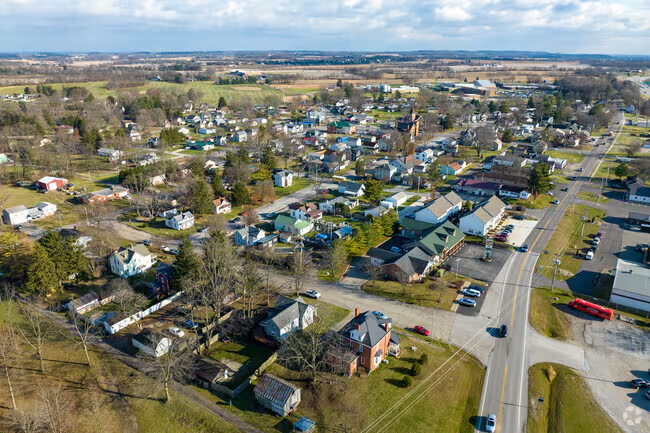
Fairfield County sits at the edge of the glaciated plain, where flat farmland to the north gives way to the sandstone hills around Lancaster - and that geological split means two neighbors five miles apart can have completely different flooding problems. One deals with slow-draining clay in a subdivision basement; the other watches runoff sheet down a hillside toward a walkout foundation.
Restoration work here has to account for both. Our teams handle the full range of property loss, from a burst supply line in a Pickerington colonial to soot-coated framing in a century-old Lancaster farmhouse.
- Water Damage Restoration - extraction, structural drying, and moisture mapping after leaks, appliance failures, and roof intrusion
- Flooded Basement Cleanup - sump pump failures, foundation seepage, and storm runoff recovery
- Sewage Cleanup - backed-up floor drains, failed septic systems, and contaminated category three water
- Fire Damage Restoration - debris removal, board-up, content cleaning, and structural repair
- Smoke Damage Restoration - soot removal from framing and finishes, plus thermal fogging and deodorization
- Mold Removal - containment, source correction, and remediation verified by moisture readings
The benefit of moving fast is simple: dry materials can usually be saved, and wet ones often cannot. Quick response protects flooring, drywall, cabinetry, and framing that would otherwise need full replacement.
Common Damage Restoration Issues in Fairfield County, Ohio
Many residents call a plumber or handyman first, which makes sense for stopping a leak - but the water already inside wall cavities and subfloor keeps working long after the pipe is patched. That gap between repair and drying is where most secondary damage starts.
What Causes Losses Locally
- The Hocking River and Walnut Creek rising fast after heavy rain or rapid snowmelt
- Aging copper and galvanized supply lines splitting during hard freezes
- Sump pump failures on low-lying lots in Baltimore, Carroll, and Millersport
- Storm runoff overwhelming older combined drains in downtown Lancaster
- Septic system backups on rural properties in Amanda, Bremen, and Rushville townships
- Kitchen fires, wood stove and fireplace incidents, and electrical faults in older wiring
Warning Signs Worth Acting On
- A musty smell in the basement that returns every time it rains
- Ceiling stains that grow or change shape between storms
- Baseboards separating from the wall or flooring cupping at the seams
- Gurgling floor drains or slow tubs, both early signals of a sewer line problem
- Soot film reappearing on walls weeks after a small fire was cleaned
- Efflorescence - white powdery residue - on block foundation walls
Catching these early usually means a targeted repair instead of a gutted room. Our documentation also gives you the moisture readings and photos insurers want before approving a claim.
Neighborhoods We Serve in Fairfield County
We cover the county end to end, from the fast-growing north to the hill country in the south.
- Lancaster - including the historic Square district, Mount Pleasant area, Rising Park neighborhoods, and East Main corridor
- Pickerington and Violet Township - newer subdivisions with finished basements and complex HVAC layouts
- Canal Winchester - the Fairfield County portion along the Diley and Gender Road corridors
- Baltimore, Thurston, and Pleasantville - older village housing stock with stone and block foundations
- Carroll and Bloom Township - low-lying parcels prone to seasonal groundwater
- Millersport and the Buckeye Lake shoreline - crawl spaces, seasonal cottages, and high water tables
- Amanda, Bremen, Sugar Grove, Rushville, and Stoutsville - rural properties on wells and septic systems
Crews stage locally, so response to outlying townships does not depend on a truck rolling in from Columbus.
Seasonal Damage Patterns in Fairfield County
Winter - December through February
- Frozen and burst pipes in crawl spaces, garages, and uninsulated exterior walls
- Fire and smoke damage tied to space heaters, chimneys, and wood stoves
- Ice damming on low-slope roofs pushing meltwater into ceilings
Spring - March through May
- Peak season for flooded basements as snowmelt and heavy rain saturate clay soils
- Sewage backups when saturated ground overwhelms drains and septic fields
- Mold growth beginning in spaces that stayed damp through winter
Summer - June through August
- Storm damage from wind, hail, and driving rain forcing water past roofs and siding
- Humidity-driven mold in basements, crawl spaces, and closets on exterior walls
- Air conditioning condensate line clogs soaking ceilings and attic decking
Fall - September through November
- Clogged gutters and downspouts redirecting water to foundations
- First-use furnace and fireplace incidents producing smoke and soot damage
- Pre-freeze plumbing failures in vacant or seasonal properties
Housing Characteristics & Restoration Considerations
Fairfield County housing runs the full range - Lancaster has homes dating to the early 1800s, while much of Pickerington and Violet Township was built after 1990. Each type fails differently, and each needs a different drying and remediation approach.
Older Homes - Lancaster, Baltimore, Amanda, Bremen
- Stone, brick, or hollow block foundations that wick moisture through the wall itself
- Plaster and lath that holds water far longer than drywall and can be saved with careful drying
- Balloon framing that lets smoke and soot travel from a first-floor fire straight into the attic
- Knob-and-tube or early wiring that raises electrical fire risk
- Possible asbestos or lead-containing materials requiring testing before demolition
Newer Construction - Pickerington, Canal Winchester, Carroll
- Finished basements where carpet pad, drywall, and trim absorb water first
- Engineered flooring and MDF trim that swell permanently once wet
- Tight building envelopes that trap humidity and feed mold after a small leak
- Second-floor laundry rooms that can flood two levels at once
Rural and Farm Properties
- Septic and well systems needing sanitizing after sewage or flood contamination
- Crawl spaces with exposed soil, where vapor drives persistent mold
- Outbuildings and additions built in stages with mismatched drainage
We adjust equipment placement, containment, and material removal based on what the structure actually is - not a one-size template.
Environmental Conditions & Damage Implications
The county averages roughly 40 inches of rain a year, with the wettest stretch falling between April and July. Combine that with summer dew points in the upper 60s and you get months where indoor humidity stays high enough to support mold without any leak at all.
Soil and Groundwater
- Glacial till and heavy clay across northern townships drains slowly and holds water against foundations
- Blackhand sandstone and steeper grades in the south send runoff downhill fast toward walkouts and window wells
- Shallow water tables near Buckeye Lake and creek bottoms keep sump pumps cycling year-round
- Clay shrink-swell cycles open hairline foundation cracks that widen after dry summers
Air and Water Quality Effects
- Freeze-thaw cycling stresses supply lines and mortar joints each winter
- Hard water and mineral scale accelerate wear on water heaters and washing machine hoses
- Rural well water contamination risk rises sharply after any sewage or flood event
- Smoke particulate settles into HVAC ductwork and recirculates until the system is cleaned
Because of these conditions, we do not consider a job finished when surfaces feel dry. Meters confirm that framing, subfloor, and cavity spaces have returned to normal moisture content before rebuild work begins.
Why Basement and Sewage Losses Behave Differently in Fairfield County
The single most common call we get is a basement with standing water - and the source determines everything that happens next. Clean groundwater seepage, a failed water heater, and a sewer backup all look similar on the floor but require entirely different handling.
How We Sort the Problem
- Identify the source and water category - clean, gray, or contaminated - before anyone touches materials
- Stop the intrusion by coordinating with your plumber, or by temporary pumping if groundwater is still rising
- Extract standing water with truck-mounted and portable units sized to the volume
- Remove unsalvageable materials - carpet pad, wet insulation, and drywall cut above the water line
- Clean and sanitize all affected surfaces, with antimicrobial application on sewage losses
- Dry the structure using air movers and dehumidifiers positioned by airflow calculation, not guesswork
- Verify with moisture meters daily until readings match unaffected areas
- Rebuild - drywall, trim, paint, and flooring restored to pre-loss condition
Sewage Requires Extra Steps
- Full containment to keep contaminants out of living space and ductwork
- Removal of all porous materials that contacted the water - no exceptions
- Septic system evaluation on rural properties before reoccupancy
- Deodorization to eliminate odor at the source rather than masking it
Preventing the Repeat
- Backflow prevention valves on floor drains in flood-prone areas
- Battery backup sump pumps for lots where power outages accompany storms
- Regrading and downspout extensions to move water away from block walls
- Vapor barriers and dehumidification in crawl spaces prone to summer mold
Solving the water problem once is good. Making sure next spring's rain does not put you right back in the same basement is better - and that is the conversation we have with every Fairfield County homeowner before we pack up the equipment.