Damage Restoration in Auglaize County, OH
- Damage Restoration Services Overview
- Common Damage Restoration Issues in Auglaize County, Ohio
- Neighborhoods We Serve in Auglaize County
- Seasonal Damage Patterns in Auglaize County
- Housing Characteristics & Restoration Considerations
- Environmental Conditions & Damage Implications
- Storm Response, Insurance Documentation, and Clear Communication in Auglaize County
Damage Restoration Services Overview
When water pours through a ceiling at midnight or smoke settles into every room after a kitchen fire, the fastest path back to normal is a trained crew with the right equipment. Property owners across Auglaize County rely on restoration specialists to stabilize the structure, document losses for insurance, and rebuild what was lost.
Full-service restoration in Wapakoneta, St. Marys, Minster, New Bremen, and the surrounding townships typically covers:
- Water Damage Restoration - extraction, structural drying, and moisture mapping after burst pipes, appliance failures, or roof leaks
- Flooded Basement - pump-out, sump and drain evaluation, and drying of block foundations and finished lower levels
- Sewage Cleanup - removal of contaminated water and porous materials, antimicrobial treatment, and safe disposal
- Fire Damage Restoration - board-up, debris and char removal, and reconstruction of damaged assemblies
- Smoke Damage Restoration - soot cleaning, thermal fogging, HVAC decontamination, and odor neutralization
- Mold Removal - containment, HEPA filtration, removal of colonized drywall and framing treatment
The benefits go beyond appearance. Prompt professional response limits secondary damage, reduces the volume of materials that must be torn out, protects indoor air quality for children and older family members, and creates the photo and moisture documentation adjusters expect. Free estimates are available at (419) 738-5481.
Common Damage Restoration Issues in Auglaize County, Ohio
Auglaize County sits on flat, poorly draining glacial ground between the Auglaize River, the St. Marys River, and Grand Lake St. Marys. That geography, combined with an aging housing stock and severe storm exposure, produces predictable damage patterns.
Local Causes We See Most Often
- Storm and wind-driven rain - straight-line winds along corridors like US Route 33 near St. Johns strip shingles and open roofs to water intrusion; the Auglaize County Courthouse roof failure is a reminder that even substantial buildings need saturated sheet rock, ceiling tiles, and baseboards removed quickly
- Saturated soil against block foundations - hydrostatic pressure pushes water through mortar joints and floor-wall seams into basements
- Sump pump and power failures - storms that flood also knock out the pump keeping the basement dry
- Sanitary sewer surcharge and backed-up floor drains - older village lines in small communities can overwhelm during heavy rain events
- Frozen and burst supply lines - unheated crawl spaces, garages, and farm outbuildings
- Heating equipment, chimney, and grain-dust fires - rural properties add barn, shop, and equipment fire risk
Warning Signs Worth Acting On
- Musty smell in a basement, closet, or under a stairway
- Bubbling paint, cupped hardwood, or soft baseboards
- Rust or efflorescence on foundation walls
- Slow floor drains or gurgling fixtures
- Lingering smoke odor that returns on humid days
- Unexplained allergy or asthma flare-ups indoors
Neighborhoods We Serve in Auglaize County
Crews respond throughout the county and into neighboring Allen, Shelby, Mercer, Logan, and Van Wert County communities.
- Wapakoneta - downtown historic districts, Blackhoof Street corridor, and newer subdivisions near I-75
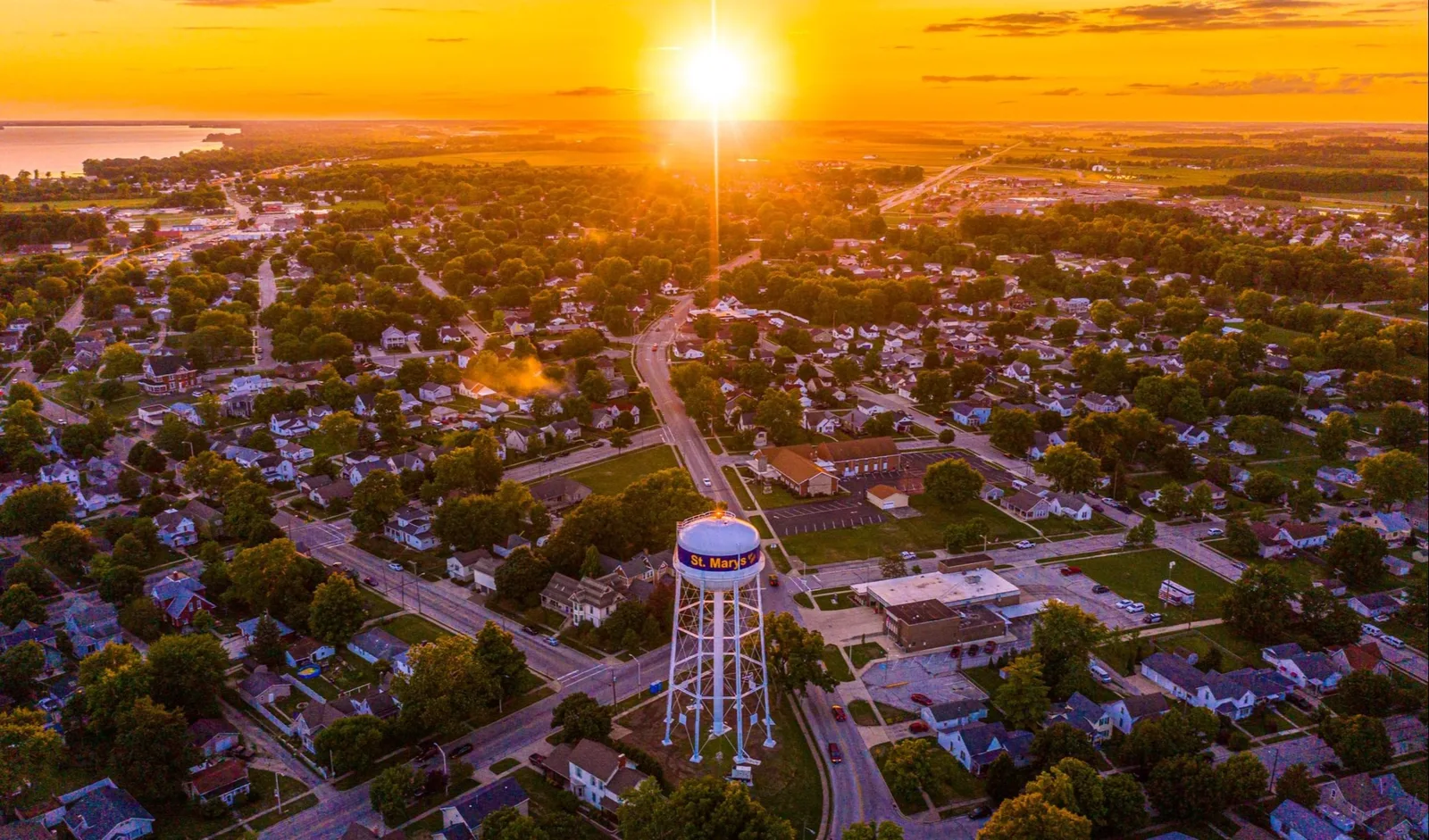
- St. Marys - lakeside properties around Grand Lake St. Marys, canal-district homes, and Spring Street neighborhoods
- Minster and New Bremen - dense village lots with full basements and older brick construction
- New Knoxville, Waynesfield, Cridersville, Buckland, Uniopolis, and St. Johns
- Rural townships - Duchouquet, German, Jackson, Logan, Moulton, Noble, Pusheta, Salem, St. Marys, Union, Washington, and Wayne
Farmsteads, grain operations, churches, schools, and Main Street commercial buildings all get the same structured response: assess, stabilize, dry or clean, then rebuild.
Seasonal Damage Patterns in Auglaize County
- January - February: Frozen and burst pipes lead the calls. Ice dams push meltwater under shingles, and furnace and space heater fires drive fire and smoke damage restoration work.
- March - April: Snowmelt over still-frozen ground plus spring rain equals flooded basements and sewage backups. Sump pumps run constantly and fail.
- May - June: Peak severe weather. Hail, straight-line winds, and tornado-warned storms open roofs; wind-driven rain soaks attics and upper-floor ceilings.
- July - August: Humidity above 60 percent indoors accelerates mold growth in basements, crawl spaces, and behind vinyl wallpaper. Any water loss left drying on its own becomes a mold removal project.
- September - October: Harvest season brings barn, combine, and grain-dust fires. Cooler nights create condensation on cold foundation walls.
- November - December: Heating systems restart, producing puff-back soot from oil and gas furnaces. Holiday cooking and candle fires spike smoke damage claims.
Knowing the seasonal rhythm helps homeowners get ahead of it - a pump test in February and a roof check in April prevent much larger losses.
Housing Characteristics & Restoration Considerations
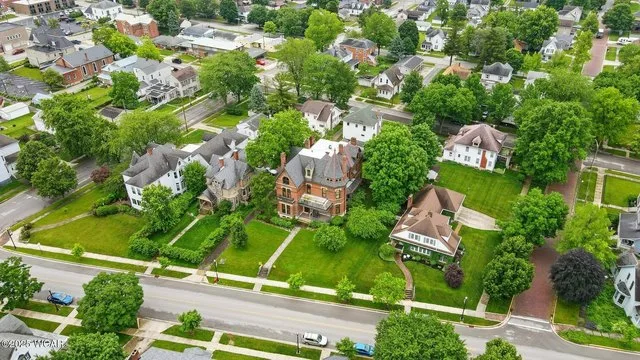
Much of Auglaize County's housing predates 1970, with a substantial share of century-old farmhouses and village homes built during the canal and railroad era. That age shapes every restoration plan.
Construction Features That Affect the Work
- Stone, brick, and hollow-block basements - porous and prone to seepage; drying requires wall cavity ventilation, not just floor fans
- Balloon-framed walls - water and smoke travel vertically between floors with no fire blocking, so hidden moisture and odor must be traced with meters and cameras
- Plaster and lath - holds water longer than drywall and can often be saved with controlled drying rather than demolition
- Original hardwood and softwood floors - candidates for specialty floor drying mats if addressed within the first days
- Crawl spaces with dirt floors - a persistent moisture source that feeds recurring mold problems
- Knob-and-tube or updated-in-stages wiring - requires care during fire damage assessment and reconstruction
- Asbestos-era floor tile, mastic, and pipe insulation - triggers testing before demolition in pre-1980 homes
- Newer I-75 corridor subdivisions - engineered joists and drywall dry faster but fail faster in fire, and finished basements mean more porous contents to remove
Farm properties add another layer: attached shops, wood-burning heat, agricultural chemicals, and outbuildings that need separate scoping. Restoration plans in older homes balance preservation of original trim, doors, and millwork against the reality that sewage-contaminated or mold-colonized porous materials must be removed.
Environmental Conditions & Damage Implications
Northwest Ohio's climate and soils work against buildings that take on water. Understanding those conditions explains why professional drying beats a rented fan.
Local Conditions and What They Mean
- Heavy clay and glacial till soils - low permeability keeps rainwater sitting against foundations, feeding basement seepage long after the storm passes
- Flat terrain and high water tables - near Grand Lake St. Marys and both river corridors, groundwater can sit only a few feet below basement slabs
- Humid continental summers - dew points in the upper 60s mean outside air makes basements wetter, so dehumidification must be closed-loop
- Freeze-thaw cycling - roughly dozens of cycles each winter crack mortar, foundations, and driveway drains, creating new water paths
- Agricultural dust, pollen, and field spray drift - loads HVAC filters and combines with soot to make smoke residue harder to clean
- Nutrient-rich surface water and algae concerns around the lake - reinforces the need to treat any surface flooding as contaminated
- Hard, mineral-heavy well and municipal water - accelerates pinhole leaks and water heater failures in older copper systems
These factors influence restoration decisions directly: containment barriers and HEPA scrubbers during mold removal, negative air during sewage cleanup, and moisture readings taken at multiple depths before drying equipment is pulled. Documented psychrometric readings - temperature, relative humidity, and grains per pound - show when a structure is genuinely dry rather than dry to the touch.
Storm Response, Insurance Documentation, and Clear Communication in Auglaize County
After a countywide storm event, dozens of properties need help at once. Communication is what separates a smooth claim from a frustrating one, so a transparent process matters as much as the equipment on the truck.
How a Typical Project Unfolds
- First contact and triage - describe what happened, how long water has been present, and whether power is on; emergency board-up or tarping is arranged for open roofs
- On-site inspection - moisture meters, thermal imaging, and photo documentation establish the affected area room by room
- Written scope review - you see what stays, what comes out, and why, before demolition begins
- Controlled removal - saturated or contaminated sheet rock, ceiling tiles, insulation, carpet pad, and baseboards are cut back to sound material and disposed of properly
- Drying, cleaning, or remediation - air movers and dehumidifiers with daily logged readings; containment and HEPA filtration for mold and sewage; soot cleaning and odor treatment for smoke
- Verification - readings confirm dry standard or post-remediation clearance before rebuilding
- Reconstruction - drywall, paint, trim, flooring, and cabinetry restored to pre-loss condition
What Transparency Should Look Like
- A named project contact who returns calls during storm surges
- Photos and moisture logs shared with you, not just the adjuster
- Line-item scopes written in industry-standard estimating software insurers recognize
- Plain-language explanations of why a material is salvageable or not
- Advance notice before any change in scope
- Coordination with your carrier, mortgage company, and any local building or health officials
Whether the loss is a single flooded basement in Minster or a wind-damaged roof near St. Johns, an honest assessment and free estimate come first. Call (419) 738-5481 to start the conversation.