Damage Restoration in Hardin County, OH
- Damage Restoration Services Overview
- Common Damage Restoration Issues in Hardin County, Ohio
- Neighborhoods We Serve in Hardin County
- Seasonal Damage Patterns in Hardin County
- Housing Characteristics & Restoration Considerations
- Environmental Conditions & Damage Implications
- Storm Response and Recovery After Severe Weather in Hardin County
Damage Restoration Services Overview

Damage that sits untreated rarely stays the same size - it grows. A damp subfloor in a Kenton farmhouse can become a structural repair within weeks, and smoke residue left on drywall keeps etching surfaces and releasing odor long after the flames are out.
Property owners across Hardin County rely on a full range of restoration work to stop that progression early:
- Water Damage Restoration - extraction, structural drying, and moisture mapping after burst pipes, appliance failures, and roof leaks
- Flooded Basement - pump-out, sump system evaluation, and drying of block foundations and finished lower levels
- Sewage Cleanup - removal of contaminated material, antimicrobial treatment, and safe disposal after backups or septic failures
- Fire Damage Restoration - debris removal, soot cleaning, board-up, and rebuilding of damaged assemblies
- Smoke Damage Restoration - odor neutralization, HVAC cleaning, and treatment of contents affected by protein or furnace puff-back residue
- Mold Removal - containment, controlled removal, and correction of the moisture source feeding growth
The benefit for Hardin County residents is straightforward: faster response limits demolition, protects belongings, and keeps insurance documentation clean and organized from the first day.
Common Damage Restoration Issues in Hardin County, Ohio
Storms drive the largest share of restoration calls here. The late-March tornado that tore roofs and buildings apart at the Hardin County Fairgrounds in Kenton showed how quickly wind damage becomes water damage once a roof deck is opened to rain.
Recurring causes across the county include:
- Wind-lifted shingles and hail bruising that create slow, hidden attic leaks
- Flat farmland with heavy clay soils that sheds water toward foundations rather than absorbing it
- Older sump pumps and failing tile lines that let basements take on water during spring saturation
- Rural septic systems and older municipal laterals in Kenton, Ada, and Forest that back up under heavy inflow
- Space heaters, wood stoves, and grain-drying or shop equipment that raise winter fire risk
- Furnace puff-backs coating interiors in oily soot
Early warning signs worth acting on:
- Musty odor in a basement, crawl space, or closet that returns after ventilation
- Tape seams lifting or nail pops appearing on ceilings below the attic
- Efflorescence, white chalky staining, or dampness at block foundation walls
- Gurgling floor drains or slow fixtures across multiple rooms
- Soot lines around vents, outlets, and door casings
- Condensation on windows that persists into the afternoon
Neighborhoods We Serve in Hardin County
Coverage extends across the county seat and the surrounding villages, farms, and campus-area rentals.
- Kenton - downtown commercial blocks, older residential streets, and neighborhoods near the fairgrounds
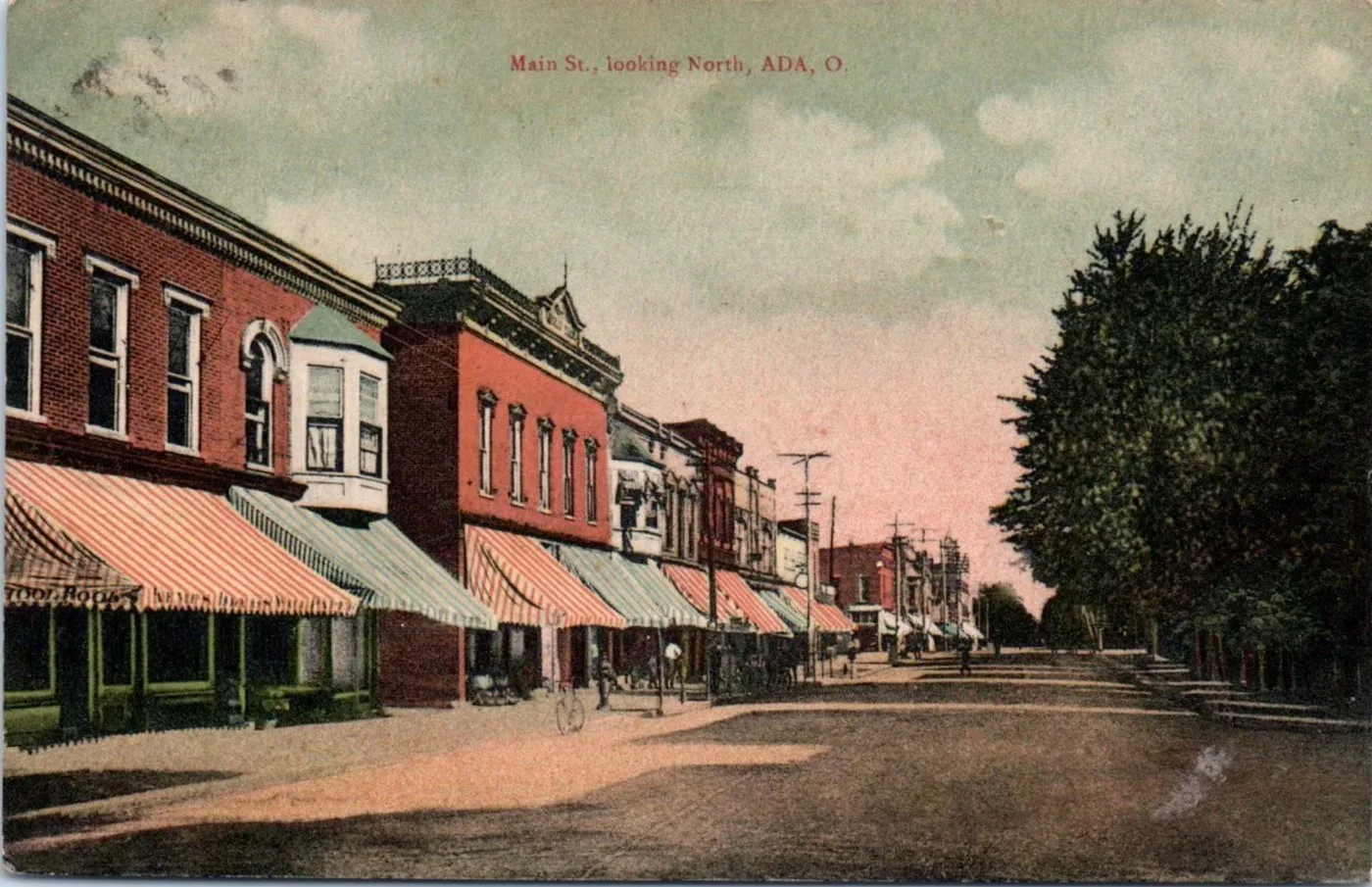
- Ada - student rentals, faculty housing, and properties near Ohio Northern University
- Forest, Dunkirk, and Alger - village homes with older basements and mature trees
- Mount Victory, Ridgeway, McGuffey, and Patterson - small-town residences and outbuildings
- Rural townships - Buck, Pleasant, Marion, Hale, Goshen, Liberty, and Taylor Creek, including farmsteads served by septic and well systems
Nearby communities along US 68, SR 31, and SR 309 are also within reach, along with adjacent portions of Logan, Allen, Auglaize, Hancock, Wyandot, Marion, and Union counties.
Seasonal Damage Patterns in Hardin County
Each season brings a distinct mix of restoration work.
- January - February: frozen and burst supply lines in unheated crawl spaces and barns; heating-related fires; furnace puff-back smoke damage; ice dams pushing meltwater under shingles
- March - April: peak flooded basement season as frozen clay soils thaw and saturate; severe thunderstorms and tornado risk producing roof and wind-driven water damage; sewage backups from overloaded systems
- May - June: hail and straight-line wind events; sump pump failures during extended rain; first visible mold growth from spring moisture
- July - August: humidity-driven mold in basements and crawl spaces; condensation on ductwork; lightning strikes causing attic fires
- September - October: harvest-season equipment and grain dryer fires; clogged gutters redirecting water to foundations
- November - December: first-burn chimney and flue fires; holiday cooking fires; smoke odor complaints as homes are sealed tight
Scheduling gutter cleaning, sump testing, and furnace inspection ahead of March and November heads off the most common claims.
Housing Characteristics & Restoration Considerations
Hardin County housing skews older than the state average, which changes how restoration is approached on nearly every job. Many Kenton and Ada homes date to the late 1800s and early 1900s, with mid-century additions and 1970s ranch construction filling out village streets.
Construction traits that shape the work:
- Stone and unmortared block foundations - porous, slow to dry, and prone to lateral seepage during flooded basement events
- Balloon-framed walls - open cavities that let water and smoke travel from basement to attic without visible signs
- Plaster and lath - holds moisture longer than drywall and requires gentler drying to avoid cracking or separation
- Dirt-floor crawl spaces - a steady humidity source that supports mold growth in the framing above
- Knob-and-tube or early wiring - a fire risk factor and a safety consideration during demolition
- Farmhouse additions - mismatched roof planes and flashing details that leak repeatedly at transitions
- Pre-1980 materials - flooring, mastic, and insulation that may require testing before removal
Practical implications: drying older homes takes more equipment and longer monitoring, sewage cleanup in a stone basement often means removing porous material rather than cleaning it, and smoke restoration in balloon-framed houses requires checking wall cavities and attics well away from the fire origin. Documented moisture readings at each visit keep the process transparent for owners and adjusters alike.
Environmental Conditions & Damage Implications
The local climate and ground conditions push moisture toward buildings rather than away from them. Hardin County sits on flat glacial till with dense, poorly draining clay - part of the historic Scioto Marsh region - so surface water lingers instead of percolating.
Conditions that affect restoration outcomes:
- High clay content - holds hydrostatic pressure against foundation walls, making basement seepage a repeat event unless drainage is corrected
- Roughly 38 - 40 inches of annual precipitation - concentrated in spring, when soils are already saturated
- Summer dew points in the 65 - 72 degree range - enough to support mold growth on cool basement surfaces without any leak present
- Hard, mineral-rich groundwater - accelerates pinhole leaks and appliance line failures in older copper plumbing
- Freeze-thaw cycling - opens mortar joints and foundation cracks each winter
- Agricultural dust and field burning residue - loads HVAC filters and complicates post-fire air scrubbing
- Rural septic and well systems - raise contamination concerns during sewage cleanup and require water testing after flooding
Because of these factors, drying plans here account for slower evaporation from masonry and outdoor air that is often too humid to use for ventilation. Dehumidification, sealed containment, and post-remediation moisture verification produce far better long-term results than fans and open windows.
Storm Response and Recovery After Severe Weather in Hardin County
The March tornado that struck the Hardin County Fairgrounds - stripping roofs and wrecking buildings including the junior fair board office - is a reminder that a single storm can generate every category of damage at once. Crews arriving afterward deal with wind-torn structures, saturated interiors, contaminated standing water, and, in some cases, electrical fires from damaged service lines.
A practical response sequence for storm-hit properties:
- Confirm safety - shut off power to affected areas, avoid downed lines, and stay out of standing water until it is cleared
- Stabilize the envelope - tarp roofs, board openings, and stop further intrusion before drying begins
- Document conditions - photograph damage, log affected rooms and contents, and record moisture readings
- Extract and classify water - separate clean rainwater from sewage-contaminated water, which requires different handling
- Set drying and filtration - dehumidifiers, air movers, and HEPA scrubbers sized to the space
- Address secondary damage - mold prevention treatments, smoke and soot cleaning, and odor control
- Rebuild - drywall, flooring, trim, and roofing once the structure is verified dry
Local knowledge matters during these events. Familiarity with Kenton's older housing stock, Ada's student rental turnover, rural septic layouts, and the county's clay-heavy drainage means fewer surprises mid-project. It also helps with realistic sequencing when many properties need attention at the same time - prioritizing structural stabilization and contamination control first, cosmetic work later.
Between storms, a few habits reduce future losses: keep gutters and downspouts discharging well away from foundations, test sump pumps and backup batteries each spring, service heating equipment before first use, inspect roof flashing after every wind event, and photograph your home's interior annually so contents documentation is ready if a claim ever becomes necessary.