Damage Restoration in Washington County, OH
- Damage Restoration Services Overview
- Common Damage Restoration Issues in Washington County, Ohio
- Neighborhoods We Serve in Washington County
- Seasonal Damage Patterns in Washington County
- Housing Characteristics & Restoration Considerations
- Environmental Conditions & Damage Implications
- River Valley Flood Response and Advanced Drying Technology
Damage Restoration Services Overview
Damage spreads fast. Water wicks into drywall within minutes, smoke residues turn acidic within hours, and mold colonies can establish themselves in a damp Washington County basement in a day or two. The window for a clean recovery is narrow, which is why emergency response matters more than almost any other factor.
Property owners in Marietta, Belpre, Beverly and the surrounding river communities rely on a full range of restoration disciplines:
- Water Damage Restoration - extraction, structural drying and moisture mapping after burst pipes, appliance failures, roof leaks and river backwater.
- Flooded Basement Recovery - pump-out, contents handling and drying for below-grade spaces along the Ohio and Muskingum valleys.
- Sewage Cleanup - containment, removal of contaminated porous materials and antimicrobial treatment after backups and lateral line failures.
- Fire Damage Restoration - board-up, debris removal, structural cleaning and reconstruction planning.
- Smoke Damage Restoration - soot removal, thermal fogging, HVAC decontamination and odor neutralization.
- Mold Removal - containment barriers, HEPA filtration, controlled demolition and post-remediation verification.
The benefit of coordinated services is simple: one crew handles the water, the contamination, the odor and the rebuild without gaps where secondary damage takes hold.
Common Damage Restoration Issues in Washington County, Ohio
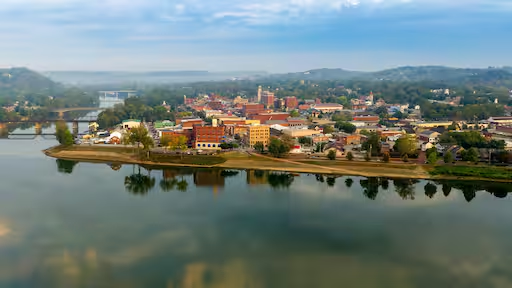
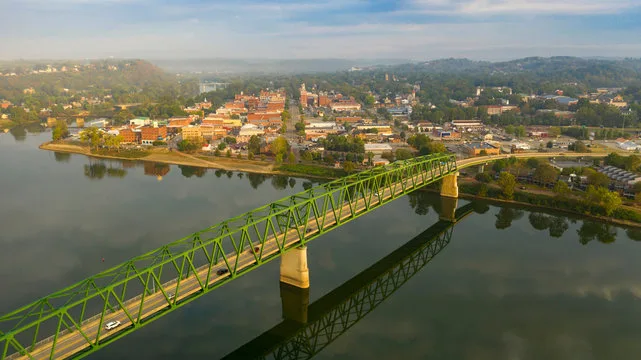
Washington County sits at the confluence of the Ohio and Muskingum Rivers, wrapped in steep Appalachian foothills. That geography funnels stormwater downhill quickly and pushes it back up through drains when river levels rise.
Frequent Causes of Loss
- River and creek flooding along the Ohio, Muskingum, Little Hocking and Duck Creek corridors
- Hillside runoff overwhelming foundation drains and window wells in Devola and Reno
- Frozen and burst supply lines during January and February cold snaps
- Combined and aging sanitary sewer backups during heavy rain events
- Sump pump failures during power outages caused by summer thunderstorms
- Chimney, woodstove and space heater fires in rural homes heated through long winters
- Lightning strikes and electrical fires during spring and summer storm season
Warning Signs Worth Acting On
- A musty, earthy odor in a basement or crawlspace that lingers after dry weather
- Efflorescence, chalky white staining or spalling on block and stone foundation walls
- Cupping hardwood, bubbling paint or soft baseboards near exterior walls
- Gurgling floor drains or slow toilets - often the first sign of a sewer backup
- Yellow-brown staining on ceilings that reappears after each rain
- Persistent smoke odor that returns when the furnace or air conditioner cycles on
Any of these signals warrants moisture testing before finishes are replaced. Cosmetic repairs over wet framing simply relocate the problem.
Neighborhoods We Serve in Washington County
Coverage spans the entire county, from the historic riverfront to the ridge communities well inland.
- Marietta - Harmar Village, downtown Front Street, Norwood, Oak Grove and the Muskingum riverfront blocks
- Belpre - Rockland, Porterfield and neighborhoods bordering the Ohio River
- Devola and Reno - low-lying residential areas along State Route 60 and the Muskingum
- Beverly, Waterford and Lowell - villages upriver on the Muskingum
- Little Hocking, Vincent and Barlow - western townships along Route 339 and 550
- New Matamoras, Newport and Wingett Run - eastern river communities
- Cutler, Macksburg, Lower Salem, Whipple and Dexter City corridor - rural northern townships
Crews also respond across the river into Williamstown and the greater Mid-Ohio Valley when regional storm systems create widespread loss.
Seasonal Damage Patterns in Washington County
Winter (December - February)
- Burst supply lines in unheated crawlspaces, garages and vacant seasonal properties
- Ice dams pushing meltwater under shingles and into attic insulation
- Peak heating-season fire and smoke losses from flues, furnaces and portable heaters
Spring (March - May)
- Snowmelt combined with heavy rain driving river crests and flooded basements
- Saturated hillside soils forcing groundwater through foundation cracks
- Severe thunderstorm and tornado risk producing wind-driven rain intrusion
Summer (June - August)
- Humidity above 70 percent fueling rapid mold growth in basements and crawlspaces
- Air conditioning condensate line clogs and overflowing pans
- Storm-related power outages disabling sump pumps and triggering sewage backups
Fall (September - November)
- Remnant tropical systems delivering multi-inch rainfall totals
- Clogged gutters and leaf-blocked downspouts redirecting water toward foundations
- First fires of the season revealing chimney and appliance defects
Housing Characteristics & Restoration Considerations
Marietta was Ohio's first permanent settlement, and the county's building stock reflects that history. A large share of homes predate 1960, with a meaningful cluster of nineteenth-century structures near the rivers.
Construction Types and What They Mean
- Pre-1900 brick and timber-frame homes - soft mortar, plaster over wood lath and balloon framing that lets smoke and water travel vertically between floors
- Stone and rubble foundations - porous and prone to seepage, requiring careful drying rather than aggressive demolition
- Mid-century block basements - hollow cores hold water long after the slab looks dry, so wall cavity drying is standard
- Rural manufactured and modular homes - vapor barriers and belly wrap trap moisture beneath the floor system
- Newer subdivisions in Devola, Barlow and Belpre - tighter envelopes that hold humidity and odor unless mechanically ventilated
Restoration Implications
- Homes built before 1980 require asbestos and lead-safe protocols before demolition on fire and water jobs
- Original woodwork, trim and staircases are often salvageable with controlled drying and specialty cleaning
- Knob-and-tube or updated-over-old wiring is de-energized and evaluated before extraction equipment is staged
- Crawlspace homes need encapsulation review after repeat water events, not just a one-time dry-out
- Finished basements demand flood cut inspection - carpet pad, paneling and batt insulation rarely dry in place
Environmental Conditions & Damage Implications
The county averages roughly 40 to 44 inches of precipitation annually, spread evenly across all four seasons. Combined with summer dew points in the upper 60s, that keeps below-grade spaces near the moisture threshold where mold thrives.
Local Conditions That Drive Damage
- Clay-heavy and silt loam soils - slow-draining, expanding when wet and pressing hydrostatically against basement walls
- Steep valley terrain - concentrated runoff arriving at foundations faster than perimeter drains can handle
- High river water table - properties near the Ohio and Muskingum experience seepage even without surface flooding
- Floodwater contamination - river inundation carries agricultural runoff, fuel residue and sanitary waste, classifying it as Category 3 water
- Hard, mineral-rich well water - accelerates pinhole leaks and appliance line failures in rural townships
- Wood smoke and industrial particulates - settle into HVAC systems and complicate post-fire air quality restoration
How Conditions Shape the Response
- Water is categorized on arrival so contaminated flood and sewage losses receive full containment rather than simple drying.
- Dehumidification targets are set against local dew point readings, not generic settings.
- Soil and groundwater pressure are documented so drainage or grading recommendations accompany the repair scope.
- Air scrubbing with HEPA and carbon media runs through the odor and mold phases, protecting occupants with respiratory sensitivities.
River Valley Flood Response and Advanced Drying Technology
Few Ohio counties face river flooding as directly as Washington County. When the Ohio approaches flood stage at Marietta, backwater moves up the Muskingum and into storm and sanitary systems throughout Harmar, Devola and Lowell - often before any surface water reaches a property line.
The Response Sequence
- Safety assessment - power and gas verification, structural stability check and hazard identification before entry.
- Water categorization - river and sewage-influenced water is treated as grossly contaminated from the start.
- Bulk extraction - truck-mounted and submersible pumping to clear standing water quickly.
- Controlled demolition - flood cuts on saturated drywall, removal of insulation, pad and unsalvageable porous contents.
- Cleaning and disinfection - pressure washing, HEPA vacuuming and EPA-registered antimicrobial application to framing and slabs.
- Structural drying - equipment placed by calculation and adjusted daily against documented readings.
- Verification and rebuild - moisture and clearance documentation before any reconstruction begins.
Equipment That Shortens the Timeline
- Thermal imaging cameras and penetrating moisture meters that map hidden water inside wall cavities and under tile
- Low-grain refrigerant and desiccant dehumidifiers sized for stone and block basements
- Injectidry and negative-pressure systems for drying hardwood floors and wall assemblies in place
- Negative air machines with HEPA and activated carbon filtration for mold and smoke work
- Hydroxyl generators and ozone treatment for embedded smoke odor in plaster and framing
- Ultrasonic cleaning for soot-covered contents, hardware and heirloom items
- Remote sensors and daily logs that document drying progress for insurance carriers
That documentation matters as much as the equipment. Clear moisture records, photographs and clearance results keep claims moving and give owners confidence the structure is genuinely dry before walls close up.