Damage Restoration in Belmont County, OH
- Damage Restoration Services Overview
- Common Damage Restoration Issues in Belmont County, Ohio
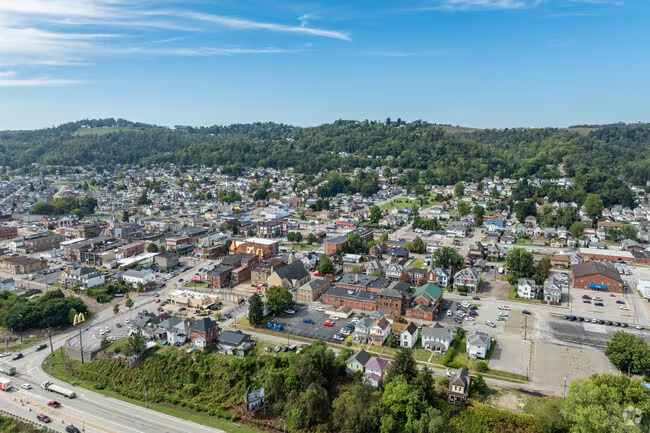
- Neighborhoods We Serve in Belmont County
- Seasonal Damage Patterns in Belmont County
- Housing Characteristics & Restoration Considerations
- Environmental Conditions & Damage Implications
- Sewer Backups and Basement Flooding in Belmont County's River Towns
Damage Restoration Services Overview
You wake up in a Bellaire farmhouse to the sound of running water in the basement, and by the time you reach the bottom step, three inches of cold water covers the concrete floor and your furnace pilot light is out. Situations like this unfold across Belmont County every season - sometimes from a burst supply line, sometimes from a sewer backup during a spring downpour, sometimes from a chimney fire that leaves smoke residue on every surface of the house.
Restoration work in this part of eastern Ohio spans a wide range of damage types, and most properties need more than one service after a single event:
- Water Damage Restoration - extraction, structural drying, moisture mapping, and monitoring of framing, subfloors, and drywall cavities
- Flooded Basement - pump-out, contents triage, block wall drying, and sump system evaluation
- Sewage Cleanup - Category 3 contamination handling, removal of porous materials, and antimicrobial treatment
- Fire Damage Restoration - stabilization, debris removal, soot cleaning, and structural cleaning of charred assemblies
- Smoke Damage Restoration - odor neutralization, HVAC duct cleaning, and treatment of hidden residue in wall cavities
- Mold Removal - containment, negative air pressure, source moisture correction, and clearance verification
The benefit for Belmont County homeowners is straightforward: fast moisture control limits secondary damage, documented work supports insurance claims, and proper cleaning protocols protect indoor air quality for families and tenants.
Common Damage Restoration Issues in Belmont County, Ohio
Belmont County's steep river-valley terrain, aging housing stock, and Ohio Valley precipitation patterns create a predictable but demanding set of restoration problems. NOAA climate normals place Ohio precipitation near 38 to 41 inches annually, and hillside runoff concentrates much of that water against foundations in the Ohio River communities.
Frequent Causes of Loss
- Hillside runoff and hydrostatic pressure forcing water through block foundation joints and cove seams
- Combined and undersized sanitary sewer capacity in older river towns, producing basement sewage backups during heavy rain
- Frozen and burst pipes in unheated crawl spaces, garages, and vacant rental properties
- Sump pump failure during power outages tied to summer thunderstorms and winter ice events
- Wood stove, chimney, and space heater fires in rural homes heated supplementally through winter
- Kitchen grease fires that push oily smoke residue through the entire structure
- Slow plumbing leaks behind older cast iron and galvanized lines feeding hidden mold colonies
Warning Signs Worth Acting On
- Musty odor that intensifies when the furnace or air conditioner cycles on
- Efflorescence, white powdery streaks, or peeling paint on basement block walls
- Cupped or discolored hardwood near exterior doors and plumbing walls
- Gurgling floor drains or slow drainage during rainfall
- Soot film returning on windowsills or vent registers after cleaning
- Stained ceiling drywall directly below bathrooms or roof valleys
Water that begins clean can degrade quickly. The IICRC S500 standard notes that Category 1 water may progress to Category 2 or 3 as dwell time and organic contamination increase - which is why a Saturday basement leak left until Monday often becomes a much larger removal project.
Neighborhoods We Serve in Belmont County
Coverage extends across the county's river corridor, ridge communities, and rural townships:
- Martins Ferry - older brick and frame homes near the river with basement flooding and sewer backup exposure
- Bellaire and Shadyside - dense hillside housing where runoff and downspout discharge reach foundations quickly
- Bridgeport, Brookside, and Lansing - compact lots with shared drainage challenges
- St. Clairsville - the county seat, including newer subdivisions off Route 40 and National Road
- Barnesville and Bethesda - rural properties with well water, wood heat, and crawl space construction
- Powhatan Point and Flushing - creek-adjacent homes prone to flash flooding
- Belmont, Holloway, and Morristown - smaller villages with older utility infrastructure
Surrounding service reach includes neighboring Monroe, Guernsey, Harrison, and Jefferson counties, plus the greater Wheeling metro area across the river.
Seasonal Damage Patterns in Belmont County
- January - February: Frozen pipe breaks peak during hard freezes. Heating equipment, wood stoves, and chimney flues drive fire damage restoration and smoke damage restoration calls. Ice damming on low-slope roofs pushes meltwater into attic insulation and ceiling cavities.
- March - April: Snowmelt combines with spring rain to saturate hillside soils. Flooded basement volume rises sharply, and sewage cleanup demand follows when sanitary lines surcharge.
- May - June: Warming temperatures plus lingering moisture accelerate mold growth in basements and crawl spaces. Mold removal inquiries climb, often tied to unresolved winter water damage.
- July - August: Severe thunderstorms bring wind-driven rain, roof breaches, and power outages that disable sump pumps. Lightning strikes contribute to structure fires. High dew points keep humidity control central to every drying plan.
- September - October: Remnant tropical systems can deliver several inches of rain in a day. Homeowners restarting furnaces discover accumulated dust and smoke odor issues.
- November - December: First freezes catch unwinterized hose bibs and vacant properties. Holiday cooking and candles increase kitchen and contents fires.
Housing Characteristics & Restoration Considerations
Belmont County's housing stock skews older than the national average, with a large share of homes built during the coal, glass, and steel expansion of the late 1800s through the mid 1900s. That history shapes nearly every restoration decision.
Common Construction Types
- Balloon-framed two-story homes in the river towns, where open stud bays let water and smoke travel vertically between floors
- Unreinforced stone and hollow block foundations that wick groundwater and hold moisture long after standing water is removed
- Brick masonry rowhouses and duplexes requiring careful drying to avoid trapping vapor behind interior plaster
- Post-1970 ranch homes in St. Clairsville with finished basements, carpet pad, and drywall that rarely survive Category 3 water
- Rural farmhouses with dirt-floor cellars, crawl spaces, and additions built in multiple eras
How Age Affects Each Service
- Water damage: Plaster over wood lath dries differently than drywall and often needs longer controlled drying with cavity injection.
- Flooded basement: Block cores hold water; drilling weep points and using targeted airflow prevents recurring humidity spikes.
- Sewage cleanup: Older floor drains without backflow protection allow contamination to spread across porous concrete requiring aggressive cleaning.
- Fire and smoke: Homes built before 1980 may contain asbestos-bearing materials and lead paint, so testing precedes demolition.
- Mold removal: Minimal original insulation and vapor barriers create condensation on cold surfaces - correcting that detail matters more than surface cleaning.
Environmental Conditions & Damage Implications
Belmont County sits on the western edge of the Appalachian Plateau, and the local environment influences how damage develops and how drying must be managed.
Climate and Humidity
- Humid continental climate with warm, muggy summers and cold, damp winters
- Summer dew points frequently in the 60s, which slows evaporation and makes dehumidification the controlling factor in structural drying
- Freeze-thaw cycling that opens masonry joints, foundation cracks, and roof flashing seams
Soil and Water Conditions
- Clay-rich, slowly draining soils that hold water against foundation walls and raise hydrostatic pressure after storms
- Steep slopes and reclaimed mining ground that channel surface runoff toward low-lying structures
- Legacy mine drainage and iron-bearing groundwater in some areas, leaving mineral staining that requires specific cleaning agents
- Private wells in rural townships, meaning post-sewage or post-flood water testing becomes part of the recovery plan
Indoor Air Quality Implications
- Tight winter closure combined with basement moisture drives elevated indoor humidity and mold spore counts
- Smoke particulate settles in ductwork on gravity and forced-air systems common in older homes
- Sewage events introduce bacteria and endotoxins, requiring containment and HEPA filtration rather than simple mopping
- Ohio EPA guidance and IICRC protocols shape material removal, disposal, and documentation decisions on contaminated losses
Practical outcome: drying plans built for Ohio Valley humidity, not generic templates, prevent repeat mold calls months later.
Sewer Backups and Basement Flooding in Belmont County's River Towns
Few restoration problems frustrate local homeowners more than repeat basement flooding in Martins Ferry, Bellaire, Bridgeport, Shadyside, and Powhatan Point. These communities were platted long before modern stormwater engineering, and many blocks still rely on infrastructure sized for a smaller population and less pavement. When two inches of rain falls in an hour on hillside streets, water reaches the lowest available opening - often a basement floor drain.
Why It Keeps Happening
- Sanitary and storm flows that share capacity during peak rainfall
- Downspouts and driveway drains discharging within a few feet of foundation walls
- Aging clay and cast iron laterals with root intrusion or offset joints
- Sump pumps on a single circuit with no battery or generator backup
- Grade that has settled toward the house over decades
How a Contaminated Basement Loss Is Handled
- Safety and utility check - gas appliances, electrical panels, and standing water hazards evaluated before entry.
- Category determination - clean groundwater, gray water, or black water sewage classified under IICRC S500 to set the scope.
- Extraction and disposal - water removed, then saturated carpet, pad, and porous contents bagged out for disposal.
- Controlled demolition - drywall and insulation cut back above the wet line, with wall cavities opened for drying.
- Cleaning and antimicrobial application - hard surfaces washed and treated after gross contamination is gone.
- Drying and monitoring - dehumidifiers and air movers positioned for block walls and concrete, with daily moisture readings logged.
- Verification and rebuild planning - documented dry standard reached before reconstruction, plus recommendations for backwater valves, exterior grading, or backup pump power.
Homeowners who address the cause alongside the cleanup - not just the water - see far fewer repeat losses in the following seasons.