
Damage Restoration in St. Clairsville, OH
- Damage Restoration Services Overview
- Common Damage Restoration Issues in St. Clairsville, Ohio
- Neighborhoods We Serve in St. Clairsville
- Seasonal Damage Patterns in St. Clairsville
- Housing Characteristics & Restoration Considerations
- Environmental Conditions & Damage Implications
- Basement Water Intrusion and Sewage Backups on Belmont County Hillsides
Damage Restoration Services Overview
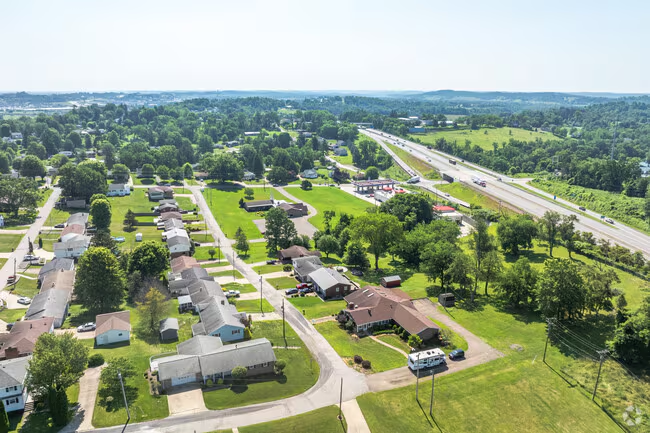
St. Clairsville sits on the hilly western edge of the Ohio Valley, where steep grades, clay-heavy soils, and older housing stock combine to push water toward basements rather than away from them. That geography shapes nearly every restoration call in Belmont County - from a saturated crawl space in a century-old farmhouse off National Road to a smoke-filled kitchen in a newer build near the I-70 interchange.
Full-service restoration for the area covers the complete range of property emergencies:
- Water Damage Restoration - extraction, structural drying, and moisture mapping after pipe failures, appliance leaks, and roof intrusion
- Flooded Basement - pump-out, sump and drain evaluation, and drying of foundation walls and framing
- Sewage Cleanup - Category 3 water removal, disinfection, and safe disposal of contaminated materials
- Fire Damage Restoration - stabilization, debris removal, soot cleaning, and rebuilding of damaged assemblies
- Smoke Damage Restoration - HVAC cleaning, odor neutralization, and treatment of surfaces far from the burn area
- Mold Removal - containment, removal of colonized materials, and correction of the moisture source
The benefit for local homeowners is straightforward: faster containment means fewer materials lost, cleaner insurance documentation, and a home that dries properly instead of trapping moisture behind finished walls.
Common Damage Restoration Issues in St. Clairsville, Ohio
Most damage in St. Clairsville traces back to water arriving where the terrain sends it. Hillside lots, aging clay tile drains, and combined-flow stormwater systems create predictable failure points during heavy rain.
Frequent Causes
- Hydrostatic pressure forcing water through block foundation joints and floor cracks
- Sump pump failure during multi-inch rainfall or power outages
- Backed-up sanitary lines caused by root intrusion in older laterals
- Frozen and burst supply lines in unheated basements, garages, and additions
- Ice damming on low-slope roof sections, pushing meltwater into ceilings
- Kitchen and heating-appliance fires, plus chimney and woodstove incidents in rural properties
- Long-running plumbing leaks behind cabinetry that seed hidden mold colonies
Warning Signs Worth Acting On
- Musty odor in a basement or closet that returns after ventilation
- Efflorescence - white mineral crust - on block foundation walls
- Floor tile lifting, baseboard swelling, or paint blistering near the slab
- Slow drains or gurgling fixtures preceding a sewage backup
- Soot film on window glass, lampshades, or return air grilles after a small fire
- Persistent smoke odor that intensifies with humidity or when the furnace runs
- Visible dark staining on rim joists, subfloor edges, or attic sheathing
Small signs rarely stay small in this climate. Belmont County humidity keeps damp materials from drying naturally, so a minor leak in April can become an active mold problem by July.
Neighborhoods We Serve in St. Clairsville
Coverage extends across the St. Clairsville area and the surrounding Belmont County communities along the National Road and I-70 corridor.
- Downtown St. Clairsville and the historic Main Street district
- Residential streets near St. Clairsville-Richland City schools
- Mall Road and Banfield Road commercial corridors
- Richland Township and Pultney Township rural properties
- Bridgeport, Brookside, and Martins Ferry to the east
- Bellaire, Shadyside, and Powhatan Point along the river
- Lansing, Maynard, Glencoe, and Blaine
- Barnesville, Bethesda, and Belmont to the south and west
- Nearby Wheeling-area communities across the Ohio River
Rural addresses on township roads and hollow properties with limited access receive the same response approach, with equipment staged for long hose runs, generator power, and gravel-drive access when needed.
Seasonal Damage Patterns in St. Clairsville
Each season brings a distinct mix of restoration work to the Ohio Valley.
Winter (December - February)
- Burst pipes in unheated basements, crawl spaces, and vacant properties
- Ice damming on north-facing roof planes, producing ceiling water damage
- Peak season for heating-related fire and smoke damage - furnaces, space heaters, woodstoves, and chimneys
Spring (March - May)
- Snowmelt combined with steady rainfall driving flooded basements
- Sewage backups when saturated ground overloads laterals and municipal lines
- First mold growth of the year on materials that stayed wet through winter
Summer (June - August)
- Mold removal demand peaks with high dew points and warm basements
- Thunderstorm downbursts causing roof and window water intrusion
- Power outages disabling sump pumps during the heaviest rain events
Fall (September - November)
- Remnant tropical systems delivering prolonged, soaking rainfall
- Clogged gutters and leaf-blocked drains redirecting water to foundations
- Early-season fires as fireplaces and furnaces restart after months idle
Housing Characteristics & Restoration Considerations
St. Clairsville's housing stock skews older than the national average, with a large share of homes built before 1960 and a meaningful cluster of late-1800s and early-1900s properties near the historic core. Age drives the restoration plan.
Common Construction Features
- Stone and hollow-block foundations - porous, prone to seepage, and slow to release absorbed moisture
- Unfinished or partially finished basements - storage losses are common, and framed sections trap water behind drywall
- Plaster over wood lath - holds water longer than drywall and can often be dried in place with the right equipment
- Balloon framing in older homes - open wall cavities let water and smoke travel between floors
- Cast iron and clay drain lines - a leading contributor to sewage backups
- Retrofit HVAC ductwork in crawl spaces - a frequent path for smoke odor and mold spore distribution
How This Shapes the Work
- Moisture readings taken at multiple depths, since masonry and plaster mask surface dryness
- Selective demolition rather than wholesale removal, preserving original trim and flooring where possible
- Asbestos and lead awareness on pre-1980 materials before any cutting or sanding
- Cavity drying with injected airflow in balloon-framed walls
- Full duct cleaning after fire or smoke events to stop recontamination
- Post-restoration moisture control - dehumidification, drainage correction, and vapor barriers - so mold does not return
Environmental Conditions & Damage Implications
The Ohio Valley climate around St. Clairsville is humid continental with substantial year-round precipitation, typically 40 inches or more annually, spread across all twelve months. That steady moisture load, combined with valley air stagnation, keeps indoor humidity elevated in basements and lower levels.
Local Conditions That Influence Restoration
- Clay and silt loam soils - low permeability, so water perches against foundations instead of draining away
- Steep Appalachian plateau topography - uphill runoff concentrates against downslope walls and window wells
- Shallow bedrock and shale - limits infiltration and increases surface flow during storms
- Summer dew points in the 65 - 72 degree range - basements sit near or below dew point, causing condensation on cool masonry
- Freeze-thaw cycling - widens foundation cracks each winter, creating new entry points
- Valley inversions - trap particulates and slow the natural dissipation of smoke odor after a fire
Practical Effects
- Drying plans depend on dehumidification, not open windows - outdoor air often adds moisture rather than removing it
- Mold remediation must address the drainage or grading defect, or regrowth follows within a season
- Sewage cleanup requires confirmed disinfection and clearance testing where groundwater is present
- Smoke odor treatment uses sealing and thermal or hydroxyl methods when ventilation alone falls short
- Foundation seepage repair is verified through a full wet cycle before finish work resumes
Basement Water Intrusion and Sewage Backups on Belmont County Hillsides
Nowhere is the local restoration challenge clearer than in St. Clairsville basements. Homes built into hillsides face constant lateral water pressure, and many were finished decades after construction without any moisture management behind the studs. When water arrives, it moves through the block cores and appears far from the actual entry point.
How a Hillside Basement Event Is Handled
- Safety and source control - power isolation, confirmation of contamination category, and stopping active inflow
- Extraction - truck-mounted or portable pumps sized to the volume, including submersible units for standing water
- Moisture mapping - thermal imaging and penetrating meters to trace water inside block cores, sill plates, and under flooring
- Controlled demolition - flood cuts on wet drywall, removal of saturated insulation, and disposal of carpet pad and contaminated contents
- Disinfection - required whenever sewage or groundwater is involved, with EPA-registered antimicrobials applied to all affected surfaces
- Structural drying - LGR dehumidifiers and directed airflow, with daily readings logged until materials reach dry standard
- Cause correction - grading, gutter extensions, window well covers, sump and backflow valve recommendations
- Reconstruction - rebuilding with more resilient materials such as closed-cell insulation and moisture-tolerant baseboard
Custom Solutions for Repeat Problems
- Backwater valves for properties with a history of sanitary line backups
- Battery or water-powered backup sump systems for outage-prone areas
- Encapsulated crawl spaces where humidity feeds recurring mold growth
- Semi-finished basement designs that allow fast drying instead of full demolition next time
- Documented moisture logs and photo records that support insurance claims in Belmont County
Solving the event is only half the job. The other half is making sure the same rainfall next spring does not put you back where you started.





