Damage Restoration in Clark County, OH
- Damage Restoration Services Overview
- Common Damage Restoration Issues in Clark County, Ohio
- Neighborhoods We Serve in Clark County
- Seasonal Damage Patterns in Clark County
- Housing Characteristics & Restoration Considerations
- Environmental Conditions & Damage Implications
- From Emergency Call to Rebuild: How a Clark County Restoration Project Unfolds
Damage Restoration Services Overview
Water spreads through drywall, subfloor, and insulation within minutes, and smoke residues begin etching into metal and glass almost as fast. In Clark County, the difference between a manageable repair and a full reconstruction usually comes down to how quickly drying equipment and cleanup crews reach the property.
Restoration work in Springfield and the surrounding townships covers a connected set of emergency responses rather than a single trade:
- Water Damage Restoration - extraction, structural drying, moisture mapping, and monitoring until materials return to normal readings
- Flooded Basement - pump-out, removal of saturated storage and finishes, sanitizing of foundation walls and slab
- Sewage Cleanup - containment of Category 3 contamination, removal of porous materials, antimicrobial treatment
- Fire Damage Restoration - board-up, debris removal, soot cleaning, and reconstruction of damaged framing and finishes
- Smoke Damage Restoration - odor neutralization, HVAC cleaning, content deodorizing, and sealing of affected surfaces
- Mold Removal - containment, HEPA filtration, removal of colonized materials, and correction of the moisture source
The benefit for local homeowners is straightforward: one coordinated response that documents damage for insurance, stabilizes the structure, and returns the home to a dry, clean, breathable condition.
Common Damage Restoration Issues in Clark County, Ohio
Clark County sits in the Mad River and Buck Creek watersheds, with flat farmland draining toward older residential neighborhoods. That combination produces recurring patterns of loss year after year.
Frequent Causes of Damage
- Heavy spring rain overwhelming combined and aging storm sewers, pushing water back into basement floor drains
- Sump pump failures during multi-day storm systems or power outages
- Frozen and burst supply lines in unheated crawl spaces, garages, and basement ceilings
- Sewer lateral blockages from mature tree roots in older Springfield neighborhoods
- Kitchen fires, space heater fires, and chimney or flue failures during winter heating months
- Slow leaks behind refrigerators, dishwashers, and water heaters that feed hidden mold growth
Warning Signs Worth Acting On
- Musty odor in a basement or closet that returns after rain
- Staining, bubbling, or a chalky white residue along foundation walls
- Cupping or darkening hardwood near exterior doors and appliances
- Persistent smoke odor that intensifies with humidity after a small kitchen fire
- Gurgling drains or slow toilets, which often precede a full sewage backup
- Visible dark spotting on ceiling tiles, window sills, or the back of baseboards
Left alone, each of these escalates. A damp basement becomes a mold remediation project; a lightly soot-coated room becomes a gut-and-rebuild once acidic residues corrode fixtures and wiring.
Neighborhoods We Serve in Clark County
Response covers the full county, from dense city blocks to rural farmsteads on well and septic systems.
- Springfield - South Limestone, Ridgewood, Northridge, Southern Village, and the historic districts near Wittenberg University
- New Carlisle and surrounding Bethel Township subdivisions
- Enon, Donnelsville, and Mad River Township
- Medway, Park Layne, and Crystal Lakes
- South Charleston, South Vienna, Catawba, and Tremont City
- North Hampton, Lawrenceville, and Moorefield Township
- Rural properties along Route 40, Route 41, and the US-68 and I-70 corridors
Crews stage equipment locally so that a flooded basement in Enon and a fire loss in South Charleston can both be reached the same day, day or night.
Seasonal Damage Patterns in Clark County
Winter (December - February)
- Burst pipes during hard freezes and thaw cycles
- Peak season for furnace, fireplace, and space heater fires
- Puff-back events from oil and older forced-air systems, coating rooms in fine soot
Spring (March - May)
- Snowmelt combined with heavy rainfall drives the highest volume of flooded basements
- Sewer backups spike when saturated ground overloads municipal lines
- Mold growth accelerates as humidity climbs and homes stay closed
Summer (June - August)
- Severe thunderstorms and straight-line winds cause roof breaches and interior water intrusion
- Condensation and high dew points feed hidden mold in crawl spaces and duct systems
- Lightning strikes and electrical fires increase during storm season
Fall (September - November)
- Leaf-clogged gutters and downspouts redirect water against foundations
- First furnace startups ignite accumulated dust, producing smoke odor complaints
- Ideal window for moisture inspections before freezing weather arrives
Housing Characteristics & Restoration Considerations
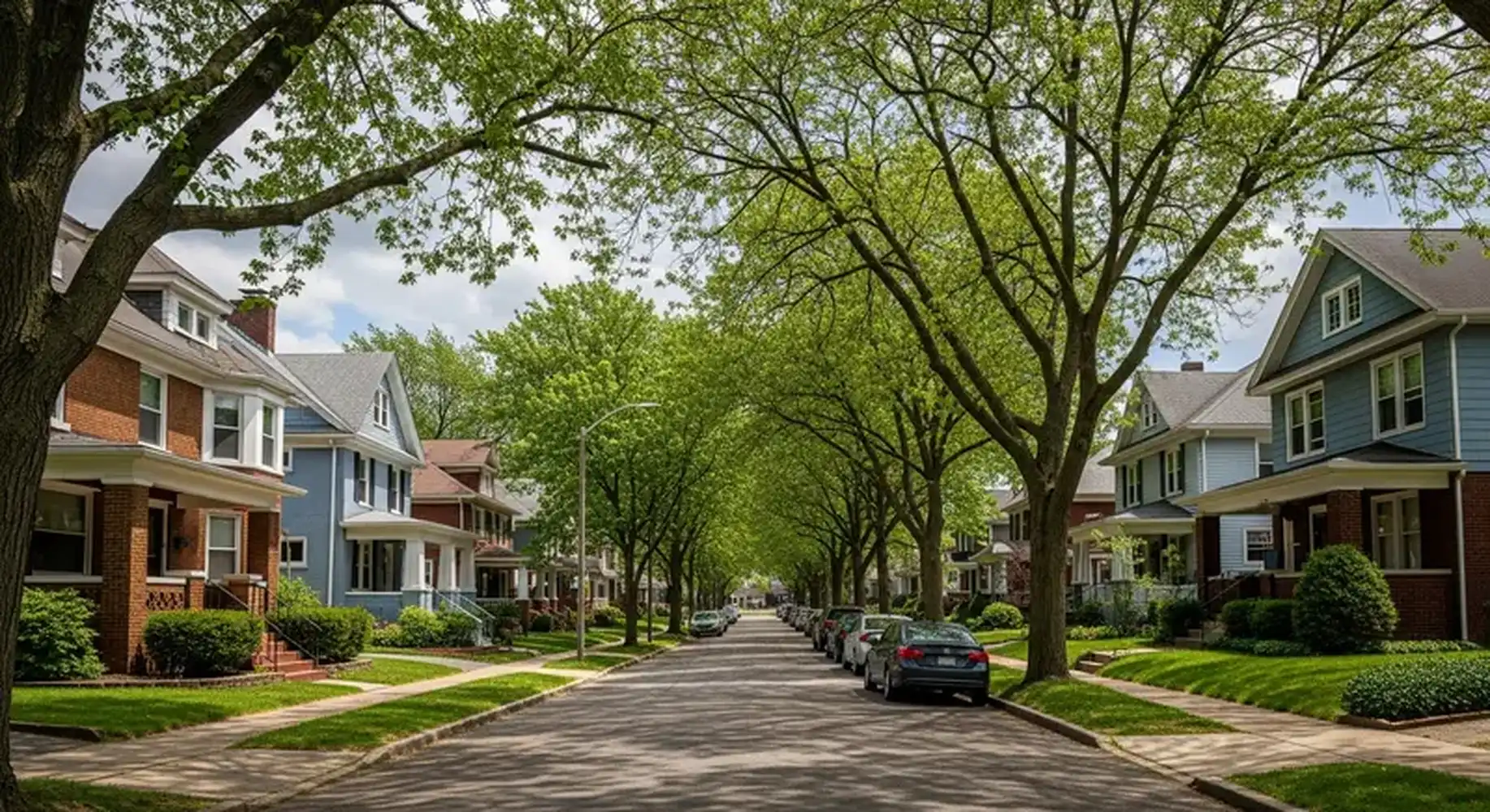
Clark County housing skews older than the national average, with a large share of Springfield homes built before 1960 and many pre-1940 structures near the city core. Newer construction clusters in New Carlisle, Enon, and the Park Layne area.
How Local Construction Shapes the Work
- Fieldstone and block foundations - porous and prone to lateral seepage, requiring longer drying cycles and often antimicrobial treatment after a flooded basement
- Plaster over wood lath - holds moisture behind the surface; requires careful cavity drying rather than simple surface dehumidification
- Balloon framing in older homes - open wall cavities let fire, smoke, and odor travel from basement to attic, expanding the scope of smoke damage restoration
- Clay sewer laterals - vulnerable to root intrusion and collapse, a leading source of sewage cleanup calls in established neighborhoods
- Finished basement rec rooms - carpet, paneling, and framed walls trap water and are frequently the primary loss in storm events
- Knob-and-tube or mixed-era wiring - demands electrical evaluation before drying equipment loads are added
- Rural septic systems - saturated leach fields back up into basements during prolonged wet spells
Age also means legacy materials. Homes built before the late 1970s may contain asbestos in floor tile, mastic, and pipe insulation, plus lead paint. Testing before demolition protects occupants and keeps the project compliant, and it shapes how affected materials are cut, bagged, and hauled out.
Environmental Conditions & Damage Implications
Clark County's humid continental climate delivers roughly 40 inches of annual precipitation, hot muggy summers, and freeze-thaw winters - a combination that keeps building materials cycling between wet and dry.
Local Conditions That Drive Restoration Needs
- High summer dew points - indoor relative humidity regularly exceeds the 60 percent threshold where mold colonizes drywall paper and dust films
- Glacial till and clay-heavy soils - slow infiltration means stormwater ponds against foundations and finds mortar joints, cracks, and window wells
- Flat-to-rolling terrain near Buck Creek and the Mad River - low-lying properties experience repeat groundwater intrusion
- Hard, mineral-rich water - scale buildup stresses supply lines, water heaters, and appliance hoses, contributing to sudden failures
- Freeze-thaw cycling - widens foundation cracks each winter, creating new seepage paths by spring
- Agricultural dust and pollen loads - settle in ductwork and combine with soot residues, making HVAC cleaning a standard part of fire and smoke work
These conditions matter for method selection. Drying a Clark County basement in July requires aggressive dehumidification because outside air cannot be used for ventilation. In a January pipe break, the opposite applies. Moisture meters, thermo-hygrometers, and daily documented readings determine when a structure is genuinely dry rather than dry to the touch - the step that prevents a water loss from becoming a mold removal project three months later.
From Emergency Call to Rebuild: How a Clark County Restoration Project Unfolds
Property owners rarely deal with a single problem. A sewer backup is also a water loss and a future mold risk. A kitchen fire brings soot, smoke odor, and gallons of suppression water. Handling those pieces through separate contractors creates gaps, delays, and disputed insurance claims.
The Start-to-Finish Sequence
- Emergency dispatch - round-the-clock response with crews staged in the Springfield area for fast arrival to Enon, New Carlisle, South Charleston, and rural addresses
- Safety and stabilization - utility shutoff, board-up, roof tarping, and hazard assessment before anyone works inside
- Inspection and documentation - moisture mapping, thermal imaging, air sampling where mold is suspected, and photo records built for the insurance adjuster
- Containment - negative air machines and poly barriers to keep soot, sewage aerosols, and mold spores out of clean areas
- Extraction and removal - pumping standing water, discarding contaminated porous materials, and controlled demolition to sound substrate
- Cleaning and treatment - antimicrobial application, soot removal by residue type, HEPA vacuuming, and duct cleaning
- Structural drying - air movers and dehumidifiers monitored daily with logged readings until materials meet dry standards
- Deodorization - thermal fogging, hydroxyl or ozone treatment, and sealing where odor has penetrated framing
- Contents handling - pack-out, cleaning, and storage of salvageable furniture, documents, and personal items
- Reconstruction - drywall, flooring, trim, paint, and cabinetry that match the original finishes
Why a Single Coordinated Team Helps
- One point of contact and one file for the insurance carrier
- No waiting between mitigation and rebuild phases
- IICRC-guided standards applied consistently across water, fire, sewage, and mold work
- Moisture sources corrected during repair so the same failure does not repeat next spring
The result for Clark County homeowners is a home that is structurally dry, sanitized, odor-free, and finished - not simply patched.