
Damage Restoration in New Carlisle, OH
- Damage Restoration Services Overview
- Common Damage Restoration Issues in New Carlisle, Ohio
- Neighborhoods We Serve in New Carlisle
- Seasonal Damage Patterns in New Carlisle
- Seasonal Damage Patterns in New Carlisle
- Housing Characteristics & Restoration Considerations
- Environmental Conditions & Damage Implications
- Insurance Documentation and the First 24 Hours in New Carlisle
Damage Restoration Services Overview
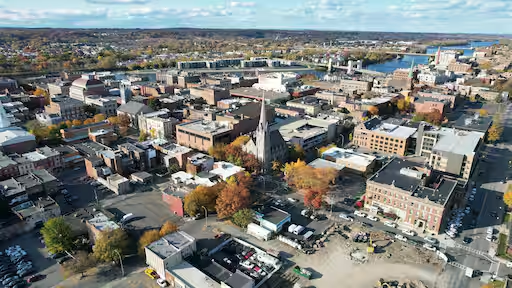
Damage left untreated rarely stays contained. A slow supply line leak behind a New Carlisle kitchen wall can soak framing, wick into drywall, and seed mold colonies within days - turning a small repair into a gut-and-rebuild project. Smoke residue that isn't neutralized keeps etching metal, glass, and finishes long after the flames are out.
BlueRed Restoration handles the full range of property damage recovery for homes and businesses across New Carlisle and Clark County:
- Water Damage Restoration - extraction, structural drying, and moisture mapping after leaks, burst pipes, or appliance failures
- Flooded Basement Cleanup - pump-outs, sump failure response, and drying of below-grade spaces
- Sewage Cleanup - safe removal of Category 3 contamination, disinfection, and odor control
- Fire Damage Restoration - debris removal, soot cleaning, structural stabilization, and content recovery
- Smoke Damage Restoration - residue neutralization, thermal fogging, HVAC cleaning, and deodorization
- Mold Removal - containment, HEPA filtration, affected material removal, and moisture source correction
Being locally based means faster arrival and quicker extraction. When crews reach a property before water migrates into subfloors, insulation, and electrical systems, the affected area stays smaller - and so does the claim. Every step is documented with moisture readings, photos, drying logs, and a clear scope of work for your adjuster.
Common Damage Restoration Issues in New Carlisle, Ohio
New Carlisle sits in the Miami Valley, where clay-heavy soils, aging municipal lines, and a freeze-thaw climate combine to stress homes in predictable ways.
What Causes Most Local Losses
- Groundwater pressure on basement walls - saturated clay soil pushes water through foundation cracks and cove joints after heavy rain
- Sump pump failures - power outages during spring thunderstorms leave basements defenseless
- Frozen and burst pipes - uninsulated lines in crawl spaces and exterior walls split during January cold snaps
- Sewer backups - combined stormwater surges and root-intruded lateral lines force wastewater back through floor drains
- Kitchen and heating fires - cooking accidents, space heaters, and wood stoves account for a large share of residential fire calls
- Hidden mold - behind vinyl wallpaper, under carpet padding, and inside wall cavities where humidity lingers
Warning Signs Worth Acting On
- Musty odor in the basement or near HVAC returns, especially when the system kicks on
- Cupping hardwood, bubbling paint, or drywall that feels cool and soft to the touch
- White mineral staining along basement block walls indicating repeated moisture cycles
- Gurgling floor drains or slow tub drainage - often the first hint of a sewer line problem
- Lingering smoke smell that returns on humid days after a small kitchen fire
- Unexplained allergy symptoms that improve when occupants leave the house
Acting on these early keeps damage contained and prevents secondary problems like mold growth and warped structural components.
Neighborhoods We Serve in New Carlisle
Crews respond throughout New Carlisle and the surrounding Clark and Miami County communities, covering older in-town blocks and newer subdivisions alike.
- Downtown New Carlisle and the Main Street corridor
- Established residential streets near Smith Park and the Tecumseh school campuses
- Newer developments along North Dayton-Lakeview Road and Studebaker Road
- Rural properties on well and septic systems outside the city limits
- Nearby communities including Medway, Donnelsville, Park Layne, Enon, Tremont City, and Crystal Lakes
- Fairborn, Huber Heights, Springfield, New Vienna area, and the Wright-Patterson AFB housing corridor
Local basing matters most in the first hour. Short drive times mean extraction equipment is running before water spreads room to room, and it means a technician can be on site the same day a homeowner spots mold or smells sewage.
Seasonal Damage Patterns in New Carlisle
Seasonal Damage Patterns in New Carlisle
Western Ohio weather drives a fairly reliable calendar of restoration calls.
- December - February: Frozen and burst pipes dominate. Furnace, fireplace, and space heater fires spike, along with puff-back soot from oil and forced-air systems. Ice damming pushes meltwater under shingles.
- March - May: Snowmelt plus persistent rain saturates clay soil, producing the year's heaviest volume of flooded basements, sump pump failures, and sewer backups.
- June - August: Humidity above 70 percent fuels mold growth in basements and crawl spaces. Severe thunderstorms bring wind-driven rain, roof leaks, lightning strikes, and power outages that disable sump pumps.
- September - November: Grilling and burn-pile fires taper off while heating equipment restarts - a common source of first-use smoke damage. Clogged gutters from falling leaves send water down foundation walls.
Two transition points deserve extra attention: the first hard freeze and the first furnace startup. Insulating exposed pipes, testing the sump pump and its backup battery, and having heating equipment serviced ahead of the season prevents a large share of avoidable losses.
Housing Characteristics & Restoration Considerations
New Carlisle's housing stock spans well over a century, and each era brings its own restoration challenges.
Pre-1940 Homes
- Fieldstone or brick foundations with mortar joints that weep groundwater
- Plaster over wood lath, which holds moisture far longer than drywall and requires extended drying
- Balloon framing that lets smoke and fire travel vertically inside wall cavities
- Potential for asbestos-containing materials and lead paint requiring careful handling during demolition
Mid-Century Ranches and Split-Levels
- Concrete block basements prone to cove-joint seepage and efflorescence
- Original cast iron and galvanized supply lines nearing end of service life
- Finished basement rec rooms with wood paneling and carpet - materials that rarely survive Category 3 water
- Ductwork in unconditioned crawl spaces that circulates smoke residue and mold spores
Newer Construction
- Tighter building envelopes trap humidity, so drying requires managed dehumidification rather than open windows
- Engineered wood subfloors and OSB swell quickly and permanently once saturated
- Poured foundations with drain tile perform well until the sump pump fails
- Open floor plans allow water and smoke to spread across large areas fast
Every drying plan starts with material identification. Solid oak flooring, plaster, engineered subfloor, and blown-in insulation all release moisture at different rates, and equipment placement is adjusted accordingly rather than following a generic template.
Environmental Conditions & Damage Implications
The local environment shapes both how damage happens and how restoration has to be performed.
Climate
- Roughly 40 inches of annual precipitation, heavily weighted toward spring
- Summer dew points regularly in the upper 60s and low 70s - ideal conditions for mold on cool basement surfaces
- Dozens of freeze-thaw cycles each winter that widen foundation cracks and stress plumbing
Soil and Groundwater
- Glacial till with dense clay layers drains slowly and holds water against foundation walls
- The Great Miami buried valley aquifer keeps water tables relatively high in parts of the area
- Hydrostatic pressure is the leading cause of recurring basement flooding, which is why moisture-source correction is part of every mold removal scope
Water and Air Quality
- Hard water in the region leaves scale that accelerates water heater and supply line failure
- Rural properties on septic systems face additional sewage backup risk during saturated ground conditions
- Agricultural dust and seasonal pollen already burden indoor air, so post-fire soot and mold spores compound respiratory issues
These conditions mean drying alone is not enough. Sewage cleanup requires antimicrobial application and verification. Mold removal requires containment and negative air pressure so spores don't relocate. Smoke restoration requires HVAC cleaning, because contaminated ductwork will re-deposit residue throughout the home.
Insurance Documentation and the First 24 Hours in New Carlisle
Most restoration disputes trace back to thin documentation, not disagreement about the damage itself. Adjusters need proof of what was wet, how wet it was, and what was done about it.
What Gets Documented on Every Job
- Initial moisture readings on affected and unaffected materials for comparison
- Thermal imaging and photographs of hidden migration behind walls and under flooring
- Category and class classification of the water loss - clean, gray, or black
- Daily drying logs showing equipment placement, temperature, humidity, and material moisture content
- Itemized scope of work with a clear line between mitigation and reconstruction
- Photo records of removed materials and disposal, particularly after sewage or mold work
What Homeowners Should Do Before Crews Arrive
- Stop the source if it's safe - shut the main water valve or the appliance supply line
- Kill power to affected areas at the breaker if water is near outlets or the panel
- Photograph everything before moving items, including standing water depth
- Move undamaged contents and valuables to a dry area
- Stay out of sewage-affected spaces entirely - Category 3 water carries bacteria and viruses
- Avoid disturbing suspected mold or wiping soot, which drives residue deeper into surfaces
- Call your insurer to open a claim, then call for mitigation - both can proceed at once
Policies generally require reasonable steps to prevent further damage. Waiting days for approval before extraction can weaken a claim rather than protect it. BlueRed Restoration's certified technicians begin stabilization immediately and build the documentation package in parallel, so the adjuster receives a complete file instead of a reconstruction after the fact. Local crews, advanced drying and air filtration equipment, and familiarity with New Carlisle's older foundations and newer subdivisions make that first response count.





