
Damage Restoration in Wichita Falls, TX
- Damage Restoration Services Overview
- Common Damage Restoration Issues in Wichita Falls, Texas
- Neighborhoods We Serve in Wichita Falls
- Seasonal Damage Patterns in Wichita Falls
- Housing Characteristics & Restoration Considerations
- Environmental Conditions & Damage Implications
- Storm Season Response and Insurance Documentation in Wichita Falls
Damage Restoration Services Overview
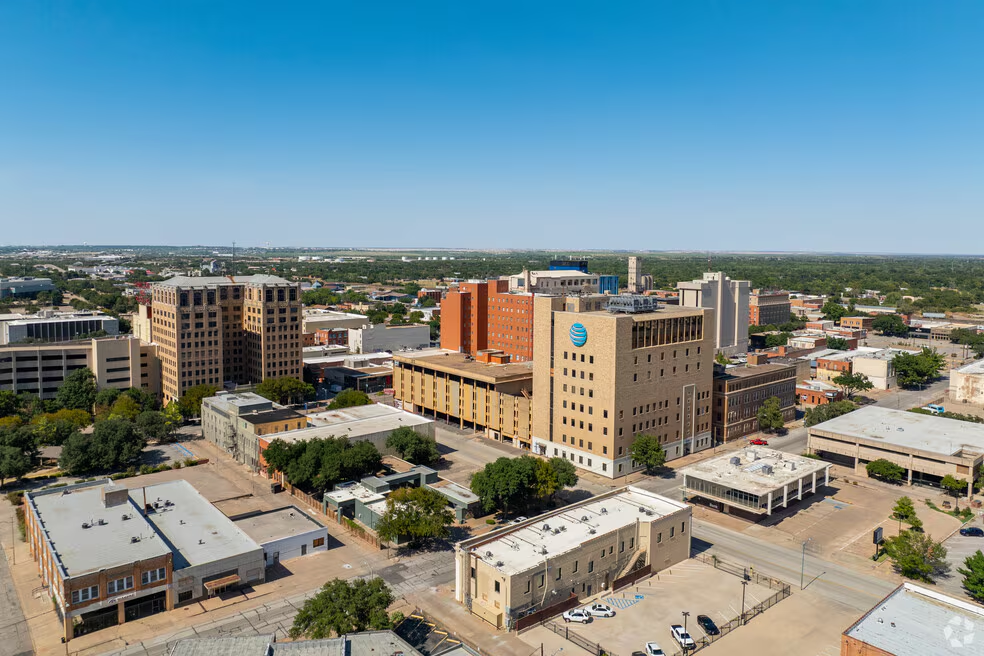
Property damage rarely arrives at a convenient moment. A supply line lets go overnight, a spring storm pushes water under a door, or a kitchen fire fills every room with smoke in minutes. For most Wichita Falls homeowners and business owners, it is the first time they have faced anything like it.
Restoration work follows a defined sequence: stabilize the property, remove what is causing continued damage, dry and clean affected materials, then rebuild. Each service addresses a different type of loss, and many jobs involve more than one.
- Water Damage Restoration - extraction, structural drying, moisture mapping, and repair of walls, flooring, and framing.
- Flooded Basement Cleanup - pumping standing water from basements, cellars, storm shelters, and sunken slab areas, followed by dehumidification.
- Sewage Cleanup - contained removal of contaminated water and porous materials, antimicrobial treatment, and disinfection to Category 3 standards.
- Fire Damage Restoration - board-up, debris removal, soot cleaning, content packout, and reconstruction.
- Smoke Damage Restoration - odor neutralization, HVAC cleaning, and treatment of surfaces smoke reached but flames never touched.
- Mold Removal - containment, controlled removal of colonized materials, and correction of the moisture source feeding growth.
Fast response limits secondary damage. Water spreads within hours, soot becomes acidic and etches surfaces, and mold can take hold in a matter of days under North Texas humidity.
Common Damage Restoration Issues in Wichita Falls, Texas
Wichita Falls sits where humid Gulf air meets the dry edge of West Texas. That collision produces roughly 34 inches of rain a year, much of it dumped in short, intense bursts rather than steady soaking rain.
Local Causes of Damage
- Flash flooding along the Wichita River, Holliday Creek, and neighborhood drainage channels that overwhelm storm inlets.
- Expansive clay soil movement that shifts slabs, cracks foundations, and separates buried drain lines.
- Frozen and burst pipes during hard freezes, especially in attics, garages, and exterior walls with thin insulation.
- Wind-driven rain and hail that lifts shingles and forces water into attics and wall cavities.
- Sewer backups when heavy rain infiltrates aging clay laterals or roots invade older service lines.
- Grass and structure fires during dry, windy stretches when fuel loads are cured and humidity drops.
Warning Signs Worth Acting On
- Musty odor in a closet, laundry room, or under a bathroom vanity
- Buckled laminate, cupped hardwood, or dark staining along baseboards
- Gurgling floor drains or slow tub drainage after storms
- Soot film on windowsills or a smoke smell that returns when the AC runs
- Peeling paint, blistered drywall tape, or unexplained spikes in the water bill
- Visible growth on ductwork, drywall paper, or the back side of cabinets
Small signals often point to a larger hidden problem. Moisture meters and thermal imaging find what visual inspection misses.
Neighborhoods We Serve in Wichita Falls
Restoration crews cover the full city and the surrounding Wichita County communities, including older core neighborhoods and newer subdivisions on the outskirts.
- Country Club and Tanglewood - established homes with mature trees, deep root systems, and older sewer laterals
- Fairway, Sunset Terrace, and Floral Heights - historic housing stock with pier-and-beam construction and original plaster
- Downtown and Depot Square - commercial buildings, lofts, and mixed-use spaces
- Southwest Parkway corridor and Rolling Meadows - slab-on-grade homes on shrink-swell clay
- Sikes Lake, Midwestern State University area, and Hamilton Park - rentals and multifamily properties
- Sheppard Air Force Base housing and nearby rental districts
- Surrounding communities - Burkburnett, Iowa Park, Electra, Holliday, Wichita Valley, Lakeside City, and Henrietta
Familiarity with local building styles, permitting, and utility layouts shortens the time between the first call and dry, safe conditions.
Seasonal Damage Patterns in Wichita Falls
Spring (March - May)
- Peak severe weather season: hail, straight-line wind, and tornado risk
- Roof breaches leading to attic and ceiling water damage
- Flash flooding and flooded basements or below-grade storage
Summer (June - August)
- AC condensate line clogs and overflowing drain pans
- Hidden mold growth behind vinyl wallpaper and inside wall cavities
- Grass fires and outbuilding fires during drought stretches
Fall (September - November)
- Second rainfall peak with saturated soil and sewer backups
- Foundation movement as clay soils rehydrate after summer cracking
- First furnace runs releasing dust and smoke odor issues
Winter (December - February)
- Burst pipes and supply line failures during Arctic outbreaks
- Space heater, fireplace, and cooking fires with widespread smoke damage
- Ice dam and roof leak issues on low-slope roofs
Water losses cluster around February freezes and spring storms. Mold calls tend to follow six to eight weeks behind either event.
Housing Characteristics & Restoration Considerations
Much of the Wichita Falls housing stock was built between the 1920s oil boom and the postwar decades, with major waves of construction tied to Sheppard Air Force Base growth. Newer subdivisions have filled in along the southwest side.
Construction Types and What They Mean
- Pre-1950 pier-and-beam homes - crawlspaces trap humidity, and joists absorb water quickly; drying requires access panels and directed airflow underneath.
- Plaster over wood lath - holds water longer than drywall and needs slower, monitored drying to avoid cracking.
- Mid-century slab-on-grade ranch homes - under-slab plumbing leaks are common and often surface as warm spots or unexplained water use.
- Homes built before 1980 - potential for asbestos in floor tile, mastic, and popcorn ceilings, plus lead paint; testing precedes demolition.
- Newer builds with engineered flooring and OSB sheathing - swell fast when wet and frequently require replacement rather than drying.
Restoration Impacts
- Cast iron and clay sewer lines in older neighborhoods raise the odds of Category 3 backups requiring full sewage cleanup protocols.
- Original single-pane windows and minimal wall insulation allow condensation that feeds hidden mold.
- Balloon-framed older homes give smoke a vertical pathway from a first-floor fire straight into the attic.
- Detached garages, storm cellars, and partial basements collect groundwater and need dedicated pumping and dehumidification.
Matching original trim, hardwood species, and textured finishes matters during reconstruction so repairs blend rather than stand out.
Environmental Conditions & Damage Implications
The local climate swings hard. Summer highs routinely pass 100 degrees, winters bring sudden Arctic fronts, and annual rainfall lands near 34 inches with high year-to-year variability.
Soil and Water Conditions
- Blackland clay expands when wet and contracts when dry, cracking slabs and shearing drain lines.
- Sandy loam pockets drain fast but allow water to travel laterally toward foundations.
- Caliche layers resist infiltration, so rainwater perches near grade and pushes against basement and stem walls.
- Hard, mineral-rich municipal water accelerates scale buildup in water heaters and supply lines, contributing to pinhole leaks and tank failures.
Air and Humidity Factors
- Gulf moisture pushes indoor humidity well above the 60 percent threshold where mold thrives
- Windy, dusty conditions drive fine particulate into HVAC systems, which then circulates soot after a fire
- Rapid temperature swings create condensation on ductwork and cool interior surfaces
- Regional smoke from grass fires can leave odor and residue on properties never directly burned
How Crews Respond
- Set dehumidification capacity based on actual grain depression, not square footage alone.
- Monitor moisture in wood framing and concrete daily until readings match unaffected areas.
- Use HEPA filtration and negative air during mold and soot work to protect adjacent rooms.
- Address drainage, grading, and gutter issues so the same loss does not repeat.
Storm Season Response and Insurance Documentation in Wichita Falls
Wichita Falls sits in one of the most active severe weather corridors in Texas. The 1979 tornado is still the reference point locally, and every spring brings hail, wind, and flash flood potential that can affect hundreds of properties in a single afternoon.
When storms hit at that scale, response order and documentation quality determine how smoothly a claim moves.
What Happens First
- Safety assessment - electrical hazards, structural stability, and contamination category are evaluated before anyone works inside.
- Emergency mitigation - board-up, roof tarping, water extraction, and temporary power to stop ongoing loss.
- Moisture mapping - thermal imaging and penetrating meters record the actual affected area, including materials that look dry.
- Drying plan - air movers and dehumidifiers placed according to IICRC S500 calculations for the class and category of water.
- Daily monitoring - readings logged until drying goals are met, then equipment is pulled.
- Reconstruction - drywall, flooring, paint, cabinetry, and trim restored to pre-loss condition.
Documentation That Supports a Claim
- Photo and video record of conditions before any material is removed
- Written scope tied to industry-standard line items adjusters recognize
- Daily moisture and atmospheric logs proving drying progress
- Category and class determination for water losses, which drives what can be dried versus removed
- Content inventory for packout items with condition notes
- Post-remediation verification for mold projects
Standards Applied
- IICRC S500 for water damage restoration and structural drying
- IICRC S520 for mold remediation, containment, and clearance
- IICRC S700 for fire and smoke restoration and odor control
- OSHA and EPA guidance for contaminated water and pre-1980 material handling
Following these protocols keeps the work defensible, protects occupant health, and gives property owners a clear record of what was done and why.





