
Damage Restoration in Denison, TX
- Damage Restoration Services Overview
- Common Damage Restoration Issues in Denison, Texas
- Neighborhoods We Serve in Denison
- Seasonal Damage Patterns in Denison
- Housing Characteristics & Restoration Considerations
- Environmental Conditions & Damage Implications
- Insurance Documentation and IICRC Standards in Texoma Claims
Damage Restoration Services Overview
Water that sits for a weekend does not simply dry out. It wicks into wall cavities, swells subfloors, corrodes fasteners, and seeds mold colonies that surface months later as musty odors and warped trim. Smoke behaves the same way - acidic soot keeps etching metal, glass, and finishes long after the flames are out.
Denison property owners face a full spectrum of loss events, and each one demands a different response:
- Water Damage Restoration - extraction, moisture mapping, and structural drying after supply line breaks, appliance failures, and roof leaks.
- Flooded Basement - pump-out, sanitation, and dehumidification for below-grade areas, storm shelters, and daylight basements.
- Sewage Cleanup - containment and disinfection following septic backups, main line clogs, and toilet overflows.
- Fire Damage Restoration - emergency board-up, debris removal, content pack-out, and reconstruction.
- Smoke Damage Restoration - soot removal, HVAC decontamination, and odor neutralization at the molecular level.
- Mold Removal - containment barriers, HEPA filtration, material removal, and antimicrobial treatment.
Fast mitigation protects more than drywall. It preserves indoor air quality, limits insurance claim scope, and keeps families and businesses in familiar surroundings while repairs move forward across Denison and the wider Texoma area.
Common Damage Restoration Issues in Denison, Texas
Denison sits at the top of Grayson County near Lake Texoma and the Red River, a location that shapes nearly every loss we respond to. Clay-heavy soil, sudden spring storm cells, and a mix of century-old and newly built housing create predictable trouble spots.
What Drives Damage Locally
- Slow-moving thunderstorm systems dumping several inches of rain over saturated ground
- Expansive clay soils shifting foundations and cracking below-grade walls
- Aging cast iron and clay sewer laterals in older neighborhoods backing up under heavy flow
- Winter cold snaps freezing uninsulated attic and exterior wall plumbing
- Space heaters, fireplaces, and grease fires during cold and holiday months
- Long humid stretches feeding mold growth inside crawl spaces and closed-up homes
Warning Signs Worth Acting On
- Discolored rings on ceilings or baseboards that darken after rainfall
- Floors that feel spongy, cup at the seams, or squeak in new places
- A persistent earthy or sour smell near HVAC returns, closets, or under sinks
- Gurgling drains or slow toilets - often the first hint of a sewer main issue
- Yellow-brown staining above door frames after even a small kitchen fire
- Soot film reappearing on walls days after cleaning, indicating trapped residue in ductwork
- Peeling paint, bubbling wallpaper, or rusting nail heads on drywall
Any of these signs deserve a moisture reading rather than a guess. Hidden saturation behind cabinets and tub surrounds is the single most common reason a small Denison water loss becomes a mold remediation project.
Neighborhoods We Serve in Denison
Restoration crews cover Denison from the historic core out to the lake communities and the surrounding Texoma region.
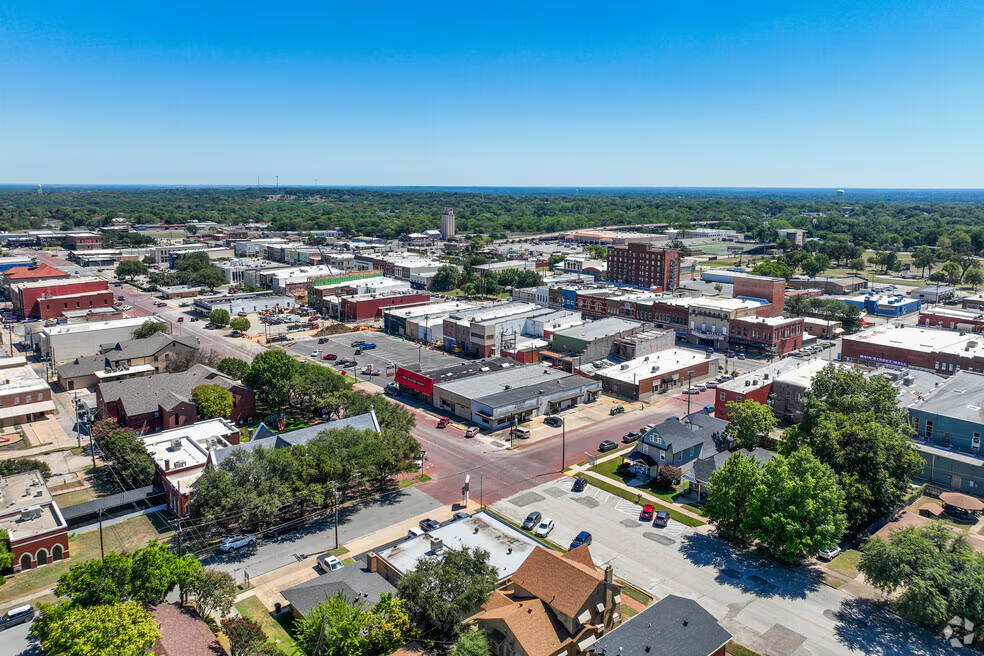
- Downtown Denison and the Main Street district - historic commercial buildings, upper-floor lofts, and older masonry structures
- Waterloo Lake area and Munson Park neighborhoods - established mid-century homes with mature tree canopy
- North Denison near Eisenhower Birthplace and Hyde Park - early 1900s frame housing with pier-and-beam construction
- Southwest Denison along Loy Lake Road and FM 691 - newer slab-on-grade subdivisions
- Lake Texoma shoreline communities - Eisenhower State Park corridor, Preston Bend, and Cedar Mills
Service extends throughout Grayson County, including Sherman, Pottsboro, Bells, Howe, Van Alstyne, Whitesboro, Gunter, and the smaller communities along US-75 and US-82.
Seasonal Damage Patterns in Denison
Loss types in Denison follow a fairly reliable annual rhythm.
- March through June - peak severe weather. Hail, straight-line winds, and heavy rainfall drive roof leaks, flooded basements, and storm-related water damage. Sewer systems overload during back-to-back rain events.
- July and August - heat and humidity dominate. Condensation on AC lines, clogged drain pans, and overworked units cause ceiling leaks. Mold removal calls climb as humidity stays trapped indoors.
- September through October - transitional storms plus early heating season. Chimney and flue issues begin producing smoke damage as fireplaces come back into use.
- November and December - kitchen fires spike around holiday cooking. Candles, decorative lighting, and dry trees add risk.
- January and February - freeze events. Burst supply lines, split hose bibs, and failed water heaters generate the largest single-day water losses of the year, often across whole neighborhoods at once.
Mold is the one constant. Any untreated water event in the North Texas climate can produce visible growth within days regardless of the calendar.
Housing Characteristics & Restoration Considerations
Denison's housing stock spans well over a century, which means restoration approaches vary block by block.
Older Homes (pre-1960)
- Pier-and-beam foundations with vented crawl spaces - prime areas for standing water and mold colonization
- Shiplap or plank subfloors beneath layered flooring, holding moisture between layers
- Plaster and lath walls that absorb smoke residue deeply and require specialized cleaning
- Original galvanized or cast iron plumbing prone to pinhole leaks and sewer backups
- Knob-and-tube or early wiring remnants that complicate fire damage assessment
- Potential asbestos-containing materials and lead paint requiring testing before demolition
Mid-Century and Modern Construction
- Slab-on-grade foundations where water spreads laterally under flooring and into wall bases
- Post-tension slabs requiring careful drilling protocols during drying and reconstruction
- Engineered wood flooring and MDF trim that delaminate quickly once wet
- Tighter building envelopes that trap humidity and accelerate microbial growth
- Attic-mounted HVAC systems - a frequent source of ceiling water damage and a fast pathway for smoke distribution
True basements are uncommon in Grayson County but not absent. Where they exist - along with storm cellars, sunken garages, and daylight lower levels near the lake - hydrostatic pressure through clay soil pushes water in through wall-floor joints. Drying those spaces requires desiccant equipment and negative-pressure containment rather than standard air movers alone.
Environmental Conditions & Damage Implications
The environment around Denison influences how fast damage spreads and how restoration has to be executed.
Climate and Humidity
- Humid subtropical conditions with summer dew points that stall evaporative drying
- Annual rainfall concentrated in intense spring and fall bursts rather than steady distribution
- Wide freeze-thaw swings in winter that stress plumbing and roof flashing
- High indoor humidity means dehumidification, not just airflow, controls the drying outcome
Soil and Groundwater
- Blackland and clay-loam soils that swell when wet and shrink in drought
- Poor percolation, so surface water pools against foundations after storms
- Foundation movement opening cracks that later become water entry points
- Elevated groundwater near Lake Texoma and Red River bottomlands during wet cycles
Water and Air Quality Factors
- Mineral-rich municipal water leaving scale that hides slow leaks at fixtures
- Rural properties on septic systems where saturated drain fields trigger indoor sewage backups
- Seasonal pollen and agricultural dust that load HVAC systems and worsen post-fire air quality
- Regional smoke drift from grass and pasture burning affecting sensitive occupants
These conditions shape equipment choices on every job. Category 3 sewage losses require full PPE, containment, and removal of porous materials. Post-fire work pairs soot removal with HEPA air scrubbing and duct cleaning, since Denison's baseline particulate load compounds respiratory irritation for occupants returning home.
Insurance Documentation and IICRC Standards in Texoma Claims
Most Denison restoration projects run through a homeowner or commercial policy, and the quality of documentation determines how smoothly that claim moves. Restoration work follows recognized industry standards - the IICRC S500 for water damage, S520 for mold remediation, and S700 for fire and smoke - which give adjusters a common reference point.
What Proper Documentation Includes
- Initial scope and cause of loss - photographs, source identification, and classification of water category and class
- Moisture mapping - meter readings and thermal imaging that define the affected boundary, not just the visible wet area
- Daily drying logs - temperature, relative humidity, grain depression, and equipment counts recorded until dry standard is met
- Containment and disposal records - required for sewage and mold work, showing how contaminated materials were isolated and removed
- Post-remediation verification - third-party clearance testing where mold is involved
- Final scope for reconstruction - line-item estimating in the format adjusters expect
Why It Matters for Denison Property Owners
- Freeze-event claims often surge regionally, and well-documented files get processed faster
- Smoke odor complaints months after a fire are far easier to resolve when original readings exist
- Mold coverage is frequently limited by policy language - proving the mold followed a covered water event is central
- Sewage losses require documented disinfection for occupancy and resale disclosure purposes
Certified technicians handling Denison losses coordinate directly with adjusters, so property owners are not translating technical drying data themselves. That coordination also keeps mitigation and reconstruction under one accountable scope - from extraction and soot removal through drywall, flooring, cabinetry, and paint returning the property to pre-loss condition.





