
Damage Restoration in Granite Shoals, TX
- Damage Restoration Services Overview
- Common Damage Restoration Issues in Granite Shoals, Texas
- Neighborhoods We Serve in Granite Shoals
- Seasonal Damage Patterns in Granite Shoals
- Housing Characteristics & Restoration Considerations
- Environmental Conditions & Damage Implications
- The Restoration Process for Lakeside Granite Shoals Properties
Damage Restoration Services Overview
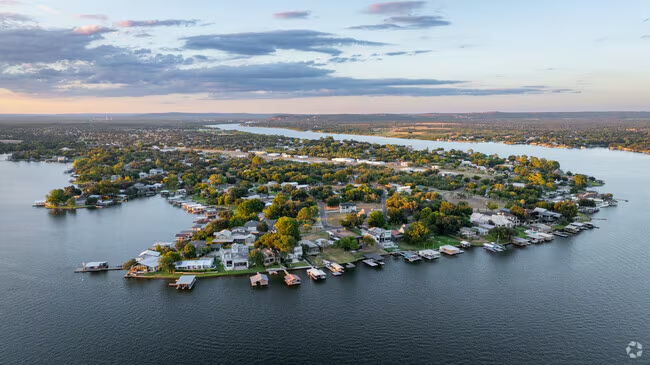
What would you do if you walked into your Granite Shoals home tomorrow morning and found two inches of standing water across the floor? Property damage rarely announces itself in advance, and the hours immediately following a burst pipe, lakeside flood, kitchen fire, or sewer backup shape how much of your home can be saved.
Restoration work in this Highland Lakes community covers a wide span of emergencies, each requiring different equipment, drying strategies, and safety protocols:
- Water Damage Restoration - extraction, structural drying, and moisture mapping after supply line breaks, roof leaks, and appliance failures
- Flooded Basement - pumping, dehumidification, and treatment of below-grade spaces, storm cellars, and walk-out lower levels along the lake slopes
- Sewage Cleanup - containment and disinfection of Category 3 contamination from septic failures and backed-up drain lines
- Fire Damage Restoration - debris removal, structural stabilization, and reconstruction after flame and heat damage
- Smoke Damage Restoration - soot removal from surfaces, HVAC systems, textiles, and porous building materials
- Mold Removal - containment barriers, HEPA filtration, and removal of colonized drywall, insulation, and framing
Homeowners near Lake LBJ benefit from crews who understand local construction, septic systems, and the humidity swings that turn a small leak into a mold problem within days.
Common Damage Restoration Issues in Granite Shoals, Texas
Granite Shoals sits on the shoreline of Lake LBJ in Burnet County, where granite outcroppings, thin soils, and sudden Hill Country storms create a distinctive damage profile.
Local Causes of Property Damage
- Flash flooding - Hill Country rainfall runs off rock quickly, sending sheet water toward driveways, garages, and low-lying slabs
- Lake level surges - shoreline properties and boat house structures take on water during heavy release and inflow events
- Freeze events - uninsulated pipes in slab homes, exterior walls, and unconditioned garages split during hard freezes
- Septic and lift station issues - saturated drain fields push wastewater back into fixtures
- Roof and storm damage - wind-lifted shingles and hail impacts open pathways for water into attics and ceilings
- Wildland fire risk - dry cedar, mesquite, and grass near property lines during drought stretches
Warning Signs Worth Acting On
- Musty odor in closets, under sinks, or near HVAC returns
- Discolored ceiling rings or bubbling paint after a rainstorm
- Flooring that cups, peels, or feels spongy underfoot
- Gurgling drains or slow toilets signaling a septic backup building
- Lingering smoke smell that returns when the air conditioning cycles on
- Unexplained allergy symptoms that ease when you leave the house
City officials have credited advance preparation with sparing Granite Shoals from worse outcomes during past weather events, and the same principle applies at the individual property level: early detection keeps a cleanup small.
Neighborhoods We Serve in Granite Shoals
Response coverage spans the full city footprint along with nearby Highland Lakes communities.
- Lakeshore and waterfront streets along Lake LBJ, including canal-front and cove properties
- Sherwood Shores and surrounding platted subdivisions
- Neighborhoods off RR 1431 - the main corridor connecting Granite Shoals to Marble Falls and Kingsland
- Interior residential blocks near Phillips Ranch Road and Prairie Creek Road
- Hillside and elevated lots where drainage crosses multiple properties
- Nearby areas - Marble Falls, Kingsland, Highland Haven, Horseshoe Bay, Cottonwood Shores, and Burnet
Familiarity with local access points matters. Narrow lakeside lanes, long private drives, and gated waterfront tracts affect how equipment reaches a structure, and crews plan staging areas accordingly so extraction and drying begin without delay.
Seasonal Damage Patterns in Granite Shoals
Central Texas weather shifts the type of restoration work needed throughout the year.
- Winter (December - February) - Hard freezes split supply lines, hose bibs, and pipes in exterior walls. Fireplace and space heater use raises fire and smoke damage calls. Thaw cycles produce sudden interior flooding.
- Spring (March - May) - The heaviest storm season. Hail and wind open roofs, flash flooding pushes water into garages and lower levels, and saturated ground stresses septic drain fields.
- Summer (June - August) - High humidity plus air conditioning condensation feeds mold growth in attics, crawl spaces, and behind vinyl wallpaper. Drought conditions elevate grass and brush fire risk near property lines.
- Fall (September - November) - Tropical remnants can dump several inches in hours, causing basement and slab flooding. Cooler nights bring the first heater startups, which release accumulated dust and occasionally cause smoke events.
Sewage backups cluster around the wettest stretches of spring and fall, when soils cannot absorb additional effluent. Mold remediation requests typically peak six to eight weeks after major rain events, once hidden moisture has had time to colonize building materials.
Housing Characteristics & Restoration Considerations
Granite Shoals grew from a lake recreation area into a full-time residential city, so the housing stock blends mid-century weekend cabins with newer custom builds.
Common Construction Types
- 1960s - 1980s lake cabins - pier-and-beam or thin slab foundations, wood paneling, and original single-pane windows
- Manufactured and modular homes - vulnerable floor decking and belly wrap that traps moisture after flooding
- 1990s - 2000s slab-on-grade homes - stucco, brick veneer, and fiberglass batt insulation
- Recent custom waterfront builds - walk-out lower levels, engineered flooring, and complex mechanical systems
- Detached structures - boat houses, workshops, and guest quarters that often lack conditioned air
How Age and Construction Affect Restoration
- Older paneling and cellulose-backed materials wick water upward, requiring removal rather than surface drying
- Pre-1980 homes may contain asbestos-bearing floor tile or textured ceilings, calling for testing before demolition after fire or water loss
- Pier-and-beam crawl spaces hold humidity long after a leak stops, making them frequent sources of hidden mold
- Slab foundations trap moisture beneath flooring adhesive, so extraction alone rarely dries the assembly
- Septic-served properties raise the contamination category during any drain backup, requiring full disinfection protocols
- Open-plan lake homes allow smoke and soot to travel freely, spreading odor into distant rooms and duct systems
Documenting materials, moisture readings, and affected assemblies room by room supports both an accurate repair scope and a smoother insurance claim.
Environmental Conditions & Damage Implications
The physical setting around Lake LBJ influences how damage develops and how long drying takes.
Climate and Air
- Hot, humid summers with dew points that keep indoor materials from drying naturally
- Mild winters punctuated by occasional severe freeze events
- Seasonal cedar pollen and construction dust that load HVAC filters and complicate post-fire air scrubbing
- Wildfire smoke drift during dry regional burn periods
Soil, Rock, and Water
- Granite and limestone bedrock near the surface limits absorption, so rainfall becomes runoff quickly
- Shallow, rocky soils reduce septic drain field capacity during wet stretches
- Expansive clay pockets shift with moisture cycles, opening foundation cracks that admit groundwater
- Lake proximity raises the water table near shoreline properties, keeping lower levels damp
- Hard, mineral-rich water accelerates scale buildup and pinhole leaks in aging copper supply lines
Restoration Implications
- Structural drying often requires desiccant dehumidification rather than refrigerant units during humid months
- Mold spores are always present outdoors, so containment and negative air pressure prevent cross-contamination during remediation
- Floodwater carrying runoff from roads and yards should be treated as contaminated, even when it appears clear
- Soot from mixed fuel loads - wood, synthetics, and vegetation - demands different cleaning agents on each surface type
The Restoration Process for Lakeside Granite Shoals Properties
Waterfront and near-lake homes present challenges that a standard drying plan does not address. Elevation changes, boat houses, seasonal occupancy, and septic systems all factor into a thorough response.
What a Detailed Response Looks Like
- Emergency contact and arrival - crews gather details about the source, duration, and affected areas before they reach the property
- Safety and source control - electricity, gas, and the water supply are addressed first; contaminated water triggers immediate containment
- Full moisture mapping - thermal imaging and penetrating meters trace water beyond the visible edge, including wall cavities, subfloors, and cabinet toe kicks
- Extraction and debris removal - truck-mounted extraction for standing water, controlled demolition of unsalvageable materials after fire or sewage loss
- Drying and stabilization - air movers and dehumidifiers positioned by calculated load, with daily readings logged until materials reach dry standard
- Cleaning and deodorization - HEPA vacuuming, soot-specific sponges and solvents, duct cleaning, and hydroxyl or ozone treatment for embedded odor
- Antimicrobial application and mold remediation - containment, negative air machines, and removal of colonized materials
- Reconstruction - drywall, flooring, trim, cabinetry, and paint returned to pre-loss condition
Details That Matter Locally
- Checking boat houses, docks, and detached workshops that owners often overlook after a storm
- Inspecting septic tank levels and drain field saturation before restoring interior fixtures
- Verifying attic insulation moisture in homes with metal roofing and limited ventilation
- Coordinating with roofing contractors so drying is not undone by an unrepaired leak
- Photographing and documenting every affected assembly for insurance adjusters
- Serving part-time residents with remote updates and secured access during work
Careful documentation and patient drying protect the structure long after the equipment leaves - the difference between a repair that holds and one that reopens the following season.





