
Damage Restoration in Piqua, OH
- Damage Restoration Services Overview
- Common Damage Restoration Issues in Piqua, Ohio
- Neighborhoods We Serve in Piqua
- Seasonal Damage Patterns in Piqua
- Seasonal Damage Patterns in Piqua
- Housing Characteristics & Restoration Considerations
- Environmental Conditions & Damage Implications
- Great Miami River Flooding and Basement Water Recovery in Piqua
Damage Restoration Services Overview
Discovering water spreading across a basement floor or walking into a home filled with smoke turns an ordinary day upside down. Property damage rarely arrives with warning, and the hours immediately following an incident shape how much of your home and belongings can be saved.
Piqua homeowners and business owners have access to a full range of restoration disciplines, each handling a different kind of loss:
- Water Damage Restoration - extraction, structural drying, and moisture mapping after burst pipes, appliance failures, or roof leaks
- Flooded Basement Recovery - pump-outs, sump system evaluation, and drying of below-grade spaces along the Great Miami River corridor
- Sewage Cleanup - removal of contaminated material, antimicrobial treatment, and sanitizing after backups from older clay laterals
- Fire Damage Restoration - debris removal, structural stabilization, board-up, and content recovery
- Smoke Damage Restoration - soot removal, thermal fogging, HVAC cleaning, and odor neutralization
- Mold Removal - containment, air filtration, affected material removal, and moisture source correction
Benefits for local property owners include reduced secondary damage, documentation that supports insurance claims, and around-the-clock availability. Emergency lines such as (937) 915-0138 and (937) 474-2899 connect Piqua residents with crews trained in water, fire, and mold recovery any hour of the day.
Common Damage Restoration Issues in Piqua, Ohio
Piqua sits in Miami County along the Great Miami River, and that geography drives much of the damage local crews respond to. Spring river swell, saturated clay soils, and a housing stock that includes many pre-1970 homes create a predictable pattern of losses.
Frequent Causes of Loss
- Groundwater pressure pushing through foundation cracks and cold joints in older basements
- Sump pump failure during heavy rain or power outages from summer thunderstorms
- Frozen and burst supply lines in uninsulated crawl spaces during January and February
- Sanitary sewer backups when heavy rainfall overloads combined or aging lateral lines
- Storm-driven roof damage - lifted shingles, hail bruising, and fallen limbs requiring emergency tarping
- Kitchen grease fires, chimney fires, and electrical faults in older knob-and-tube or early wiring
- Hidden mold behind bathroom tile, under carpet padding, and inside wall cavities near plumbing chases
Warning Signs Worth Acting On
- A musty smell in the basement or lower level that lingers after rain
- Efflorescence - white chalky residue - on block foundation walls
- Bubbling paint, cupped hardwood, or drywall that feels cool and soft near the baseboard
- Gurgling floor drains or slow toilets, often the first hint of a lateral blockage
- Yellow-brown staining on ceilings after a windstorm
- Soot film on windowsills or a smoke odor that returns when the furnace runs
Catching any of these early usually means drying instead of demolition.
Neighborhoods We Serve in Piqua
Restoration crews cover Piqua city limits and the surrounding Miami County communities, with response routes built around Interstate 75 and State Route 36.
- Downtown Piqua and the Caldwell Historic District - older brick and frame structures needing careful content and plaster restoration
- Shawnee and the south side - mid-century homes with block foundations and finished basements
- Northwest Piqua and the Echo Hills area - newer subdivisions with poured foundations and sump systems
- Rossville and neighborhoods near the Great Miami River - elevated flood exposure during spring melt
- Springcreek and Washington Township - rural properties on well water and septic systems
Service also extends to Covington, Fletcher, Casstown, Troy, Sidney, Pleasant Hill, and Bradford. Commercial calls from the Piqua industrial corridor, schools, churches, and Main Street storefronts are handled with the same 24-hour dispatch.
Seasonal Damage Patterns in Piqua
Seasonal Damage Patterns in Piqua
Each season brings a different mix of calls. Knowing the pattern helps homeowners prepare before the phone call becomes an emergency.
- December through February - frozen pipe breaks, ice dam leaks along eaves, and furnace puffback events that coat interiors in oily soot. Heating equipment and space heaters drive the year's highest fire risk.
- March through May - snowmelt plus spring rain raises the Great Miami River and saturates clay soil. Flooded basements, sump failures, and sewer backups peak here.
- June through August - severe thunderstorms and straight-line winds bring roof damage, emergency tarping calls, and lightning-related fires. High humidity accelerates mold growth in any space left damp.
- September through November - remnant tropical systems deliver heavy rain, while the first furnace cycles reveal smoke odors and dormant mold in ductwork.
Preventive Timing
- Test the sump pump and backup battery in late February
- Clean gutters and inspect roof flashing in April and October
- Schedule chimney and dryer vent cleaning before heating season
- Run a dehumidifier in the basement from June through September
Housing Characteristics & Restoration Considerations
Piqua's housing stock leans older than the national average, with a large share of homes built before 1960 and a notable cluster of late-1800s and early-1900s residences near downtown. That age directly shapes restoration strategy.
Construction Types and What They Mean
- Balloon-frame homes - open wall cavities let water travel between floors and allow smoke and fire to spread vertically, so drying and containment must reach beyond the visible damage
- Plaster and lath walls - absorb water deeply and hold odor; salvage requires patient drying rather than quick demolition
- Stone and unreinforced block foundations - porous by nature, prone to seepage and efflorescence, and a common source of chronic basement mold
- Post-1980 poured concrete basements - dry faster but often finished with carpet and drywall that wick moisture upward after a flood
- Cast iron and clay sewer laterals - crack and root-intrude, producing the sewage backups that require full sanitizing protocols
- Original hardwood over subfloor - cups and crowns quickly; injection drying mats can often save it if crews arrive promptly
Restoration Adjustments for Older Piqua Homes
- Asbestos and lead-paint screening before demolition in pre-1978 structures
- Careful content pack-out for antiques, trim, and built-ins that cannot be replaced
- Extended drying schedules for dense masonry and layered flooring
- Negative-pressure containment during mold removal to protect occupied living space
Environmental Conditions & Damage Implications
Piqua's humid continental climate produces four distinct seasons with meaningful swings in temperature and moisture - conditions that influence how damage develops and how long recovery takes.
Climate and Moisture
- Roughly 40 inches of annual precipitation, with the wettest stretch falling between April and July
- Summer dew points regularly climbing into the upper 60s, keeping indoor humidity high without mechanical drying
- Winter lows dipping well below freezing, creating burst-pipe and ice-dam conditions
- Freeze-thaw cycling that widens foundation cracks year after year
Soil and Water Factors
- Glacial till and heavy clay soils that drain slowly and hold water against foundation walls
- Alluvial deposits near the Great Miami River and Swift Run, raising the seasonal water table
- Moderately hard municipal water that leaves scale in supply lines and water heaters, contributing to leaks
- Rural well and septic properties where a failing system can send contaminated water toward the structure
Air Quality Implications
- Elevated summer pollen and mold spore counts that colonize damp materials within one to two days
- Agricultural dust and seasonal field burning that combine with smoke residue to complicate odor removal
- Tight modern envelopes that trap soot particulate and mold VOCs, making HEPA filtration and duct cleaning part of most fire and mold projects
These conditions mean drying targets in Piqua are set against local humidity, not a generic standard, and moisture readings are verified before any rebuild begins.
Great Miami River Flooding and Basement Water Recovery in Piqua
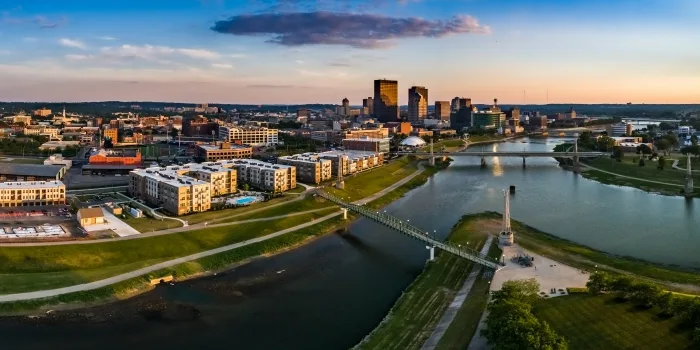
The Great Miami River defines Piqua, and it also defines the community's biggest restoration challenge. Properties in Rossville, along Water Street, and throughout the low-lying east side sit close enough to the floodplain that a single sustained rain event can push groundwater into basements that stayed dry for years.
How a Flooded Basement Call Typically Progresses
- Safety assessment - power is cut to affected circuits and standing water is tested to determine whether it is clean groundwater or sewage-contaminated Category 3 water
- Extraction - truck-mounted or portable pumps remove standing water, followed by weighted extraction of saturated carpet and pad
- Material decisions - drywall is flood-cut above the waterline, wet insulation is discarded, and salvageable framing is cleaned
- Sanitizing - antimicrobial application throughout the affected footprint, expanded to full disinfection when sewage is involved
- Structural drying - air movers, low-grain dehumidifiers, and daily moisture readings documented until materials reach dry standard
- Cause correction - sump pump replacement, backwater valve recommendations, grading and downspout adjustments to prevent repeat events
Custom Solutions for Local Properties
- Injection drying for finished basements to preserve paneling and built-in cabinetry
- Crawl space encapsulation assessments for homes where ground moisture drives recurring mold
- Coordination with plumbing and drain cleaning when a clogged lateral caused the backup
- Combined water and mold scopes when a leak went undetected for weeks behind a wall
- Emergency roof tarping so storm water stops entering while interior drying proceeds
Because water damage, sewage contamination, and mold growth so often stack on top of one another here, the most effective response addresses all three in a single coordinated plan rather than separate visits.





