
Damage Restoration in Medina, OH
- Damage Restoration Services Overview
- Common Damage Restoration Issues in Medina, Ohio
- Neighborhoods We Serve in Medina
- Seasonal Damage Patterns in Medina
- Housing Characteristics & Restoration Considerations
- Environmental Conditions & Damage Implications
- The Medina Restoration Process: From Emergency Stabilization to Reconstruction
Damage Restoration Services Overview
What happens in the hours after a supply line bursts, a basement fills with storm runoff, or a kitchen fire fills every room with acrid smoke? For Medina property owners, those first hours often determine whether a repair stays small or spreads into framing, insulation, and finished living space.
Full-service restoration in Medina, Ohio covers the entire arc of recovery - from emergency stabilization through reconstruction. Common services include:
- Water Damage Restoration - extraction, moisture mapping, and rapid structural drying of drywall, subfloors, and framing.
- Flooded Basement Cleanup - pumping standing water, removing saturated carpet and pad, and drying block or poured foundation walls.
- Sewage Cleanup - containment, removal of contaminated porous materials, and antimicrobial treatment of affected surfaces.
- Fire Damage Restoration - board-up, debris removal, soot cleaning, and rebuilding of charred structural elements.
- Smoke Damage Restoration - odor counteracting, thermal fogging or ozone treatment, and HVAC decontamination.
- Mold Removal - containment barriers, negative air pressure, safe removal, and correction of the moisture source.
The benefit for Medina residents is continuity: one team handles demolition of unsalvageable materials, then drywall, finish carpentry, electrical, plumbing, and exterior repairs - so the property returns to normal without juggling multiple contractors.
Common Damage Restoration Issues in Medina, Ohio
Medina County sits in a region of freeze-thaw cycles, lake-effect snow, and heavy summer thunderstorms - a combination that stresses foundations, roofs, and plumbing systems year-round.
Frequent Causes of Damage
- Frozen and burst supply lines in unheated crawl spaces, garages, and older basements.
- Hydrostatic pressure pushing groundwater through foundation cracks and cove joints.
- Sump pump failures or power outages during multi-inch rainfall events.
- Municipal sewer surcharges and private septic backups that send contaminated water into finished lower levels.
- Aging roofs damaged by ice dams, hail, and straight-line winds.
- Cooking fires, wood stoves, chimney flue issues, and electrical faults in older wiring.
Warning Signs Worth Acting On
- Musty odors in basements, closets, or near HVAC returns - often the first sign of hidden mold.
- Bubbling paint, tape seams lifting, or discolored drywall along baseboards.
- Efflorescence - white mineral crusting - on block foundation walls.
- Warped or cupping hardwood, spongy subfloor, or lifting vinyl plank.
- Persistent smoke odor that returns during humid weather, indicating soot residue remains in porous materials.
- Slow floor drains or gurgling fixtures that precede a sewage backup.
Because Ohio humidity stays elevated from late spring through early fall, damp materials left untreated can support microbial growth quickly - which is why moisture readings, not surface appearance, guide the drying process.
Neighborhoods We Serve in Medina
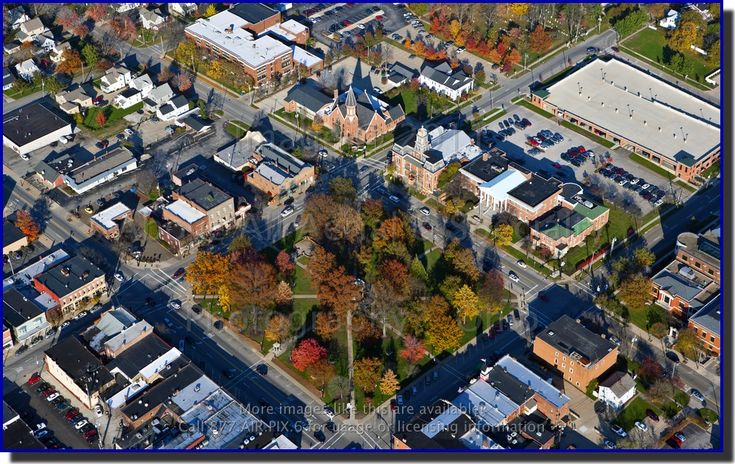
Service extends across the City of Medina and the surrounding townships and communities of Medina County, covering both century homes near the historic square and newer subdivisions on the edges of town.
- Downtown Medina and the Historic Public Square district
- Medina Township, Montville Township, and York Township
- Brunswick, Brunswick Hills, and Hinckley
- Wadsworth, Rittman, and Sharon Township
- Seville, Westfield Center, and Chippewa Lake
- Lodi, Spencer, Litchfield, and Homerville
- Valley City, Granger Township, and Liverpool Township
Neighboring Summit, Lorain, Cuyahoga, and Wayne County communities also fall within reach. Response planning accounts for rural properties on well and septic systems as well as city-serviced homes and commercial buildings along the State Route 18 and I-71 corridors.
Seasonal Damage Patterns in Medina
Damage in Medina follows a fairly predictable calendar shaped by Northeast Ohio weather.
- December through February - Frozen pipe breaks, ice dam leaks along eaves, and chimney or space heater fires. Smoke damage calls rise sharply during the heating season.
- March and April - Snowmelt combined with spring rain saturates soil, driving flooded basement cleanup and sump pump failure response.
- May through July - Thunderstorms, wind-driven rain, and roof leaks. Sewer surcharges and sewage backups peak after intense downpours.
- July through September - Elevated humidity and air conditioning condensation fuel mold growth in basements, crawl spaces, and attics.
- October and November - Clogged gutters, early freezes on outdoor spigots, and the first heating-appliance incidents of the season.
Water damage restoration requests occur year-round, but the source shifts - plumbing failures dominate winter, while groundwater and storm intrusion dominate spring and summer. Mold removal work often trails a water event by two to six weeks, when odors and staining finally become noticeable.
Housing Characteristics & Restoration Considerations
Medina's housing stock spans more than a century and a half, and each era brings its own restoration challenges.
Older Homes Near the Square and Historic Districts
- Plaster and lath walls that hold moisture far longer than modern drywall and require careful drying rather than blanket demolition.
- Stone or rubble foundations prone to seepage, which complicates flooded basement drying.
- Balloon framing that allows smoke and heat to travel vertically between floors during a fire.
- Original wood trim and millwork worth salvaging through controlled cleaning instead of replacement.
- Cast iron and galvanized drain lines that corrode and contribute to sewage backups.
Mid-Century and Late-20th-Century Homes
- Block foundations with cove joint seepage and finished basements built without vapor barriers.
- Aging polybutylene or early copper supply lines vulnerable to pinhole leaks.
- Limited attic ventilation contributing to condensation and mold on roof sheathing.
Newer Subdivisions and Commercial Buildings
- Engineered wood subfloors and OSB sheathing that swell rapidly when saturated.
- Tight building envelopes that trap smoke odor and humidity, requiring HVAC cleaning and controlled dehumidification.
- Open floor plans that allow water and soot to travel across large areas quickly.
Each construction type dictates the drying strategy, the extent of demolition, and the reconstruction scope - from drywall and finish carpentry to electrical, plumbing, and roofing replacement.
Environmental Conditions & Damage Implications
Local climate and ground conditions shape how damage develops in Medina properties long after the initial event.
Climate and Humidity
- Roughly 38 to 42 inches of annual precipitation, with heavy snow loads in winter and intense summer storms.
- Summer relative humidity frequently above 70 percent, slowing evaporation and extending drying times.
- Repeated freeze-thaw cycles that widen foundation and mortar cracks each winter.
Soil and Groundwater
- Glacial till with high clay content drains slowly and holds water against foundation walls.
- Clay expansion and contraction stresses footers, block joints, and drain tile.
- Elevated water tables in low-lying areas near Rocky River tributaries and Chippewa Lake increase basement seepage risk.
Air and Water Quality Factors
- Hard water common on private wells contributes to mineral scaling and appliance supply line failures.
- Rural septic systems can surcharge during saturated ground conditions, creating category three contamination.
- Smoke particulate and soot bind to cool surfaces and circulate through ductwork, requiring air scrubbing with HEPA filtration.
These conditions mean drying targets are set against local baseline humidity, and mold removal projects always include correcting the moisture source - grading, downspout discharge, sump discharge, or ventilation - so the problem does not return the following season.
The Medina Restoration Process: From Emergency Stabilization to Reconstruction
Recovery in Medina County follows a structured sequence built on industry standards for water damage, fire and smoke cleanup, and microbial remediation.
How a Project Typically Unfolds
- Emergency response and assessment - 24/7 dispatch, safety evaluation, and identification of the water category or fire damage class.
- Stabilization - water extraction, board-up of compromised windows and doors, tarping of damaged roofing, and temporary power or containment as needed.
- Moisture mapping and documentation - thermal imaging and penetrating meters locate hidden dampness behind cabinets, under flooring, and inside wall cavities.
- Controlled demolition - removal of unsalvageable drywall, insulation, carpet pad, and contaminated porous materials, especially in sewage cleanup where category three water is present.
- Structural drying - air movers, low-grain refrigerant dehumidifiers, and daily moisture readings until materials reach documented dry standard.
- Cleaning and decontamination - antimicrobial application, soot removal by residue type, HEPA vacuuming, duct cleaning, and odor treatment through hydroxyl or ozone processes.
- Mold remediation - containment barriers, negative air machines, and post-remediation verification when growth is confirmed.
- Reconstruction - drywall, paint, flooring, finish carpentry, cabinetry, electrical and plumbing repairs, plus roofing and exterior work when storm damage is involved.
What Sets Skilled Local Work Apart
- Technicians trained to recognize how Medina's clay soils and older foundations influence drying strategy.
- Written documentation of moisture readings and photographs that support insurance claims.
- Careful salvage of historic trim, hardwood, and plaster wherever conditions allow.
- Direct coordination between mitigation and rebuild crews, avoiding gaps between phases.
The goal throughout is straightforward - dry the structure properly, remove contamination fully, and rebuild so the property is genuinely back to normal.





