
Damage Restoration in Brunswick, OH
- Damage Restoration Services Overview
- Common Damage Restoration Issues in Brunswick, Ohio
- Neighborhoods We Serve in Brunswick
- Seasonal Damage Patterns in Brunswick
- Housing Characteristics & Restoration Considerations
- Environmental Conditions & Damage Implications
- Basement Water and Sewage Backups: What Brunswick Homeowners Should Know
Damage Restoration Services Overview
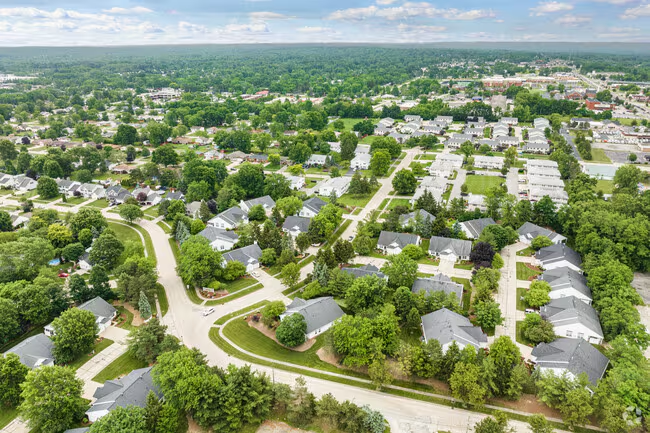
You head downstairs to grab something from the storage shelves and your sock hits standing water. The sump pump quit sometime overnight, and now the finished basement carpet, the drywall, and the boxes on the floor are all soaked. Situations like this happen to Brunswick households year-round, and the clock starts running immediately.
Property damage rarely stays in one lane. Water spreads into framing cavities, sewage backups introduce contamination, and a kitchen fire leaves behind soot and odor long after the flames are out. Restoration work in Brunswick covers the full range:
- Water Damage Restoration - extraction, structural drying, moisture mapping, and monitoring until materials reach dry standard
- Flooded Basement - pump-outs, content handling, and drying of below-grade spaces after sump failures or groundwater intrusion
- Sewage Cleanup - removal of contaminated materials, antimicrobial treatment, and safe disposal following category three losses
- Fire Damage Restoration - debris removal, board-up, structural cleaning, and rebuilding of damaged assemblies
- Smoke Damage Restoration - soot removal from surfaces and HVAC systems plus deodorization of trapped odor
- Mold Removal - containment, air filtration, affected material removal, and moisture source correction
The benefit to Brunswick homeowners is simple: faster mitigation means fewer materials lost, lower repair scope, and a smoother insurance claim.
Common Damage Restoration Issues in Brunswick, Ohio
Brunswick sits in Medina County where clay-heavy soil, freeze-thaw cycles, and heavy summer storm cells combine to stress residential structures. Certain failure points show up repeatedly across the city.
Frequent Causes of Loss
- Sump pump failure or discharge line freezing during winter storms
- Hydrostatic pressure pushing groundwater through foundation cracks and cove joints
- Sanitary sewer backups during high-volume rain events, especially in older neighborhoods with combined stormwater loading
- Supply line and water heater failures in utility rooms and finished lower levels
- Ice dams along low-slope roof sections causing ceiling and wall saturation
- Kitchen grease fires, furnace puff-backs, and electrical faults in aging panels
- Hidden mold growth behind vanities, under carpet pad, and inside wall cavities
Warning Signs Worth Acting On
- Musty odor that intensifies when the HVAC system runs
- Efflorescence, white chalky staining, or bubbling paint on basement block walls
- Buckled baseboards, cupped hardwood, or soft spots in subfloor
- Slow floor drains or gurgling fixtures, which often precede a sewage backup
- Yellow or brown staining on ceilings after heavy rain or snowmelt
- Soot film on cold surfaces, window glass, and near return air vents after a small fire
Catching these early usually means drying and cleaning rather than demolition and reconstruction.
Neighborhoods We Serve in Brunswick
Restoration crews cover the entire city and the communities that surround it, with response routes built around Route 42, Center Road, and Interstate 71.
- Downtown Brunswick and the Center Road corridor
- Substation Road and Grafton Road residential areas
- Neighborhoods near Brunswick Lake and Sleepy Hollow
- Pearl Road and Boston Road corridors
- Hadcock Road and Laurel Road subdivisions
- Brunswick Hills Township and surrounding rural parcels
- Homes near Beebetown and the northern Medina County line
Service also extends to neighboring Northeast Ohio communities including Medina, Strongsville, Hinckley, Valley City, Wadsworth, North Royalton, Berea, and Akron. Coverage across this footprint means shorter drive times for emergency water extraction, sewage cleanup, and fire board-up work - which matters most in the first hours after a loss.
Seasonal Damage Patterns in Brunswick
Winter (December - February)
- Frozen and burst supply lines in crawl spaces, garages, and exterior walls
- Ice dam leaks along eaves after lake-effect snow accumulations
- Heating-related fires from furnaces, space heaters, and fireplaces
- Smoke damage from furnace puff-backs in older systems
Spring (March - May)
- Snowmelt plus rainfall saturating clay soils, driving flooded basements
- Sump pump overload and sewer backups during sustained storms
- First mold growth of the year in basements that stayed damp over winter
Summer (June - August)
- Fast-moving thunderstorms causing roof damage, wind-driven rain, and power loss that disables sump pumps
- High humidity accelerating mold colonization in unconditioned spaces
- Grill and outdoor cooking fires spreading to structures
Fall (September - November)
- Clogged gutters and downspouts directing water toward foundations
- Early-season heating equipment failures producing soot and odor
- Pre-winter mold inspections and moisture control work
Housing Characteristics & Restoration Considerations
Brunswick grew rapidly from the 1960s through the 1990s, so a large share of housing stock falls into that window, mixed with newer subdivisions built after 2000 and a handful of pre-war farmhouses in the surrounding township.
How Construction Age Shapes Restoration
- 1960s - 1970s ranches and split-levels: block foundations, original cast iron or clay lateral lines, and limited perimeter drainage - a common source of flooded basements and sewage backups
- 1980s - 1990s colonials: finished lower levels with carpet, paneling, and framed walls that trap moisture behind the surface and encourage mold
- 2000s and newer builds: tighter envelopes and higher insulation values that hold humidity when a leak occurs, plus engineered subfloor that swells quickly
- Older farmhouses and township properties: knob-and-tube remnants, balloon framing that lets fire and smoke travel vertically, and possible asbestos or lead in original materials
Practical Implications
- Finished basements often require selective drywall and insulation removal rather than surface drying alone
- Homes with forced-air systems need duct evaluation after fire or smoke events, since soot circulates fast
- Pre-1978 properties require lead-safe practices during demolition, and lead abatement may be part of the scope
- Multi-level layouts demand moisture mapping across floors, because water migrates downward through wall cavities
Documenting construction details up front keeps the drying plan accurate and supports the insurance file.
Environmental Conditions & Damage Implications
Brunswick's climate and geology both play direct roles in how damage develops and how restoration is approached.
Climate and Humidity
- Humid continental climate with roughly 38 - 40 inches of annual precipitation
- Summer indoor humidity frequently exceeds the 60 percent threshold where mold thrives
- Winter freeze-thaw cycling widens foundation cracks season after season
- Lake Erie influence brings heavier snow totals and prolonged cloudy, damp stretches
Soil and Groundwater
- Glacial till with high clay content drains slowly and holds water against foundation walls
- Flat to gently rolling terrain limits natural runoff in many subdivisions
- Seasonal high water tables push moisture through cove joints and floor cracks
- Saturated clay increases hydrostatic pressure, a leading cause of basement flooding here
Air Quality and Water
- Municipal water is chlorinated and generally hard, leaving mineral scale that stresses supply lines and water heaters
- Some township properties rely on wells and septic systems, which changes sewage cleanup protocols
- Smoke residue and mold spores both degrade indoor air, making HEPA filtration and negative air containment standard practice
These conditions explain why drying equipment counts, dehumidification capacity, and moisture verification matter more here than in drier regions - materials simply give up water more slowly in a humid Ohio spring.
Basement Water and Sewage Backups: What Brunswick Homeowners Should Know
Below-grade flooding is the single most common restoration call in Brunswick, and how it gets handled in the first day determines whether the outcome is a dry-out or a rebuild.
Categories Matter
- Clean water: broken supply line or water heater - most materials are salvageable with rapid drying
- Gray water: sump overflow, washing machine discharge, or seepage - requires antimicrobial treatment and often carpet pad removal
- Black water: sanitary sewer backup or groundwater carrying contaminants - porous materials come out, and the space is disinfected before drying begins
The Response Sequence
- Stop the source - shut off water, clear the backup, or restore sump function
- Extract standing water with truck-mounted or portable equipment
- Remove unsalvageable materials such as pad, saturated drywall, and contaminated contents
- Clean and disinfect all affected surfaces, framing included
- Set air movers and commercial dehumidifiers sized to the cubic footage and material load
- Monitor moisture readings daily until framing, block, and subfloor reach dry standard
- Address the root cause, then reconstruct - flooring, drywall, trim, and paint
Reducing the Odds of a Repeat
- Install a battery backup or water-powered secondary sump pump before storm season
- Add a backwater valve if your home has experienced sewer backups
- Extend downspouts at least six feet from the foundation and regrade low spots
- Test the sump pit each spring and fall by pouring water in and confirming activation
- Keep basement relative humidity below 50 percent with a properly drained dehumidifier
- Store contents on shelving rather than directly on the slab
IICRC-certified technicians document every reading and photograph conditions throughout, giving you a clear record for the adjuster and clarity about what happens next.





