
Damage Restoration in Mount Vernon, OH
- Damage Restoration Services Overview
- Common Damage Restoration Issues in Mount Vernon, Ohio
- Neighborhoods We Serve in Mount Vernon
- Seasonal Damage Patterns in Mount Vernon
- Housing Characteristics & Restoration Considerations
- Environmental Conditions & Damage Implications
- What to Expect: Documentation, Insurance, and Clear Communication
Damage Restoration Services Overview
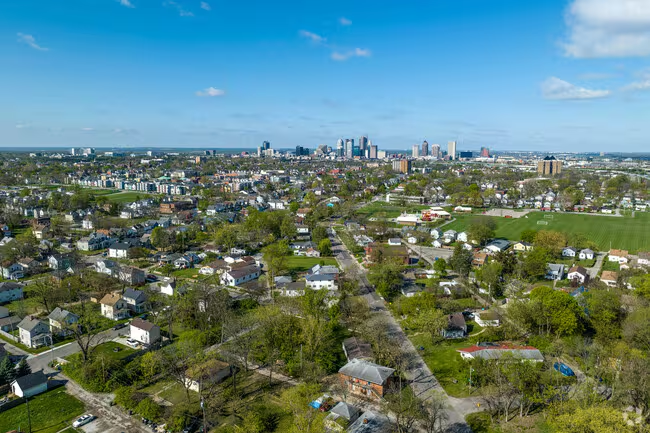
Water spreads through drywall, subfloor, and insulation within hours, and smoke residues turn acidic on metal and painted surfaces almost as fast. In Mount Vernon, where many homes combine century-old framing with newer additions, the first day after an incident often decides whether materials are dried and saved or demolished and replaced.
Restoration work here covers a connected set of emergencies rather than one isolated problem:
- Water Damage Restoration - supply line breaks, failed water heaters, appliance overflows, and roof leaks after Knox County storms
- Flooded Basement - groundwater intrusion, sump pump failure, and foundation seepage in older Mount Vernon housing stock
- Sewage Cleanup - toilet backups, floor drain surcharges, and septic failures on properties outside the city sewer district
- Fire Damage Restoration - structural stabilization, debris removal, and rebuilding after kitchen, chimney, and electrical fires
- Smoke Damage Restoration - odor control, soot removal, and content cleaning after even small contained fires
- Mold Removal - containment and remediation where moisture sat undetected in crawl spaces, wall cavities, or basements
The benefit of handling these under one process is continuity. Documentation gathered during extraction supports the mold assessment later, and moisture mapping from a flooded basement guides the reconstruction scope. Local companies including Thompson Restoration Associates (614) 831-1369 and DryPro Emergency Water Damage Restoration serve the area with round-the-clock response.
Common Damage Restoration Issues in Mount Vernon, Ohio
Mount Vernon sits in the Kokosing River valley in Knox County, and the combination of river-adjacent low ground, clay-heavy soil, and freeze-thaw winters produces a predictable set of restoration calls.
Recurring Causes
- Frozen and burst pipes - uninsulated lines in crawl spaces, garages, and unheated additions during North Central Ohio cold snaps
- Hydrostatic pressure - saturated clay soil pushing water through foundation cracks and cove joints
- Sump pump failure - pumps that quit during the same storms that knock out power
- Sanitary sewer surcharge - older combined and aging laterals backing up into basement floor drains
- Heating equipment fires - wood stoves, chimneys, and space heaters used heavily from November through March
- Kitchen grease fires - the most frequent source of widespread smoke and soot deposits in residential structures
- Hidden structural weakness - termite or rot-damaged framing that must be evaluated and repaired before finishes go back in
Warning Signs Worth Acting On
- Musty odor in a basement or closet that intensifies on humid days
- Efflorescence, a chalky white residue, on block foundation walls
- Tape seams lifting or nail pops appearing on ceilings below bathrooms
- Slow floor drains or gurgling fixtures - often the first hint of a sewer line problem
- Yellow-brown staining that returns after painting, indicating ongoing moisture
- Persistent smoke odor months after a small fire, meaning residues remain in HVAC ductwork
Neighborhoods We Serve in Mount Vernon
Response covers the full city and the surrounding Knox County townships, with attention to the different construction eras found in each area.
- Downtown and the Public Square district - historic commercial buildings and upper-floor apartments
- East High Street and the Gambier Street corridor - large older homes with stone and block basements
- North Main and the Mount Vernon Nazarene University area - mixed rental and owner-occupied properties
- West side neighborhoods near Riverside Park - lower-lying parcels close to the Kokosing River
- Newark Road and Coshocton Avenue corridors - post-war ranches and newer subdivisions
- Surrounding communities - Fredericktown, Gambier, Danville, Centerburg, Howard, Apple Valley, Utica, and rural Clinton, Monroe, and Pleasant townships
Rural properties often rely on private wells and septic systems, which changes how sewage cleanup and water restoration are approached compared with city-serviced addresses.
Seasonal Damage Patterns in Mount Vernon
- December through February - peak season for frozen and burst pipes, ice damming along eaves, and heating-related fires from chimneys, furnaces, and portable heaters. Smoke damage calls climb alongside them.
- March and April - snowmelt combined with spring rain saturates clay soil, driving flooded basement calls, sump pump overload, and sewer backups when systems reach capacity.
- May and June - severe thunderstorms bring wind-driven rain, roof damage, and power outages that disable sump pumps. Mold growth begins in materials wetted during spring.
- July and August - high humidity keeps crawl spaces and basements damp. Mold removal requests peak, along with air conditioner condensate line overflows.
- September and October - a good window for foundation repair, drainage correction, and dryer vent or chimney cleaning before heating season.
- November - first hard freezes catch outdoor spigots and vacation properties around Apple Valley, and the first fires of the season are lit in flues that have not been inspected.
Housing Characteristics & Restoration Considerations
Mount Vernon's housing stock spans roughly 150 years, and the restoration approach shifts substantially with construction era.
Pre-1940 Homes
- Stone or unreinforced block foundations that wick moisture and seep at the cove joint
- Plaster over wood lath, which holds water far longer than drywall and requires slower, controlled drying
- Balloon framing that allows fire, smoke, and odor to travel vertically inside wall cavities
- Knob-and-tube remnants or early wiring that raise fire risk and require electrical evaluation before rebuild
- Original framing sometimes compromised by termites or long-term rot - damaged members must be assessed and repaired before finishes are installed
Mid-Century Ranches and Split-Levels
- Poured or block basements finished with paneling and carpet, which trap water against walls
- Cast iron or clay sewer laterals prone to root intrusion and backups
- Limited insulation in rim joists, creating condensation and mold-friendly conditions
Newer Construction
- Tighter building envelopes that hold humidity and smoke odor rather than venting it
- Engineered joists and OSB subfloor that lose strength quickly when saturated
- PEX and copper supply lines in exterior walls, vulnerable during deep freezes
Crawl spaces are common across all eras in Knox County. Because they sit directly on soil, they are the single most frequent hidden source of mold and elevated indoor humidity, and they are checked early during any water or mold investigation.
Environmental Conditions & Damage Implications
Local climate and soil conditions shape how quickly damage develops and how drying equipment is deployed.
Climate
- Roughly 38 to 40 inches of annual precipitation, spread across all seasons
- Summer relative humidity frequently above 70 percent, slowing evaporation and encouraging mold within 24 to 48 hours of wetting
- Winter temperatures well below freezing, with repeated freeze-thaw cycles that widen foundation cracks
- Dry indoor winter air that lets smoke odors settle deeply into textiles and porous finishes
Soil and Groundwater
- Glacial till and silty clay loam soils that drain slowly and expand when wet
- Kokosing River floodplain influence on low-lying west and north properties
- Seasonally high water tables that keep basement slabs damp even without an obvious leak
Water and Air Quality Factors
- Hard water throughout the region, contributing to scale buildup and premature failure of water heaters and supply valves
- Rural well and septic systems where backups introduce biological contamination requiring category three cleanup protocols
- Agricultural dust and seasonal pollen that load HVAC systems, compounding air quality problems after fire or mold events
Because of these conditions, drying plans in Mount Vernon rely on dehumidification capacity rather than airflow alone, and post-remediation verification includes moisture readings in framing, not just surface checks.
What to Expect: Documentation, Insurance, and Clear Communication
Restoration involves insurance carriers, adjusters, and sometimes multiple trades, and confusion in that process causes more frustration than the damage itself. Transparency starts with a documented walkthrough before any equipment is placed.
The Typical Process
- Emergency contact and safety assessment - power, gas, and structural hazards are identified first, especially after fire
- Source control - stopping the leak, capping the line, or arranging sewer service so restoration is not undone
- Moisture mapping and photo documentation - meter readings, thermal imaging, and room-by-room photos recorded for the claim file
- Extraction and controlled demolition - removing unsalvageable materials, with containment established for sewage or mold work
- Structured drying - air movers and dehumidifiers monitored with daily readings until materials reach dry standard
- Cleaning and odor treatment - soot removal, HVAC duct cleaning, content processing, and sealing where residues remain
- Reconstruction - framing repair, drywall, flooring, paint, and trim to return the space to pre-loss condition
Questions Worth Asking Any Restoration Contractor
- What moisture readings are you recording, and will I receive copies?
- Which materials are being removed, and why can they not be dried in place?
- Is containment required, and how will air movement be controlled?
- Who communicates with my insurance adjuster, and how often?
- Will the same company handle reconstruction, or does that require a separate contractor?
What Homeowners Can Do First
- Photograph everything before moving items, including standing water levels
- Keep damaged belongings until they have been documented
- Avoid entering water contaminated by sewage without protective equipment
- Leave soot alone - wiping smoke residue can drive it permanently into surfaces
- Record the date, time, and cause of loss while details are fresh
Clear scope, written findings, and consistent updates keep a Mount Vernon restoration project predictable, even when the damage is not.




