
Damage Restoration in Huron, OH
Damage Restoration Services Overview
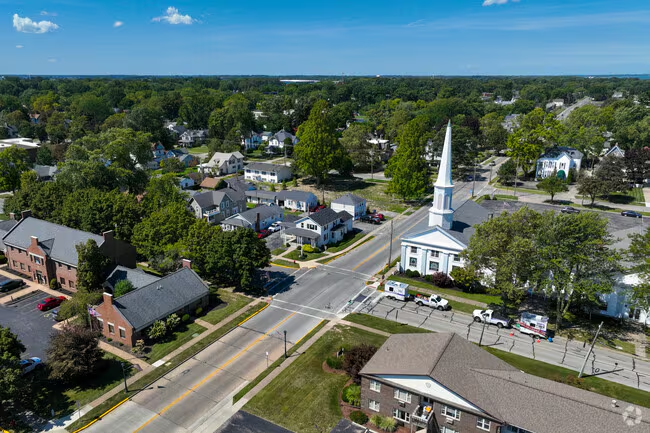
Few things rattle a homeowner like walking downstairs to standing water, or opening a door to the acrid smell of smoke. In Huron, where Lake Erie weather and older housing stock combine, property damage rarely announces itself in advance. Fast, methodical restoration keeps a bad day from becoming a months-long rebuild.
Our teams handle the full range of emergency and remediation work for Huron properties:
- Water Damage Restoration - extraction, structural drying, moisture mapping, and monitoring until materials return to dry standard.
- Flooded Basement Cleanup - pump-out, contents triage, sump and drain assessment, and dehumidification of below-grade spaces.
- Sewage Cleanup - Category 3 black water removal, antimicrobial treatment, and safe disposal of porous materials.
- Fire Damage Restoration - board-up, debris removal, soot and char cleaning, structural evaluation, and reconstruction coordination.
- Smoke Damage Restoration - odor neutralization, HVAC cleaning, thermal fogging, and surface-specific residue removal.
- Mold Removal - containment, HEPA filtration, affected material removal, and correction of the moisture source behind the growth.
Benefits for Huron residents go beyond a dry floor. Documented moisture readings support insurance claims, early intervention prevents secondary mold colonization, and proper containment protects the air your family breathes. Technicians respond around the clock, because a Saturday night pipe break behaves exactly like a Monday morning one.
Common Damage Restoration Issues in Huron, Ohio
Huron sits at the mouth of the Huron River on Lake Erie's south shore - a location that shapes nearly every damage call we take. Lake-effect moisture, high water tables near the river and shoreline, and combined-age sewer infrastructure produce a predictable set of problems.
Frequent Causes
- Heavy spring rain and river backwater pushing groundwater against foundation walls
- Sump pump failure or power loss during storms, flooding finished basements
- Sanitary line backups after saturating rainfall, introducing black water into lower levels
- Frozen and burst supply lines in unheated crawl spaces and vacation properties along the lake
- Ice damming on low-slope roofs, pushing meltwater into ceilings and wall cavities
- Kitchen and chimney fires during winter heating months, plus wiring faults in older homes
- Chronic humidity feeding mold behind drywall, under carpet padding, and in closed cottages
Warning Signs Worth Acting On
- Musty or earthy odor that intensifies when the HVAC runs
- Efflorescence, chalky white staining, or peeling paint on block foundation walls
- Buckled baseboards, cupped hardwood, or drywall that feels soft near the floor line
- Gurgling floor drains or slow fixtures - often the first hint of a sewer backup
- Soot filming on window glass, lampshades, or upward-facing surfaces after any fire
- Smoke odor returning on humid days, indicating residue still trapped in porous materials
Any of these deserve inspection before the damage spreads into framing and insulation.
Neighborhoods We Serve in Huron
Crews cover the full city and the surrounding Erie County corridor, including:
- Downtown Huron and the Main Street district
- Huron River waterfront and marina-adjacent properties
- Old Woman Creek and Rye Beach Road areas
- Sawmill Creek and nearby resort-area homes
- Huron Township, Berlin Heights, and Milan corridor
- Cleveland Road East and West commercial properties
- Shoreline cottages and seasonal residences off Route 6
We also respond throughout the neighboring region - Sandusky, Vermilion, Norwalk, Bellevue, Clyde, Castalia, Port Clinton, and Lakeside Marblehead. Familiarity with local building patterns matters: a 1920s lakefront cottage on a stone foundation dries very differently than a 2005 subdivision home with a poured basement and finished lower level. Knowing the difference before equipment is placed shortens the entire project.
Seasonal Damage Patterns in Huron
Winter (December - February)
- Burst pipes in crawl spaces, garages, and shuttered seasonal homes
- Ice dams driving water into attics and upper-wall cavities
- Peak fire and smoke damage season from furnaces, space heaters, and fireplaces
Spring (March - May)
- Snowmelt plus rain producing the year's heaviest flooded basement volume
- Sewer backups when stormwater overwhelms collection systems
- Mold growth accelerating as temperatures climb over damp winter materials
Summer (June - August)
- Severe thunderstorms, wind-driven rain, and power outages disabling sump pumps
- High dew points near the lake keeping indoor humidity elevated
- Peak mold remediation calls, especially in basements and closed cottages
Fall (September - November)
- Clogged gutters and leaf-packed downspouts redirecting water to foundations
- Roof leaks revealed by the first sustained rains
- Early heating-system fires as furnaces restart after months idle
Housing Characteristics & Restoration Considerations
Huron's housing mix spans more than a century of construction, and each era brings its own restoration challenges.
- Pre-1940 homes - stone or unreinforced block foundations, balloon framing, plaster over wood lath. Balloon-framed walls let fire, smoke, and water travel vertically between floors with no stops, so inspection has to extend well beyond the visible damage.
- 1950s - 1970s ranches - poured basements, original cast iron drain lines, and early finished lower levels with paneling and glued-down tile that trap moisture underneath.
- 1980s - 2000s subdivisions - larger footprints, carpeted basements, and more complex HVAC systems that circulate smoke and mold spores throughout the house.
- Lakefront cottages and seasonal homes - crawl spaces, minimal insulation, and long unoccupied stretches where a leak runs undetected for weeks.
What That Means for Restoration
- Older plaster holds water differently than drywall and often needs targeted drying rather than removal.
- Knob-and-tube or aged wiring in pre-war homes requires electrical clearance before equipment placement after fire or flooding.
- Finished basements with vapor-trapping flooring usually need material removal to reach the slab and dry it properly.
- Homes built before the late 1970s may contain asbestos-bearing tile, mastic, or insulation - testing precedes demolition.
- Cast iron and clay laterals are prone to root intrusion, making sewage cleanup a repeat risk until the line is repaired.
Environmental Conditions & Damage Implications
Local climate and ground conditions explain why Huron properties face damage that inland Ohio homes often avoid.
- Lake Erie proximity - the lake moderates temperature but raises humidity and generates lake-enhanced rain and snow bands. Elevated summer dew points keep indoor relative humidity high without mechanical dehumidification.
- Heavy lake-plain clay soils - poor infiltration means rainfall runs sideways toward foundations rather than percolating down, loading footing drains and sump systems.
- Shallow water table - homes near the Huron River, Old Woman Creek, and the shoreline sit close to groundwater, so hydrostatic pressure pushes water through cracks and cold joints.
- Seiche and storm surge events - wind-driven lake water raises river levels and can back up storm drainage in low-lying areas.
- Freeze-thaw cycling - repeated cycles widen foundation and mortar cracks each winter, creating new entry points for water.
Restoration Impacts
- Mold colonies establish quickly when ambient humidity stays above 60 percent, so containment and dehumidification start on day one.
- Drying plans must account for outside air that is often too humid to use for ventilation - closed-system drying with refrigerant or desiccant units performs better.
- Clay soil retains contamination, so exterior sewage overflow requires soil treatment as well as interior sanitizing.
- Smoke odor rebounds in humid conditions, making thorough residue removal - not masking - the only durable fix.
Emergency Response Timelines for Huron Property Owners
Damage severity is a function of time. Water migrates through drywall and subfloor within hours, mold can begin colonizing damp organic material within a day or two, and soot becomes acidic and etches metal, glass, and finishes almost immediately after a fire. That is why response windows are measured in minutes and hours, not business days.
What Happens After You Call
- Immediate intake - a live technician gathers property details, water source, and safety concerns, and dispatches the nearest crew.
- Rapid arrival - trucks stage equipment for Huron and the Erie County corridor so extraction units, air movers, and dehumidifiers arrive together.
- Safety and source control - shut off water, confirm electrical safety, board up openings after fire, and establish containment for sewage or mold work.
- Assessment and documentation - moisture meters, thermal imaging, and photo records establish the affected area and support the insurance claim.
- Extraction and stabilization - remove standing water, pump out flooded basements, and place drying equipment before materials degrade further.
- Daily monitoring - readings tracked until framing, subfloor, and cavities reach dry standard, with equipment adjusted as conditions change.
- Cleaning and restoration - antimicrobial application, soot and odor treatment, material replacement, and final verification.
Steps You Can Take Before Crews Arrive
- Shut off the main water supply if a supply line failed
- Stay out of standing water near outlets, panels, or submerged appliances
- Avoid all contact with sewage-contaminated water and keep pets and children clear
- Do not run the HVAC after a fire - it spreads soot through every duct
- Photograph conditions for your insurer before moving anything
- Lift small furniture off wet carpet and remove documents and electronics if safe to do so
Round-the-clock availability matters most on holiday weekends and during winter storms, exactly when Huron pipe breaks and basement floods peak.





