
Damage Restoration in East Liverpool, OH
- Damage Restoration Services Overview
- Common Damage Restoration Issues in East Liverpool, Ohio
- Neighborhoods We Serve in East Liverpool
- Seasonal Damage Patterns in East Liverpool
- Seasonal Damage Patterns in East Liverpool
- Housing Characteristics & Restoration Considerations
- Environmental Conditions & Damage Implications
- Emergency Response Timing in the Tri-State Corridor
Damage Restoration Services Overview
You come home to a Fifth Street bungalow after a heavy Ohio Valley downpour and hear water running where no faucet is on. The basement stairs disappear into six inches of brown water, the furnace is submerged, and the smell already tells you this is more than rainwater. Situations like this move fast, and so should the response.
Restoration work in East Liverpool covers a connected set of problems that often arrive together:
- Water damage restoration - extraction, structural drying, and moisture mapping after pipe failures, appliance leaks, and roof intrusion.
- Flooded basement cleanup - pump-out, content triage, and drying of block foundations common throughout the older hillside neighborhoods.
- Sewage cleanup - Category 3 contamination handling, antimicrobial treatment, and safe disposal of porous materials.
- Fire damage restoration - board-up, debris removal, soot cleaning, and structural stabilization.
- Smoke damage restoration - odor neutralization, HVAC decontamination, and treatment of surfaces smoke reached but flames never touched.
- Mold removal - containment, controlled removal, and correction of the moisture source feeding growth.
The benefit of addressing these quickly is straightforward: less demolition, fewer replaced materials, better indoor air, and a smoother insurance claim for Columbiana County homeowners and business owners.
Common Damage Restoration Issues in East Liverpool, Ohio
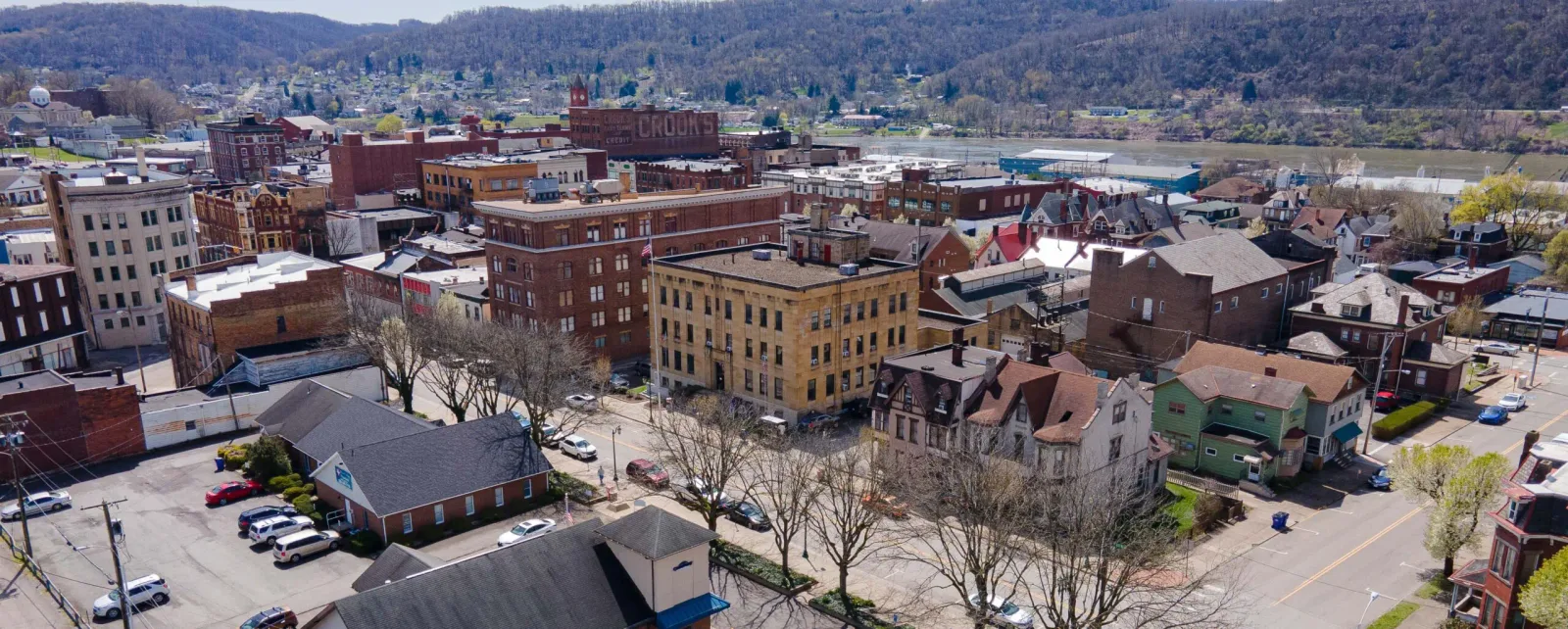
East Liverpool sits on the Ohio River at the point where Ohio, Pennsylvania, and West Virginia meet - a location that combines river flooding, steep hillside runoff, and an aging housing stock built during the pottery boom.
Local Conditions That Drive Damage
- River and creek backwater - properties in the lower elevations near the Ohio River and along Little Beaver Creek face seasonal high-water risk.
- Hillside runoff - homes stacked along the bluffs above downtown collect sheet water that drives straight into foundation walls.
- Combined and aging sewer lines - heavy rain can push wastewater backward through floor drains, creating sewage cleanup situations rather than simple water losses.
- Century-old buildings - structures like the former McCrory building downtown, now over 120 years old, illustrate how much of the local building inventory predates modern waterproofing and wiring.
- Knob-and-tube and early wiring - a recurring ignition source behind residential fire and smoke damage calls.
Warning Signs Worth Acting On
- Musty odor in a basement or crawlspace that returns after every rain.
- Efflorescence, white chalky streaking, or bubbling paint on block foundation walls.
- Slow floor drains, gurgling toilets, or backup during storms - early indicators of a sewer problem.
- Staining on ceilings below bathrooms or around chimney flashing.
- Lingering smoke odor after a small kitchen or furnace puffback, which signals soot embedded in porous surfaces and ductwork.
- Visible growth behind baseboards, under carpet padding, or inside closets on exterior walls.
Neighborhoods We Serve in East Liverpool
Coverage extends across the city and into the surrounding Columbiana County communities and the tri-state corridor.
- Downtown and the Diamond district - commercial storefronts and mixed-use buildings with shared walls and old plumbing stacks.
- The East End and Klondyke area - hillside residential streets prone to runoff and drainage issues.
- West End and Riverview - lower-elevation homes closer to the Ohio River floodplain.
- Pleasant Heights and Thompson Park vicinity - established neighborhoods with mature trees and storm-related roof damage.
- Calcutta, Glenmoor, and St. Clair Township - suburban subdivisions with finished basements.
- Wellsville, Chester WV, Newell, and Midland PA - nearby river towns served across the state lines.
Local familiarity matters because access routes, hillside grades, and municipal utility layouts differ block by block, and that shapes how quickly equipment can be staged on site.
Seasonal Damage Patterns in East Liverpool
Seasonal Damage Patterns in East Liverpool
Damage in the upper Ohio Valley follows a fairly predictable annual rhythm.
- December through February - frozen and burst supply lines in unheated crawlspaces, ice damming on low-slope roofs, and a spike in fire and smoke damage from furnaces, space heaters, wood stoves, and holiday cooking.
- March and April - snowmelt combined with spring rain raises river and creek levels, producing the year's heaviest volume of flooded basement and sewage backup calls.
- May through July - fast-moving thunderstorms bring wind-driven rain, roof and window intrusion, and lightning-related fires. Humidity climbs and mold growth accelerates in any space that stayed damp through spring.
- August and September - remnant tropical systems occasionally track through the region, dumping several inches in a short window and overwhelming storm drains.
- October and November - leaf-clogged gutters and downspouts redirect water against foundations, while the first furnace runs of the season trigger puffbacks and smoke odor complaints.
Knowing the calendar helps homeowners schedule gutter cleaning, sump pump testing, chimney inspection, and dryer vent service before the corresponding risk window opens.
Housing Characteristics & Restoration Considerations
East Liverpool's housing stock skews old. A large share of homes date to the late 1800s and early 1900s, built during the city's era as a national pottery center, with additional waves of construction through the 1940s and 1950s.
Construction Features That Shape the Work
- Stone and hand-laid block foundations - porous and slow to dry, requiring extended dehumidification and sometimes controlled removal of finished basement materials.
- Balloon framing - open wall cavities let water travel downward and smoke travel upward, so inspection has to extend well beyond the visible damage.
- Plaster and lath walls - hold moisture behind the surface and absorb smoke odor deeply, often needing specialized drying or selective removal.
- Hardwood floors over plank subfloor - salvageable with mat drying systems if addressed quickly, but prone to cupping and buckling if left wet.
- Asbestos-containing materials - pipe wrap, floor tile, and joint compound are common in pre-1980 homes and require abatement protocols before demolition begins.
- Lead-based paint - present in most pre-1978 structures, affecting how surfaces are cut, sanded, and contained during fire or water repairs.
Practical Implications
- Testing precedes demolition in older properties so hazardous materials are identified first.
- Drying plans account for dense masonry and multiple wall layers, not just surface moisture readings.
- Smoke deodorization includes duct systems and attic spaces where soot migrates through open framing.
- Mold containment is built before disturbance so spores are not pushed through the whole house.
Environmental Conditions & Damage Implications
Ohio sits where continental air masses, Great Lakes moisture, and seasonal storm tracks converge, and East Liverpool's river valley setting amplifies the effects.
Climate and Moisture
- Annual precipitation in the upper Ohio Valley typically runs near 40 inches, distributed across all four seasons rather than concentrated in one wet period.
- Summer dew points frequently exceed 65°F, keeping indoor relative humidity above the 60 percent threshold where mold colonizes readily.
- Valley fog and cool overnight temperatures slow natural evaporation, which is why passive drying rarely resolves a flooded basement.
- Freeze-thaw cycling repeatedly opens hairline cracks in foundation walls and masonry chimneys.
Soil, Water, and Air
- Clay-heavy soils on the hillsides hold water against foundations and expand, raising hydrostatic pressure on basement walls.
- Steep terrain concentrates runoff into narrow channels, so a single storm can deliver a large volume of water to one property line.
- Industrial legacy from the region's pottery and manufacturing history means soil and older building materials warrant careful handling during excavation or demolition.
- River proximity raises groundwater tables seasonally, keeping sump systems working nearly year-round in low-lying areas.
These conditions push restoration toward aggressive dehumidification, moisture verification with meters rather than appearance, and antimicrobial treatment on any material that stayed wet beyond the first day.
Emergency Response Timing in the Tri-State Corridor
Speed determines outcome more than any other factor in restoration. Water spreads through flooring and wall cavities within hours, mold can begin establishing within a day or two under valley humidity, and soot becomes acidic as it sits, permanently etching metal, glass, and finished surfaces.
Why Local Positioning Matters
- East Liverpool's hillside streets and river-level districts require crews familiar with access limitations, narrow alleys, and older utility layouts.
- Regional providers such as SERVPRO and Paul Davis Restoration maintain around-the-clock availability with IICRC-certified technicians and rapid dispatch targets.
- Crews serving the tri-state corridor can reach Wellsville, Calcutta, Chester, and Newell without long staging delays.
What a Fast Response Sequence Looks Like
- Immediate contact and triage - describing the source, affected area, and any safety concerns such as standing water near electrical panels.
- On-site assessment - moisture mapping, category classification for water losses, and documentation for the insurance claim.
- Stabilization - water extraction, board-up and tarping after fire, or containment barriers around mold growth.
- Structural drying and cleaning - air movers, commercial dehumidifiers, soot removal, and antimicrobial application.
- Deodorization - hydroxyl or ozone treatment, HVAC cleaning, and sealing where odor has penetrated framing.
- Reconstruction - rebuilding removed materials once verified dry readings are documented.
Steps to Take Before Help Arrives
- Shut off the water supply or main breaker if it can be reached safely.
- Avoid walking through suspected sewage - Category 3 water carries pathogens.
- Photograph everything for the claim before moving items.
- Do not attempt to wipe soot from walls; dry soot smears and sets under pressure.
- Move undamaged contents to a dry, conditioned area on an upper floor.





