Damage Restoration in Allen County, IN
- Damage Restoration Services Overview
- Common Damage Restoration Issues in Allen County, Indiana
- Neighborhoods We Serve in Allen County
- Seasonal Damage Patterns in Allen County
- Seasonal Damage Patterns in Allen County
- Housing Characteristics & Restoration Considerations
- Environmental Conditions & Damage Implications
- Sewer Backups and Basement Flooding in Fort Wayne's Older Drainage Districts
Damage Restoration Services Overview
Water spreads through drywall, subfloor, and framing within minutes, and smoke residues begin etching into surfaces almost as quickly. In Allen County, Indiana, the difference between a manageable cleanup and a full reconstruction project often comes down to how fast trained technicians arrive with extraction and drying equipment.
Property owners across Fort Wayne and the surrounding townships rely on a full range of mitigation and rebuild services:
- Water Damage Restoration - extraction of standing water, moisture mapping, structural drying, and documentation for insurance carriers
- Flooded Basement Cleanup - sump pump failures, foundation seepage, and storm backups handled from pump-out through dehumidification
- Sewage Cleanup - containment, removal of contaminated porous materials, and antimicrobial treatment of affected areas
- Fire Damage Restoration - debris removal, soot cleaning, structural stabilization, and coordinated rebuilding
- Smoke Damage Restoration - odor neutralization, HVAC cleaning, and treatment of residues that travel far beyond the burn area
- Mold Removal - containment barriers, negative air, removal of colonized materials, and correction of the moisture source
Certified specialists - not general contractors treating water as one more punch-list item - bring targeted training through programs like the Dewald Academy of Drying. Northeast Indiana companies have served Allen, Adams, DeKalb, Huntington, Noble, Wells, and Whitley Counties since 1976, earning a local reputation as "the water cleanup people."
Common Damage Restoration Issues in Allen County, Indiana
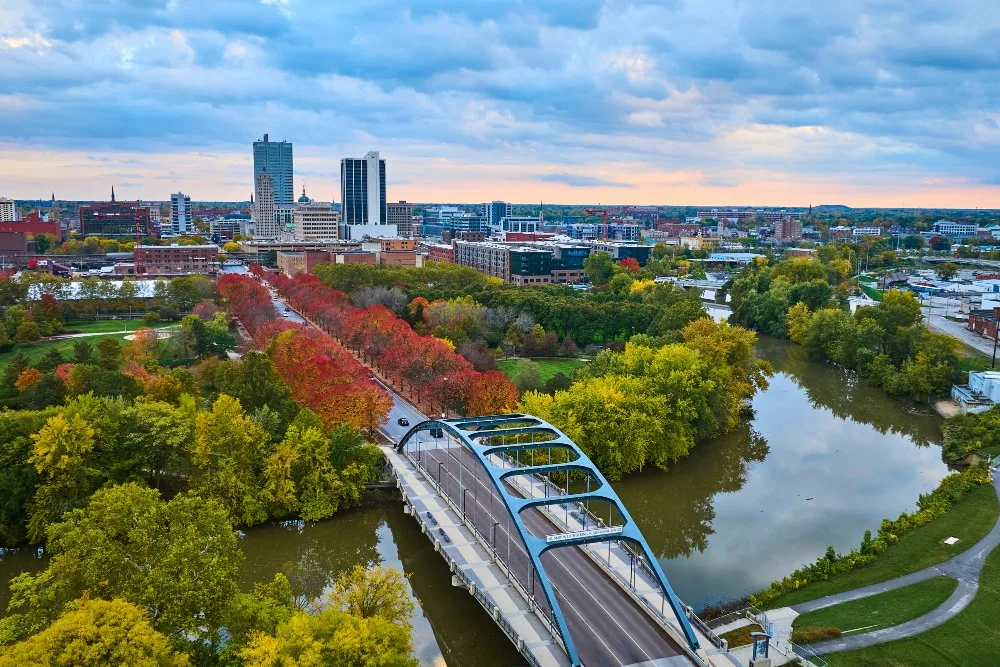
Allen County sits at the confluence of the St. Marys, St. Joseph, and Maumee Rivers, and that geography shapes nearly every restoration call in the region. Add heavy clay soils, freeze-thaw cycles, and a large stock of older housing, and the causes of damage become fairly predictable.
Frequent Causes of Damage
- River and flash flooding along the St. Marys, St. Joseph, Maumee, and Cedar Creek corridors
- Sump pump failure or power loss during spring thunderstorms
- Frozen and burst supply lines in unheated crawl spaces, garages, and older basements
- Sanitary and combined sewer backups during high-volume rain events
- Failed water heaters, washing machine hoses, and ice maker lines
- Kitchen fires, furnace puffbacks, and space heater incidents during winter
- Chronic humidity in basements and crawl spaces leading to hidden mold growth
Warning Signs Worth Acting On
- Musty odors that intensify after rain or when the HVAC system runs
- Cupping hardwood, bubbling paint, or tape seams lifting on basement drywall
- White efflorescence or dark staining along block foundation walls
- Gurgling floor drains or slow-draining fixtures - a common precursor to sewage backup
- Soot films on ceiling registers, blinds, or the tops of door casings after a small fire
- Lingering smoke odor that returns on humid days even after surface cleaning
Small leaks rarely stay small in this climate. Moisture trapped behind finished basement walls can support mold colonies within days, which is why moisture meters and thermal imaging are used on every inspection rather than relying on what is visible.
Neighborhoods We Serve in Allen County
Service covers Fort Wayne and the communities that ring it, from tight urban blocks to rural properties on well and septic systems.
- Fort Wayne neighborhoods: Downtown, West Central, Southwest Fort Wayne, North Fort Wayne, Aboite, Waynedale, Lakeside, Northcrest, Pine Valley, Covington Dells, and Foster Park
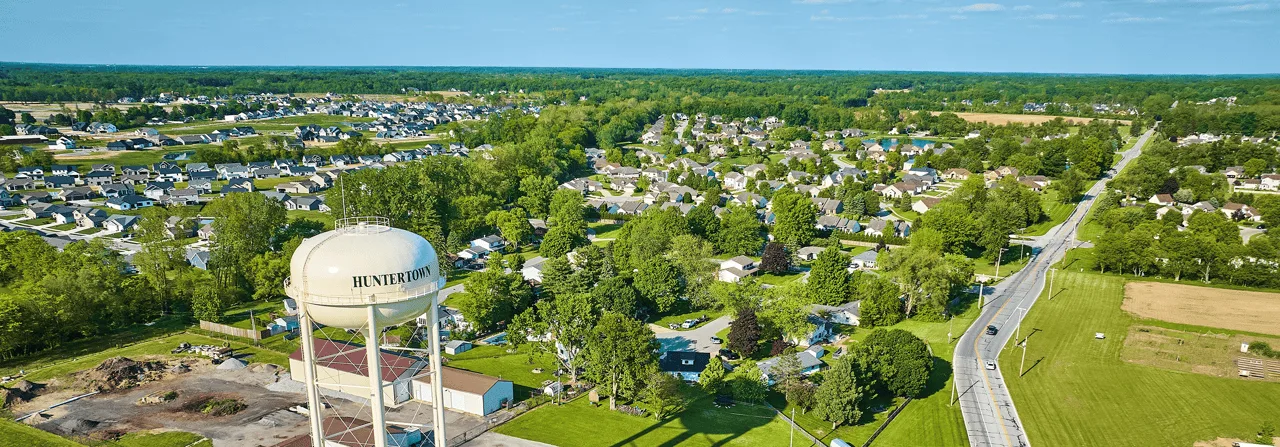
- Surrounding towns: New Haven, Leo-Cedarville, Grabill, Huntertown, Woodburn, Monroeville, Hoagland, Zanesville, and Harlan
- Townships: Aboite, Perry, St. Joseph, Wayne, Washington, Adams, Cedar Creek, and Jefferson
- Nearby counties: Adams, DeKalb, Huntington, Noble, Wells, and Whitley, plus Williams, Defiance, and Paulding Counties in Northwest Ohio
Familiarity with local street layouts, older sewer districts, and rural access routes shortens response time when a basement is filling or a fire scene has just been released.
Seasonal Damage Patterns in Allen County
Seasonal Damage Patterns in Allen County
Restoration demand in Northeast Indiana follows a fairly reliable annual rhythm.
- January - February: Peak season for frozen and burst pipes, furnace puffbacks, chimney fires, and space heater incidents. Ice damming pushes meltwater into attics and upper walls.
- March - April: Snowmelt combines with spring rain to saturate clay soils. Flooded basements, sump pump failures, and foundation seepage dominate call volume.
- May - June: Severe thunderstorms bring wind-driven rain, roof leaks, power outages that disable sump pumps, and sewer backups in older combined systems.
- July - August: High dew points create ideal conditions for mold growth in basements, crawl spaces, and closets. Air conditioning condensate line clogs cause ceiling and wall damage.
- September - October: Remaining humidity plus the first furnace startups release stored dust and odor. Mold discovered during real estate inspections spikes.
- November - December: Cooking fires, holiday decorations, and fireplace use drive fire and smoke damage calls. Early freezes catch unwinterized outdoor spigots and vacant properties.
Scheduling sump pump checks in late winter and having gutters cleared before spring reduces a large share of the water losses seen each year.
Housing Characteristics & Restoration Considerations
Allen County housing spans more than a century of construction, and each era responds differently to water, smoke, and mold.
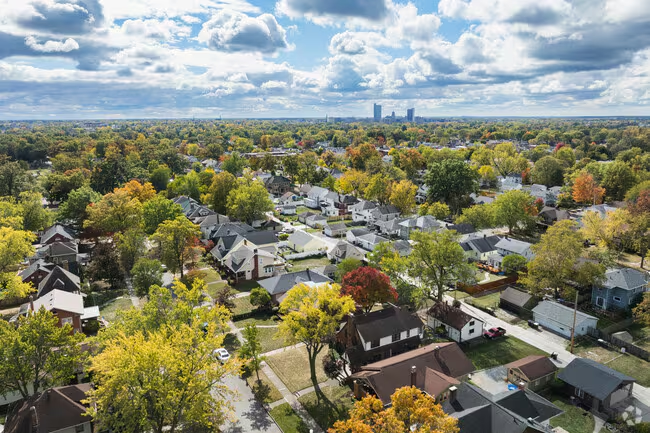
- Pre-1940 homes (West Central, Lakeside, Williams Woodland): plaster and lath, balloon framing, stone or brick foundations. Plaster holds moisture and smoke odor deeply, and balloon-framed wall cavities let smoke and water travel between floors.
- 1950s - 1970s ranches (Waynedale, Northcrest, New Haven): poured or block basements, original cast iron and galvanized plumbing nearing end of life, and asbestos-containing floor tile that requires careful handling during water extraction.
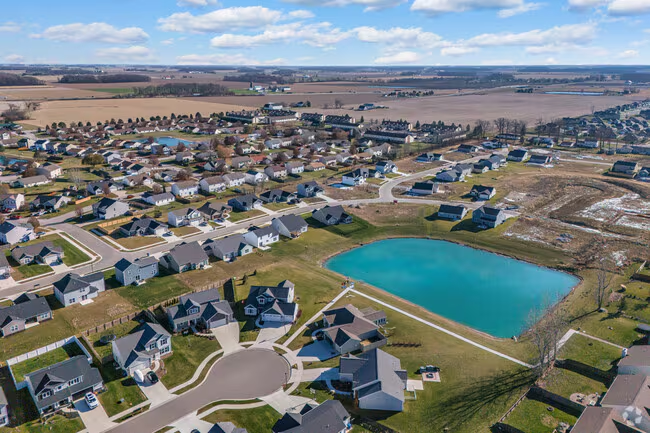
- 1980s - 2000s subdivisions (Aboite, Southwest Fort Wayne, Huntertown): finished basements with carpet, drywall, and framing directly against foundation walls - the most common location for hidden mold after seepage.
- Newer construction: tighter building envelopes trap humidity and smoke odor, making mechanical dehumidification and HVAC cleaning necessary rather than optional.
- Rural properties in Woodburn, Monroeville, and Harlan: septic systems and crawl spaces mean sewage backups often involve saturated soil and vapor barriers beneath the home.
Restoration plans account for these differences. Finished basements typically require flood cuts and removal of insulation behind the wallboard. Older plaster may be salvageable with controlled drying rather than demolition. After a fire, homes with original woodwork receive cleaning methods that preserve trim and cabinetry wherever the damage allows. Once dry-out is finished, a detailed repair estimate covers drywall, paint, flooring, and cabinetry so the rebuild proceeds without a second contractor learning the property from scratch.
Environmental Conditions & Damage Implications
Northeast Indiana's climate and soil conditions directly influence how damage develops and how long drying takes.
- Humid continental climate: Summer dew points regularly climb into the upper 60s and 70s, meaning outside air cannot be used to dry a structure for much of the year - sealed containment and dehumidifiers do the work instead.
- Annual precipitation near 38 inches: Distributed across all seasons, with spring and early summer producing the heaviest single-event rainfall totals.
- Heavy clay and silt loam soils: Poor drainage keeps water against foundation walls long after storms end, feeding hydrostatic pressure and chronic basement seepage.
- Freeze-thaw cycling: Repeated expansion opens cracks in block and poured foundations, creating new entry points each winter.
- Three-river floodplain: Properties near the St. Marys, St. Joseph, and Maumee face floodwater carrying silt, fuel residue, and bacteria - always treated as contaminated Category 3 water.
- High regional pollen and seasonal allergens: Occupants with respiratory sensitivity notice mold and smoke residue effects sooner, which makes air scrubbing and HEPA filtration part of most projects.
- Hard groundwater and municipal water: Mineral scale accelerates wear on water heaters, supply valves, and appliance connections that later fail and flood.
These conditions mean drying targets are set against local seasonal norms rather than generic benchmarks. Moisture readings are logged daily until materials reach documented dry standards, and the moisture source itself - grading, sump discharge, plumbing, or ventilation - gets identified so the same loss does not repeat next spring.
Sewer Backups and Basement Flooding in Fort Wayne's Older Drainage Districts
Parts of Fort Wayne still rely on combined sewer infrastructure that carries both stormwater and sanitary waste in a single pipe. During intense rainfall, capacity is exceeded and the nearest relief point can be a basement floor drain. Ongoing city sewer separation and tunnel projects have improved conditions in many districts, yet older neighborhoods near the rivers continue to see backups during heavy storms.
What Makes Sewage Losses Different
- Contaminated water requires containment, PPE, and disposal of porous materials rather than drying in place
- Carpet, pad, particleboard, and drywall that contacted the water are removed rather than salvaged
- Concrete, block, and framing are cleaned and treated with antimicrobial products after debris removal
- Ductwork and HVAC returns located in the basement often need cleaning to prevent odor migration upstairs
- Air scrubbers run throughout the process to protect occupied areas of the home
Steps Taken on a Local Backup Call
- Rapid extraction of standing water and containment of the affected zone
- Assessment of the damage extent, with a clear explanation of options before work begins
- Removal of contaminated materials and controlled demolition where needed
- Cleaning, antimicrobial application, and structural drying with monitored equipment
- Verification that the space is clean and dry, followed by a detailed estimate for repairs
- Rebuild work - drywall, paint, flooring, cabinetry - completed with the same crew standards
Prevention Worth Discussing With a Local Specialist
- Backwater valve installation on the main sanitary line
- Battery backup or water-powered secondary sump pumps
- Extending sump and downspout discharge well away from clay-heavy foundation soil
- Sealing floor drain gaps and keeping stored belongings off basement floors
Decades of work across Allen County means familiarity with which streets flood first, which drainage districts back up, and how quickly mold follows an untreated basement event in a Northeast Indiana summer.