
Damage Restoration in New Haven, IN
- Damage Restoration Services Overview
- Common Damage Restoration Issues in New Haven, Indiana
- Neighborhoods We Serve in New Haven
- Seasonal Damage Patterns in New Haven
- Housing Characteristics & Restoration Considerations
- Environmental Conditions & Damage Implications
- Sewer Backups and Basement Flooding Along the Maumee Corridor
Damage Restoration Services Overview
You come home from work on a February evening, open the basement door, and hear water running where no water should be. A supply line behind the washer let go hours ago, and three inches of water now covers the floor, the storage boxes, and the bottom of the drywall. Every hour that passes makes the repair larger.
That scenario plays out across New Haven more often than most homeowners expect, and it is only one of several emergencies that require trained restoration crews. Property damage rarely stays contained to the original problem - water feeds mold, fire leaves smoke residue in rooms the flames never touched, and a sewer backup contaminates everything it touches.
- Water Damage Restoration - extraction, structural drying, moisture mapping, and monitoring until materials return to normal readings
- Flooded Basement Cleanup - pump-out, contents handling, sump and drain evaluation, and dehumidification of below-grade spaces
- Sewage Cleanup - removal of contaminated materials, antimicrobial treatment, and safe disposal following industry protocols
- Fire Damage Restoration - board-up, debris removal, soot cleaning, and full rebuild by certified technicians
- Smoke Damage Restoration - soot residue removal, HVAC cleaning, and odor neutralization at the molecular level
- Mold Removal - containment, spore testing, affected material removal, and correction of the moisture source
Fast response protects Allen County homes and businesses from secondary losses, keeps insurance claims documented, and shortens the time families spend displaced.
Common Damage Restoration Issues in New Haven, Indiana
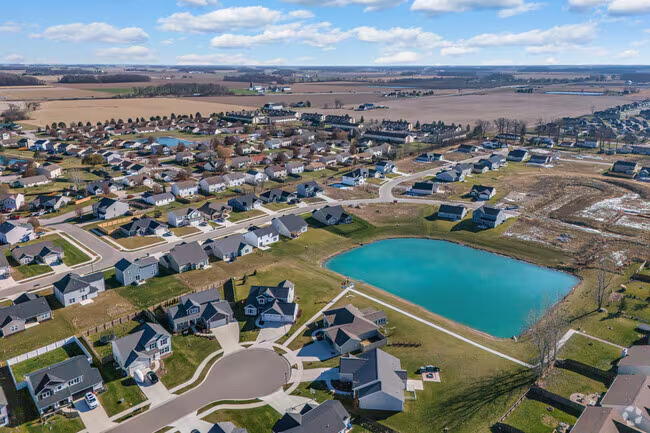
New Haven sits along the Maumee River corridor east of Fort Wayne, where flat terrain, clay-heavy soil, and combined stormwater pressure create predictable problems for property owners.
Recurring Causes of Loss
- Spring river rise and saturated ground pushing water through foundation walls and floor-wall joints
- Sump pump failure during multi-day rain events, especially in homes with a single pump and no battery backup
- Sanitary sewer surcharge that sends wastewater back through basement floor drains and laundry standpipes
- Frozen and burst supply lines in unheated crawl spaces, garages, and exterior walls during January cold snaps
- Kitchen grease fires, wood stove and fireplace mishaps, and space heater incidents during heating season
- Lightning strikes and wind-driven rain from summer thunderstorms rolling in off the plains
- Hidden mold behind vinyl wall coverings, under carpet pad, and inside wall cavities after slow leaks
Warning Signs Worth Acting On
- A musty smell that grows stronger when the furnace or air conditioner runs
- Efflorescence - white chalky residue - on basement block walls
- Buckled baseboards, cupped hardwood, or nail pops in ceiling drywall
- Gurgling floor drains when the washing machine discharges
- Yellow-brown staining on ceilings and around ceiling fixtures
- Lingering smoke odor weeks after a small kitchen or appliance fire
Ignoring early indicators almost always converts a contained water loss into a mold remediation project involving multiple rooms.
Neighborhoods We Serve in New Haven
Crews respond throughout New Haven and the surrounding Allen County communities, covering older housing near the historic downtown core as well as newer subdivisions on the north and east sides.
- Downtown New Haven and the Broadway and Green Street corridors
- Residential streets near Landin Road, Werling Road, and Ryan Road
- Neighborhoods along Maplecrest, Doyle Road, and Dawkins Road
- Subdivisions surrounding New Haven High School and Schnelker Park
- Properties bordering the Maumee River and Meadowbrook areas
- Adjacent communities including Fort Wayne, Harlan, Woodburn, Monroeville, Leo-Cedarville, and Huntertown
Service also extends across the wider region - DeKalb County towns such as Auburn, Garrett, Butler, Waterloo, and Ashley; Huntington County communities including Huntington, Roanoke, Warren, and Andrews; and Wabash County locations like Wabash, North Manchester, La Fontaine, Servia, and Roann. Commercial clients along the US 30 and I-469 corridors receive the same emergency coverage.
Seasonal Damage Patterns in New Haven
Northeast Indiana weather produces distinct restoration seasons, and knowing what each brings helps property owners prepare.
- December through February - frozen pipe bursts dominate. Fire and smoke calls climb with furnace, fireplace, and space heater use. Tightly sealed homes trap smoke odor in soft goods and ductwork.
- March through April - snowmelt combines with spring rain to saturate clay soil. Flooded basements, sump failures, and hydrostatic seepage peak during this window.
- May through June - severe thunderstorms bring wind, hail, and roof breaches. Storm-driven water entering attics leads to insulation saturation and ceiling collapse.
- July through August - humidity above 70 percent fuels mold growth in basements and crawl spaces. Air conditioning condensate line clogs cause slow, hidden ceiling leaks.
- September through October - heavy fall rain events overload municipal systems, triggering sewage backups through floor drains.
- November - first hard freezes catch unprotected hose bibs, irrigation lines, and crawl space plumbing.
Emergency response operates around the clock every month, because these losses rarely happen during business hours.
Housing Characteristics & Restoration Considerations
New Haven's housing stock spans well over a century, and each construction era responds differently to water, fire, and mold.
Pre-1950 Homes Near the Historic Core
- Stone and unreinforced block foundations that wick moisture through porous mortar joints
- Plaster over wood lath, which holds water far longer than drywall and requires extended drying
- Balloon framing that lets fire, smoke, and odor travel vertically inside wall cavities
- Cast iron and clay sewer laterals prone to root intrusion and collapse
- Possible asbestos-containing floor tile, pipe wrap, and mastic requiring testing before demolition
Mid-Century Ranches and Split-Levels
- Finished basements with paneling and carpet installed directly over concrete
- Original galvanized supply lines that corrode and develop pinhole leaks
- Crawl spaces with exposed soil and minimal vapor barrier - a common mold source
Newer Subdivision Construction
- Poured walls with interior drain tile and sump systems that fail without backup power
- Engineered wood subfloor and I-joists that lose structural integrity quickly when saturated
- Tight building envelopes that concentrate smoke residue and slow natural drying
Technicians adjust drying equipment placement, cavity drying techniques, and cleaning methods based on the age and assembly of each structure rather than applying one standard approach.
Environmental Conditions & Damage Implications
Local climate and ground conditions directly shape how damage develops and how restoration is carried out in New Haven.
Climate and Humidity
- Roughly 38 inches of annual precipitation, plus 30 or more inches of snow in a typical winter
- Summer dew points regularly in the upper 60s, keeping indoor relative humidity elevated without dehumidification
- Winter temperatures dipping below zero, which stresses plumbing in exterior walls and unheated spaces
- Freeze-thaw cycling that widens foundation cracks year after year
Soil and Groundwater
- Dense glacial till and clay soils that drain slowly and hold water against foundation walls
- Shallow water tables in low-lying areas near the Maumee and its tributaries
- Expansive clay that shifts with moisture content, opening pathways for seepage
Air and Water Quality Effects
- Hard water with high mineral content that scales fixtures and can mask slow leaks with staining
- Seasonal pollen and agricultural dust that combine with soot residue after a fire, complicating cleaning
- Elevated indoor humidity in basements creating ideal conditions for Aspergillus, Penicillium, and Stachybotrys colonies
Because of these conditions, containment barriers, HEPA filtration, negative air pressure, and continuous moisture monitoring are standard on local water and mold projects - not optional add-ons.
Sewer Backups and Basement Flooding Along the Maumee Corridor
Few losses rattle a homeowner like standing water in a finished basement, and in New Haven the cause is often more complicated than a single failed appliance. Properties sitting on flat ground near the Maumee and its drainage ditches face pressure from three directions at once - surface runoff, rising groundwater, and municipal sewer capacity during heavy rain.
What Happens During a Category 3 Loss
Water that has contacted sewage is classified as grossly contaminated and cannot be treated like a clean water leak. Response follows a defined sequence:
- Site safety assessment, including electrical hazards and confined-space concerns
- Extraction of standing water with truck-mounted or portable equipment
- Removal and disposal of porous materials - carpet, pad, drywall below the water line, insulation, and affected contents
- Cleaning and antimicrobial application to all remaining surfaces
- Structural drying with air movers and low-grain refrigerant dehumidifiers, documented with daily moisture readings
- Post-remediation verification before any rebuild work begins
Reducing Your Risk Before the Next Storm
- Install a backwater valve on the sanitary lateral to block reverse flow
- Add a battery backup or water-powered secondary sump pump
- Test the primary pump and float switch each spring and fall
- Extend downspouts at least six feet from the foundation
- Regrade soil so it slopes away from the house on all sides
- Keep stored items on shelving rather than directly on the basement floor
- Have the lateral camera-inspected if tree roots are a known problem on your street
When prevention falls short, documented mitigation and clear communication with your insurance adjuster make the claim process far less stressful for New Haven families and business owners.





