Damage Restoration in Morgan County, IN
- Damage Restoration Services Overview
- Common Damage Restoration Issues in Morgan County, Indiana
- Neighborhoods We Serve in Morgan County
- Seasonal Damage Patterns in Morgan County
- Seasonal Damage Patterns in Morgan County
- Housing Characteristics & Restoration Considerations
- Environmental Conditions & Damage Implications
- Working Through an Insurance Claim After Morgan County Damage
Damage Restoration Services Overview
Water spreads through drywall, subfloor, and insulation within minutes. Smoke residues become acidic and start etching surfaces within hours. Mold colonies can establish in a damp Morgan County basement in a day or two. Speed changes the outcome - and the cost.
Restorex responds around the clock to property owners across Morgan County, Indiana, with a full range of restoration work handled by one team from the first call to the final walkthrough.
- Water Damage Restoration - extraction, structural drying, moisture mapping, and monitoring until materials return to dry standard
- Flooded Basement Cleanup - pump-out, content removal, sanitizing, and dehumidification of below-grade spaces
- Sewage Cleanup - containment of Category 3 contamination, removal of porous materials, antimicrobial treatment, and safe disposal
- Fire Damage Restoration - board-up, debris removal, structural cleaning, and rebuild coordination
- Smoke Damage Restoration - soot removal, thermal fogging, HVAC cleaning, and odor neutralization
- Mold Removal - containment barriers, HEPA filtration, affected material removal, and moisture source correction
Insurance paperwork is where many homeowners get stuck. Our team documents damage thoroughly, communicates directly with adjusters, and helps Morgan County families move a claim forward without guesswork. Call (317) 676-4973 any hour, any day.
Common Damage Restoration Issues in Morgan County, Indiana
Morgan County sits along the White River corridor, and that geography drives a large share of the emergency calls we take. Low-lying neighborhoods near Martinsville have a long history with river flooding, and older drainage infrastructure adds pressure during heavy rain events.
Frequent Causes of Loss
- White River and tributary flooding pushing water into crawl spaces and finished basements
- Sump pump failure during multi-inch rainfalls, especially when power drops out
- Sanitary sewer backups when municipal lines surcharge during storms
- Frozen and burst supply lines in unheated crawl spaces and garages during January cold snaps
- Failed water heaters, washing machine hoses, and supply lines in homes built decades ago
- Kitchen fires, chimney and wood stove fires, and space heater incidents in winter months
- Septic system failures on rural properties outside city sewer service
Warning Signs Worth Acting On
- Musty odor in a basement or crawl space that lingers after dry weather
- Cupping hardwood, bubbling paint, or dark staining along baseboards
- Efflorescence - white chalky residue - on block foundation walls
- Slow drains or gurgling fixtures that suggest a partial sewer blockage
- Soot film on window glass, lampshades, or HVAC registers after a small fire
- Smoke odor that returns when humidity rises, meaning residue was never fully removed
- Recurring allergy symptoms that ease when occupants leave the house
Small signs often point to a larger hidden problem behind wall cavities. Moisture meters and thermal imaging find what the eye cannot.
Neighborhoods We Serve in Morgan County
Crews are dispatched countywide, with routes built around I-69, SR 37, SR 67, and SR 39 for fast arrival.
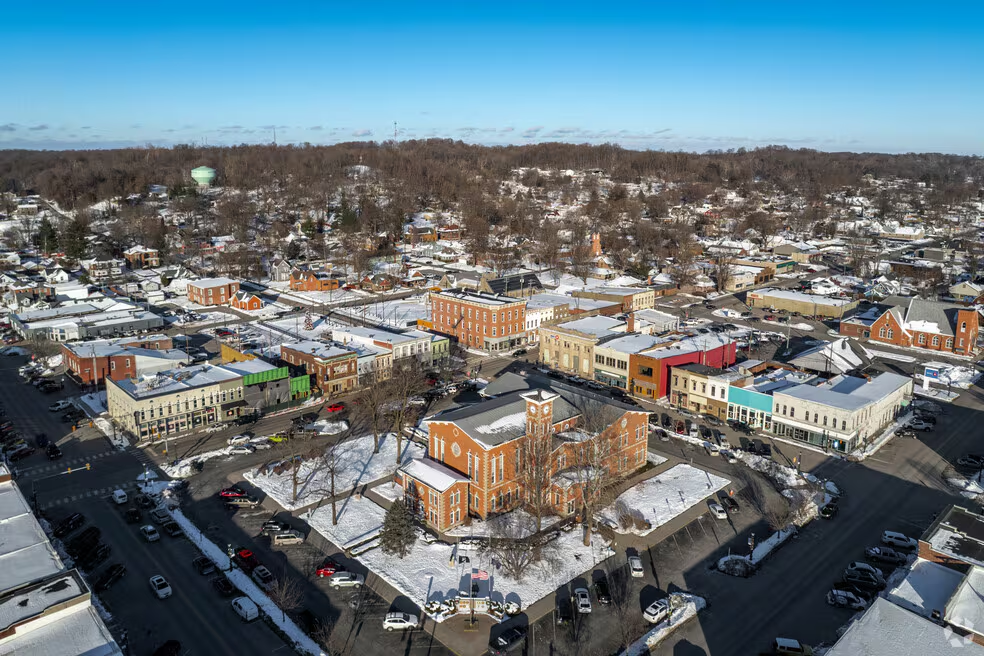
- Martinsville - historic downtown, the Morgan County Courthouse square, Artesian neighborhoods, and residential streets near Jimmy Nash City Park
- Mooresville - established subdivisions, older homes near Main Street, and newer construction along the northern county line
- Brooklyn and Centerton - small-town properties and surrounding acreage
- Monrovia and Eminence - farmhouses, outbuildings, and septic-served homes
- Paragon and Wilbur - riverfront and rural parcels prone to seasonal high water
- Morgantown, Bethany, and Waverly - mixed-age housing and country properties
- Camby, Hall, Cope, and unincorporated township areas across Washington, Madison, Green, and Ray townships
Rural addresses receive the same response commitment as in-town properties. Equipment trailers are staged so crews can reach outlying areas without long delays.
Seasonal Damage Patterns in Morgan County
Seasonal Damage Patterns in Morgan County
Damage in central Indiana follows a predictable rhythm. Knowing what season brings helps property owners prepare.
- December through February - Frozen pipe bursts lead the call volume. Furnace, fireplace, and space heater fires spike, and puffback events from oil and gas furnaces coat interiors in soot.
- March through May - Snowmelt combines with spring storms. Saturated soil, White River rise, sump pump overload, and sewer backups drive flooded basement and sewage cleanup work.
- June through August - Heat and humidity push indoor dew points up. Mold growth accelerates in crawl spaces, basements, and around AC condensate lines. Storm-driven roof leaks add wind and water losses.
- September through November - Fall Foliage Festival season brings cooler nights and the first furnace startups, which often reveal cracked heat exchangers and smoke issues. Clogged gutters from leaf drop send water against foundations.
Year-Round Risks
- Appliance and supply line failures with no seasonal pattern
- Septic and sewer line problems on aging rural systems
- Hidden slow leaks under sinks, behind toilets, and in wall cavities
Housing Characteristics & Restoration Considerations
Morgan County housing spans nearly two centuries. Martinsville was founded in 1822, and the mix ranges from pre-Civil War era structures near the courthouse square to subdivisions built after I-69 improved access to Indianapolis.
What We Typically Encounter
- Early 1900s and mid-century homes - plaster and lath, balloon framing, and knob-and-tube remnants; plaster holds water differently than drywall and needs slower, monitored drying
- Block and stone foundations - porous masonry wicks moisture upward and often requires drilled drying and specialty dehumidification
- Finished basements - carpet pad, paneling, and framed walls trap water behind surfaces; flood cuts are usually necessary
- Crawl spaces - common countywide, frequently with damaged vapor barrier and standing water that feeds mold
- Ranch homes from the 1960s-1980s - galvanized or early copper supply lines nearing end of life
- Manufactured and modular homes - tight cavities, belly board water retention, and limited access
- Rural farmhouses - additions built in stages, mixed materials, and outbuildings with separate risk profiles
How Age Shapes the Work
- Pre-1980 homes call for asbestos and lead-safe awareness before demolition
- Older HVAC ductwork spreads smoke residue and mold spores throughout the structure
- Historic trim, hardwood, and millwork often justify restoration over replacement
- Multiple remodels can hide layered flooring that traps moisture underneath
Environmental Conditions & Damage Implications
Central Indiana's humid continental climate creates conditions that favor microbial growth for much of the year. Summer dew points regularly sit high enough that unconditioned basements and crawl spaces stay above the moisture threshold mold needs.
Local Conditions That Matter
- Annual precipitation - roughly forty inches, with spring the wettest stretch and heavy convective storms in summer
- White River floodplain - Martinsville and downstream communities face repeat exposure during high-water events
- Soil - silt loam and clay-heavy soils in much of the county drain slowly, holding water against foundation walls and increasing hydrostatic pressure
- Groundwater - the area's mineral springs heritage reflects a high water table in places, which stresses sump systems
- Freeze-thaw cycling - repeated winter swings widen foundation cracks and stress buried lines
- Well and septic properties - rural systems require careful handling during sewage events to protect drinking water
Restoration Implications
- Dehumidification must be sized for humid conditions, not just the volume of water removed
- Mold remediation without correcting the moisture source will fail - grading, gutters, and sump function get addressed
- Post-fire air quality work includes HEPA filtration and duct cleaning to capture fine particulate
- Sewage-affected soil and porous materials are removed rather than cleaned in place
- Clay soil backfill means downspout extensions and drainage corrections carry real weight
Working Through an Insurance Claim After Morgan County Damage
Most property owners handle one major loss in a lifetime. Adjusters handle several a day. That imbalance is why documentation matters so much - and why Restorex builds the claim file from the moment we arrive.
How the Process Runs
- Emergency call - reach us at (317) 676-4973 at any hour; we gather details and dispatch a crew
- On-site assessment - moisture mapping, thermal imaging, photo and video documentation, and category classification of water or contamination
- Mitigation begins immediately - extraction, board-up, containment, or pump-out to stop damage from spreading, since insurers expect prompt action
- Scope and estimate - line-item documentation prepared in industry-standard format adjusters recognize
- Adjuster coordination - we speak directly with your carrier, meet the adjuster on site, and answer technical questions on your behalf
- Structural drying and cleaning - daily moisture readings logged and shared as verification the work met standard
- Reconstruction - drywall, flooring, paint, cabinetry, and trim so the property is returned to pre-loss condition
- Final walkthrough - clearance confirmation, photo record, and complete file for your records
What Helps Your Claim
- Photograph damage before anything is moved, if it is safe to do so
- Keep damaged items until the adjuster has reviewed them
- Save receipts for temporary lodging, fans, or emergency supplies
- Report the loss to your carrier promptly and note the claim number
- Avoid running HVAC after a fire, which spreads soot into clean areas
One team handles mitigation, remediation, and rebuild - no juggling separate contractors while your home sits open. Whether the call comes from a Martinsville basement, a Mooresville kitchen fire, or a Paragon crawl space, the response is the same: fast arrival, clear communication, and work carried through to completion.