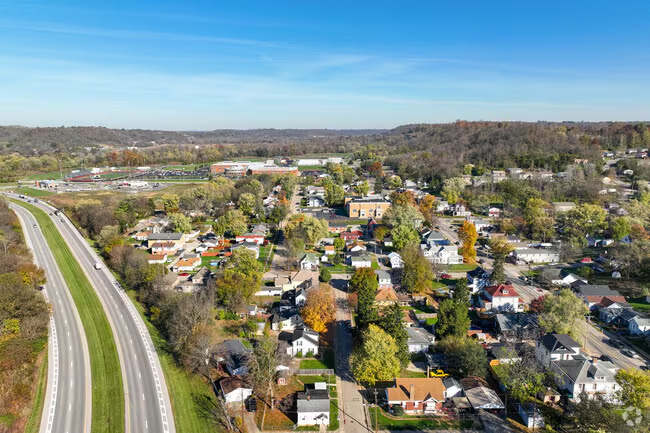
Damage Restoration in Dearborn County, IN
- Damage Restoration Services Overview
- Common Damage Restoration Issues in Dearborn County, Indiana
- Neighborhoods We Serve in Dearborn County
- Seasonal Damage Patterns in Dearborn County
- Housing Characteristics & Restoration Considerations
- Environmental Conditions & Damage Implications
- Advanced Drying and Decontamination for River Valley Properties
Damage Restoration Services Overview

When water rises in a basement in Lawrenceburg or smoke settles into the walls of a farmhouse outside Guilford, the first hours matter more than anything else. Professional restoration gives Dearborn County property owners a clear path forward - stabilize the structure, remove what is contaminated, dry what can be saved, and rebuild what cannot.
Restoration work in this corner of southeastern Indiana covers a connected group of specialties:
- Water Damage Restoration - extraction, structural drying, and moisture mapping after supply line breaks, appliance failures, roof leaks, and river-driven flooding.
- Flooded Basement - pump-out, content triage, sanitizing of block and poured walls, and drying of below-grade spaces common throughout the Ohio River valley.
- Sewage Cleanup - safe handling of Category 3 water from backed-up laterals, failed septic systems, and overwhelmed municipal lines.
- Fire Damage Restoration - board-up, debris removal, structural cleaning, and coordinated reconstruction.
- Smoke Damage Restoration - soot removal from framing and finishes, thermal fogging, HVAC decontamination, and odor neutralization.
- Mold Removal - containment, HEPA filtration, antimicrobial treatment, and correction of the moisture source behind growth.
The benefit is not only a dry, clean building. It is documentation for insurance, verified moisture readings, and a home that is genuinely safe to occupy again.
Common Damage Restoration Issues in Dearborn County, Indiana
Dearborn County's terrain - steep bluffs above the Ohio River, narrow creek bottoms, and hilltop ridges - shapes almost every loss we respond to. Water moves fast downhill and pools where it has nowhere to go.
Frequent Causes of Damage
- Ohio River backwater and Tanners Creek, Hogan Creek, and Laughery Creek flooding pushing into low-lying homes and outbuildings.
- Hillside runoff overwhelming footing drains and sump systems on Aurora and Greendale slopes.
- Frozen and burst supply lines in unheated crawl spaces during January cold snaps.
- Sewer laterals compromised by tree roots in older neighborhoods, leading to basement backups.
- Septic field saturation on rural parcels near Moores Hill and Manchester after prolonged rain.
- Chimney, wood stove, and space heater fires in older heated structures.
- Electrical faults in homes with knob-and-tube or early aluminum wiring.
Warning Signs Worth Acting On
- Musty odor in a finished basement that returns after every heavy rain.
- Efflorescence, chalky white residue, or bubbling paint on foundation walls.
- Slow floor drains or gurgling fixtures - often the first hint of a sewer blockage.
- Cupping hardwood or soft spots in subfloor near dishwashers and refrigerators.
- Persistent smoke odor that strengthens when the furnace or air conditioning runs.
- Dark staining at rim joists, window wells, or behind stored boxes.
Small signs escalate quickly here. Humid valley air keeps materials from drying on their own, and mold colonies establish in porous materials within a couple of days of unaddressed wetting.
Neighborhoods We Serve in Dearborn County
Crews cover the full county and the surrounding communities that share its river-valley conditions.
- Lawrenceburg - historic downtown blocks, riverfront properties, and homes behind the levee system.
- Greendale - hillside residential streets with deep basements and older masonry.
- Aurora - riverfront Victorians, Hillforest-area homes, and Hogan Creek corridor properties.
- West Harrison and Logan - properties along the Whitewater and state line.
- Dillsboro, Moores Hill, and St. Leon - rural homes on septic systems and well water.
- Guilford, Yorkville, Bright, and Hidden Valley Lake - subdivisions on rolling ridges with walkout basements.
- Manchester, Cold Springs, and Sparta Township - farmsteads and outbuildings.
Surrounding coverage extends into Ohio County, Ripley County, Franklin County, and nearby Ohio communities along the I-275 and US-50 corridors.
Seasonal Damage Patterns in Dearborn County
Winter (December - February)
- Burst pipes in crawl spaces, garages, and vacant rentals.
- Peak fire and smoke damage season tied to furnaces, fireplaces, and portable heaters.
- Ice damming on north-facing roofs causing ceiling water stains.
Spring (March - May)
- Highest risk for flooded basements as snowmelt combines with heavy rainfall.
- Ohio River crest events pushing groundwater up through slab cracks and floor drains.
- Sewage backups when combined systems reach capacity during downpours.
Summer (June - August)
- Mold growth accelerates as dew points climb into the 70s.
- Air conditioning condensate line clogs soaking ceilings and closets.
- Storm-driven roof damage and wind-blown rain intrusion.
Fall (September - November)
- Leaf-clogged gutters redirecting water against foundations.
- First furnace runs releasing dormant smoke and soot odors.
- Ideal window for moisture inspections, sump testing, and crawl space encapsulation before winter.
Housing Characteristics & Restoration Considerations
Dearborn County's housing stock spans nearly two centuries, and each era brings its own restoration challenges. River towns hold nineteenth-century brick and frame homes, mid-century ranches fill the neighborhoods built during the county's industrial years, and the Bright and Hidden Valley areas added large subdivisions from the 1980s onward.
How Construction Type Affects the Work
- Pre-1900 masonry and timber homes - lime mortar, plaster over wood lath, and balloon framing allow water and smoke to travel vertically inside wall cavities. Drying requires cavity ventilation rather than surface-only airflow.
- Stone and unreinforced block foundations - highly porous, so flooded basement work includes controlled demolition of wall coverings and extended dehumidification.
- Mid-century ranches - original cast iron or clay sewer laterals are prone to root intrusion and collapse, driving sewage cleanup calls.
- Post-1980 subdivisions - finished walkout basements with carpet, drywall, and framed storage rooms mean higher content loss and larger mold containment areas.
- Rural farmhouses and manufactured homes - vented crawl spaces, well systems, and septic fields require added sanitation and water testing steps.
Restoration Adjustments We Make
- Test for asbestos-containing floor tile, mastic, and pipe insulation before demolition in older homes.
- Check for lead paint layers when removing fire-damaged trim and plaster.
- Use injection drying to save original hardwood and historic millwork where possible.
- Seal and clean ductwork after smoke events, since older systems distribute soot throughout the structure.
- Verify sump discharge and grading before rebuilding any below-grade finished space.
Environmental Conditions & Damage Implications
The county sits in a humid continental climate that receives roughly 45 inches of precipitation each year, with summer dew points that regularly keep indoor relative humidity above the 60 percent threshold where mold thrives.
Local Conditions That Drive Restoration Needs
- Silty and clay-rich valley soils - drain slowly, hold water against foundations, and expand and contract enough to crack block walls.
- Steep loess and shale slopes - shed runoff rapidly toward homes built into hillsides.
- High water table near the Ohio, Whitewater, and Laughery corridors - hydrostatic pressure forces water through cold joints even without visible flooding.
- Hard, mineral-heavy groundwater - accelerates scale buildup and pinhole leaks in supply lines.
- Seasonal agricultural burning and pollen - complicates indoor air quality assessment after smoke events.
- Freeze-thaw cycling - opens mortar joints and foundation cracks each winter, creating new entry points by spring.
Practical Effects on the Restoration Process
- Drying plans account for outdoor dew point, since open-window drying often adds moisture rather than removing it here.
- Post-flood basements receive antimicrobial application because valley floodwater frequently carries agricultural and septic contamination.
- Mold remediation includes correcting grading, downspout extensions, and vapor barriers - not just removing growth.
- Smoke odor treatment factors in tight modern envelopes that trap particulate and volatile compounds indoors.
Interestingly, the same water-adjacent terraces that draw modern development attracted settlement for thousands of years. Ball State University's Applied Anthropology Laboratories surveyed hundreds of acres of Dearborn County farmland and documented dozens of sites - including Late Prehistoric villages clustered around reliable water sources, and the Oberting hilltop enclosure noted in nineteenth-century county histories. Building near water has always meant managing water.
Advanced Drying and Decontamination for River Valley Properties
Properties in the Ohio River valley demand more than fans and a shop vacuum. Effective restoration here relies on measurement, containment, and equipment matched to the moisture load of a humid basin.
Equipment and Methods Used on Local Losses
- Thermal imaging cameras - locate hidden moisture behind plaster, tile, and paneling without opening walls unnecessarily.
- Penetrating and non-invasive moisture meters - establish dry standards from unaffected areas and confirm progress daily.
- Low-grain refrigerant and desiccant dehumidifiers - pull moisture from dense masonry and concrete that conventional units cannot touch.
- Submersible and truck-mounted extraction - clears standing water from deep basements quickly to limit wicking into drywall and framing.
- Negative air machines with HEPA filtration - contain spores and soot particulate during mold removal and fire cleanup.
- Injectidry and cavity drying systems - save hardwood floors, wall assemblies, and historic trim.
- Hydroxyl generators and thermal fogging - neutralize smoke odor at the molecular level instead of masking it.
- ATP surface testing - verifies sanitation after sewage cleanup rather than relying on appearance alone.
How a Typical Response Unfolds
- Emergency contact, safety assessment, and utility shutoff where needed.
- Water extraction or debris and board-up work depending on the loss type.
- Containment barriers established to protect unaffected areas.
- Contaminated and unsalvageable materials removed and documented.
- Drying equipment placed with daily moisture logging and adjustments.
- Antimicrobial, soot removal, and odor treatment applied to remaining surfaces.
- Clearance verification, photo documentation, and insurance reporting.
- Reconstruction of drywall, flooring, trim, and finishes.
That sequence adapts to the property. A Hidden Valley Lake walkout with a failed sump gets a different drying strategy than an 1870s Aurora brick home with soot in the stairwell - but both get measured, verified results.