Damage Restoration in Tippecanoe County, IN
- Damage Restoration Services Overview
- Common Damage Restoration Issues in Tippecanoe County, Indiana
- Neighborhoods We Serve in Tippecanoe County
- Seasonal Damage Patterns in Tippecanoe County
- Seasonal Damage Patterns in Tippecanoe County
- Housing Characteristics & Restoration Considerations
- Environmental Conditions & Damage Implications
- Insurance Coordination and the Restoration Process in Tippecanoe County
Damage Restoration Services Overview
Water in the basement, smoke staining the ceiling, or a sewage backup in the laundry room - property damage arrives without warning and disrupts everything. Tippecanoe County homeowners and business owners need a clear plan and a responsive crew, not a waiting list.
Restoration work covers a wide span of emergencies, and each one calls for different equipment, drying strategies, and safety protocols.
- Water Damage Restoration - extraction, structural drying, moisture mapping, and monitoring until materials return to normal readings
- Flooded Basement Cleanup - pumping standing water, removing saturated contents, and drying block, poured concrete, and framing
- Sewage Cleanup - containment, removal of contaminated porous materials, antimicrobial treatment, and odor control
- Fire Damage Restoration - stabilization, debris removal, contents handling, and full reconstruction back to pre-loss condition
- Smoke Damage Restoration - soot removal from surfaces and HVAC systems, thermal fogging, and deodorization
- Mold Removal - containment barriers, negative air, safe removal of colonized materials, and moisture source correction
The benefit of one team handling mitigation and repairs is continuity. Documentation flows straight to your insurance adjuster, timelines stay tight, and no one is left arguing over who handles the drywall after the drying equipment leaves.
Common Damage Restoration Issues in Tippecanoe County, Indiana
Tippecanoe County sits along the Wabash River, with Lafayette and West Lafayette hugging its banks and tributaries like the Tippecanoe River, Wildcat Creek, and Wea Creek feeding runoff through the area. That geography drives much of the water damage we see.
Local Causes We Respond To Most
- Spring river rise and flash flooding along low-lying neighborhoods near the Wabash
- Heavy clay soils that hold water against foundation walls, forcing seepage through cracks and cove joints
- Aging combined sewer infrastructure that backs up during intense downpours
- Frozen and burst supply lines during January and February cold snaps
- Sump pump failures during multi-day rain events or power outages
- Kitchen fires, space heater incidents, and furnace puff-backs in older housing stock
- Storm damage - wind-driven rain through compromised roofing and siding
Warning Signs Worth Acting On
- Musty odors in basements, crawl spaces, or near HVAC returns
- Bubbling paint, cupping hardwood floors, or soft drywall near baseboards
- Efflorescence - white chalky residue - on block foundation walls
- Slow drains or gurgling fixtures that hint at a sewer line problem
- Lingering smoke odor that returns when humidity rises
- Dark speckling on ceiling tiles, closet walls, or behind furniture on exterior walls
Small signs escalate fast. Mold colonization can begin within a couple of days of unaddressed moisture, and sewage contamination spreads through wicking materials well beyond the visible spill.
Neighborhoods We Serve in Tippecanoe County
Our crews cover the full county and the surrounding region, with familiar routes through both urban Lafayette and the rural townships.
- Lafayette - Downtown, Historic Centennial, Highland Park, Vinton, Wabash Village corridor, and the Creasy Lane commercial district
- West Lafayette - Purdue campus rentals, New Chauncey, Hills and Dales, Happy Hollow, and Klondike
- Smaller communities - Dayton, Battle Ground, Clarks Hill, Shadeland, Romney, Buck Creek, and Otterbein's edge
- Surrounding counties - Boone, Carroll, Clinton, and Howard, including Delphi, Frankfort, Lebanon, and Kokomo
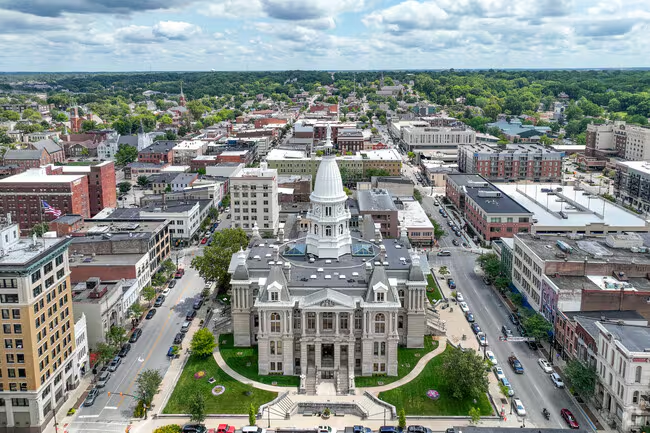
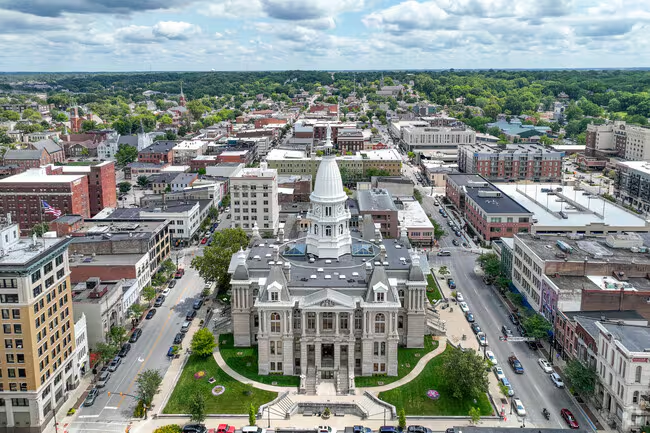
Student rental properties, historic homes near the courthouse square, newer subdivisions off Veterans Memorial Parkway, and farm properties out on county roads each present different restoration challenges. Our teams adjust equipment staging, containment, and reconstruction planning accordingly.
Seasonal Damage Patterns in Tippecanoe County
Seasonal Damage Patterns in Tippecanoe County
Indiana's swing between wet springs and hard winters creates a predictable rhythm of emergency calls.
- March through May - snowmelt plus spring storms saturate clay soils. Flooded basements, sump failures, and sewage backups peak here.
- June through August - humidity climbs and severe thunderstorms roll through. Mold growth accelerates in crawl spaces, and wind-driven rain causes roof leaks and water intrusion.
- September through October - a quieter stretch, ideal for moisture inspections, crawl space work, and correcting drainage before winter.
- November through December - heating systems restart, producing furnace puff-backs and soot deposits. Holiday cooking and candle fires rise sharply.
- January through February - deep freezes burst pipes in unheated garages, crawl spaces, and vacant rentals. Ice damming pushes meltwater under shingles.
Smoke damage calls cluster around the coldest months, when homes stay sealed and odors saturate soft goods. Mold calls often surface in late spring, after a winter leak went unnoticed behind a wall.
Housing Characteristics & Restoration Considerations
Tippecanoe County housing spans more than a century of construction methods, and each era responds differently to water, fire, and mold.
Older Homes - Pre-1950
- Plaster and lath walls hold moisture longer than drywall and require patient, controlled drying
- Stone and unsealed block foundations wick groundwater during wet seasons
- Balloon framing lets smoke and fire travel vertically between floors
- Knob-and-tube remnants and older wiring raise fire risk and demand careful post-loss inspection
- Hardwood floors are salvageable with mat drying if addressed quickly
Mid-Century and Ranch Homes
- Finished basements with paneling, carpet pad, and framed walls trap water behind the surface
- Original cast iron drain lines corrode and contribute to sewage backups
- Crawl spaces with exposed dirt floors feed persistent humidity and mold growth
Newer Construction and Student Rentals
- Tight building envelopes hold smoke odor and moisture inside rather than venting it
- Engineered flooring and MDF trim swell fast and rarely dry back to spec
- High-occupancy rentals near Purdue see more kitchen fires, overflow events, and delayed reporting
- Multi-unit buildings require containment so one unit's loss does not contaminate neighbors
Homes built before 1980 may contain asbestos in floor tile, mastic, or pipe wrap, and lead paint in older trim. Testing before demolition keeps the project safe and compliant.
Environmental Conditions & Damage Implications
The local climate and soil profile shape how quickly damage develops and how long drying takes.
Climate
- Humid continental pattern - hot, sticky summers and freeze-thaw winters
- Roughly forty inches of annual precipitation, concentrated in spring and early summer
- Summer indoor humidity frequently exceeds the range where mold colonizes untreated materials
- Repeated freeze-thaw cycles widen foundation cracks each winter
Soil and Groundwater
- Glacial till with dense clay content drains slowly and pushes hydrostatic pressure against basement walls
- River-bottom silt loam near the Wabash holds a high water table, stressing sump systems
- Flat lots with minimal grade allow surface water to pool near foundations
Air and Water Quality Effects
- Hard water leaves mineral scale that shortens the life of supply lines and water heaters
- Agricultural dust and pollen load HVAC systems, worsening post-fire soot circulation
- Smoke residue is acidic and etches glass, chrome, and appliance finishes within days
- Category 3 water from sewage carries bacteria that survive in porous materials long after surfaces look clean
Because of the clay soils and humidity, drying in Tippecanoe County often calls for dehumidification capacity beyond a standard equipment set - especially in basements and crawl spaces where evaporation slows.
Insurance Coordination and the Restoration Process in Tippecanoe County
The second phone call after a loss is usually to the insurance carrier, and that is where many property owners feel stuck. Knowing what documentation adjusters expect makes the claim move faster.
What Happens After You Call
- Emergency response - crews stabilize the property, stop the water source, board openings, or tarp roofing
- Assessment and documentation - moisture readings, thermal imaging, photos, and a room-by-room scope of loss
- Extraction and containment - standing water removed, contaminated materials isolated, negative air established when needed
- Controlled drying - air movers and dehumidifiers placed by calculation, with daily moisture logs
- Cleaning and deodorization - soot removal, antimicrobial application, HVAC cleaning, contents handling
- Reconstruction - drywall, flooring, trim, paint, and finish work returning the property to pre-loss condition
How We Work With Your Carrier
- Detailed daily documentation adjusters recognize and accept
- Industry-standard estimating software for line-item transparency
- Direct communication with your adjuster so you are not relaying technical details
- Clear separation of covered mitigation work and any owner-elected upgrades
What You Can Do First
- Shut off water at the main valve if a supply line failed
- Stay out of standing water near electrical panels or outlets
- Avoid contact with sewage-affected areas entirely
- Photograph damage before moving anything
- Do not run the HVAC system after a fire - it spreads soot through every room
Serving Lafayette, West Lafayette, Dayton, Battle Ground, and the surrounding counties since 2005, our certified team handles fire, smoke, water, sewage, mold, and storm damage from first response through final repairs.