Damage Restoration in Wabash County, IN
- Damage Restoration Services Overview
- Common Damage Restoration Issues in Wabash County, Indiana
- Neighborhoods We Serve in Wabash County
- Seasonal Damage Patterns in Wabash County
- Housing Characteristics & Restoration Considerations
- Environmental Conditions & Damage Implications
- Floodplain Properties and the Restoration Standards That Protect Them
Damage Restoration Services Overview
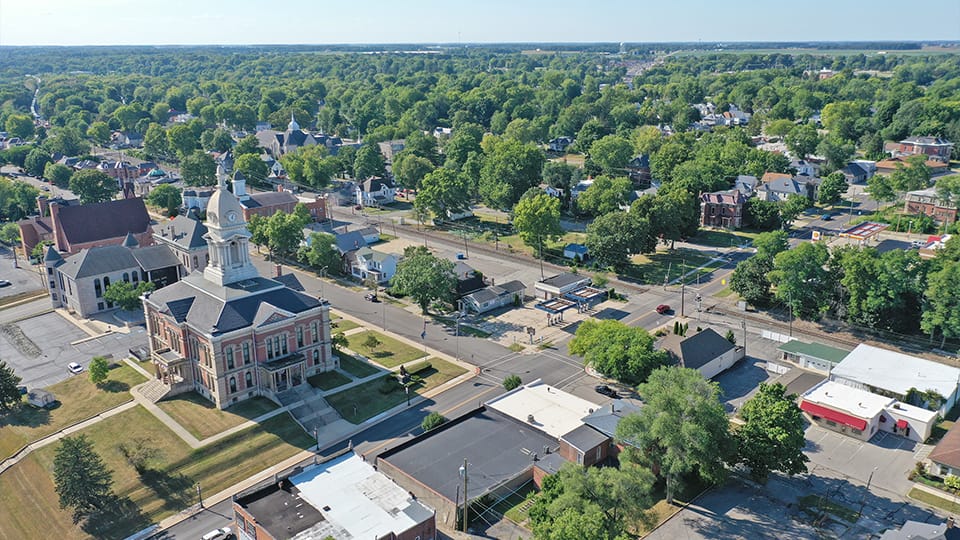
Water spreads through drywall, subfloor, and framing within minutes, and smoke residues begin etching metal and glass within hours. In Wabash County, where the Wabash and Eel River corridors shape drainage across much of the landscape, fast action separates a manageable cleanup from a full reconstruction project.
Property owners here rely on a connected set of restoration services, each addressing a different failure point:
- Water Damage Restoration - extraction, structural drying, and moisture mapping after supply line breaks, appliance failures, roof leaks, and river-driven flooding.
- Flooded Basement - pump-outs, sump system failures, foundation seepage, and drying of below-grade living space and storage.
- Sewage Cleanup - removal of Category 3 contaminated water, disposal of porous materials, and antimicrobial treatment of affected surfaces.
- Fire Damage Restoration - securing the structure, debris removal, soot cleaning, and coordination of rebuild work.
- Smoke Damage Restoration - odor neutralization, HVAC cleaning, and treatment of residues that travel far beyond the burn area.
- Mold Removal - containment, controlled removal of colonized materials, and correction of the moisture source feeding growth.
Benefits for local homeowners include documented moisture readings for insurance claims, protection of framing and personal belongings, and reduced risk of long-term air quality problems in older housing stock.
Common Damage Restoration Issues in Wabash County, Indiana
Flood history shapes risk here. Between 1913 and 1973, the Wabash River reached damaging stages at least 14 times, cresting above 20 feet on 13 occasions and hitting 24.44 feet in 1959 - a pattern that pushed the city to weigh levee construction and left every bridge in the county needing repair after major events.
Frequent causes of loss across the county:
- Riverine and creek flooding - the Eel and Wabash corridors, plus feeder creeks and streams, create wide floodplain areas that back water into low-lying neighborhoods and farm outbuildings.
- Groundwater seepage - saturated soils push water through foundation cracks and cove joints in basements built before modern waterproofing.
- Sump pump and sewer backups - heavy rain overwhelms combined and aging lines, sending contaminated water into finished basements.
- Frozen and burst pipes - unheated crawl spaces and exterior walls in older homes fail during hard freezes.
- Heating and cooking fires - wood stoves, space heaters, and chimney buildup drive winter fire calls in rural properties.
- Storm damage - straight-line winds strip roofs and uproot trees, opening structures to rainwater intrusion.
Warning signs worth acting on immediately:
- Musty odor in basements, closets, or near HVAC returns.
- Buckling hardwood, cupped laminate, or bubbling paint along baseboards.
- White efflorescence or dark staining on block foundation walls.
- Persistent smoke odor that strengthens with humidity after a fire.
- Gurgling floor drains during rainfall, a common precursor to sewage backflow.
Neighborhoods We Serve in Wabash County
Coverage extends across the county's full range of place types - from historic downtown grids to rural farmsteads far from municipal sewer service.
- City of Wabash - including older neighborhoods near the center of town, properties along South Miami Street and West Canal Street, and homes near the river terrace.
- North Manchester - college-area rentals, historic homes, and properties near the Eel River.
- Roann, Lagro, La Fontaine, and Urbana - small-town residences and outbuildings within floodplain reach.
- Somerset, Liberty Mills, Laketon, and Servia - rural crossroads communities.
- Township and unincorporated areas - Noble, Chester, Pleasant, Paw Paw, Waltz, and surrounding farmland.
- Nearby regions - properties bordering Huntington, Miami, Grant, Kosciusko, and Whitley counties.
Crews familiar with local road networks and river access points reach both downtown addresses and gravel-road properties without delay.
Seasonal Damage Patterns in Wabash County
Restoration demand shifts predictably through the year, and knowing the pattern helps owners prepare ahead.
- January - February: Burst supply lines in crawl spaces and exterior walls; ice damming forcing meltwater under shingles; heating-related fires and heavy smoke residue from wood stoves and furnaces.
- March - April: Peak river season. Snowmelt combined with spring rain raises the Wabash and Eel, flooding basements and triggering sewer backups. Historically, homes stayed damp well past the first of April even after floodwaters receded.
- May - June: Severe thunderstorms and straight-line winds tear roofs and topple trees, opening structures to rain. Sump pumps run continuously and fail under load.
- July - August: High humidity accelerates mold growth in basements, attics, and any space that dried incompletely in spring. Air conditioning condensate line clogs cause hidden ceiling and wall damage.
- September - October: Remnant tropical rainfall saturates soils; harvest-season equipment and grain-drying fires affect outbuildings.
- November - December: Chimney and fireplace fires rise; vacant or seasonally closed properties experience undetected leaks during the first freeze.
Housing Characteristics & Restoration Considerations
Much of the county's housing predates modern building codes, with historic neighborhoods clustered near downtown centers and traditional grid streets. That age directly influences how restoration work proceeds.
- Balloon-framed homes - open wall cavities let smoke and heat travel from basement to attic, so smoke damage restoration often requires inspection well beyond the fire's origin.
- Plaster and lath walls - hold moisture longer than drywall and need controlled drying rather than immediate demolition to preserve historic finishes.
- Fieldstone and block foundations - porous and prone to seepage, making flooded basement work a matter of both extraction and drainage correction.
- Stone or dirt-floor crawl spaces - a persistent moisture source that feeds mold growth on floor joists above.
- Knob-and-tube or early wiring - requires careful de-energizing before extraction equipment is deployed.
- Rural properties on septic systems - saturated drain fields during flooding push sewage back indoors, requiring full Category 3 protocols.
- Newer infill housing and townhomes - tighter envelopes trap humidity, so drying plans must account for limited natural air exchange.
Older homes also carry a higher probability of asbestos-containing floor tile, pipe wrap, and textured finishes, plus lead-based paint. Testing before demolition protects occupants and keeps the project compliant with federal renovation rules. Finished basements added in later decades frequently sit over unsealed slabs, where carpet padding and framed walls trap water invisibly until odor appears.
Environmental Conditions & Damage Implications
Wabash County sits in a humid continental zone with roughly 40 inches of annual precipitation, cold winters, and warm, sticky summers - conditions that reward fast drying and punish delay.
- Summer dew points in the 60s and 70s keep indoor relative humidity high, allowing mold to colonize damp materials in as little as 24 to 48 hours without dehumidification.
- Glacial till and clay-heavy soils drain slowly, holding water against foundation walls and increasing hydrostatic pressure on basement floors and cove joints.
- Floodplain corridors along the Eel and Wabash Rivers, plus their feeder creeks, remain protected under FEMA regulations because they function as natural flood mitigation - a reminder that properties near these areas face recurring exposure.
- Hard, mineral-rich groundwater leaves scale and staining that complicate cleaning of fixtures and surfaces after backups.
- Agricultural runoff can introduce fertilizer, fuel, and livestock waste into floodwaters, elevating contamination categories beyond what appearance suggests.
- Freeze-thaw cycling widens foundation and mortar cracks each winter, creating new seepage paths by spring.
Air quality implications matter after fire as well. Soot particles from synthetic furnishings carry acidic residues and volatile compounds that settle in ductwork and porous contents. HVAC systems circulate them long after visible cleanup finishes, which is why duct inspection and hydroxyl or ozone treatment belong in a proper smoke damage plan.
Floodplain Properties and the Restoration Standards That Protect Them
Living near a designated floodplain changes both how damage happens and how it must be repaired. Federal regulations set specific procedures for development within these corridors so they keep functioning as flood mitigation - and repairs to substantially damaged structures may trigger elevation or floodproofing requirements enforced through local permitting.
A defensible restoration process for floodplain and river-adjacent properties looks like this:
- Safety assessment - utilities shut off, structural stability confirmed, and contamination category determined before anyone enters standing water.
- Water classification - clean, gray, or black. River flooding and sewer backups are treated as Category 3, requiring PPE, containment, and disposal of porous materials.
- Extraction and debris removal - submersible pumps and truck-mounted units clear standing water; saturated insulation, carpet pad, and cabinetry base come out.
- Controlled demolition - flood cuts placed above the waterline so wall cavities can be cleaned and dried rather than sealed damp.
- Cleaning and antimicrobial application - EPA-registered products applied to framing, block, and slab surfaces per IICRC S500 and S520 guidance.
- Structural drying - air movers, LGR dehumidifiers, and daily moisture logs on wood, concrete, and plaster until readings match dry standards.
- Verification and documentation - meter readings, thermal imaging, and photo records supplied for insurance and permit files.
- Reconstruction - rebuild with flood-resistant materials where appropriate, including closed-cell insulation, treated base plates, and moisture-tolerant wall assemblies.
The same discipline applies to fire losses in these areas, where firefighting water saturates lower levels and combines with soot to create a contaminated slurry. Technicians certified in water restoration, applied structural drying, fire and smoke restoration, and mold remediation follow written protocols at each stage - so the finished repair holds up against the next high-water year rather than hiding problems inside the walls.