
Damage Restoration in Fort Wayne, IN
- Damage Restoration Services Overview
- Common Damage Restoration Issues in Fort Wayne, Indiana
- Neighborhoods We Serve in Fort Wayne
- Seasonal Damage Patterns in Fort Wayne
- Housing Characteristics & Restoration Considerations
- Environmental Conditions & Damage Implications
- Modern Drying Technology and Emergency Response Across Allen County
Damage Restoration Services Overview
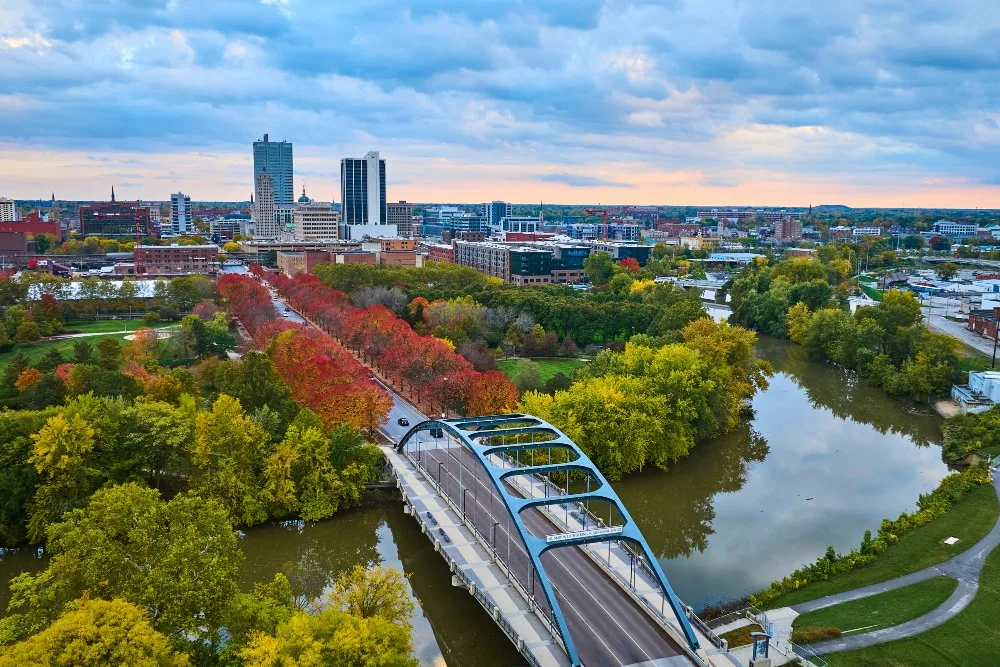
When water pours across a basement floor at 2 a.m. or smoke settles into every room after a kitchen fire, the fastest path back to normal is a certified restoration crew already on the way. Fort Wayne property owners rely on trained technicians who arrive with extraction equipment, containment materials, and a documented plan for insurance carriers.
A full-service restoration provider handles the entire chain of events from the first emergency call through final reconstruction:
- Water Damage Restoration - extraction, structural drying, moisture mapping, and in-place drying that preserves salvageable materials
- Flooded Basement Cleanup - standing water removal, sump system evaluation, and drying of framing, insulation, and finished walls
- Sewage Cleanup - Category 3 contaminated water handling, safe removal of porous materials, and antimicrobial treatment
- Fire Damage Restoration - board-up, debris removal, soot cleaning, and structural stabilization
- Smoke Damage Restoration - odor neutralization, HVAC cleaning, and treatment of surfaces that absorbed smoke residue
- Mold Removal - containment, negative air pressure, HEPA filtration, and correction of the moisture source
The benefit for Allen County homeowners goes beyond dry floors. Prompt professional response limits secondary damage, protects indoor air quality, preserves personal belongings, and produces the moisture readings and photo documentation that insurance adjusters expect.
Common Damage Restoration Issues in Fort Wayne, Indiana
Fort Wayne sits at the confluence of the St. Marys, St. Joseph, and Maumee rivers, and that geography shapes nearly every restoration call in the region. Roughly one in five local buildings faces meaningful flood exposure over a 30-year window, and spring thaw combined with heavy rainfall drives the majority of basement and foundation intrusion.
Frequent causes of damage across the city include:
- Hydrostatic pressure forcing groundwater through foundation wall cracks and cove joints
- Sump pump failure or power loss during severe storms
- Municipal sewer backups and lateral line blockages in older neighborhoods with combined sewer service
- Frozen and burst supply lines in unheated crawl spaces and garages during January cold snaps
- Kitchen grease fires, wood stove and fireplace incidents, and electrical faults in aging wiring
- Long-term humidity in tight, poorly ventilated homes feeding mold colonies behind drywall
Five quiet warning signs deserve attention before they become emergencies:
- Foundation wall fractures showing mineral staining or active seepage
- Corroded or disconnected sump pump discharge lines dumping water back against the foundation
- Attic condensation with darkened roof sheathing and visible mold growth
- Peeling exterior paint accompanied by swollen siding or trim substrate
- Cold-floor syndrome traced to a saturated crawl space beneath the living area
Hairline cracks need professional evaluation to separate normal settlement from an active water pathway. Epoxy injection will not hold if hydrostatic pressure persists, so exterior grading, gutter discharge, and drainage patterns must be reviewed before any waterproofing decision.
Neighborhoods We Serve in Fort Wayne
Restoration crews cover the entire Fort Wayne metro and the broader Northeast Indiana region, with response varying by property type and street-level drainage conditions.
- Central and near-downtown: West Central, Williams Woodland Park, Lakeside, Nebraska, and the Historic Fort Wayne district - older masonry homes with stone or block basements
- North side: North Anthony, Northcrest, Glenwood Park, Coventry, and the Dupont corridor
- Southwest: Aboite Township, Covington, Village of Coventry, Winterfield, and Sycamore Hills
- Southeast and south: Waynedale, Pine Valley area, Southwood Park, and Foster Park
- East side: New Haven, Maplecrest, and Georgetown
- Surrounding communities: Huntertown, Leo-Cedarville, Grabill, Woodburn, Auburn, Columbia City, and outlying Allen County townships
Riverfront and low-lying parcels near the St. Marys and Maumee floodplains see the heaviest seasonal water calls, while newer Aboite and Dupont subdivisions more often involve appliance failures, supply line breaks, and mold behind finished basement walls.
Seasonal Damage Patterns in Fort Wayne
Each season brings a distinct pattern of restoration emergencies across Allen County.
- March through May: Peak season for flooded basements. Snowmelt saturates already frozen ground, spring storms overwhelm sump systems, and river levels rise. Sewage backups spike when combined systems reach capacity.
- June through August: Humidity drives mold growth in crawl spaces, attics, and finished lower levels. Thunderstorms bring wind-driven rain, roof leaks, and lightning-related fire damage.
- September through November: Steady rainfall exposes clogged gutters and poor grading. Heating systems restart, and dormant dust in furnaces and fireplaces creates early-season smoke and puffback incidents.
- December through February: Frozen and burst pipes dominate. Space heaters, candles, holiday cooking, and wood stoves push fire and smoke damage calls to their annual high. Ice damming forces meltwater under shingles and into ceilings.
Late February and early March deserve special attention. Thawing soil, saturated ground, and rain arriving on top of snowpack combine to test every sump pump and foundation crack in the city at once.
Housing Characteristics & Restoration Considerations
Fort Wayne's housing stock spans well over a century of construction, and the era of a home dictates how restoration is approached. Many central-city homes date to the late 1800s and early 1900s, while post-war ranches fill the near suburbs and slab-on-grade and finished-basement construction dominates newer southwest developments.
- Pre-1940 homes: Stone, brick, or unreinforced block foundations with porous mortar joints. Plaster walls hold moisture longer than drywall and require different drying strategies. Knob-and-tube remnants and balloon framing allow fire and smoke to travel vertically through wall cavities.
- 1950s-1970s ranches and split-levels: Poured or block basements with original cast iron and clay sewer laterals prone to root intrusion and backups. Cast iron drain lines corrode and leak inside walls.
- 1980s-2000s subdivisions: Finished basements with carpet, drywall, and framed walls that trap moisture behind vapor barriers, creating hidden mold after even minor flooding.
- Recent construction: Tighter building envelopes hold humidity indoors. Small leaks produce mold faster because air exchange is limited.
Crawl space homes across Waynedale and older rural pockets present their own challenge - saturated soil beneath the floor system transfers moisture upward, producing cold floors, musty odors, and joist mold long before any visible water appears. Restoration in these properties usually pairs drying with vapor barrier replacement and drainage correction.
Environmental Conditions & Damage Implications
The clay-heavy soils common throughout Allen County are the single largest environmental factor in local water damage. Clay drains slowly, holds moisture against foundations, and expands and contracts with seasonal moisture swings.
- Soil behavior: Saturated clay generates hydrostatic pressure against basement walls, pushing water through cracks, cove joints, and tie-rod holes. Shrink-swell cycles widen existing fractures each year.
- Rainfall and river levels: Three converging rivers mean elevated groundwater tables across large sections of the city, reducing the effectiveness of gravity drainage during wet periods.
- Humidity: Summer dew points routinely support mold growth, and unconditioned basements and crawl spaces often exceed the relative humidity threshold where colonies establish within days of a water event.
- Freeze-thaw cycling: Repeated freezing damages exterior masonry, concrete, and buried discharge lines, opening new intrusion pathways each winter.
- Water quality after loss: Any flooding that contacts sewer lines, floor drains, or ground-level soil is treated as contaminated and requires Category 3 protocols with proper disposal of porous materials.
Environmental conditions also affect fire and smoke work. Cold, dry winter air pulls smoke residue deep into porous surfaces, while summer humidity reactivates odor compounds in drywall and framing. Both scenarios demand thermal fogging, hydroxyl or ozone treatment, and full HVAC cleaning rather than surface washing alone.
Modern Drying Technology and Emergency Response Across Allen County
The difference between saving a hardwood floor and replacing it usually comes down to how quickly moisture is measured and how precisely the drying environment is controlled. Current restoration practice relies on data, not guesswork.
Equipment Used on Fort Wayne Jobs
- Truck-mounted and portable extraction units that remove bulk water before drying begins
- Thermal imaging cameras and penetrating moisture meters that locate water inside wall cavities and under flooring
- Low-grain refrigerant and desiccant dehumidifiers matched to the cubic footage and material load of each space
- Air movers positioned to create controlled evaporation across affected surfaces
- Injectidry systems that force air into wall cavities, under cabinets, and beneath hardwood without demolition
- HEPA air scrubbers and negative air machines for mold containment and post-fire particulate capture
- Hydroxyl generators and thermal foggers for smoke odor neutralization
How an Emergency Call Progresses
- 24/7 dispatch and phone triage, including guidance on shutting off water or power safely
- On-site inspection with moisture mapping, contamination category assessment, and photo documentation
- Water extraction or fire debris removal, plus emergency board-up and tarping when the structure is compromised
- Controlled demolition limited to materials that cannot be dried or decontaminated in place
- Antimicrobial application and containment where sewage or mold is present
- Structural drying with daily moisture readings logged until materials reach dry standard
- Cleaning, deodorization, content restoration, and reconstruction back to pre-loss condition
Drying in place matters in a market with so many older homes. Preserving original plaster, hardwood, and trim keeps character intact and shortens the disruption for families. IICRC-certified technicians who understand local soil, housing stock, and climate patterns can identify why the loss happened - not just clean up after it - and recommend drainage, grading, or sump corrections that reduce the odds of a repeat next spring.





