Damage Restoration in Tipton County, TN
- Damage Restoration Services Overview
- Common Damage Restoration Issues in Tipton County, Tennessee
- Neighborhoods We Serve in Tipton County
- Seasonal Damage Patterns in Tipton County
- Housing Characteristics & Restoration Considerations
- Environmental Conditions & Damage Implications
- Storm Recovery and Modern Restoration Technology in Tipton County
Damage Restoration Services Overview
Damage left untreated rarely stays contained. A damp subfloor in a Covington ranch home becomes a mold colony within days, smoke residue etches permanently into drywall and HVAC ductwork, and a single sewage backup can contaminate framing lumber that later has to be cut out entirely. The cost of waiting almost always exceeds the cost of acting.
Property owners across Tipton County rely on a connected set of restoration disciplines, each addressing a different failure point:
- Water damage restoration - extraction, structural drying, and moisture mapping after burst pipes, roof leaks, appliance failures, and storm intrusion
- Flooded basement recovery - pumping standing water, drying below-grade walls, and addressing hydrostatic pressure sources
- Sewage cleanup - removal of Category 3 contamination, disinfection, and safe disposal of porous materials
- Fire damage restoration - debris removal, structural stabilization, and rebuilding of damaged assemblies
- Smoke damage restoration - soot removal, odor neutralization, and cleaning of contents and mechanical systems
- Mold removal - containment, HEPA filtration, remediation, and moisture-source correction
Acting early protects framing, insulation, and finishes that are difficult and expensive to replace. It also supports cleaner insurance documentation and helps families and business owners in Munford, Atoka, Brighton, and Mason return to normal routines sooner.
Common Damage Restoration Issues in Tipton County, Tennessee
Tipton County sits in West Tennessee's river country, where the Mississippi floodplain, the Hatchie River bottoms, and Big Creek shape how water moves across the landscape. That geography drives most of the restoration calls in the area.
Frequent Causes of Damage
- Severe thunderstorms and tornado activity - the county has sustained major storm damage that destroyed or heavily damaged homes, leaving roofs open to repeated rainfall
- Backwater flooding along the Hatchie and Mississippi drainage during prolonged regional rainfall
- Slow-draining loess and clay soils that hold water against foundations and push it through basement walls and crawl space vents
- Aging or undersized sump pumps and rural septic systems that surcharge during saturated conditions
- Sanitary line backups in older Covington and Mason neighborhoods after heavy inflow events
- Winter pipe ruptures in unconditioned crawl spaces and detached structures
- Kitchen, chimney, and electrical fires - more common during cold-weather heating months
Warning Signs Worth Investigating
- Musty odors that intensify when the HVAC cycles on
- Cupping hardwood, bubbling vinyl plank, or drywall that feels soft near the baseboard
- Efflorescence, white chalky staining, or peeling paint on foundation walls
- Condensation on ductwork or persistent humidity above comfortable levels
- Yellow-brown staining on ceilings after a storm, indicating roof or flashing failure
- Lingering smoke odor weeks after a small kitchen fire, signaling residue inside ducts
- Gnat or drain fly activity near floor drains, a common sewage indicator
Neighborhoods We Serve in Tipton County
Coverage extends across the county's incorporated towns, rural routes, and unincorporated communities.
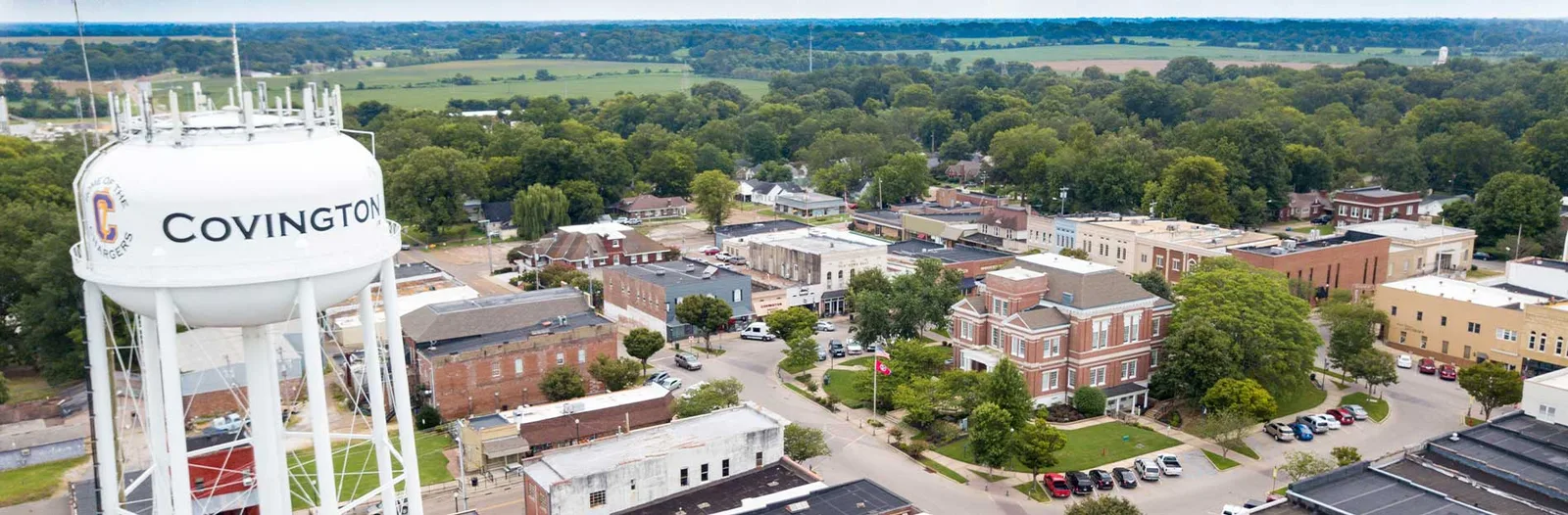
- Covington - the county seat, including historic homes near the courthouse square and newer subdivisions off Highway 51
- Munford - established neighborhoods and growing residential developments along Tipton Road
- Atoka - fast-growing suburban corridors serving Memphis-area commuters
- Brighton - family neighborhoods and school-district properties
- Mason - older housing stock along the eastern county line
- Burlison, Gilt Edge, Garland, and Quito - small communities with rural water and septic infrastructure
- Drummonds and Charleston - properties near lowland drainage areas
- Surrounding regions including Millington, Arlington, and the northern Shelby County line
Commercial work covers retail centers, restaurants, medical offices, schools, warehouses, and agricultural buildings throughout the county. Reach the team at (901) 235-3748 or (901) 441-6041.
Seasonal Damage Patterns in Tipton County
Restoration demand in West Tennessee follows a predictable rhythm tied to rainfall, humidity, and heating season.
- December through February - frozen and burst supply lines in crawl spaces, garages, and vacant properties; peak season for heating-related fire damage restoration and smoke damage cleanup from fireplaces and space heaters
- March through May - the most active severe weather window, bringing tornadoes, straight-line winds, hail, and wind-driven rain; flooded basement calls surge as saturated soils raise the water table
- June through August - high humidity fuels rapid mold growth after even minor leaks; air conditioning condensate line clogs and failed water heaters generate steady water damage restoration work
- September through October - typically the driest stretch, ideal for foundation drainage corrections, crawl space encapsulation, and preventive mold inspections
- November - clogged gutters and leaf-packed downspouts redirect roof runoff toward foundations; sewage backups increase as the first heavy autumn rains overwhelm saturated septic fields
Tropical remnants moving inland from the Gulf can deliver several inches of rain in a single day at almost any point between June and October, producing clusters of simultaneous flooding calls across the county.
Housing Characteristics & Restoration Considerations
Tipton County's housing mix spans more than a century of construction methods, and each era responds differently to water, fire, and mold.
Common Construction Types
- Pre-1950 homes in Covington and Mason - balloon framing, plaster over wood lath, brick foundations, and original wood floors; balloon-framed walls allow smoke and fire to travel vertically between floors, and plaster holds moisture far longer than drywall
- 1960s-1980s brick ranches - vented crawl spaces, minimal vapor barriers, and cast iron or clay drain lines prone to root intrusion and sewage backups
- 1990s-present subdivisions in Atoka, Brighton, and Munford - slab-on-grade construction, engineered lumber, and tightly sealed envelopes that trap humidity when drying is incomplete
- Manufactured and modular homes - particleboard subfloors and belly wrap that hold water beneath the visible surface
- Farmhouses and outbuildings - knob-and-tube remnants, unconditioned storage areas, and limited insulation
How Age Shapes the Work
- Older homes may contain asbestos-bearing floor tile, mastic, or pipe insulation requiring careful handling before demolition
- Lead-based paint in pre-1978 properties affects how fire-damaged surfaces are cleaned and stripped
- Crawl space homes need targeted drying of joists, rim boards, and ductwork, not just visible flooring
- Slab homes require moisture testing beneath tile and laminate, where water spreads laterally without surface signs
- Storm-damaged roofs from recent tornado activity leave hidden sheathing saturation that later shows as attic mold
Environmental Conditions & Damage Implications
The regional environment accelerates nearly every form of property damage found in Tipton County.
Climate and Humidity
- Humid subtropical conditions with warm, wet summers and roughly 50-55 inches of annual rainfall
- Summer dew points frequently in the 70s, which slows evaporative drying and shortens the window before mold colonizes damp materials
- Freeze-thaw cycling in winter that stresses foundation walls, exterior spigots, and uninsulated plumbing runs
Soil and Water Conditions
- Deep windblown loess over clay subsoil - highly erodible, quick to gully around downspouts, and slow to release absorbed water
- Low-lying areas near the Hatchie River and Mississippi bottoms with elevated seasonal water tables that drive basement seepage
- Iron and mineral content in some well water that leaves staining requiring different cleaning agents than municipal supply
- Rural septic systems that fail when drain fields stay saturated, creating repeat sewage cleanup needs
Air Quality Effects
- Heavy spring and fall pollen loading that settles in ductwork and complicates post-fire smoke odor removal
- Agricultural dust and field burning residue that mixes with soot on exterior surfaces
- Tight modern building envelopes that concentrate mold spores and combustion byproducts indoors without proper filtration
Each of these factors changes the drying plan, the containment strategy, and the equipment placement used on a given property.
Storm Recovery and Modern Restoration Technology in Tipton County
Recent tornado events in Tipton County demonstrated why restoration methods matter as much as response speed. When multiple properties are damaged at once, disciplined sequencing and measurement-driven drying separate a clean recovery from a project that reopens months later with mold behind new drywall.
Equipment and Methods Used on Local Projects
- Thermal imaging cameras - map moisture migration behind walls and above ceilings without exploratory demolition
- Penetrating and non-penetrating moisture meters - establish dry standards for wood, plaster, and concrete, then verify progress daily
- Low-grain refrigerant dehumidifiers - pull moisture in the high-humidity conditions typical of West Tennessee summers
- Axial and centrifugal air movers - directed airflow across saturated surfaces rather than random room-wide fans
- Injectidry and cavity drying systems - dry wall cavities, hardwood assemblies, and crawl space framing while preserving finishes
- HEPA air scrubbers and negative air machines - control spore and soot particulate during mold removal and fire cleanup
- Hydroxyl and ozone generators plus thermal fogging - neutralize embedded smoke odor rather than masking it
- Ultrasonic cleaning - restore soot-covered contents, hardware, and fixtures
How a Storm Recovery Project Progresses
- Emergency board-up, roof tarping, and structural stabilization to stop ongoing intrusion
- Water extraction, contaminated material removal, and documented moisture mapping
- Antimicrobial application and containment where sewage or mold is present
- Controlled drying with daily readings until materials reach verified dry standards
- Reconstruction of framing, insulation, drywall, flooring, and finishes
- Final clearance testing and photo documentation for the insurance file
Commercial clients receive phased scheduling that keeps portions of a building operational during the work, minimizing downtime for restaurants, clinics, and retail operations while crews complete the restoration.