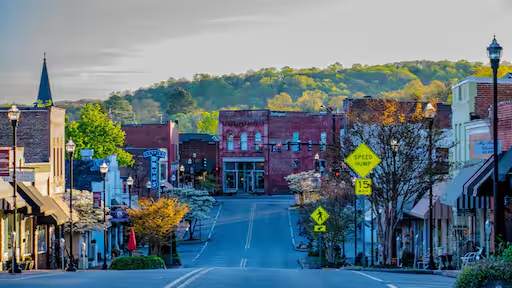
Damage Restoration in Anderson County, TN
- Damage Restoration Services Overview
- Common Damage Restoration Issues in Anderson County, Tennessee
- Neighborhoods We Serve in Anderson County
- Seasonal Damage Patterns in Anderson County
- Housing Characteristics & Restoration Considerations
- Environmental Conditions & Damage Implications
- Emergency Response and Insurance Documentation for Anderson County Property Owners
Damage Restoration Services Overview

Anderson County sits where the Cumberland Mountains drop into the Clinch River valley, and that geography shapes nearly every restoration call in Oak Ridge, Clinton, Norris, and Lake City. Steep ridge runoff, Norris Lake shoreline moisture, aging municipal sewer laterals, and a housing stock that ranges from 1940s Manhattan Project cemesto homes to new builds all create distinct damage patterns.
Restoration crews serving the county respond around the clock to protect structures before secondary damage sets in - warped subfloors, delaminated drywall, and hidden colonies behind baseboards.
- Water Damage Restoration - extraction, structural drying, moisture mapping, and monitoring until materials reach dry standard.
- Flooded Basement - pump-outs, content removal, sump and drain evaluation, and dehumidification of below-grade spaces.
- Sewage Cleanup - containment, removal of porous materials, antimicrobial treatment, and disinfection of Category 3 losses.
- Fire Damage Restoration - board-up, debris removal, soot and char cleaning, and structural cleaning of framing.
- Smoke Damage Restoration - odor neutralization, HVAC cleaning, thermal fogging, and treatment of protein and synthetic residues.
- Mold Removal - containment barriers, HEPA filtration, material removal, and moisture-source correction.
The benefit for county residents is simple: faster mitigation means fewer materials lost, cleaner indoor air, and smoother insurance documentation from the first hour forward.
Common Damage Restoration Issues in Anderson County, Tennessee
Local terrain drives much of the damage restoration workload. When heavy rain hits the ridges, water moves fast - the Tennessee Department of Transportation has worked repeatedly to repair flood damage and rockslide activity on State Route 116, where crews have moved tens of thousands of cubic yards of material. The same runoff that undercuts roadways pushes into crawl spaces and basements.
Frequent Causes of Loss
- Ridge and hillside runoff overwhelming foundation drains in Briceville, Rocky Top, and Andersonville
- Clinch River and Norris Lake backwater during sustained spring rainfall
- Frozen or burst supply lines in unconditioned crawl spaces during January cold snaps
- Sewer backups when combined stormwater volume overloads older lateral lines
- Failed water heaters, washing machine hoses, and refrigerator supply lines
- Kitchen grease fires, wood stove and fireplace incidents, and electrical faults in aging panels
- Chronic crawl space humidity feeding mold growth under floor systems
Warning Signs Worth Acting On
- Musty odor that intensifies when the HVAC system cycles on
- Cupping hardwood, bubbling paint, or tape seams lifting on drywall
- Efflorescence - white chalky residue - on block basement walls
- Gurgling floor drains or slow tub drainage across multiple fixtures
- Yellow-brown staining on ceilings after a fire, indicating soot migration
- Smoke odor returning on humid days even after surface cleaning
- Condensation on ductwork or persistent indoor humidity above comfortable levels
Neighborhoods We Serve in Anderson County
Coverage spans the full county, from the Oak Ridge Reservation west to the Campbell County line.
- Oak Ridge - Jackson Square, Highland View, Emory Valley, Woodland, Scarboro, and West Hills
- Clinton - downtown Market Street corridor, South Clinton, and Eagle Bend
- Norris - the planned TVA community and surrounding Norris Watershed properties
- Rocky Top and Lake City - including Coal Creek and Norris Lake access neighborhoods
- Andersonville - lakefront homes and rural properties along Highway 61
- Briceville and Devonia - mountain communities near State Route 116
- Claxton, Marlow, Dutch Valley, and Medford - unincorporated county areas
Response also extends toward neighboring Knox, Roane, Morgan, Campbell, and Union County lines for property owners near the borders.
Seasonal Damage Patterns in Anderson County
Winter (December - February)
- Pipe freezes and bursts in crawl spaces, garages, and vacant lake cabins
- Peak heating-season fires from space heaters, wood stoves, and chimney flues
- Smoke odor problems in tightly sealed homes with limited ventilation
Spring (March - May)
- Highest volume of flooded basements as saturated ridge soils shed rainfall
- Sewage backups when heavy storms pressure older collection lines
- Mold growth accelerating as temperatures climb and humidity returns
Summer (June - August)
- Condensation-driven mold in crawl spaces and around ductwork
- Storm damage from severe thunderstorms bringing wind-driven rain and roof leaks
- Air conditioning condensate line clogs causing ceiling and closet water damage
Fall (September - November)
- Clogged gutters and downspouts redirecting water against foundations
- First-use furnace and fireplace fires as heating systems restart
- Remnant tropical systems delivering multi-day rainfall totals
Housing Characteristics & Restoration Considerations
Anderson County has one of the most unusual housing profiles in Tennessee, and that directly changes how restoration is approached.
Common Construction Types
- 1940s Oak Ridge cemesto homes - cement-asbestos board panels, flat or low-slope roofs, and original wood floors that require careful, controlled drying
- Norris TVA-era cottages - small footprints, plaster walls, and shallow crawl spaces with limited access
- Mid-century Clinton ranch homes - block foundations, finished basements, and cast iron drain lines prone to backups
- Lake-area cabins and A-frames - seasonal occupancy, exposed plumbing, and heavy wood interiors that absorb smoke odor
- Post-2000 subdivisions - vinyl siding, engineered floor trusses, and slab or crawl space foundations
How Age Affects the Work
- Pre-1980 homes may contain asbestos-bearing materials and lead paint, so testing precedes demolition of affected surfaces.
- Plaster and lath assemblies hold moisture longer than modern drywall and need extended monitoring with penetrating meters.
- Finished basements with paneling and carpet pad often require full removal rather than in-place drying after a Category 3 sewage event.
- Balloon-framed walls allow smoke and soot to travel vertically between floors, expanding the cleaning scope.
- Vented crawl spaces under older homes are prime mold territory and frequently need encapsulation after remediation.
Environmental Conditions & Damage Implications
East Tennessee's humid subtropical climate delivers roughly 50 inches of rain annually, spread across every month. That steady moisture load keeps drying projects demanding year-round.
Climate and Air
- Warm, humid summers push indoor relative humidity into mold-friendly territory without active dehumidification
- Valley inversions trap airborne particulates, which matters when smoke residues are being cleared from a structure
- Mild winters mean freeze-thaw cycles crack block foundations and stress buried lines
- Spring pollen loads foul HVAC filters, compounding post-fire air quality problems
Soil, Water, and Terrain
- Karst limestone geology - sinkholes, underground channels, and unpredictable groundwater movement into basements
- Clay-heavy valley soils - poor percolation that holds water against foundation walls after storms
- Steep mountain slopes - rapid runoff and slide risk, as ongoing State Route 116 repair work has shown
- Norris Lake fluctuation - seasonal pool changes affecting shoreline properties and their crawl spaces
- Private wells and septic systems in rural areas - contamination risk that raises the stakes on any sewage cleanup
These conditions mean drying plans account for outdoor dew point, not just indoor readings, and mold remediation always includes correcting the moisture source rather than treating visible growth alone.
Emergency Response and Insurance Documentation for Anderson County Property Owners
What happens in the first several hours after discovery shapes the entire outcome. Anderson County properties spread across mountain hollows, lakefront lots, and dense Oak Ridge neighborhoods, so access planning matters as much as equipment.
What to Do Before Crews Arrive
- Shut off the water supply at the main valve, or cut power to the affected zone if standing water is near outlets.
- Leave the structure entirely after a fire until it has been cleared as safe to enter.
- Avoid contact with sewage-contaminated water - it carries bacteria and requires protective equipment.
- Photograph and video everything before moving items, capturing wide shots and close details.
- Move undamaged contents to a dry, conditioned area if it can be done safely.
- Contact your insurance carrier to open a claim and note the adjuster's name and claim number.
How Documentation Supports Your Claim
- Moisture readings logged daily across affected rooms and materials
- Thermal imaging showing water migration behind walls and under flooring
- Psychrometric records proving drying conditions were maintained
- Photo logs of pre-existing conditions, demolition scope, and completed work
- Written scope tied to industry standards that adjusters recognize
- Air sampling and clearance results on mold remediation projects
Working With Local Realities
- Rural Briceville and Devonia addresses may need generator power for drying equipment
- Lake properties with seasonal occupancy benefit from monitoring between visits
- Oak Ridge historic-era homes require material-matched repairs after removal
- Road closures and slide repairs on mountain routes are factored into arrival planning
Around-the-clock availability keeps mitigation moving on nights, weekends, and holidays throughout Anderson County.