Damage Restoration in Herkimer County, NY
- Damage Restoration Services Overview
- Common Damage Restoration Issues in Herkimer County, New York
- Neighborhoods We Serve in Herkimer County
- Seasonal Damage Patterns in Herkimer County
- Housing Characteristics & Restoration Considerations
- Environmental Conditions & Damage Implications
- Working With Insurance and Understanding Your Restoration Timeline in the Mohawk Valley
Damage Restoration Services Overview
When water pours through a basement window or smoke settles into every fabric in the house, the first hours matter more than anything else. Redeeming Restoration delivers prompt water damage restoration for homes, rentals, and commercial properties throughout Herkimer County, along with the full range of recovery services that follow a flood, fire, or backup.
Property damage rarely stays contained to one category. A basement flood becomes a mold problem. A kitchen fire leaves behind smoke residue and water from suppression efforts. Our approach treats the whole picture.
- Water Damage Restoration - emergency extraction, structural drying, dehumidification, and moisture mapping behind walls and under flooring
- Flooded Basement Cleanup - pump-out, content removal, sanitizing of concrete and block walls, and sump system evaluation
- Sewage Cleanup - containment of Category 3 contamination, safe removal of affected porous materials, and antimicrobial treatment
- Fire Damage Restoration - debris removal, soot cleaning, structural stabilization, and rebuilding of damaged walls, ceilings, and floors
- Smoke Damage Restoration - odor neutralization, HVAC and duct cleaning, and content cleaning for textiles and hard surfaces
- Mold Removal - source identification, containment, remediation, and restoration of healthy indoor air
Herkimer County property owners benefit from crews who know Mohawk Valley construction, local drainage patterns, and how to document losses clearly for insurance carriers.
Common Damage Restoration Issues in Herkimer County, New York
The Mohawk River watershed shapes most of the damage calls we receive. Herkimer County sits where steep Adirondack foothill runoff meets valley floodplain, and that combination produces fast, high-volume water events.
The Halloween night storm remains the clearest example. Winds reaching 60 miles per hour and heavy rain hit the watershed feeding the Mohawk River, flooding a significant section of the village of Dolgeville and forcing evacuations in parts of the Town of Frankfort. The New York National Guard mobilized 210 Soldiers and Airmen, with teams reporting to the Herkimer County Emergency Operations Center in the Village of Herkimer. Events like that leave hundreds of properties needing extraction, sanitizing, and mold prevention at once.
Frequent Causes of Damage Locally
- Creek and river overflow along West Canada Creek, Fulmer Creek, Moyer Creek, and the Mohawk
- Frozen and burst supply lines in older uninsulated walls and crawl spaces
- Municipal sewer surcharges and failed septic systems during saturated ground conditions
- Sump pump failure during power outages tied to wind storms
- Heating season fires from wood stoves, chimneys, space heaters, and aging electrical panels
- Chronic humidity in stone-walled and dirt-floor basements common in century-old farmhouses
Warning Signs Worth Acting On
- Musty odors that intensify when the furnace or air handler runs
- Efflorescence, white powder, or dark staining on foundation walls
- Cupping hardwood, bubbling paint, or soft spots in subfloor
- Slow floor drains or gurgling fixtures after heavy rain
- Lingering smoke odor weeks after a small fire, which signals residue in ductwork
Neighborhoods We Serve in Herkimer County
Our crews cover the county from the Mohawk Valley floor to the northern hill towns, including rural properties reached by county routes.
- Village of Herkimer and the Town of Herkimer - river-adjacent homes and downtown commercial buildings
- Ilion, Mohawk, and Frankfort - dense village housing and former mill properties
- Little Falls - historic brick and stone structures along the canal corridor
- Dolgeville and Salisbury - creek-fed neighborhoods with documented flood history
- Newport, Middleville, and Poland - West Canada Creek communities
- Old Forge, Inlet, and Webb - Adirondack camps, seasonal cabins, and lakefront homes
- Fairfield, Norway, Ohio, and Russia - rural farm properties on well and septic systems
We also respond throughout surrounding Oneida, Fulton, Montgomery, and Otsego County communities when regional storms stretch local resources.
Seasonal Damage Patterns in Herkimer County
Damage types in this county follow a predictable annual rhythm tied to snowpack, rainfall, and heating habits.
- December through February - frozen and burst pipes, ice dam leaks into ceilings and exterior walls, and the peak of heating-related fire and smoke damage from wood stoves and chimneys
- March and April - snowmelt combined with rain saturates the ground, driving flooded basements, sump pump overload, and sewer backups across the valley villages
- May and June - rising humidity turns spring moisture into visible mold growth behind drywall, in closets, and inside ductwork
- July and August - thunderstorm downbursts, roof leaks, air conditioning condensate overflow, and lightning-related fires
- September and October - remnants of tropical systems and autumn nor'easters bring the county's most severe flash flooding, as the Halloween storm demonstrated
- November - furnace startup releases dust and smoke odors, and the first hard freezes expose vulnerable plumbing
Scheduling gutter cleaning, sump testing, and chimney inspection ahead of each shift reduces the chance of an emergency call.
Housing Characteristics & Restoration Considerations
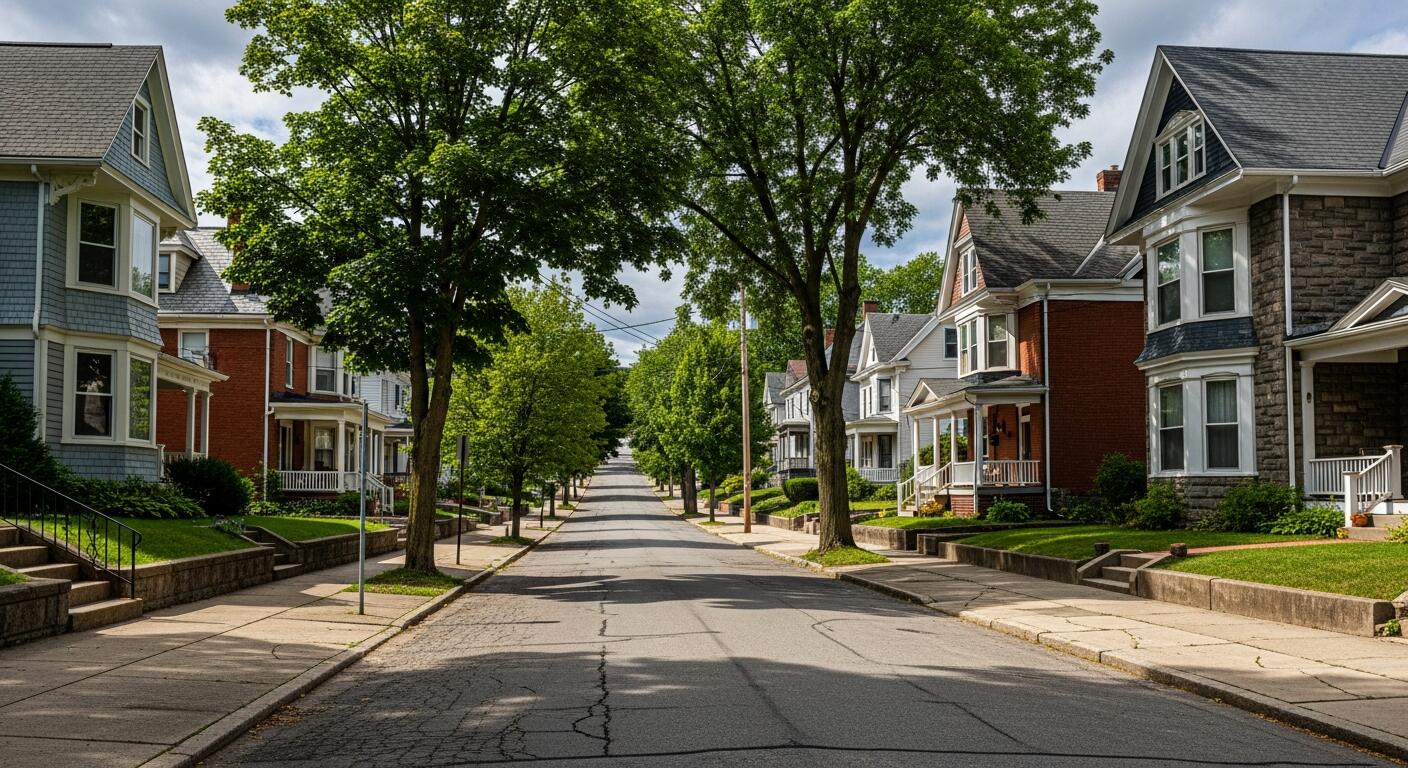
Herkimer County's housing stock skews older than the national average, and that age drives nearly every restoration decision we make. Many village homes date to the mill era of the late 1800s and early 1900s, while rural farmhouses are often older still.
Construction Types We Encounter
- Balloon-frame homes - open wall cavities let water and smoke travel from basement to attic without obstruction, so drying and deodorizing must address the full height of the wall
- Fieldstone and rubble foundations - porous, irregular, and prone to seepage; they hold moisture and support mold growth long after standing water is gone
- Brick and stone masonry - common in Little Falls and Herkimer village, requiring careful soot cleaning that will not etch historic surfaces
- Plaster and lath walls - absorb water differently than drywall and often need targeted drying rather than automatic removal
- Post-war ranches and split-levels - finished basements with carpet, paneling, and drop ceilings that trap water
- Seasonal Adirondack camps - unoccupied for months, so leaks and mold go undetected until spring opening
How Age Affects the Work
- Pre-1980 materials may contain asbestos or lead, so testing precedes demolition
- Knob-and-tube or ungrounded wiring raises fire risk and complicates post-flood electrical clearance
- Cast iron and clay sewer laterals crack and root-intrude, increasing sewage backup frequency
- Original single-pane windows and thin insulation encourage condensation and hidden mold
Environmental Conditions & Damage Implications
Climate and geology in the Mohawk Valley create conditions that accelerate both water intrusion and microbial growth.
Climate Factors
- Humid continental climate with cold, snow-heavy winters and warm, muggy summers
- Annual precipitation spread across all twelve months, with no true dry season for structures to recover
- Substantial lake-effect and orographic snowfall in the northern towns, producing heavy spring melt
- Repeated freeze-thaw cycles that crack foundations, mortar joints, and exterior masonry
Soil, Water, and Air
- Glacial till and dense clay subsoils drain slowly, holding hydrostatic pressure against basement walls
- Alluvial soils along the Mohawk floodplain shift and settle, opening gaps around slabs and utility penetrations
- Hard well water in rural areas leaves mineral scale that shortens the life of supply lines and water heaters
- Agricultural runoff and septic overflow can contaminate floodwater, elevating cleanup to sewage-grade protocols
- Wood smoke from stoves and outdoor boilers layers onto existing indoor air problems after a fire event
Moisture buildup can trigger mold growth behind walls or inside ductwork. We identify the source, remove contamination, and restore safe indoor air rather than covering the symptom with paint or sealant. Post-flood drying targets documented moisture readings in framing, subfloor, and masonry before any rebuild begins.
Working With Insurance and Understanding Your Restoration Timeline in the Mohawk Valley
Clear communication does more to reduce stress than any piece of equipment. After a flood or fire, most Herkimer County property owners are dealing with an insurance carrier for the first time, and the vocabulary alone can be disorienting.
What Transparent Restoration Looks Like
- A walkthrough that explains what is salvageable, what is not, and why
- Written moisture readings and photo documentation from the first visit forward
- Plain-language explanation of water categories - clean, gray, and sewage-contaminated - and how each changes the scope
- Direct coordination with your adjuster, including scope sheets and itemized documentation
- Daily updates on drying progress rather than silence between equipment checks
- Honest discussion of what falls outside coverage, such as gradual seepage or maintenance-related mold
A Typical Sequence After a Loss
- Emergency response - stop the source, extract standing water, and stabilize the structure
- Assessment and documentation - map moisture, photograph damage, and inventory affected contents
- Containment and removal - isolate contaminated zones, remove unsalvageable porous materials
- Drying and treatment - air movers, dehumidifiers, antimicrobial application, and odor neutralization
- Verification - confirm materials have reached dry standard before closing walls
- Reconstruction - drywall, flooring, trim, and paint to return the space to pre-loss condition
Regional flood events like the Halloween storm that drew the National Guard to the Herkimer County Emergency Operations Center create heavy demand across Dolgeville, Frankfort, and neighboring towns. During those surges, honest scheduling matters. We tell property owners where they stand in the queue and what steps they can take in the meantime - moving contents off wet floors, shutting off power to affected circuits, and photographing everything before disposal.
Keeping records of maintenance, prior claims, and repair receipts strengthens your position with a carrier and speeds approval when the next storm rolls through the valley.