
Damage Restoration in Highland, NY
- Damage Restoration Services Overview
- Common Damage Restoration Issues in Highland, New York
- Neighborhoods We Serve in Highland
- Seasonal Damage Patterns in Highland
- Housing Characteristics & Restoration Considerations
- Environmental Conditions & Damage Implications
- Start-to-Finish Restoration for Highland's River Valley Homes
Damage Restoration Services Overview
Damage spreads fast. A burst supply line, a backed-up sewer lateral, or a kitchen fire can turn a comfortable Highland home into an unsafe structure within hours, and the clock starts the moment water, smoke, or contamination touches building materials.
Our certified crews respond around the clock across Highland and the surrounding Hudson Valley with a full range of restoration services:
- Water Damage Restoration - extraction, structural drying, and moisture mapping after leaks, appliance failures, and storm intrusion
- Flooded Basement Cleanup - pump-out, content removal, and dehumidification for below-grade spaces
- Sewage Cleanup - containment, removal of contaminated materials, and antimicrobial treatment of Category 3 losses
- Fire Damage Restoration - debris removal, board-up, structural cleaning, and reconstruction
- Smoke Damage Restoration - soot removal, thermal fogging, HVAC cleaning, and odor neutralization
- Mold Removal - containment, HEPA filtration, and removal performed under New York mold licensing rules
Benefits for Highland residents include:
- Faster drying that limits secondary mold growth
- Documentation and moisture readings that support insurance claims
- IICRC-certified technicians, fully insured and bonded in New York
- One team from emergency mitigation through final repairs
Common Damage Restoration Issues in Highland, New York
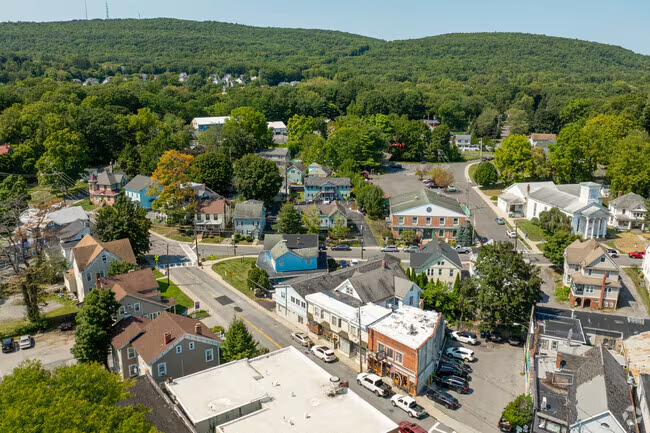
Highland sits along the western bank of the Hudson River in Ulster County, where river-valley humidity, clay-heavy soils, and older housing stock combine to create recurring restoration problems.
Frequent Causes of Loss
- Frozen and split pipes in unheated crawl spaces, garages, and exterior walls during January and February cold snaps
- Groundwater intrusion through fieldstone and block foundations after heavy Hudson Valley rain events
- Sump pump failure or power loss during storms, leading to flooded basements
- Sewer backups where older laterals are compromised by tree roots or heavy stormwater loading
- Chimney, woodstove, and space heater fires during long heating seasons
- Kitchen grease fires that push soot through the entire HVAC system
- Hidden mold behind finished basement paneling, under vinyl flooring, and in attic sheathing
Warning Signs Highland Homeowners Should Not Ignore
- A musty odor that intensifies on humid days or when the air handler runs
- Efflorescence, white chalky streaking, or dampness on basement walls
- Cupped, buckled, or discolored hardwood near dishwashers, refrigerators, and bathrooms
- Slow floor drains or gurgling fixtures - often the first indicator of a sewer issue
- Lingering smoke odor weeks after a small fire, signaling soot residue inside ductwork and wall cavities
- Peeling paint, staining on ceilings, or rusted fasteners around roof penetrations
Small signals rarely stay small. Calling early keeps a mitigation job from becoming a rebuild.
Neighborhoods We Serve in Highland
We respond throughout the hamlet of Highland and the wider Town of Lloyd, plus neighboring river communities on both sides of the Hudson.
- Highland hamlet center, including homes near Vineyard Avenue and Main Street
- Neighborhoods surrounding the Walkway Over the Hudson and Hudson Valley Rail Trail corridor
- Riverside properties near the Mid-Hudson Bridge approach and Route 9W
- Clintondale, Modena, and the orchard country west of the village
- Milton, Marlboro, and Plattekill along the river road
- New Paltz, Gardiner, and the Wallkill River flats
- Poughkeepsie and Lloyd-adjacent Dutchess County neighborhoods across the bridge
Coverage extends to farm properties, orchard outbuildings, seasonal cottages, multi-unit rentals, and commercial spaces along the Route 44/55 and 9W corridors. Crews are dispatched with drying and extraction equipment on board so mitigation begins on the first visit.
Seasonal Damage Patterns in Highland
Winter (December - February)
- Frozen pipe bursts in exterior walls, crawl spaces, and vacant seasonal homes
- Ice damming on low-slope and north-facing roofs, pushing meltwater into ceilings
- Peak season for heating equipment fires, chimney fires, and smoke damage
Spring (March - May)
- Snowmelt combined with Hudson Valley rain saturating soil and overwhelming sump pumps
- Flooded basements in homes with block or stone foundations
- Sewer backups when municipal and septic systems take on excess groundwater
Summer (June - August)
- High humidity accelerating mold growth in basements, closets, and attics
- Severe thunderstorms and tropical remnants driving wind-driven rain intrusion
- Condensation damage around undersized or poorly maintained air conditioning systems
Fall (September - November)
- Hurricane remnants and nor'easters causing roof leaks and river-adjacent flooding
- Clogged gutters overflowing against foundations
- First fires of the season igniting creosote and dust in unswept flues
Housing Characteristics & Restoration Considerations
Highland's housing mix spans centuries, and each construction era responds differently to water, fire, and mold.
Common Property Types
- 19th-century farmhouses and Victorians with balloon framing, plaster on wood lath, and stone foundations
- Mid-century ranches and capes with block foundations and finished basement rec rooms
- 1970s - 1990s colonials and split-levels with drywall, fiberglass batt insulation, and forced-air systems
- Newer subdivisions and townhomes with engineered lumber and tighter building envelopes
- Converted farm structures, orchard outbuildings, and seasonal river cottages
How Construction Shapes the Restoration Plan
- Balloon framing lets water and smoke travel vertically between floors, so we open and inspect cavities rather than surface-drying
- Plaster and lath holds moisture far longer than drywall and needs targeted injection drying to be saved
- Stone and block foundations wick groundwater, requiring dehumidification plus drainage recommendations after a flooded basement
- Finished basements with paneling and carpet pad hide mold growth and often require selective demolition
- Forced-air ductwork distributes soot and mold spores house-wide, making HVAC cleaning part of fire and smoke restoration
- Crawl spaces with exposed soil demand vapor barriers to stop recurring humidity problems
- Private septic systems in outlying areas can surcharge into basements, requiring full Category 3 sewage protocols
We document pre-loss materials and finishes so reconstruction matches the character of older Highland homes.
Environmental Conditions & Damage Implications
The lower Hudson Valley climate creates conditions that both cause damage and complicate drying.
Climate and Moisture
- Humid continental climate with hot, sticky summers and freeze-thaw winters
- Roughly 45 inches of annual precipitation, spread evenly across the year
- Summer indoor humidity frequently above the 60 percent threshold where mold colonizes
- Repeated freeze-thaw cycles that crack foundation mortar and open new water paths
Soil and Groundwater
- Glacial till and clay-rich soils drain slowly, holding water against foundation walls
- Shallow bedrock in parts of the Town of Lloyd forces runoff sideways toward basements
- Sloped river-facing lots channel stormwater downhill into below-grade living space
- Elevated seasonal water tables that keep sump pumps cycling for weeks
Air and Water Quality Factors
- Well water in outlying areas can carry iron and minerals that stain after a loss
- Pollen and agricultural dust from surrounding orchards load HVAC filters, worsening post-fire soot circulation
- Smoke particles bond aggressively to cool surfaces in winter, requiring specialized cleaning agents
- Tight modern envelopes trap moisture and odor, so containment and HEPA filtration are used on every mold and smoke job
Because of these conditions, drying plans in Highland account for outdoor dew point, not just square footage - a job that dries in three days in April may need more equipment in August.
Start-to-Finish Restoration for Highland's River Valley Homes
Highland homeowners rarely face a single problem. A flooded basement becomes a mold issue; a kitchen fire leaves both water damage from suppression and soot throughout the ductwork. Handing those phases to separate contractors slows everything down.
We manage the entire process under one roof.
How the Process Works
- Emergency call and dispatch - 24/7 response with equipment already loaded for extraction, containment, or board-up
- Safety assessment - power, structural stability, contamination category, and air quality evaluated before work begins
- Containment and stabilization - tarping, board-up, negative air machines, and plastic barriers to stop damage from spreading
- Extraction and debris removal - standing water pumped out, sewage-contaminated porous materials removed and disposed of properly
- Drying and cleaning - air movers, commercial dehumidifiers, soot removal, HVAC cleaning, and antimicrobial application
- Odor neutralization - hydroxyl or ozone treatment and thermal fogging for smoke odor embedded in framing and textiles
- Verification - moisture meters, thermal imaging, and post-remediation clearance documentation
- Reconstruction - drywall, plaster repair, flooring, trim, cabinetry, and paint to return the home to pre-loss condition
What You Get With One Team
- A single point of contact from the first phone call through final walkthrough
- Photo logs, moisture readings, and scope documentation formatted for insurance adjusters
- IICRC-certified water, fire, and mold technicians
- New York State licensed mold contractor status, keeping remediation compliant
- Direct coordination with your carrier so you are not chasing paperwork
- Repairs that respect original materials in Highland's older farmhouses and Victorians
Whether it is groundwater in a Clintondale basement or smoke damage in a Vineyard Avenue colonial, one call starts the whole process.





