
Damage Restoration in Ithaca, NY
- Damage Restoration Services Overview
- Common Damage Restoration Issues in Ithaca, New York
- Neighborhoods We Serve in Ithaca
- Seasonal Damage Patterns in Ithaca
- Housing Characteristics & Restoration Considerations
- Environmental Conditions & Damage Implications
- Storm-Driven Water Intrusion and Modern Drying Technology in Tompkins County
Damage Restoration Services Overview
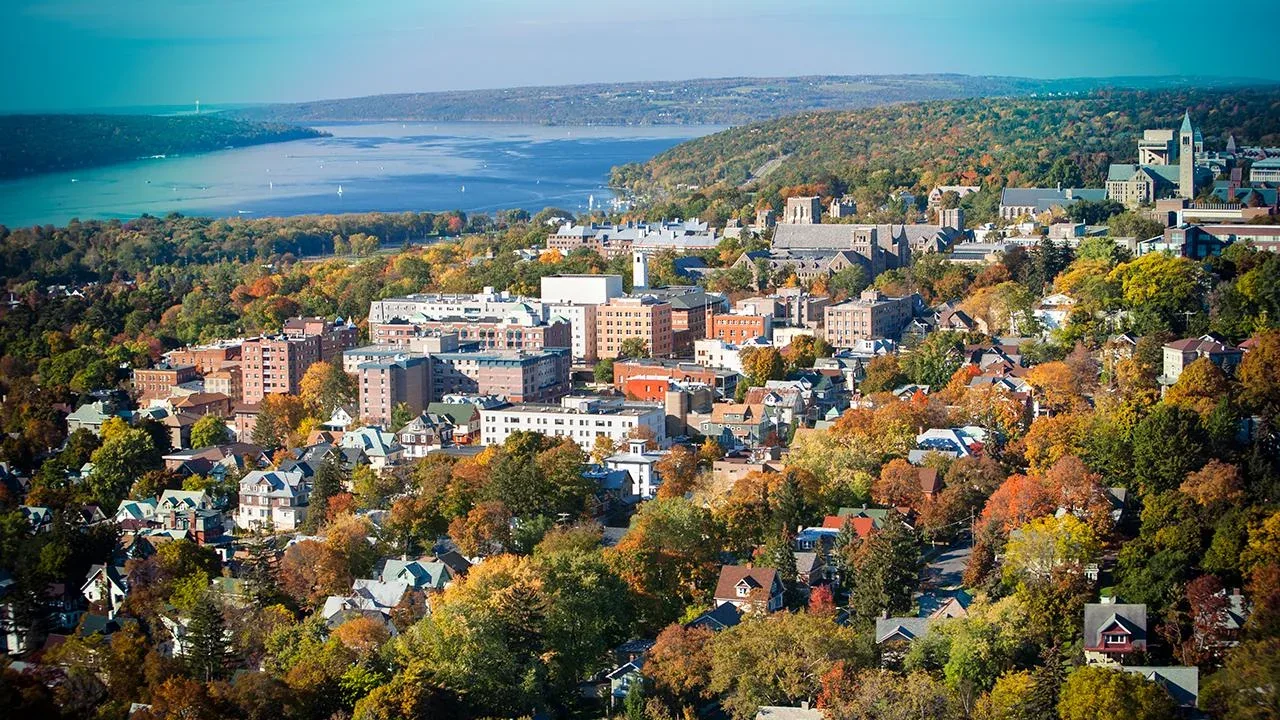
Ithaca sits in a valley carved by glaciers, where more than 150 waterfalls fall within ten miles of downtown - a beautiful landscape that also funnels enormous volumes of water toward homes on the valley floor. That same geography, combined with lake-effect snow, aging housing stock, and severe summer storms like the June 2026 hail event near Lansing and northern Tompkins County, keeps property damage a year-round reality here.
Restoration work in Ithaca covers a connected set of emergencies, and most properties eventually face more than one:
- Water Damage Restoration - burst supply lines, failed water heaters, ice dam leaks, and storm-driven intrusion through damaged roofing
- Flooded Basement - hillside runoff, sump pump failure, and hydrostatic pressure against stone and block foundations
- Sewage Cleanup - backups from saturated municipal lines, failed septic fields, and floor drain surcharges
- Fire Damage Restoration - structural cleaning, board-up, contents recovery, and odor control
- Smoke Damage Restoration - soot removal from surfaces, HVAC systems, textiles, and porous finishes
- Mold Removal - containment, remediation, and moisture-source correction
The benefit of treating these as one discipline is simple: water left behind after a flood or a fire hose becomes mold within days. Coordinated response protects framing, insulation, finishes, and indoor air quality before secondary damage multiplies the repair.
Common Damage Restoration Issues in Ithaca, New York
Local conditions drive predictable failure patterns across Tompkins County properties.
What Causes Damage Here
- Steep-slope runoff - South Hill, East Hill, and Cayuga Heights properties absorb sheet flow that overwhelms grading and window wells
- Freeze-thaw cycling - repeated swings crack foundations, split hose bibs, and rupture pipes in uninsulated crawl spaces
- Ice dams - poorly ventilated attics push meltwater under shingles and into ceilings
- Hail and wind - the June 30, 2026 storm brought hail up to 1.75 inches near Lansing and Myers, bruising shingles and puncturing flashing in ways that leak weeks later
- Combined sewer and septic strain - heavy rain saturates older lines and leach fields, forcing sewage back through basement drains
- Heating and cooking fires - wood stoves, space heaters, and older wiring in student rentals and century homes
Warning Signs Worth Acting On
- Musty odor in basements or closets, strongest after rain
- Ceiling stains, bubbling paint, or nail pops along rooflines
- Efflorescence, white chalky residue, on block or stone foundation walls
- Gurgling floor drains or slow tub drainage during storms
- Lingering smoke odor that returns when humidity rises
- Cupping hardwood, spongy subfloor, or tack strips pulling loose
Catching these early usually means drying and cleaning rather than demolition and rebuild.
Neighborhoods We Serve in Ithaca
Coverage spans the city, the surrounding towns, and the rural corners of Tompkins County.
- City neighborhoods - Fall Creek, Northside, Southside, Belle Sherman, Bryant Park, Downtown and the Commons
- Hillside areas - South Hill, East Hill, Cornell Heights, Cayuga Heights, Forest Home
- Town of Ithaca - Northeast Ithaca, Northwest Ithaca, West Hill, Inlet Valley
- County communities - Lansing, Myers, Dryden, Freeville, Varna, Trumansburg, Ulysses, Newfield, Enfield, Danby, Groton, Brooktondale, Slaterville Springs
- Zip codes - 14850, 14851, 14852, 14853
Each area brings its own quirks: lakefront properties near Myers deal with high water tables, Fall Creek's tightly spaced older homes complicate equipment staging, and rural Enfield and Newfield homes rely on septic systems and private wells that change how sewage cleanup and post-flood sanitizing are handled.
Seasonal Damage Patterns in Ithaca
- December through February - frozen and burst pipes lead the list, along with ice dam leaks into upper-floor ceilings. Heating-related fire and smoke damage peaks during extended cold snaps.
- March and April - snowmelt plus spring rain saturates hillside soils. Flooded basements, sump pump burnout, and sewage backups cluster in this window.
- May and June - severe thunderstorms bring hail and wind. Roof and siding breaches from events like the June 2026 storm allow water intrusion that surfaces as interior damage over following weeks.
- July and August - humidity in the valley climbs, and mold growth accelerates in basements, crawl spaces, and behind vinyl wallcoverings.
- September and October - remnants of tropical systems deliver heavy rainfall; clogged gutters and leaf-blocked drains push water toward foundations.
- November - first freezes catch unprotected exterior plumbing, and chimney and flue issues trigger smoke damage as wood stoves come back online.
Knowing the calendar allows preventive steps - gutter clearing before leaf drop, pump testing before thaw, and roof inspection after every hail event.
Housing Characteristics & Restoration Considerations
Ithaca's housing stock skews old. A large share of city homes predate 1940, and many downtown and Fall Creek properties date to the late 1800s. Age changes every part of the restoration approach.
Construction Types and Their Impact
- Stone and rubble foundations - porous, irregular, and prone to seepage; drying requires targeted airflow and sometimes controlled demolition of finished basement walls
- Balloon-framed walls - open stud cavities let water and smoke travel between floors, so inspection must extend well beyond the visible damage
- Plaster and lath - holds moisture longer than drywall and needs careful moisture mapping before anyone decides to remove it
- Knob-and-tube remnants and older wiring - a persistent fire risk in unrenovated rentals and attics with added insulation
- Converted student rentals - multiple kitchens and baths mean more supply lines, more drains, and more backup potential
- Newer builds in Lansing and Northeast Ithaca - tighter envelopes trap humidity, making mold a concern even without a plumbing failure
Restoration Priorities by Home Type
- Document historic trim, flooring, and millwork before any removal so replacement matches
- Map moisture with thermal imaging rather than cutting exploratory holes in plaster
- Contain work areas in multi-unit buildings to protect neighboring tenants
- Clean HVAC ductwork after fire or sewage events, since older systems distribute contamination quickly
- Correct the moisture source - grading, gutters, sump discharge - before rebuilding finishes
Environmental Conditions & Damage Implications
The physical setting of Ithaca shapes how damage develops and how it must be dried.
Climate and Moisture
- Annual precipitation approaching 40 inches, spread fairly evenly across months
- Roughly 60 to 70 inches of seasonal snowfall, with lake-effect bands off Cayuga Lake
- Summer dew points that keep basements near mold-friendly humidity for weeks
- More than 100 freeze-thaw cycles annually stressing masonry and plumbing
Soil, Water, and Air
- Glacial till and lake-plain clay - slow-draining soils that hold water against foundation walls and raise hydrostatic pressure
- Shale bedrock near the surface - limits absorption on hillsides and sends runoff downslope fast
- High water tables near the inlet, Cayuga waterfront, and Myers - persistent seepage even without a storm
- Hard groundwater in rural wells - mineral scaling that shortens the life of water heaters and supply fittings
- Valley air stagnation - smoke odor and airborne particulate linger longer indoors after a fire
These conditions mean drying targets have to be set against local baselines. Dehumidification is sized for regional humidity, negative-pressure containment prevents spore spread through open old-house framing, and post-remediation verification confirms readings return to normal for comparable materials in an unaffected part of the same structure.
Storm-Driven Water Intrusion and Modern Drying Technology in Tompkins County
Hail rarely floods a house on the day it falls. The June 30, 2026 storm that pushed golf-ball-size hail across Lansing, Myers, Cayuga Heights, and northern Tompkins County created hundreds of small breaches - fractured shingle mats, dented flashing, cracked skylight seals, and split gutter seams. Water then entered slowly over subsequent rain events, soaking attic insulation and wall cavities before any stain appeared on a ceiling.
How a Storm-Related Water Response Progresses
- Emergency stabilization - tarping, board-up, and stopping active intrusion
- Moisture mapping - thermal imaging cameras and penetrating meters trace water paths through insulation, plaster, and framing
- Extraction - truck-mounted and portable units pull standing water from basements and carpeted areas
- Controlled demolition - only saturated, unsalvageable materials come out, with historic finishes protected where possible
- Structural drying - low-grain refrigerant dehumidifiers, axial air movers, and injectidry systems for wall cavities and hardwood
- Antimicrobial application - reduces mold potential in materials that stayed wet more than a day
- Daily monitoring - logged readings continue until materials reach documented dry standard
Equipment That Changes Outcomes
- Desiccant dehumidifiers - effective in cold Ithaca basements where refrigerant units lose capacity
- HEPA air scrubbers and negative air machines - contain spores and soot during mold removal and fire cleanup
- Hydroxyl and ozone generators - neutralize smoke odor at the molecular level rather than masking it
- Ultrasonic contents cleaning - restores soot-covered belongings that once would have been discarded
- Floor drying mats - save hardwood in older homes instead of replacing entire rooms
Combining early inspection after storms with documented drying protocols keeps a hail-damaged roof from becoming a mold remediation project six months later.





