
Damage Restoration in Corning, NY
- Damage Restoration Services Overview
- Common Damage Restoration Issues in Corning, New York
- Neighborhoods We Serve in Corning
- Seasonal Damage Patterns in Corning
- Housing Characteristics & Restoration Considerations
- Environmental Conditions & Damage Implications
- Flood-Prone Basements in the Chemung River Valley: What Corning Owners Should Know
Damage Restoration Services Overview
When water pours through a basement wall on Corning's Northside or smoke settles into a Market Street apartment, the fastest path back to normal starts with trained responders and calibrated equipment. Professional restoration turns a chaotic loss into a documented, step-by-step recovery.
Corning property owners rely on a connected set of services that often overlap during a single event:
- Water Damage Restoration - extraction, structural drying, and moisture mapping after burst pipes, appliance failures, roof leaks, or river-driven flooding.
- Flooded Basement - pump-outs, contents triage, and drying of stone, block, and poured foundations common throughout Steuben County.
- Sewage Cleanup - removal of Category 3 contaminated water, antimicrobial treatment, and safe disposal of porous materials.
- Fire Damage Restoration - stabilization, debris removal, soot cleaning, and reconstruction coordination.
- Smoke Damage Restoration - odor neutralization, HVAC cleaning, and treatment of soot films on glass, wood, and textiles.
- Mold Removal - containment, HEPA filtration, and removal of colonized materials with clearance verification.
Key benefits for local residents include reduced secondary damage, thorough insurance documentation, salvaged belongings, and indoor air quality that supports healthy occupancy - especially in older homes where hidden cavities trap moisture long after the visible mess is gone.
Common Damage Restoration Issues in Corning, New York
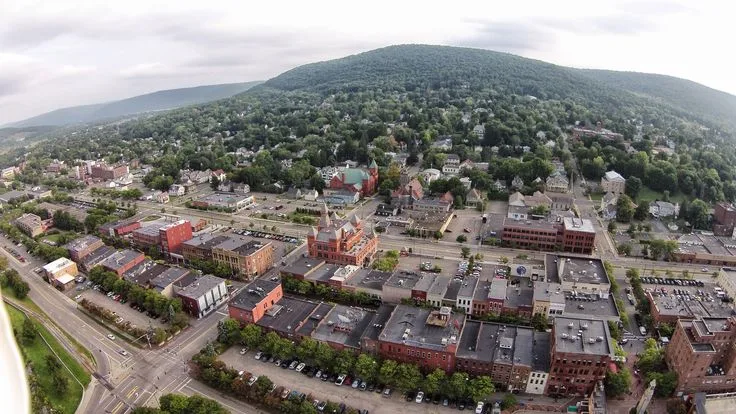
Corning sits in the Chemung River valley, ringed by steep hillsides that shed rainwater and snowmelt straight toward low-lying neighborhoods. That geography shapes nearly every loss local crews respond to.
Local Causes of Damage
- Chemung and Cohocton river rises during spring thaw and tropical remnant storms - the 1972 Agnes flood remains the benchmark event in local memory.
- Hillside runoff overwhelming downspouts, window wells, and foundation drains on the Southside and along the valley walls.
- Frozen and burst supply lines in unheated crawl spaces during deep January cold.
- Sanitary and combined sewer surcharging that pushes wastewater up floor drains and laundry standpipes.
- Sump pump failures during multi-day rain or power outages.
- Heating equipment, wood stoves, and chimney fires in older homes during long heating seasons.
- Kitchen grease fires that spread soot through open stairwells in Victorian floor plans.
Warning Signs Worth Acting On
- Musty odors in basements, closets, or behind finished basement paneling.
- Efflorescence, chalky white staining, or bubbling paint on foundation walls.
- Cupped hardwood, soft baseboards, or floor tile that sounds hollow underfoot.
- Sewer gas smells near drains after heavy rain.
- Yellow-brown ghosting above baseboards and around outlets after a fire - a sign soot traveled farther than the burn.
- Recurring allergy or asthma flare-ups that ease when occupants leave the building.
Neighborhoods We Serve in Corning
Restoration teams cover the full city and the surrounding Steuben and Chemung county communities, adjusting methods to each area's housing stock and drainage conditions.
- Gaffer District & Market Street - historic mixed-use buildings with shared walls and upper-floor apartments.
- Northside - established residential streets near the museum corridor and Denison Park.
- Southside - riverfront-adjacent homes with high basement moisture exposure.
- East Corning and Houghton Plot - mid-century homes with block foundations.
- South Corning and Gibson - village and hamlet properties on well and septic systems.
- Painted Post, Riverside, and Erwin - valley-floor neighborhoods vulnerable to river backwater.
- Caton, Lindley, and Campbell - rural hillside properties with long driveways and private utilities.
Surrounding service reach extends toward Big Flats, Horseheads, Elmira, Bath, and Addison for larger commercial and multi-family losses.
Seasonal Damage Patterns in Corning
Damage calls follow a fairly predictable rhythm across the year in the Southern Tier.
- December - February: Frozen pipe bursts, ice dam leaks along eaves, and heating-related fire and smoke damage peak. Space heaters and chimney flues drive many structure fires.
- March - April: Snowmelt combined with saturated, still-frozen ground produces the heaviest flooded basement season. Sump pumps run continuously and sewer lines surcharge.
- May - June: Thunderstorm downpours cause roof leaks, window well flooding, and sudden water intrusion. Mold growth accelerates in basements left damp from spring.
- July - August: Humidity above 60 percent indoors fuels mold colonization on joists, drywall backing, and stored contents. Air conditioning condensate lines clog and overflow.
- September - October: Tropical storm remnants track through the Chemung valley, producing the region's most severe river flooding and widespread sewage cleanup needs.
- November: Heating systems restart, exposing dirty furnaces and neglected flues - a common source of puff-back soot and smoke damage.
Housing Characteristics & Restoration Considerations
Corning's building stock skews old. A large share of homes date to the late 1800s through the 1940s, with a second wave built during postwar expansion and rebuilding after the 1972 flood.
Common Construction Types
- Victorian and Queen Anne frame homes with balloon framing, plaster on wood lath, and tall basements.
- Brick commercial and mixed-use buildings downtown with shared party walls.
- Fieldstone and rubble foundations that wick groundwater continuously.
- Concrete block basements from the 1950s-1970s, often partially finished.
- Modest ranches and capes on slab or crawl space in outlying hamlets.
How Age Affects the Work
- Balloon framing lets fire, smoke, and odor travel vertically through wall cavities, so smoke damage restoration must include cavity inspection, not just surface cleaning.
- Plaster walls hold moisture longer than drywall and may require injection drying or selective demolition to prevent mold behind them.
- Stone foundations cannot be dried like poured concrete; controlled dehumidification and airflow across the wall face matter more than aggressive heat.
- Pre-1978 finishes raise lead paint concerns, and pre-1980 flooring, pipe wrap, and boiler insulation may contain asbestos - both require testing before demolition.
- Knob-and-tube or aging wiring discovered during fire damage restoration often triggers electrical upgrades during reconstruction.
- Finished basements with carpet and paneling almost always need removal after sewage cleanup, since porous materials cannot be sanitized in place.
Environmental Conditions & Damage Implications
The valley's climate and soils create conditions that reward fast, technical drying and careful contaminant handling.
Climate and Moisture Load
- Roughly 35-40 inches of annual precipitation plus 60-plus inches of seasonal snow keeps soils near saturation for months.
- Humid summers push indoor dew points high enough for mold to establish on damp materials within days.
- Hard freeze cycles crack foundation mortar and stress plumbing at exterior walls.
Soils, Groundwater, and Contaminants
- Valley-floor alluvial and glacial outwash soils sit over a shallow water table, producing steady hydrostatic pressure against basement walls.
- Silty clay layers on hillsides shed water laterally toward foundations instead of absorbing it.
- NYSDEC and NYSDOH have overseen investigation and remediation tied to historical glass-industry waste disposal across the greater Corning area. Sampling against state soil cleanup objectives has identified arsenic, barium, chromium, mercury, and elevated lead and cadmium, with a portion of excavated soils classified as hazardous waste.
That legacy matters during restoration. Floodwater and groundwater intrusion can carry fill-material soil into crawl spaces and basements, so sediment is treated as potentially contaminated rather than ordinary mud. Crews use HEPA vacuuming, containment, and proper waste characterization, and they coordinate with regulators when excavation or soil disturbance is part of the repair. Post-fire debris also demands controlled handling, since combustion concentrates metals and particulates in ash residue.
Flood-Prone Basements in the Chemung River Valley: What Corning Owners Should Know
Few places take basement water as seriously as Corning. The Agnes flood reshaped the city, and the levee and floodwall system built afterward protects the valley floor - but interior drainage, sewer backups, and groundwater still put water in basements every year.
What Happens During a Basement Response
- Safety check: power isolation, gas verification, and assessment of whether the water is clean, gray, or sewage-contaminated.
- Extraction: truck-mounted or portable pumps clear standing water, followed by weighted extraction on any salvageable soft goods.
- Contents triage: items are photographed, sorted for cleaning, off-site storage, or disposal - important for both insurance and sentiment.
- Controlled demolition: saturated paneling, insulation, and base drywall are cut back to sound material, with lead and asbestos screening in older homes.
- Sanitizing: after sewage exposure, surfaces receive antimicrobial application and sediment is removed rather than diluted.
- Structural drying: dehumidifiers and air movers run against daily moisture readings until materials reach documented dry standards.
- Verification and rebuild: clearance testing where mold was present, then reconstruction of finishes.
Reducing the Odds of a Repeat
- Install a battery or water-powered backup sump pump - valley outages often coincide with the worst rain.
- Add a backwater valve to guard against sewer surcharge.
- Extend downspouts well past the foundation and regrade soil away from walls.
- Use inorganic basement finishes: closed-cell foam, cement board, and sealed concrete instead of carpet and wood paneling.
- Keep a dehumidifier running through humid months and store belongings on elevated shelving.
- Photograph the basement annually so damage documentation is straightforward if a loss occurs.
Owners who pair fast professional drying with these upgrades typically see smaller, shorter, and less expensive recoveries the next time the river valley gets a soaking.





