
Damage Restoration in Lake Carmel, NY
- Damage Restoration Services Overview
- Common Damage Restoration Issues in Lake Carmel, New York
- Neighborhoods We Serve in Lake Carmel
- Seasonal Damage Patterns in Lake Carmel
- Housing Characteristics & Restoration Considerations
- Environmental Conditions & Damage Implications
- Why Lakeside Basements Need Urgent Attention in Lake Carmel
Damage Restoration Services Overview
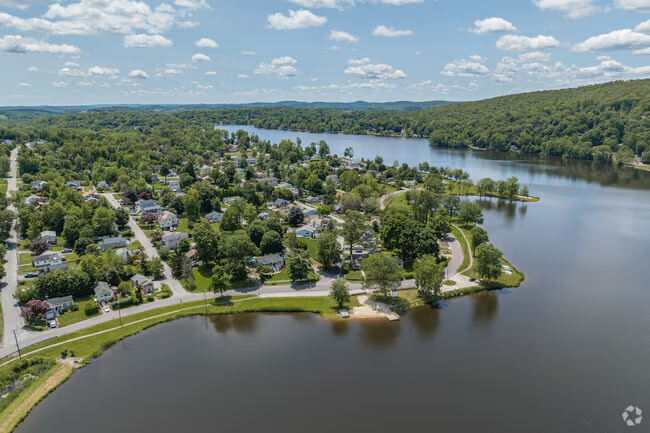
What happens to a house when water gets in and nobody notices for three days? In Lake Carmel, where homes sit on damp ground near a manmade lake built in the 1920s, that question stops being hypothetical fast.
Restoration work covers a wider range of emergencies than most homeowners expect, and the categories overlap constantly. A single incident often triggers two or three service needs at once.
- Water Damage Restoration - extraction, structural drying, and moisture mapping after burst pipes, appliance failures, or roof leaks
- Flooded Basement - pump-out, content triage, and dry-down for below-grade spaces that take on groundwater or runoff
- Sewage Cleanup - containment, removal of contaminated materials, and antimicrobial treatment after backups and septic failures
- Fire Damage Restoration - debris removal, structural stabilization, and rebuild after flame damage
- Smoke Damage Restoration - soot removal from framing and finishes, plus odor neutralization in porous materials
- Mold Removal - containment barriers, HEPA filtration, and removal of colonized building materials
The benefit to Lake Carmel residents is straightforward: one team that recognizes how lakeside humidity turns a small leak into a mold problem, and how a kitchen fire becomes a water job the moment the hoses shut off. Fast response protects framing, insulation, and indoor air quality before secondary damage multiplies the repair scope.
Common Damage Restoration Issues in Lake Carmel, New York
Proximity to water shapes nearly every restoration call in this community. Homes near the shoreline deal with damp ground, seasonal runoff, and indoor humidity that inland properties simply escape.
Local Conditions That Drive Damage
- High water tables near the lake that push moisture through foundation walls and slab joints
- Steep grades on side streets that funnel snowmelt and storm runoff toward lower-lying homes
- Older septic systems in saturated soil, which back up when the ground can no longer absorb effluent
- Seasonal cottages converted to year-round use, often with under-insulated crawl spaces and pipes
- Woodstoves and supplemental heat sources that raise fire and smoke risk through winter
Warning Signs Worth Acting On
- A musty smell in the basement that returns every time humidity rises
- Efflorescence - white chalky residue - on block or poured foundation walls
- Cupping or darkening at the edges of hardwood flooring on the first floor
- Slow drains on multiple fixtures at once, a common precursor to sewage backup
- Staining on ceilings near chimney chases or bathroom vents
- Soot film on window glass or lampshades after a minor cooking or fireplace incident
A wet lakeside basement deserves urgent treatment. Damp that close to the water rarely dries out on its own, and mold colonies establish themselves in insulation and framing within days, not weeks.
Neighborhoods We Serve in Lake Carmel
Coverage extends across the hamlet and the surrounding Town of Kent, including shoreline streets and the hillside developments above them.
- Shoreline and lakefront streets ringing Lake Carmel itself
- The dense grid of side roads off Route 52 and Gipsy Trail Road
- Terrace and hillside sections where runoff collects at the base of slopes
- Nearby Kent Cliffs, Ludingtonville, and Farmers Mills
- Adjacent communities including Carmel, Mahopac, Brewster, Patterson, and Putnam Lake
Each pocket presents different challenges. Lakefront properties need aggressive dehumidification and vapor control. Hillside homes more often face gravity-fed runoff entering through window wells and garage slabs. Older converted cottages tend to hide moisture behind paneling and drop ceilings, which means moisture meters and thermal imaging come out before any demolition begins.
Seasonal Damage Patterns in Lake Carmel
Winter (December - February)
- Frozen and burst supply lines in crawl spaces and unheated additions
- Ice dams forcing meltwater under shingles and into wall cavities
- Chimney and woodstove fires, followed by smoke damage throughout the structure
Spring (March - May)
- Peak season for flooded basements as snowmelt meets saturated ground
- Septic backups when the water table rises above leach field depth
- Mold growth accelerating as temperatures climb and basements stay wet
Summer (June - August)
- Sustained indoor humidity feeding mold on joists, boxes, and stored fabrics
- Thunderstorm downpours overwhelming gutters and sump pumps
- Condensation damage on uninsulated ductwork and cold-water lines
Fall (September - November)
- Tropical storm remnants delivering heavy rain over short windows
- Clogged gutters from leaf fall directing water against foundations
- Early heating season fires as furnaces and flues restart after months idle
Housing Characteristics & Restoration Considerations
Lake Carmel's housing stock traces back to the community's origins as a lake resort development, and that history shows up in the walls.
Typical Construction Found Here
- Mid-century seasonal cottages later expanded for full-time living
- Post-war ranches and split-levels with block foundations
- Newer colonials on the outer hillsides with poured concrete basements
- Detached garages, sheds, and boathouses close to grade
How Age and Materials Affect the Work
- Block foundations hold water inside their cores, so drying requires cavity ventilation, not just surface airflow
- Wood paneling and drop ceilings conceal moisture, requiring inspection openings before scope is finalized
- Original plaster and lath absorbs smoke odor deeply and often needs sealing rather than surface cleaning
- Cast iron and clay waste lines in older homes crack and root-intrude, raising sewage backup risk
- Blown-in and batt insulation in converted cottages must be removed once saturated - it cannot be dried in place
- Knob-and-tube or early wiring in the oldest homes influences how fire damage is stabilized and rebuilt
Finished basements are common here and complicate every water event. Carpet, subfloor, framing, and insulation each dry at different rates, so documented moisture readings guide what gets saved and what gets removed.
Environmental Conditions & Damage Implications
Putnam County sits in a humid continental climate with cold, snow-heavy winters and warm, muggy summers - conditions that push buildings through repeated wet-dry cycles.
Site Conditions Around the Lake
- Soil - glacial till over shallow bedrock, with poor percolation that holds runoff near foundations
- Water table - elevated near the shoreline and slow to drop after heavy rain or snowmelt
- Humidity - summer dew points regularly high enough to sustain mold growth without any leak at all
- Tree canopy - heavy shade slows exterior drying and keeps north-facing walls damp
- Well and septic reliance - many properties operate on private systems sensitive to ground saturation
What This Means for Restoration
- Drying plans account for outdoor dew point, since open windows can add moisture rather than remove it
- Dehumidification runs longer near the lake than equivalent work at inland addresses
- Post-remediation verification includes air sampling, because spore counts stay elevated in humid microclimates
- Sewage cleanup includes assessment of septic function, not just interior sanitation
- Smoke odor treatment factors in tight, weatherized envelopes that trap particulate indoors
Bedrock close to the surface also limits how well French drains and regrading perform, which is why interior moisture control often carries more weight than exterior fixes alone.
Why Lakeside Basements Need Urgent Attention in Lake Carmel
A wet basement three streets from the lake behaves differently than a wet basement in a dry inland town. The surrounding soil stays saturated, the vapor drive runs inward year-round, and passive drying almost never finishes the job.
The Sequence That Protects the Structure
- Stop the source - shut off supply lines, clear the drain, or divert exterior runoff before extraction begins
- Extract standing water - submersible pumps and truck-mounted extraction remove bulk water first
- Map the moisture - meters and thermal imaging identify how far water traveled into walls, insulation, and subfloor
- Assess contamination category - clean water, gray water, and sewage each require different handling and disposal
- Remove unsalvageable materials - saturated insulation, carpet pad, and swollen particleboard come out
- Establish drying conditions - air movers plus low-grain refrigerant dehumidifiers pull moisture from framing and masonry
- Monitor daily - readings are logged until materials reach dry standard, not until surfaces feel dry
- Verify and rebuild - clearance testing where mold was present, then reconstruction of removed finishes
Common Mistakes We See Locally
- Running a single household dehumidifier in a large finished basement and assuming it's handling the load
- Reinstalling carpet over a subfloor that still reads wet, which seeds mold underneath
- Painting over water-stained block instead of addressing the moisture path behind it
- Cleaning a sewage backup with household products, leaving contamination in porous materials
- Waiting out a musty smell through summer, when humidity guarantees it will get worse
Water damage, mold growth, and sewage contamination link together closely near the lake. Treating them as one continuous problem - rather than three separate calls months apart - keeps repair scope smaller and indoor air cleaner for the people living there.





