
Damage Restoration in Utica, NY
- Damage Restoration Services Overview
- Common Damage Restoration Issues in Utica, New York
- Neighborhoods We Serve in Utica
- Seasonal Damage Patterns in Utica
- Housing Characteristics & Restoration Considerations
- Environmental Conditions & Damage Implications
- From Emergency Response to Final Paint: One Contractor in Utica
Damage Restoration Services Overview
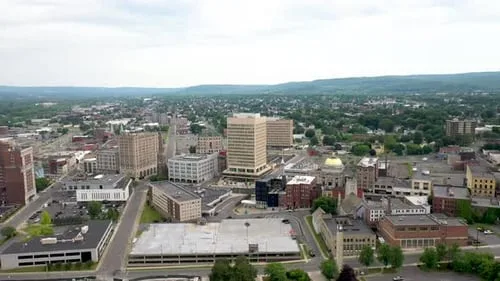
Damage spreads on its own schedule, not yours. In a Utica home, water from a burst supply line reaches drywall, subfloor, and framing within hours, and smoke residues become acidic and start etching surfaces almost immediately after a fire is out.
Fast, coordinated response limits how much of your property has to be replaced instead of repaired. Restoration teams serving Utica and Oneida County handle the full range of property emergencies:
- Water Damage Restoration - emergency extraction, structural drying, dehumidification, and moisture monitoring after pipe breaks, appliance failures, and roof leaks
- Flooded Basement - pump-out, contents removal, sanitizing, and drying of foundation walls and slabs common in older Utica homes
- Sewage Cleanup - safe removal of Category 3 contamination from backups, floor drain overflows, and failed laterals
- Fire Damage Restoration - board-ups, roof tarping, debris removal, contents packouts, and full reconstruction
- Smoke Damage Restoration - soot removal, HVAC cleaning, puff back cleanup, and odor neutralization
- Mold Removal - containment, affected material removal, HEPA filtration, and correcting the moisture source
The benefit for homeowners is simple: one team from emergency mitigation through framing, drywall, flooring, and paint, plus documentation that supports the insurance claim from the first day.
Common Damage Restoration Issues in Utica, New York
Utica's combination of long freezing winters, aging housing stock, and Mohawk Valley drainage patterns creates a predictable set of restoration calls year after year.
What Causes Most Damage Locally
- Frozen and burst pipes in uninsulated crawl spaces, exterior walls, and unheated second-floor bathrooms of older duplexes
- Ice dams on steep-pitched roofs that force meltwater under shingles and into ceilings
- Snowmelt and spring rain saturating soil around stone and block foundations, pushing water through basement walls
- Combined and overloaded sewer lines in older neighborhoods that back up into floor drains and basement fixtures
- Sump pump failures during power outages from lake-effect storms and summer thunderstorms
- Furnace puff backs and chimney fires from oil-fired and older heating systems running hard through winter
- Kitchen fires and electrical faults in homes with legacy wiring and undersized panels
Warning Signs Worth Acting On
- Musty or earthy odors in basements, closets, or near baseboards
- Staining, bubbling paint, or soft spots on drywall and ceilings
- Efflorescence - white powdery deposits - on foundation walls
- Cupping or buckling hardwood and lifting vinyl seams
- Fine black soot film on lampshades, ceilings, and around HVAC registers
- Gurgling drains or slow floor drains before a full sewage backup
- Persistent smoke odor that returns when humidity rises
Any of these signals that moisture or residue is still active behind finished surfaces, where household cleaning cannot reach it.
Neighborhoods We Serve in Utica
Restoration crews based near 1500 Bleecker St respond across the city and the wider Mohawk Valley.
- East Utica - dense blocks of early 1900s two-family homes with stone basements
- West Utica and Cornhill - large Victorian and Foursquare houses with plaster interiors
- South Utica and the Parkway area - mid-century homes with finished basements and attached garages
- North Utica - properties near the Mohawk River flood plain and Barge Canal
- Brewery District and Downtown - mixed-use and commercial buildings
- Deerfield, New Hartford, Whitesboro, Yorkville, and Marcy
- Rome, Clinton, Sauquoit, Frankfort, Herkimer, and the rest of Oneida County
Local familiarity matters. Crews already know which streets sit low, which blocks share older sewer infrastructure, and how municipal permitting works when reconstruction follows mitigation.
Seasonal Damage Patterns in Utica
Each season brings a different mix of emergencies, and knowing the pattern helps homeowners prepare before the call becomes urgent.
- December through February - peak frozen and burst pipe season, ice dam ceiling leaks, chimney and space heater fires, and furnace puff backs coating interiors in oily soot
- March and April - rapid snowmelt plus rain drives flooded basements, foundation seepage, sump pump overload, and sewer backups
- May and June - mold growth accelerates as humidity climbs and spring water intrusion goes unnoticed behind walls
- July and August - thunderstorms, wind-driven rain, roof damage, and power outages that disable sump pumps; lightning-related fires
- September and October - remnants of tropical systems bring heavy rainfall; heating systems restart and reveal cracked heat exchangers and flue problems
- November - first hard freezes catch outdoor spigots, hose bibs, and vacant-property plumbing
Mold remediation calls trail water events by two to six weeks, which is why drying documentation from the original loss matters so much.
Housing Characteristics & Restoration Considerations
Utica's housing stock skews old - a large share of homes date to before 1940 - and that age shapes nearly every restoration decision.
Construction Types You'll Find
- Balloon-framed homes where wall cavities run uninterrupted from basement to attic, letting water, smoke, and fire travel vertically with no stops
- Stone and rubble foundations that absorb and hold moisture, complicating basement drying
- Plaster and wood lath walls that hold water far longer than drywall and require careful drying to avoid delamination
- Two-family and multi-family layouts where a loss in one unit affects shared walls, stacks, and mechanicals
- Knob-and-tube remnants and older panels that must be evaluated after any water or fire event
- Finished basements added in the 1960s-1980s with paneling and carpet over concrete - prime mold territory after flooding
How That Changes the Work
- Smoke and soot need tracing through cavities, not just surface cleaning of the fire room
- Drying plans use cavity injection and controlled demolition rather than surface air movement alone
- Asbestos and lead-safe practices apply to older flooring, insulation, and painted trim
- Reconstruction often means matching historic trim profiles, plaster textures, and hardwood species
- Mold containment must account for open chases and unsealed basement stairwells
Handling mitigation and rebuild under one contractor keeps these details from getting lost between trades.
Environmental Conditions & Damage Implications
The Mohawk Valley's climate is hard on buildings - roughly 100 inches of annual snowfall in many years, sustained sub-freezing stretches, and humid summers all push moisture into places it doesn't belong.
Local Conditions That Drive Damage
- Freeze-thaw cycling opens mortar joints, foundation cracks, and roof flashing seams season after season
- Heavy lake-effect snow loads that melt against warm roof decks and create ice dams at eaves
- Clay-heavy and glacial till soils that drain slowly, holding hydrostatic pressure against basement walls
- Mohawk River and Sauquoit Creek proximity raising groundwater during spring high water
- Summer dew points in the 60s that keep basements above the 60 percent relative humidity threshold where mold thrives
- Hard, mineral-rich water that shortens the life of water heaters, supply lines, and valve seats
What That Means for Restoration
- Basement drying requires dehumidification sized for masonry, not just fans
- Post-fire indoor air quality work includes HEPA filtration and full duct cleaning, since tightly sealed winter homes recirculate soot
- Mold remediation pairs removal with moisture control - grading, downspout extensions, sump discharge, and vapor barriers
- Sewage cleanup includes antimicrobial treatment of porous masonry that absorbed contaminated water
- Clearance moisture readings should be verified against local seasonal baselines before rebuild begins
From Emergency Response to Final Paint: One Contractor in Utica
The biggest source of delay after a loss is handoffs - one company extracts water, another demos, a third rebuilds, and no one owns the timeline. Utica homeowners get a cleaner outcome when mitigation and reconstruction sit with a single team that documents everything for the insurance carrier.
How the Process Typically Runs
- Emergency call and dispatch - 24/7 response with crews rolling toward the property quickly, day or night
- Make safe - board-ups, roof tarping, utility shutoffs, and stabilization to stop further loss
- Assessment and documentation - moisture mapping, thermal imaging, photos, and a written scope shared with your adjuster
- Extraction and mitigation - pump-out, controlled demolition, soot removal, and antimicrobial treatment of contaminated areas
- Structural drying - air movers and dehumidifiers with daily readings until materials hit dry standard
- Contents handling - packouts, cleaning, deodorizing, and secure storage of salvageable belongings
- Odor and air quality - HVAC cleaning, HEPA filtration, hydroxyl or thermal fogging where appropriate
- Reconstruction - framing, insulation, drywall or plaster repair, flooring, trim, and paint back to pre-loss condition
- Final walkthrough - verification readings, punch list, and closeout paperwork for the claim
What Homeowners Should Do First
- Get everyone out and stay out after a fire until the structure is cleared
- Shut off water at the main if a pipe or supply line failed
- Avoid contact with sewage-affected water and keep children and pets away
- Photograph conditions before moving anything, if it's safe to do so
- Don't run HVAC after a fire - it spreads soot through the whole house
- Call your insurer and a restoration contractor the same day
Local crews serving Utica, Rome, New Hartford, and Oneida County work directly with adjusters so the claim moves while the drying equipment is already running.





