
Damage Restoration in Rome, NY
- Damage Restoration Services Overview
- Common Damage Restoration Issues in Rome, New York
- Neighborhoods We Serve in Rome
- Seasonal Damage Patterns in Rome
- Housing Characteristics & Restoration Considerations
- Environmental Conditions & Damage Implications
- Storm and Tornado Recovery Lessons from Rome's 2024 Disaster
Damage Restoration Services Overview
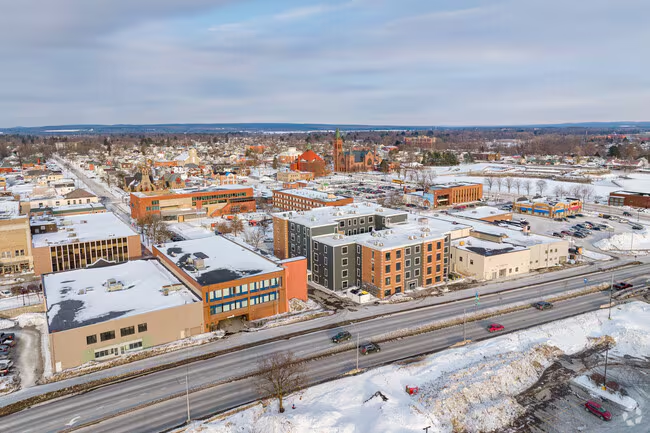
Rome sits in the Mohawk Valley where lake-effect snow, spring snowmelt, and severe summer storms all converge on a housing stock that includes homes built well before modern drainage standards. The July 2024 EF-2 tornado showed how quickly this city can go from a normal Tuesday to stripped roofs, collapsed walls, and water pouring into hundreds of interiors at once.
Restoration work here covers a connected group of services, and most jobs involve more than one:
- Water damage restoration - extraction, structural drying, and moisture mapping after burst pipes, roof breaches, or appliance failures
- Flooded basement cleanup - pumping, sump system evaluation, and drying of foundation walls and slab
- Sewage cleanup - removal of Category 3 contamination, disinfection, and safe disposal of porous materials
- Fire damage restoration - board-up, debris removal, structural cleaning, and rebuilding of damaged assemblies
- Smoke damage restoration - soot removal from framing and contents, HVAC cleaning, and odor neutralization
- Mold removal - containment, HEPA filtration, material removal, and correction of the moisture source
The benefit for Rome property owners is straightforward: fast moisture control protects framing and drywall, and thorough documentation supports the insurance claim that pays for the repair.
Common Damage Restoration Issues in Rome, New York
Local geography drives most of the calls. The Mohawk River, Wood Creek, and the Erie Canal corridor keep groundwater high across low-lying parts of the city, while heavy clay soil sheds rainfall toward foundations rather than absorbing it.
Frequent Causes of Loss
- Frozen and burst supply lines in uninsulated crawl spaces, garages, and older exterior walls
- Ice dams on low-pitch roofs that push meltwater under shingles and into ceilings
- Sump pump failures and power outages during spring thaw and heavy rain
- Sanitary sewer backups when combined flows overwhelm older municipal lines
- Storm-driven roof breaches, including the widespread damage seen downtown along James Street in July 2024
- Chimney, woodstove, and cooking fires during long heating seasons
- Hidden mold behind finished basement paneling and beneath vinyl flooring
Warning Signs Worth Acting On
- Musty odor in the basement that intensifies after rainfall
- Efflorescence, chalky white staining, or peeling paint on foundation walls
- Ceiling stains that change shape or darken between storms
- Slow floor drains, gurgling toilets, or sewer odor near the laundry area
- Lingering smoke smell that returns on humid days after a small kitchen or furnace fire
- Cupped hardwood, soft baseboards, or drywall that crumbles at the seam
Any of these signals moisture that has already moved into building materials, and delay usually converts a drying job into a demolition job.
Neighborhoods We Serve in Rome
Coverage spans the full city and the surrounding Oneida County communities that share the same weather and soil conditions.
- Downtown Rome and the James Street corridor - historic churches, storefronts, and mixed-use buildings hit hardest by the 2024 tornado
- North Rome and the Turin Road area - postwar ranches and split-levels with finished basements
- East Rome and the Erie Boulevard corridor - commercial properties and older multifamily housing
- Griffiss Business and Technology Park - large-footprint commercial and institutional structures
- West Rome and Ridge Mills - rural parcels on private wells and septic systems
- Stanwix Heights, Floyd, Lee Center, Westmoreland, Verona, and Taberg
- Nearby Oneida County markets - Utica, New Hartford, Whitesboro, Oriskany, and Camden
Seasonal Damage Patterns in Rome
Winter (December - February)
- Burst pipes during extended subzero stretches and lake-effect snow events
- Ice dam leaks into attic insulation and upper-floor ceilings
- Heating-season fires from furnaces, woodstoves, and space heaters
- Smoke odor trapped by sealed windows and recirculating HVAC
Spring (March - May)
- Snowmelt combined with rain producing flooded basements citywide
- Sump pump overload and hydrostatic pressure through foundation cracks
- Sewer backups when saturated ground infiltrates older laterals
- First mold growth appearing on materials wet since winter
Summer (June - August)
- Severe thunderstorms, damaging wind, and tornado risk - the July 2024 event remains the benchmark
- Roof breaches and window failures allowing bulk water intrusion
- Humidity-driven mold growth in basements and crawl spaces
- Air conditioning condensate line clogs damaging ceilings below
Fall (September - November)
- Remnant tropical moisture producing prolonged heavy rain
- Clogged gutters channeling water against foundations
- Chimney and flue fires as heating systems restart
- Pre-freeze pipe failures during the first hard cold snap
Housing Characteristics & Restoration Considerations
Rome's building stock is older than the national average, with large concentrations from the late 1800s through the mid-1900s and a postwar wave tied to Griffiss Air Force Base. That mix shapes nearly every restoration plan.
What Local Construction Means for Restoration
- Stone and rubble foundations in pre-1930 homes wick moisture continuously and need extended drying with targeted dehumidification
- Plaster and wood lath holds water far longer than drywall and traps soot deep in its texture after a fire
- Balloon framing in Victorian-era houses lets water and smoke travel vertically between floors without visible signs
- Finished basements from the 1960s through 1980s often hide paneling over furring strips - a reliable location for concealed mold
- Cast iron and clay sewer laterals crack and root-intrude, raising backup risk during heavy flow
- Knob-and-tube or early wiring requires electrical clearance before equipment is placed in wet areas
Materials That Demand Extra Attention
- Asbestos-containing floor tile, pipe wrap, and mastic common in mid-century homes
- Lead paint in pre-1978 properties, which affects demolition methods
- Original hardwood that can often be dried in place with mats rather than replaced
- Historic millwork, doors, and trim in downtown buildings worth restoring rather than discarding
Documenting these conditions early keeps the scope accurate and prevents surprises mid-project.
Environmental Conditions & Damage Implications
Rome averages well over 40 inches of precipitation annually plus heavy seasonal snowfall, and summer dew points frequently sit in the range where mold thrives indoors without mechanical dehumidification.
Local Conditions and Their Effects
- Clay-rich, poorly draining soils - hold water against foundations and increase hydrostatic pressure on basement walls
- High water table near the river and canal corridor - keeps sump systems cycling and slows slab drying
- Freeze-thaw cycling - widens mortar joints and foundation cracks each winter, creating new entry points
- Humid summers - push basement relative humidity above 60 percent, enough to sustain mold on stored cardboard, fabric, and wood
- Long heating season - concentrates combustion byproducts and soot residue inside tightly closed homes
- Hard groundwater in outlying areas - accelerates corrosion in older galvanized supply lines and water heaters
How These Factors Shape the Work
- Moisture meters and thermal imaging identify wet material behind finishes before demolition begins
- Drying plans account for cold-weather air that dehumidifiers handle differently than summer air
- Sewage and floodwater are treated as contaminated regardless of appearance, with porous materials removed
- Containment and negative air keep mold spores and soot from spreading through ductwork
- Post-remediation verification confirms surfaces and air are ready for reconstruction
Storm and Tornado Recovery Lessons from Rome's 2024 Disaster
The confirmed tornado that tore through downtown Rome on July 16, 2024 produced what Gov. Kathy Hochul described as the worst storm damage in the city's history. Steeples came down, roofs were peeled off churches and a nearby grocery store, and more than a dozen buildings partially collapsed. Recovery efforts drew on the Rome, New York Emergency Response Fund through The Community Foundation of Herkimer and Oneida Counties, along with business and homeowner grant programs administered locally.
That event reinforced practical lessons for anyone facing a large loss here.
What to Do in the First 48 Hours
- Confirm the structure is safe to enter and shut off power to affected areas if water is present
- Photograph and video everything before moving debris or discarding contents
- Arrange emergency board-up and roof tarping to stop continued water intrusion
- Report the claim and record the adjuster's name, claim number, and coverage details
- Begin extraction and drying promptly - mold can establish within a couple of days in warm weather
- Keep receipts for temporary housing, equipment, and emergency repairs
Why Storm Losses Become Multi-Service Projects
- A breached roof soaks insulation, ceilings, and wall cavities, triggering full structural drying
- Rain following the storm floods basements once gutters and downspouts are destroyed
- Extended power outages disable sump pumps and can lead to sewer backups
- Downed lines and generator misuse increase fire and smoke damage risk
- Delayed access to damaged buildings allows mold colonies to form before drying can start
Preparing for the Next Event
- Install a battery or water-powered backup sump pump
- Add a backwater valve to protect against sewer surcharge
- Clear gutters, extend downspouts, and regrade soil away from the foundation
- Inspect the chimney and heating system annually before the first cold snap
- Store an inventory of belongings and policy documents off-site or in the cloud





