
Damage Restoration in Gloversville, NY
- Damage Restoration Services Overview
- Common Damage Restoration Issues in Gloversville, New York
- Neighborhoods We Serve in Gloversville
- Seasonal Damage Patterns in Gloversville
- Housing Characteristics & Restoration Considerations
- Environmental Conditions & Damage Implications
- Insurance Documentation and Claim Support for Gloversville Property Owners
Damage Restoration Services Overview
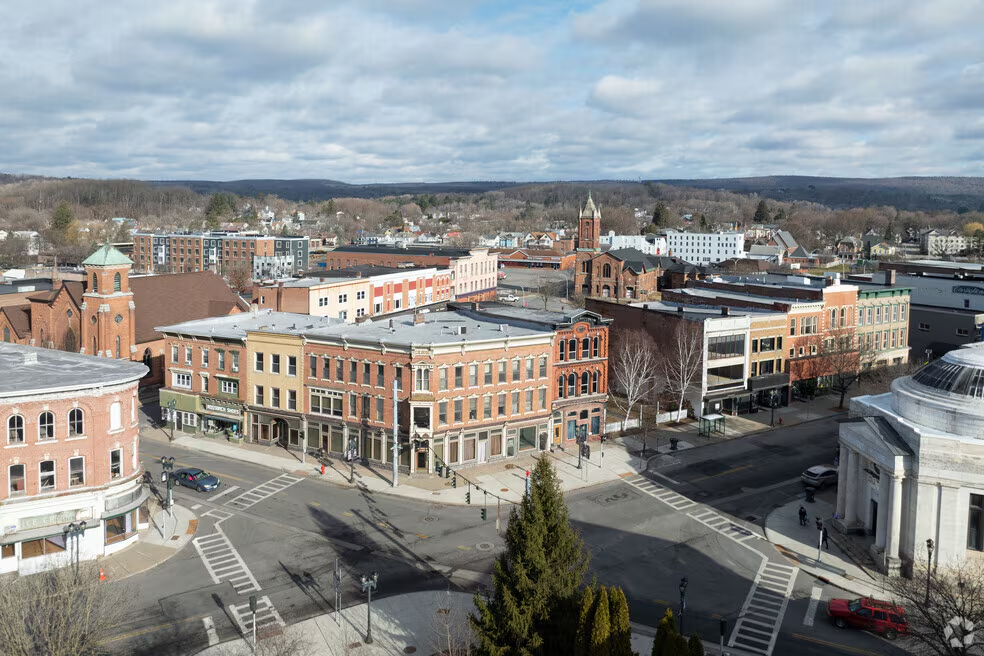
Coming home to standing water in the basement, the smell of smoke in the hallway, or a dark bloom of mold behind the drywall shakes anyone. Property damage rarely arrives on a convenient schedule, and the hours immediately after discovery shape how much of your home or business can be saved.
Gloversville property owners have access to a full range of restoration work handled by IICRC-certified technicians who respond around the clock:
- Water Damage Restoration - extraction, structural drying, moisture mapping, and monitoring until materials reach dry standard
- Flooded Basement Cleanup - pump-out, content triage, sanitizing of slab and foundation walls, and dehumidification
- Sewage Cleanup - containment, removal of contaminated porous materials, antimicrobial treatment, and safe disposal
- Fire Damage Restoration - board-up, debris removal, soot and char cleaning, structural stabilization
- Smoke Damage Restoration - thermal fogging, HEPA air scrubbing, duct cleaning, and odor neutralization
- Mold Removal - containment barriers, negative air, source correction, and post-remediation verification
Every project includes photo documentation, moisture logs, and line-item reporting formatted for insurance carriers, so claims move forward without the back-and-forth that stalls repairs.
Common Damage Restoration Issues in Gloversville, New York
Gloversville sits in a bowl of low ground ringed by the southern Adirondack foothills. Water rolls downhill, collects in the old tannery district and the flats near Cayadutta Creek, and pushes against foundations that were poured generations ago.
What Drives Local Calls
- Hydrostatic pressure against fieldstone and unsealed block foundations during spring snowmelt
- Combined and aging sewer lines that back up into floor drains when heavy rain overwhelms capacity
- Frozen and burst supply lines in uninsulated crawl spaces, attics, and second-floor bathrooms of tall Victorians
- Chimney, woodstove, and space heater fires during long heating seasons
- Puffback events from oil-fired boilers that coat entire interiors in oily soot
- Chronic mold behind plaster, under carpet padding, and inside closed-off basement rooms
Warning Signs Worth Acting On
- Musty or earthy odor that intensifies when the furnace or AC runs
- Efflorescence, white powder, or flaking paint on basement walls
- Cupping hardwood, bubbling vinyl, or soft spots underfoot
- Stained ceiling tiles or rings that darken after every storm
- Gurgling floor drains or slow fixtures throughout the house at once
- Soot streaks above baseboards, outlets, and door casings after a heating malfunction
- Recurring allergy or asthma symptoms that ease when you leave the building
Left alone, a small leak becomes a mold colony within days, and smoke residue turns acidic and etches metal, glass, and finishes permanently.
Neighborhoods We Serve in Gloversville
Response coverage spans the full city and the surrounding Fulton County communities:
- Downtown Gloversville and the Main Street commercial corridor
- The former tannery district and Cayadutta Creek flats
- Kingsboro Avenue and the North Main historic blocks
- Fifth Avenue, Bleecker Street, and the East End residential streets
- West Fulton Street and Harrison Street neighborhoods
- Neighborhoods near Nick Stoner Golf Course and the reservoir road
- Johnstown, Mayfield, Broadalbin, Northville, Caroga Lake, Perth, and Meco
- Lakefront and seasonal properties along Great Sacandaga Lake
Crews stage equipment locally, which matters when a basement is filling and every hour of standing water pushes more moisture into sill plates and framing. Commercial buildings, rental properties, churches, and municipal facilities receive the same emergency response as single-family homes.
Seasonal Damage Patterns in Gloversville
Restoration demand in Fulton County follows a predictable rhythm tied to Adirondack weather.
- December through February: Frozen pipe bursts peak during deep cold snaps and after holiday travel leaves homes unheated. Chimney and heating-appliance fires cluster here, along with oil burner puffbacks that spread smoke damage room to room.
- March and April: Snowmelt off the surrounding hills saturates ground already frozen at depth, sending water through foundation cracks and window wells. This is the busiest stretch for flooded basements and sewer backups.
- May and June: Rising humidity activates mold that took hold during spring flooding. Post-water-damage mold calls surge, especially in homes dried improperly or not at all.
- July and August: Thunderstorms drop heavy rain quickly, overwhelming gutters and drain tile. Air conditioning condensate leaks and sump pump failures add to summer water losses.
- September and October: Remnants of tropical systems occasionally track inland. Heating systems fire up for the first time, revealing cracked heat exchangers and smoke issues.
- November: Ice dams begin forming on north-facing roofs, pushing meltwater under shingles and into attic insulation and ceilings.
Housing Characteristics & Restoration Considerations
Gloversville's housing stock reflects its glove-manufacturing heyday. A large share of homes predate 1940, with many built between 1880 and 1930 during the city's industrial peak.
Construction Features That Shape Restoration Work
- Fieldstone and rubble foundations that wick moisture continuously and cannot be sealed with paint alone
- Balloon framing in older two- and three-story homes, which lets water and smoke travel vertically inside wall cavities with no fire stops
- Lath and horsehair plaster that holds water far longer than drywall and often requires controlled removal rather than surface drying
- Multiple flooring layers - original hardwood under linoleum under carpet - trapping moisture between them
- Narrow, low-headroom basements with limited ventilation and dirt or thin slab floors
- Converted multi-family layouts where one unit's leak affects several tenants
Regulatory Realities
New York State requires asbestos testing before renovation or demolition of any building constructed before 1981. In Gloversville that covers most of the housing stock, and asbestos is commonly found in pipe insulation, 9x9 floor tile, siding shingles, and plaster systems. Lead paint is equally common.
That means demolition after a fire or flood cannot start until surveys and sample analysis are complete. Licensed New York asbestos contractors handle surveys, lab analysis, and third-party air monitoring during abatement, keeping the restoration timeline legal and documented rather than stalled by a stop-work order.
Environmental Conditions & Damage Implications
Local climate and geology work against dry buildings for much of the year.
Climate
- Roughly 40 inches of annual precipitation plus substantial snowfall off the Adirondack foothills
- Summer relative humidity that regularly climbs above 70 percent, well past the 60 percent threshold where mold germinates
- Sharp freeze-thaw cycling that widens foundation cracks a little more each winter
- Long heating seasons that concentrate combustion byproducts and soot indoors
Soil and Water
- Glacial till and clay-heavy soils that drain slowly and hold water against foundation walls
- Low-lying former tannery ground with a high seasonal water table
- Proximity to Cayadutta Creek, which raises groundwater levels after storms
- Aging municipal infrastructure prone to surcharge and backflow during peak flow
Effects on Restoration
- Category 3 water from sewer backups demands full removal of carpet, pad, and saturated drywall - not drying in place
- High ambient humidity slows evaporation, so more dehumidification capacity and longer monitoring are needed
- Smoke and soot particles bond aggressively to cold surfaces in winter, requiring different cleaning agents than warm-weather losses
- Radon can enter through the same cracks that admit groundwater, making post-restoration testing worthwhile
- Older, tighter-sealed retrofits trap moisture and combustion residue, so HEPA filtration and air quality verification belong in the scope
Insurance Documentation and Claim Support for Gloversville Property Owners
A restoration project succeeds or stalls based on paperwork as much as equipment. Carriers want proof that damage occurred, proof of what it took to correct it, and proof that the building reached a dry, safe condition.
What Thorough Documentation Includes
- Time-stamped photos and video of pre-mitigation conditions in every affected room
- Moisture meter readings on framing, subfloor, and plaster, recorded daily
- Thermal imaging showing hidden migration inside balloon-framed walls
- Equipment logs listing air movers, dehumidifiers, and air scrubbers by unit and hours run
- Category and class determination for the water loss, which drives coverage decisions
- Asbestos and lead survey results when pre-1981 materials must be disturbed
- Post-remediation verification or clearance testing for mold and sewage jobs
- Line-item estimates written in the software adjusters already use
Steps to Take Before Help Arrives
- Shut off the water supply or electrical power to the affected area if it is safe to reach.
- Photograph everything from multiple angles before moving anything.
- Stay out of standing water that may contain sewage or contact live circuits.
- Move undamaged contents and valuables to a dry room on another floor.
- Call your carrier to open a claim and write down the claim number.
- Keep receipts for tarps, lodging, fans, and any emergency purchases.
- Avoid running household HVAC after a fire, since it circulates soot through clean areas.
Work in Gloversville is overseen directly by the owner, with no call center routing and no subcontractor handoffs between the person who scoped the job and the crew doing it. The same technician who took the first moisture reading is there for the final one, and homeowners get straight answers about what is salvageable and what is not.





