Damage Restoration in Cowlitz County, WA
- Damage Restoration Services Overview
- Common Damage Restoration Issues in Cowlitz County, Washington
- Neighborhoods We Serve in Cowlitz County
- Seasonal Damage Patterns in Cowlitz County
- Housing Characteristics & Restoration Considerations
- Environmental Conditions & Damage Implications
- Flood Response and Insurance Documentation Along the Cowlitz River
Damage Restoration Services Overview
Few things rattle a household like walking into a basement full of river water or waking up to smoke staining the ceiling. Property damage rarely arrives at a convenient hour, and the first few hours often determine how much of your home can be saved.
ServiceMaster by JTS provides disaster restoration and professional cleaning for neighbors throughout Cowlitz County, WA. Our Kelso-based, IICRC certified restoration team answers calls around the clock, with 24/7 emergency dispatch for extraction, structural drying, fire and smoke cleanup, storm damage, and insurance coordination.
- Water Damage Restoration - extraction, moisture mapping, and controlled structural drying after pipe breaks, appliance failures, and roof leaks.
- Flooded Basement Cleanup - pump-out, contents handling, and drying for below-grade spaces along the Cowlitz and Columbia river corridors.
- Sewage Cleanup - containment, removal of contaminated porous materials, and antimicrobial treatment of affected surfaces.
- Fire Damage Restoration - board-up, debris removal, soot cleaning, and rebuilding coordination.
- Smoke Damage Restoration - soot residue removal, HVAC cleaning, and odor neutralization for wildfire and structure fire smoke.
- Mold Removal - containment, HEPA filtration, controlled removal, and correction of the moisture source.
Working with one team across all six services keeps documentation consistent for your insurance carrier and prevents gaps between drying, cleaning, and repair.
Common Damage Restoration Issues in Cowlitz County, Washington
Cowlitz County sits where the Cowlitz, Toutle, and Columbia rivers meet, and that geography shapes nearly every restoration call we take. January flooding alone left roughly 120 homes and structures reporting damage totaling at least $2 million - a reminder of how quickly high water moves through low-lying neighborhoods.
Local Damage Drivers
- River flooding and backwater - saturated ground and elevated river stages push water into crawl spaces, garages, and finished basements.
- Sustained winter rainfall - Pacific Northwest storm cycles overwhelm gutters, French drains, and sump pumps.
- Sanitary sewer surcharge - heavy inflow during storms can back contaminated water up floor drains and basement fixtures.
- Wildfire smoke intrusion - late-summer smoke from regional fires settles into attics, ductwork, soft goods, and window tracks.
- Heating-season fires - wood stoves, chimneys, and space heaters account for a share of winter structure fires.
- Chronic humidity - poorly vented crawl spaces stay damp for months, feeding mold growth in subfloors and insulation.
Warning Signs Worth Acting On
- Musty odors that intensify after rain or when the furnace runs
- Cupping hardwood, blistered paint, or dark tide lines along baseboards
- Efflorescence or white powdery residue on foundation walls
- Gurgling floor drains or slow basement fixtures during storms
- Sooty film on window glass and light fixtures weeks after a fire
- Allergy-like symptoms that ease when you leave the house
Waiting for damage to "dry out on its own" is how a contained water loss becomes a mold remediation project.
Neighborhoods We Serve in Cowlitz County
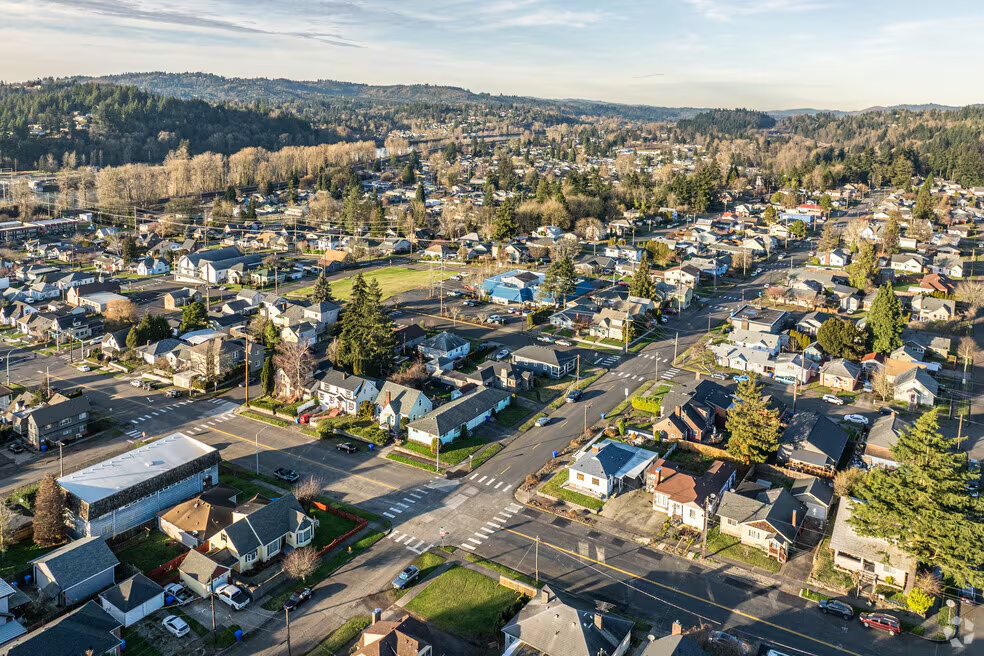
Our crews dispatch from Kelso and cover the county's cities, unincorporated areas, and rural properties.
- Kelso - downtown, West Kelso, Beacon Hill, and Cowlitz River-adjacent neighborhoods
- Longview - Old West Side, Highlands, Columbia Heights, St. Helens, Mint Valley, and Lake Sacajawea area
- Castle Rock - and surrounding Toutle River properties
- Woodland - including Lewis River bottomland acreage
- Kalama - riverfront homes and hillside neighborhoods
- Toutle, Silver Lake, and Ryderwood
- Rose Valley, Carrolls, Ostrander, and Lexington
We also respond to commercial buildings, rental portfolios, churches, and small manufacturing sites across the Longview-Kelso industrial corridor and along the I-5 and SR 411 routes.
Seasonal Damage Patterns in Cowlitz County
Winter (December - February)
- Peak river flooding and flooded basement calls
- Frozen and burst supply lines during cold snaps
- Sewage backups from storm-loaded sanitary lines
- Chimney and wood stove fires with heavy smoke residue
Spring (March - May)
- Snowmelt from the Cascades keeping groundwater high
- Crawl space saturation and first mold discoveries of the year
- Roof leaks revealed by persistent rain
Summer (June - August)
- Wildfire smoke infiltration and outdoor burning incidents
- Air conditioning condensate overflows
- Hidden mold surfacing as warmer temperatures accelerate growth
Fall (September - November)
- Return of atmospheric river storms and gutter overflow damage
- Sump pump failures during the first sustained rains
- Heating equipment fires as furnaces and stoves restart
Scheduling gutter cleaning, sump pump testing, and chimney inspection before October removes several of the most common causes from your list.
Housing Characteristics & Restoration Considerations
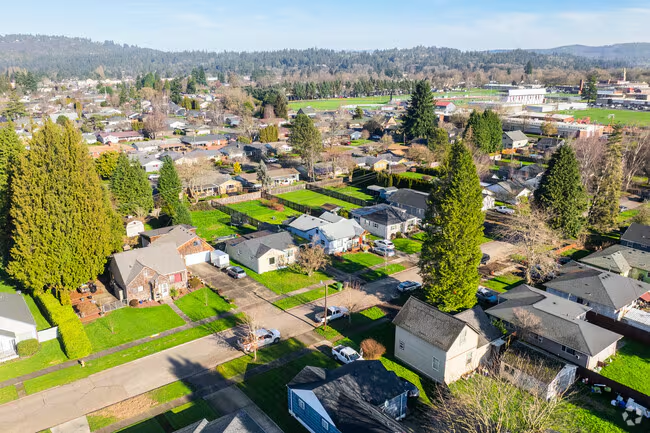
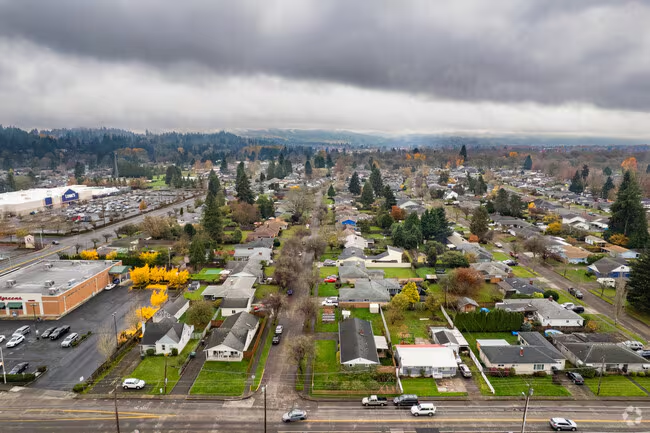
Much of Cowlitz County's housing stock dates to the mill-town building booms of the 1920s through the 1970s, with newer subdivisions in Mint Valley, Woodland, and the county's outer edges. Building age directly changes how a restoration project unfolds.
Common Construction Types
- Early-century wood frame with shiplap sheathing - absorbs water quickly and requires longer, monitored drying cycles
- Post-war ranch homes on vented crawl spaces - vulnerable to ground moisture, insulation saturation, and subfloor mold
- Split-levels and daylight basements - the most frequent flooded basement calls in the Longview-Kelso area
- Cedar and lap siding with limited overhangs - allows wind-driven rain to reach wall cavities
- Manufactured homes in rural parks - belly insulation traps water and needs specialized drying
Age-Specific Restoration Factors
- Pre-1980 materials testing - asbestos-containing flooring, mastic, and popcorn ceilings must be identified before demolition.
- Lead-safe practices - homes built before 1978 require careful containment during fire and water repairs.
- Knob-and-tube or aluminum wiring - older circuits are evaluated by a licensed electrician after any fire or water event.
- Cast iron and galvanized plumbing - corroded lines are a recurring source of slow leaks and hidden mold.
- Original hardwood and plaster - often salvageable with in-place drying if we reach it early.
Basement finishes added over the decades - paneling, carpet pad, and framed walls against bare concrete - hold moisture the longest and drive most of our removal decisions.
Environmental Conditions & Damage Implications
The county's marine west coast climate delivers roughly 45 to 50 inches of annual rain, most of it between October and April, with mild temperatures that rarely dry a building out on their own.
Climate and Moisture
- Relative humidity stays high through much of the year, slowing evaporation and requiring commercial dehumidification rather than open windows.
- Cool winter air holds little moisture, so drying equipment must be sized and balanced rather than simply added.
- Mold colonies establish readily in the 60 - 80°F range common in Cowlitz County crawl spaces.
Soil, Water, and Terrain
- Alluvial floodplain soils along the Cowlitz and Columbia drain slowly and stay saturated, raising hydrostatic pressure on foundation walls.
- Volcanic sediment from the Mount St. Helens eruption still influences riverbeds and drainage in the Toutle corridor.
- Hillside clay soils in Columbia Heights and Beacon Hill shed water toward downhill structures.
- Floodwater contamination - river flooding carries agricultural runoff, fuel, and sewage, which classifies most of it as Category 3 water requiring the same protocols as a sewage cleanup.
Air Quality
- Regional wildfire smoke deposits fine particulate that lodges in insulation, ducts, and textiles.
- Industrial and river-valley inversions can concentrate airborne particles during still winter days.
- HEPA filtration and duct cleaning are standard steps after smoke exposure, not optional add-ons.
Flood Response and Insurance Documentation Along the Cowlitz River
January's flooding produced damage reports from roughly 120 homes and structures, with losses totaling at least $2 million countywide - and the debates over long-term flood strategy continue while property owners handle immediate repairs. That gap between policy discussion and household reality is where thorough documentation matters most.
What Our Flood Response Looks Like
- Emergency dispatch - 24/7 call intake with crews staged during active flood warnings.
- Safety assessment - electrical hazards, structural stability, and water contamination category are evaluated before entry.
- Extraction and pump-out - truck-mounted and portable equipment clear standing water from basements and crawl spaces.
- Contaminated material removal - carpet pad, saturated drywall, and insulation exposed to river water are removed under containment.
- Cleaning and antimicrobial application - hard surfaces are cleaned and treated to address bacteria carried by floodwater.
- Structural drying - air movers and dehumidifiers run on a monitored schedule with daily moisture readings.
- Verification and reconstruction planning - drying goals are confirmed before any rebuild begins.
Documentation That Supports Your Claim
- Photo and video records of pre-mitigation conditions in every affected room
- Moisture maps showing the full extent of migration behind walls and under flooring
- Daily atmospheric and material readings logged throughout the drying period
- Itemized scope of removed materials and equipment placement
- Direct communication with adjusters so findings are shared without delay
Flood losses often fall under separate policies than standard water damage, and many county residents discover the distinction mid-claim. Detailed records help clarify what caused the loss - a failed sump pump versus rising river water - and keep the conversation moving. Whether your call involves water, sewage, fire, smoke, or mold, ServiceMaster by JTS brings IICRC certified crews and consistent reporting from the first phone call through final walkthrough.