Damage Restoration in Clallam County, WA
- Damage Restoration Services Overview
- Common Damage Restoration Issues in Clallam County, Washington
- Neighborhoods We Serve in Clallam County
- Seasonal Damage Patterns in Clallam County
- Housing Characteristics & Restoration Considerations
- Environmental Conditions & Damage Implications
- Working With Septic Systems, Wells, and Insurance Documentation on the Olympic Peninsula
Damage Restoration Services Overview
A November storm rolls off the Strait of Juan de Fuca, a gutter overflows, and by morning three inches of water sits against the foundation of a Port Angeles rambler. What starts as a wet carpet edge becomes saturated subfloor, swollen baseboards, and - within days - the musty smell that signals microbial growth.
Restoration work in Clallam County covers a connected set of problems, not isolated repairs. Each service addresses a different stage or source of loss:
- Water Damage Restoration - extraction, structural drying, and dehumidification after supply line breaks, roof leaks, appliance failures, and storm intrusion.
- Flooded Basement - pumping standing water, drying below-grade walls and slabs, and identifying how groundwater or surface runoff entered.
- Sewage Cleanup - handling Category 3 contaminated water from septic backups, failed lift stations, and drain line failures with containment and disinfection.
- Fire Damage Restoration - stabilizing the structure, removing char and debris, and coordinating rebuild of damaged assemblies.
- Smoke Damage Restoration - cleaning soot residues, treating odor absorbed into porous materials, and addressing HVAC contamination.
- Mold Removal - containment, removal of colonized materials, and correcting the moisture source that allowed growth.
For property owners from Sequim to Forks, the practical benefit is straightforward: faster moisture control means fewer materials lost, less secondary damage, and documentation that supports an insurance claim.
Common Damage Restoration Issues in Clallam County, Washington
Clallam County sits across one of Washington's sharpest moisture gradients, and that divide drives almost every damage pattern seen here. Sequim's rain shadow receives a fraction of what the western county absorbs, while Forks and the Sol Duc corridor endure some of the heaviest rainfall totals in the continental United States.
Frequent Causes of Loss
- Wind-driven rain off the Strait forcing water past siding laps, window flashing, and roof penetrations
- Saturated ground raising the water table and pushing moisture through basement walls and crawlspace vapor barriers
- Septic system overload during extended wet stretches in rural areas outside city sewer service
- Frozen or split supply lines in unheated crawlspaces during cold snaps off the Olympics
- Woodstove and chimney fires in homes relying on supplemental heat
- Wildfire smoke infiltration during late-summer Red Flag Warning periods
Warning Signs Worth Acting On
- Persistent earthy odor in crawlspaces, closets, or lower levels
- Cupping hardwood, bubbling paint, or baseboards pulling away from walls
- Rust staining at the base of water heaters, washing machines, or furnace pans
- Slow drains or gurgling fixtures - often the first indicator of a septic or sewer problem
- Dark speckling on drywall behind furniture placed against exterior walls
- Soot film on window glass or a lingering acrid smell weeks after a small kitchen fire
Many Clallam County homes sit on crawlspaces rather than full basements, so damage often develops out of sight and is discovered only when flooring feels soft or utility bills climb.
Neighborhoods We Serve in Clallam County
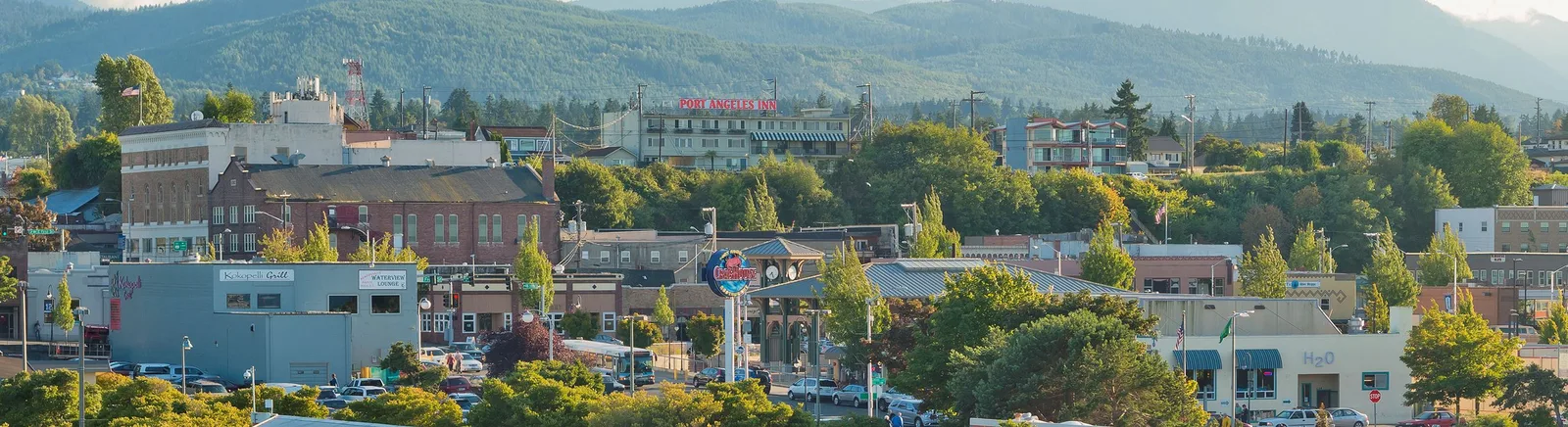
Coverage spans the full width of the county, from the Strait shoreline to the Pacific coast.
- Port Angeles - downtown, the west side, Lower Elwha, Ediz Hook area, and the bluff neighborhoods above the harbor
- Sequim and the Dungeness Valley - Carlsborg, Blyn, Diamond Point, Happy Valley, and Sunland
- Forks and the West End - Beaver, Sappho, Sol Duc, and outlying timber-country properties
- Coastal communities - La Push, Clallam Bay, Sekiu, and Neah Bay
- Rural corridors - Joyce, Piedmont, Lake Crescent, Lake Sutherland, and the Elwha valley
- Highway 101 and 112 corridors between Port Angeles and Discovery Bay
Response planning accounts for the county's long east-west distances and the reality that some West End properties are an hour or more from Port Angeles.
Seasonal Damage Patterns in Clallam County
Damage types shift predictably through the year, and knowing the pattern helps homeowners prepare.
- November through February - peak season for water damage and flooded basements. Atmospheric river events, saturated soils, and clogged gutters combine with cold-snap pipe failures. Chimney and woodstove fires also concentrate here.
- March through April - snowmelt from the Olympics feeds the Elwha, Dungeness, and Sol Duc systems. Crawlspace groundwater intrusion and septic drainfield saturation become common.
- May through June - warming temperatures activate mold growth in materials that stayed damp all winter. This is when odor complaints and post-winter inspections spike.
- July through September - drier conditions bring wildfire risk and smoke damage, including smoke drifting from fires elsewhere in the Olympics or across the region. Air quality events push soot and fine particulate into homes through ventilation systems.
- October - the first sustained rains expose roofing and flashing failures that developed over summer, often producing the season's first attic and ceiling losses.
Sewage cleanup calls follow rainfall closely, since heavy infiltration overwhelms both septic drainfields and older municipal lines.
Housing Characteristics & Restoration Considerations
Housing stock in Clallam County skews older and more varied than in urban Washington counties, which directly changes how restoration is approached. Port Angeles contains a substantial number of pre-1960 homes, Sequim has grown with newer single-level construction, and the West End holds a mix of mid-century timber-industry housing and manufactured homes.
Construction Features That Affect Restoration
- Vented crawlspaces - common countywide, they trap humid air and require targeted drying with containment rather than simple air movement
- Post-and-pier and partial daylight basements - hillside lots in Port Angeles frequently combine both, creating uneven water migration paths
- Plaster and lath walls - older homes hold moisture longer and respond differently to drying than modern drywall
- Asbestos-containing materials - vinyl flooring, pipe wrap, and textured ceilings in pre-1980 homes require testing before demolition under Washington regulations
- Cedar siding and shake roofing - traditional in the region, prone to hidden water tracking behind the cladding
- Manufactured homes - sealed belly wrap can hold water indefinitely, demanding a different extraction method than site-built floors
Practical Implications
- Fire and smoke restoration in older homes must account for knob-and-tube wiring and uninsulated wall cavities that channel smoke
- Mold removal often requires crawlspace vapor barrier replacement, not just surface treatment
- Septic-served properties need drainfield evaluation as part of any sewage cleanup response
- Well water systems may require disinfection after flooding reaches the wellhead
Environmental Conditions & Damage Implications
The county's climate does more than cause damage - it shapes how long drying takes and how quickly secondary problems appear.
Moisture and Climate
- Sequim's rain shadow sees roughly a sixth of the annual precipitation recorded near Forks, so drying strategies differ dramatically across the county
- Marine air keeps ambient humidity elevated much of the year, meaning open-window drying rarely works and closed-drying with dehumidification is standard
- Mild winter temperatures keep mold biologically active nearly year-round rather than pausing in cold months
- Fog and marine layer conditions along the Strait slow evaporation even on days without rain
Soil, Water, and Air
- Glacial till and dense clay soils in parts of the county drain slowly, holding water against foundations after storms
- Coarse alluvial soils in the Dungeness Valley drain quickly but transmit groundwater rise rapidly into crawlspaces
- Shallow water tables near river corridors and shoreline properties complicate below-grade drying
- Salt-laden air near the Strait accelerates corrosion on fire-damaged metal and electrical components
- Wildfire smoke episodes deposit fine particulate that settles into ductwork, insulation, and soft goods well beyond the visible soot line
What This Means for Restoration
- Extended dehumidification periods compared to drier regions of Washington
- Moisture mapping and documented daily readings rather than assumptions about dryness
- Mold containment planning built into most water losses from the outset
- HVAC assessment as a standard step after any smoke event
Working With Septic Systems, Wells, and Insurance Documentation on the Olympic Peninsula
A large share of Clallam County properties sit outside municipal sewer and water service, and that changes both the cleanup process and the paperwork. When a septic backup floods a hallway in Joyce or Carlsborg, the response involves more than extraction - it involves determining whether the drainfield failed, whether the tank was overwhelmed by groundwater, and whether the private well is at risk.
How Contaminated Water Events Are Handled
- Isolate the affected area with containment barriers and negative air pressure
- Remove standing contaminated water and dispose of porous materials that absorbed it
- Clean and apply appropriate antimicrobial treatment to salvageable surfaces
- Dry the structure to documented moisture targets with monitored equipment
- Coordinate with septic professionals so the underlying system issue is addressed, not just the interior mess
- Recommend well testing when floodwater or sewage reached the wellhead area
Transparency Throughout the Project
Clear communication matters most when a homeowner is displaced and an adjuster is asking questions. Expect these practices on every job:
- Written scope explaining what will be removed, what will be dried in place, and why
- Photo documentation before work begins and at each stage of demolition and drying
- Daily moisture readings logged with equipment placement recorded
- Plain-language explanation of any asbestos or lead testing required before demolition
- Direct notification if hidden damage changes the scope, before additional work proceeds
- Documentation packaged in a format adjusters recognize, supporting the claim without inflating it
Note that federally administered flood insurance operates under separate coverage rules from standard homeowner policies, and mold remediation carries its own regulatory thresholds. Property owners are always told which category their loss falls into and what that means for the work ahead.