
Damage Restoration in Longview, WA
- Damage Restoration Services Overview
- Common Damage Restoration Issues in Longview, Washington
- Neighborhoods We Serve in Longview
- Seasonal Damage Patterns in Longview
- Seasonal Damage Patterns in Longview
- Housing Characteristics & Restoration Considerations
- Environmental Conditions & Damage Implications
- Storm Response and Start-to-Finish Restoration in Cowlitz County
Damage Restoration Services Overview
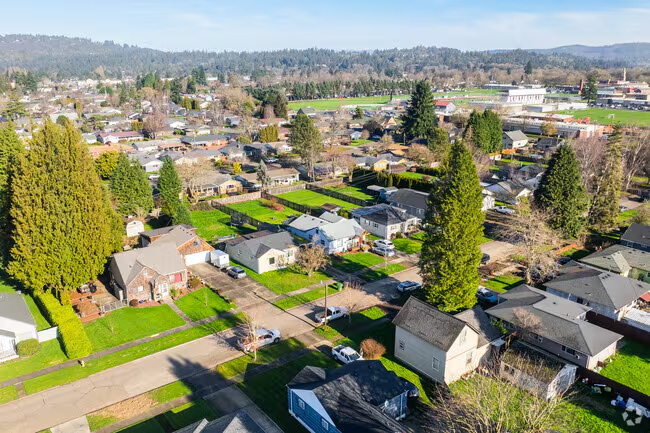
Coming home to standing water in the basement, soot-stained walls, or the smell of sewage is unsettling. Property damage rarely arrives at a convenient moment, and every hour that passes allows moisture, smoke residue, and bacteria to spread deeper into building materials.
Longview homeowners and business owners have access to a full range of restoration disciplines under one roof:
- Water Damage Restoration - extraction, structural drying, and moisture mapping after leaks, pipe breaks, and appliance failures
- Flooded Basement Cleanup - pumping, dehumidification, and content recovery for below-grade spaces
- Sewage Cleanup - safe removal of Category 3 contaminated water, disinfection, and disposal of affected porous materials
- Fire Damage Restoration - debris removal, structural stabilization, and rebuild coordination
- Smoke Damage Restoration - soot removal, odor neutralization, and HVAC decontamination
- Mold Removal - containment, air filtration, and removal of colonized materials
Why this matters locally: with roughly 50 inches of rain falling across about 177 days each year, Longview properties face near-constant moisture pressure. Fast response limits secondary damage, protects indoor air quality, and keeps repair scopes smaller. IICRC-aligned documentation - moisture readings, photos, and daily logs - also supports smoother insurance claims for Cowlitz County property owners.
Common Damage Restoration Issues in Longview, Washington
Sitting at the junction of the Cowlitz and Columbia rivers, Longview deals with a distinct mix of water, weather, and aging-infrastructure problems.
Frequent Causes of Damage
- Wind-driven rain forced under siding, window flashing, and roof edges during Pacific storms
- Fallen limbs puncturing roofs along tree-lined streets in Old West Side and St. Helens neighborhoods
- Ice dams and snow melt backing water under shingles during cold snaps
- High groundwater pushing moisture through basement walls and slab cracks
- Municipal or private line backups sending sewage into floor drains and lower-level bathrooms
- Failed water heaters, washing machine hoses, and supply lines in homes with original plumbing
- Kitchen fires, wood stove and chimney fires, and space heater incidents during winter
- Wildfire smoke intrusion during late-summer regional fire events
Warning Signs Worth Acting On
- Musty odors in crawlspaces, closets, or near baseboards
- Bubbling paint, cupped hardwood, or soft drywall near exterior walls
- Discolored staining on ceilings after heavy rain
- Gurgling drains or slow toilets - often an early sewage backup indicator
- Lingering smoke odor that returns when the furnace runs
- Visible dark speckling on framing, subfloor, or behind vinyl flooring
Small signs escalate quickly here. Mold colonies can establish within roughly two days in damp, unventilated Longview crawlspaces, and sewage contamination should never be handled without proper containment and personal protective equipment.
Neighborhoods We Serve in Longview
Service covers the full city and the surrounding Cowlitz County communities.
- Old West Side - historic homes near Lake Sacajawea with original plumbing and plaster
- St. Helens and Highlands - established residential streets with mature trees and basements
- Columbia Heights and Columbia Valley Gardens - hillside drainage and slope runoff concerns
- Mint Valley and Olympic - newer subdivisions with slab and crawlspace construction
- Downtown and the Alabama Street corridor - commercial buildings, offices, and retail
- Kelso - just east across the Cowlitz River
- Longview Heights, West Longview, and Willow Grove
- Surrounding areas - Castle Rock, Rainier, Kalama, Woodland, Cathlamet, and Silver Lake
Crews stage locally, which shortens drive times for emergency water extraction, sewage cleanup, and fire board-up calls throughout Southwest Washington and the greater Portland metro region.
Seasonal Damage Patterns in Longview
Seasonal Damage Patterns in Longview
Restoration demand in Longview follows a predictable rhythm tied to rainfall and heating season.
- November through February - peak water season. Sustained rain, saturated soil, and storm surges drive flooded basements, roof leaks, and crawlspace standing water. Sewer systems overload and back up during heavy downpours.
- December and January - fire and smoke season. Wood stoves, chimneys, furnaces, holiday cooking, and portable heaters push fire and smoke damage calls to their annual high.
- March through May - mold season. Warming temperatures combined with winter moisture still trapped in framing, insulation, and drywall create ideal conditions for mold growth.
- June through August - appliance and plumbing failures. Increased water use, vacation-empty homes, and aging supply lines produce undetected leaks. Regional wildfire smoke can also infiltrate HVAC systems.
- September and October - transition storms. The first significant wind and rain events expose failed roofing, clogged gutters, and grading problems from the dry months.
Freezing snaps, though less common than east of the Cascades, still cause burst pipes in uninsulated Longview crawlspaces and garages.
Housing Characteristics & Restoration Considerations
Longview was built as a planned mill town, and much of its housing stock reflects that early-to-mid twentieth century origin. Roughly 37,800 residents live in a mix of pre-war bungalows, post-war ranches, and newer subdivision construction.
How Local Construction Shapes Restoration Work
- Homes built before 1980 may contain asbestos in floor tile, mastic, popcorn ceilings, and pipe wrap - testing is required before demolition
- Lead-based paint in pre-1978 homes affects fire and smoke cleaning methods
- Plaster and lath walls hold moisture longer than drywall and need extended, monitored drying
- Vented crawlspaces common throughout the city trap humidity and become primary mold sources
- Unfinished and partially finished basements often have porous concrete, wood shelving, and stored contents that absorb floodwater
- Galvanized and cast iron plumbing in older homes corrodes and fails without warning
- Wood-frame construction with cellulose-rich materials feeds both mold growth and fire spread
Practical Implications
- Hardwood floors over old subfloor may be salvageable with mat drying systems rather than replacement
- Smoke residues travel through balloon-framed wall cavities in older homes, requiring cavity cleaning and sealing
- Sewage-affected carpet, pad, and drywall in finished basements are removed rather than cleaned
- Slab-on-grade homes in Mint Valley need different moisture detection than crawlspace properties
Documentation of readings and photos throughout the process validates that structures dried properly - important for both insurers and future resale.
Environmental Conditions & Damage Implications
Longview's setting at the confluence of two major rivers creates conditions that accelerate nearly every category of property damage.
Climate
- About 50 inches of annual rainfall spread across roughly 177 wet days
- Mild, damp winters that keep relative humidity elevated for months
- Limited natural drying periods between October and April
- Occasional freeze events that stress exposed plumbing
Soil and Groundwater
- River-valley alluvial soils with high clay and silt content drain slowly
- Elevated water tables in low-lying areas near the Cowlitz and Columbia
- Hydrostatic pressure against foundation walls in Columbia Valley Gardens and similar districts
- Saturated ground that channels runoff toward foundations after prolonged rain
Air Quality
- Industrial and mill activity contributes particulate that settles in HVAC systems
- Summer wildfire smoke from regional fires deposits odor-causing residues indoors
- Tight modern homes trap humidity and volatile compounds without adequate ventilation
What This Means for Restoration
- Drying takes longer than in arid climates - dehumidification equipment and monitoring must run until confirmed dry standards are met, not on a fixed schedule
- Mold remediation requires addressing the moisture source, not just visible growth
- Floodwater from ground infiltration is treated as contaminated and handled with antimicrobial protocols
- Smoke odor neutralization must include duct cleaning to prevent recontamination
Storm Response and Start-to-Finish Restoration in Cowlitz County
Storms are the single largest driver of restoration work in Longview. When a Pacific system rolls up the Columbia, calls come in for roof leaks, flooded basements, sewage backups, and downed-limb intrusions - often all within the same evening.
What Happens After You Call
- Immediate dispatch. Emergency teams stage 24/7 during storm events, backed by an on-our-way-in-30-minutes-or-less response commitment across Southwest Washington.
- Inspection and moisture mapping. Technicians use meters and thermal imaging to trace water behind walls, under flooring, and into crawlspaces.
- Emergency mitigation. Board-up, tarping, water extraction, and power removal of contaminated material stop the damage from spreading.
- Containment and safety controls. Negative air machines and barriers isolate mold or sewage work areas from clean living space.
- Structural drying. Air movers and dehumidifiers run with daily readings recorded until materials reach dry standard.
- Cleaning and deodorization. Soot removal, antimicrobial application, HVAC decontamination, and odor neutralization restore air quality.
- Contents care. Salvageable furniture, documents, electronics, and keepsakes are inventoried, cleaned, and stored.
- Reconstruction. Drywall, flooring, cabinetry, paint, and finish carpentry return the property to pre-loss condition.
Why One Team Start to Finish Matters
- No gaps between mitigation and rebuild where damage can worsen
- A single point of contact for scheduling and questions
- Consistent documentation packaged for your insurance carrier
- IICRC-standard methods applied at every phase, from extraction through final walkthrough
- Local crews familiar with Longview building stock, permitting, and typical claim requirements
Whether the emergency is a sewage backup in an Old West Side basement, smoke damage in a Mint Valley kitchen, or mold discovered in a Highlands crawlspace, the goal stays the same - stabilize fast, dry thoroughly, and rebuild properly.





