
Damage Restoration in Salamanca, NY
- Damage Restoration Services Overview
- Common Damage Restoration Issues in Salamanca, New York
- Neighborhoods We Serve in Salamanca
- Seasonal Damage Patterns in Salamanca
- Housing Characteristics & Restoration Considerations
- Environmental Conditions & Damage Implications
- Modern Drying Science and Equipment for Old Salamanca Homes
Damage Restoration Services Overview
You come home from work on a February evening, open the basement door, and hear water running where no water should be. A supply line behind the washer let go hours ago, and three inches of it now sits against a stone foundation wall in a house built before World War I.
That scenario plays out across Salamanca every winter - and it rarely stays a simple cleanup job if the response is slow.
Full-service damage restoration for Salamanca properties covers the entire arc of recovery, from the first extraction to the last coat of paint:
- Water Damage Restoration - burst supply lines, failed water heaters, roof leaks, ice dam intrusion, and appliance overflows
- Flooded Basement - sump pump failures, hydrostatic pressure through block and stone walls, Allegheny River backwater, and snowmelt saturation
- Sewage Cleanup - main line backups, septic surcharge, and Category 3 contamination requiring containment and antimicrobial treatment
- Fire Damage Restoration - structural cleaning, debris removal, board-up, and rebuild after wood stove, chimney, kitchen, or electrical fires
- Smoke Damage Restoration - soot removal from framing and contents, odor neutralization, HVAC decontamination, and thermal fogging
- Mold Removal - containment, HEPA filtration, affected material removal, and moisture source correction
The benefit to Salamanca homeowners is straightforward: one coordinated response instead of chasing separate contractors while damage spreads through old-growth framing and porous plaster.
Common Damage Restoration Issues in Salamanca, New York
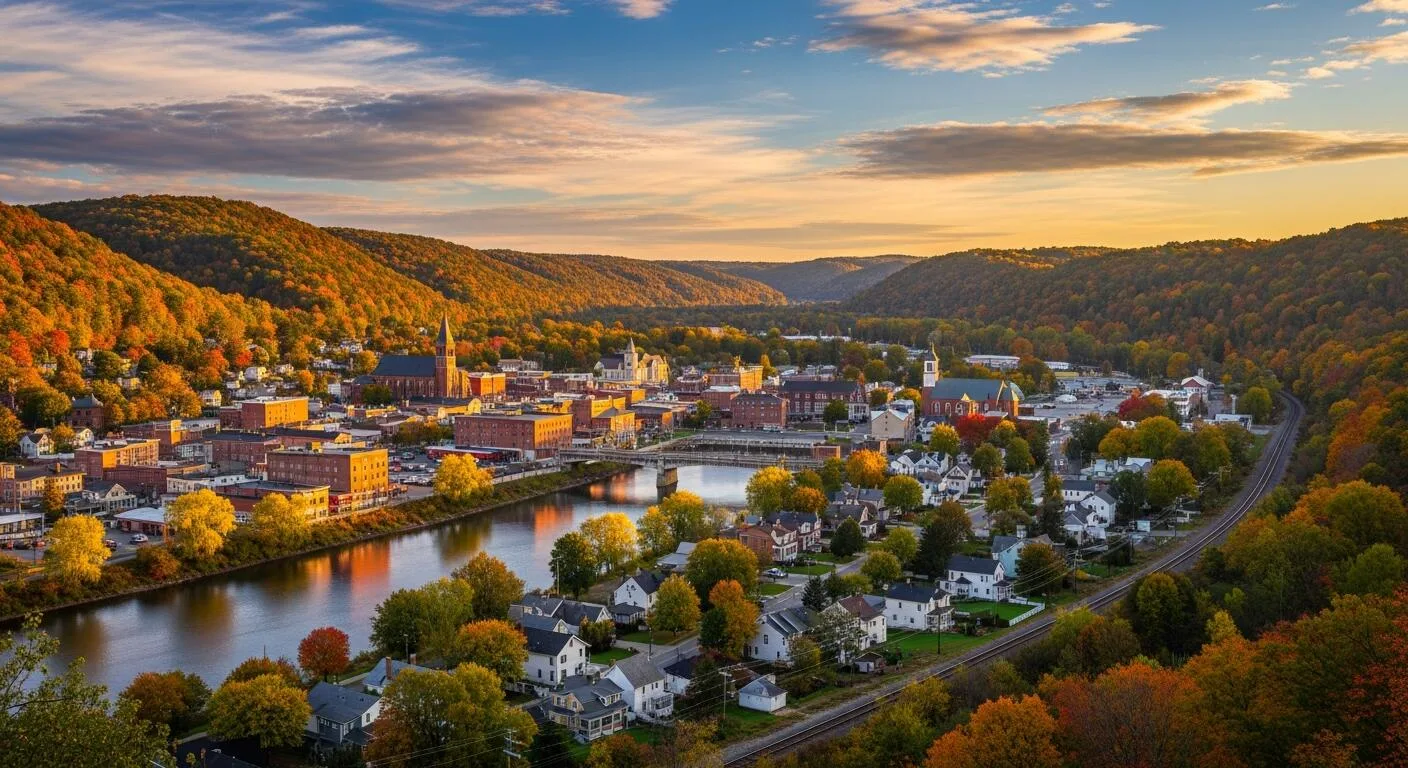
Salamanca sits in a river valley ringed by steep, forested hillsides. Water moves downhill fast here, and it finds basements.
Local Conditions That Drive Damage
- Allegheny River and Great Valley Creek flooding - spring ice jams and heavy rain events push water into low-lying properties near the flats
- Hillside runoff - homes built into the slopes above Wildwood and Rock City Road take on sheet water and saturated soil pressure
- Lake-effect snow loads - heavy accumulation from the Lake Erie snow belt creates ice dams and roof deck saturation
- Severe summer storms - Western New York has seen confirmed tornadic damage patterns in recent years, and straight-line winds strip shingles, tiles, flashing, and underlayment
- Aging sewer and septic infrastructure - older laterals and clay tile lines crack, root-invade, and back up during heavy flow
- Wood stoves and supplemental heat - common in Cattaraugus County homes, and a leading source of chimney and structure fires
Warning Signs Worth Acting On
- Musty odor in the basement or first-floor closets that returns after cleaning
- Efflorescence, white chalky residue, or dark staining on stone or block foundation walls
- Peeling paint, bubbled drywall tape, or cupping hardwood near exterior walls
- Gurgling floor drains or slow tubs - often the first hint of a main line backup
- Yellow-brown staining on ceilings after a thaw, indicating ice dam intrusion
- A lingering smoky smell that intensifies with humidity, meaning soot residue is still active
- Visible growth behind furniture, inside closets, or under carpet padding
Neighborhoods We Serve in Salamanca
Coverage spans the city limits and the surrounding Cattaraugus County communities.
- Downtown Salamanca - Main Street, Broad Street, and the commercial corridor with older mixed-use buildings
- The Flats - low-elevation residential blocks near the Allegheny River
- Wildwood Avenue and the hillside neighborhoods - homes on grade with runoff and drainage concerns
- East and West Salamanca - established residential streets with mid-century and older housing stock
- Seneca Nation territory properties within and around the city
Surrounding service areas include Kill Buck, Great Valley, Little Valley, Steamburg, Onoville, Randolph, Limestone, Allegany, Ellicottville, Red House, and the seasonal cabins and camps bordering Allegany State Park. Rural properties on well and septic systems receive the same emergency response as in-city addresses.
Seasonal Damage Patterns in Salamanca
Winter (December - February)
- Frozen and burst pipes in unheated crawl spaces, garages, and seasonal camps
- Ice dams forcing meltwater under shingles and into wall cavities
- Peak season for wood stove, chimney, and space heater fires - and the smoke damage that follows
Spring (March - May)
- Snowmelt plus rain saturating soil and overwhelming sump pumps
- Flooded basements from hydrostatic pressure and river-level rises
- Sewage backups when combined flow exceeds line capacity
Summer (June - August)
- Severe thunderstorms, high winds, and hail damaging roofing and flashing
- Wind-driven rain intrusion through compromised roof decking
- Mold colonization accelerating in humid, poorly ventilated basements
Fall (September - November)
- Clogged gutters and leaf-packed downspouts redirecting water to foundations
- First-use furnace and chimney fires as heating season begins
- Hidden mold discovered during closing-up of summer camps and cabins
Housing Characteristics & Restoration Considerations
Salamanca's housing stock skews old. A large share of homes date to the railroad era and the early twentieth century, with mid-century additions and a smaller pocket of newer construction on the outskirts.
What Local Construction Means for Restoration
- Stone and rubble foundations - porous, irregular, and prone to seepage; drying requires targeted airflow and moisture mapping rather than standard fan placement
- Balloon framing - open wall cavities let water and smoke travel between floors, so inspection cannot stop at the visible damage line
- Plaster and lath walls - hold moisture far longer than drywall and trap soot in the keys behind the lath
- Original hardwood floors - often salvageable with specialty floor drying mats if extraction happens quickly
- Knob-and-tube or updated-in-place wiring - requires careful evaluation after any water or fire event
- Coal-era chimneys converted for wood or gas - a recurring fire origin point when liners are cracked or absent
- Low-clearance crawl spaces - common under additions and a frequent hidden mold reservoir
Practical Implications
- Older homes may contain asbestos-bearing materials in pipe wrap, floor tile, and joint compound - testing precedes demolition
- Lead paint protocols apply to pre-1978 surfaces disturbed during rebuild
- Matching original trim, doors, and millwork often means custom fabrication rather than off-the-shelf replacement
- Basement finishing added over stone walls without a vapor barrier is a frequent mold discovery during flooded basement work
Environmental Conditions & Damage Implications
The Allegheny River valley creates a microclimate that works against dry buildings. Cool nights, humid summers, and heavy annual precipitation combine into sustained moisture pressure.
Climate Factors
- Annual snowfall well above the state average due to lake-effect bands off Lake Erie
- Freeze-thaw cycling that opens mortar joints, foundation cracks, and roof seams
- Summer humidity that keeps basement dew points high enough for mold growth without any leak at all
- Valley fog and slow morning drying that extends surface wetness on exterior materials
Soil and Groundwater
- Glacial outwash and alluvial soils in the valley floor with a seasonally high water table
- Silty clay on the hillside slopes that sheds water rather than absorbing it, sending volume downhill
- Shallow bedrock in some upland areas limiting drainage depth and pushing water laterally into foundations
Air and Water Quality Effects
- Iron and mineral content in area well water leaves staining that complicates post-loss cleaning
- Wood smoke is a common ambient factor in winter, and residue accumulation inside HVAC systems compounds after a fire event
- Forested surroundings mean heavy organic debris in gutters and on roofs, holding moisture against sheathing
- High ambient humidity slows structural drying, making dehumidification capacity - not just air movement - the controlling factor
Modern Drying Science and Equipment for Old Salamanca Homes
Restoring a 110-year-old valley home is not the same as restoring a modern slab-on-grade build. The materials behave differently, and the equipment has to match.
How a Restoration Response Unfolds
- Emergency stabilization - source control, water shutoff, tarping, board-up, and safety assessment for electrical and structural hazards
- Moisture mapping - thermal imaging cameras and penetrating meters locate water trapped behind plaster, under hardwood, and inside balloon-framed cavities
- Extraction - truck-mounted and portable units remove standing water from basements and saturated carpet before evaporation begins
- Containment - negative air chambers with HEPA scrubbers isolate sewage-contaminated or mold-affected zones from clean living space
- Controlled drying - low-grain refrigerant and desiccant dehumidifiers paired with axial air movers, injectidry systems for wall cavities, and floor drying mats for hardwood
- Antimicrobial and decontamination treatment - applied to Category 2 and 3 losses and to any surface with growth potential
- Soot and odor remediation - dry sponge cleaning, abrasive methods where appropriate, hydroxyl generators, ozone, and thermal fogging for deep-set smoke odor
- Daily monitoring - documented moisture readings until materials return to established dry standards
- Reconstruction - drywall, plaster repair, trim matching, flooring, and paint to return the property to pre-loss condition
Why the Equipment Choice Matters Here
- Stone foundations release moisture slowly, so extended dehumidification beats aggressive airflow alone
- Plaster and lath need cavity drying access points rather than blanket demolition, which preserves original character
- Hidden voids in balloon-framed walls require borescope inspection before drying equipment is placed
- Sewage losses demand full PPE, containment, and documented disinfection - not shop-vac cleanup
- Documented readings support the insurance claim and reduce disputes over scope
Same-day emergency response matters most in the first 24 to 48 hours, before clean water turns contaminated and before mold has anything to feed on.





