
Damage Restoration in Olean, NY
- Damage Restoration Services Overview
- Common Damage Restoration Issues in Olean, New York
- Neighborhoods We Serve in Olean
- Seasonal Damage Patterns in Olean
- Housing Characteristics & Restoration Considerations
- Environmental Conditions & Damage Implications
- Protecting Olean Basements From Repeat Water and Sewage Events
Damage Restoration Services Overview
What would you do if you walked into your basement on a March morning and found three inches of water covering the floor? For property owners in Olean, that scenario plays out more often than most people expect - and how quickly you respond shapes everything that follows.
Restoration work covers a wide span of emergencies, and each one demands a different technical approach. Certified professionals serving Olean handle:
- Water Damage Restoration - burst supply lines, failed water heaters, roof leaks, appliance overflows, and storm intrusion
- Flooded Basement - sump pump failures, foundation seepage, and groundwater pressure after heavy rain or snowmelt
- Sewage Cleanup - backed-up floor drains, sewer line blockages, and Category 3 contamination requiring full sanitization
- Fire Damage Restoration - structural cleaning, debris removal, board-up, and content pack-out after flame damage
- Smoke Damage Restoration - soot removal from framing and finishes, thermal fogging, and odor neutralization
- Mold Removal - containment, HEPA filtration, antimicrobial treatment, and removal of porous materials that cannot be salvaged
The benefit to Olean homeowners and business operators is straightforward: faster stabilization means fewer materials lost, lower reconstruction scope, and a cleaner path through the insurance claim. PuroClean serves the area around the clock at (716) 338-4901, with additional water damage cleanup support available at (585) 340-6799.
Common Damage Restoration Issues in Olean, New York
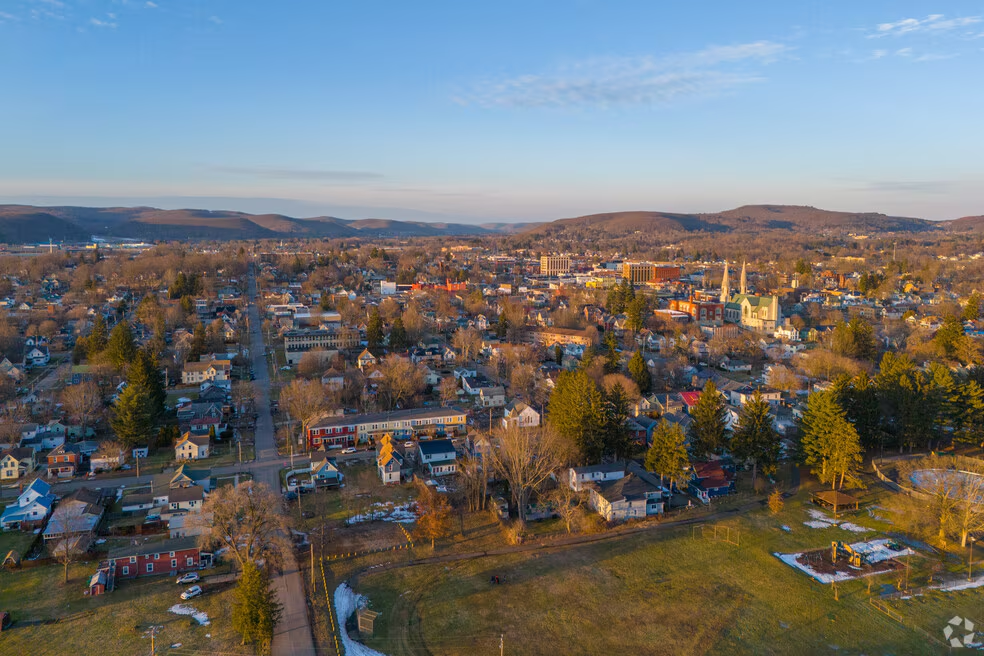
Olean sits in the Allegheny River valley in southern Cattaraugus County, surrounded by hills that funnel runoff straight toward the city floor. That geography, combined with a lake-effect climate and a housing stock that leans older, produces a predictable set of restoration calls.
Local Conditions That Drive Damage
- River valley drainage - the Allegheny and Olean Creek raise the water table quickly during thaws and sustained rain
- Deep frost line - freeze-thaw cycling stresses foundation walls and unheated supply piping
- Heavy snow loads - ice damming along eaves pushes meltwater into wall cavities and ceilings
- Aging municipal and lateral sewer lines - root intrusion and surcharge conditions send wastewater back through basement drains
- Long heating seasons - furnaces, wood stoves, and space heaters raise puff-back and fire risk from October through April
Warning Signs Worth Acting On
- Efflorescence or chalky white staining along basement block walls
- A musty odor that intensifies when the HVAC system cycles on
- Floor drains gurgling when a washing machine or upstairs fixture drains
- Peeling paint, cupped hardwood, or soft spots near exterior walls
- Gray film on window glass and lampshades after furnace operation - a classic puff-back indicator
- Recurring allergy symptoms that ease when occupants leave the property
Mold colonization can begin within a day or two of sustained moisture, so damp drywall, saturated carpet padding, and wet insulation should never be left to air-dry on their own.
Neighborhoods We Serve in Olean
Response teams cover the full city and the surrounding communities of Cattaraugus County and northern Pennsylvania.
- Downtown Olean and the North Union Street corridor - mixed-use commercial buildings and upper-floor apartments
- West State Street and the Boardmanville area - established single-family neighborhoods
- East Olean and the Wayne Street district - older frame homes with stone and block foundations
- South Olean and the Constitution Avenue area - postwar and mid-century construction
- The St. Bonaventure and Allegany corridor - student rentals, campus properties, and riverfront homes
- Portville, Hinsdale, Weston Mills, Cuba, Franklinville, and Bradford, PA - rural properties with wells and septic systems
Rural service areas often involve private septic and well systems, which change how sewage cleanup and post-flood sanitization are handled. Crews arrive equipped for both municipal and on-site utility scenarios.
Seasonal Damage Patterns in Olean
Winter (December - February)
- Frozen and ruptured supply lines in crawl spaces, garages, and vacant rental units
- Ice dams forcing meltwater beneath shingles into ceilings and wall cavities
- Peak fire and smoke damage season from heating equipment, chimneys, and holiday cooking
Spring (March - May)
- Highest volume of flooded basement calls as snowmelt combines with valley rainfall
- Sump pump overload and failure during extended saturation
- Sewer surcharge and drain backups when systems reach capacity
Summer (June - August)
- Mold growth accelerates in humid basements and closed-up seasonal properties
- Thunderstorm-driven roof leaks and wind damage
- Air conditioning condensate line clogs causing hidden ceiling and closet moisture
Fall (September - November)
- Clogged gutters redirecting roof runoff against foundation walls
- First furnace startups producing soot puff-backs and smoke odor
- Discovery of summer-long mold problems once windows close for the season
Housing Characteristics & Restoration Considerations
Olean's housing stock skews older than the national average, with a large share of homes built before 1960 and a meaningful number dating to the oil-boom era of the early twentieth century. That age brings specific restoration challenges.
Common Construction Features
- Stone, brick, and concrete block foundations - porous and prone to lateral seepage under hydrostatic pressure
- Balloon-frame walls in pre-1930 homes - open cavities let water and smoke travel vertically between floors
- Plaster over wood lath - absorbs moisture and soot deeply, requiring careful drying rather than immediate demolition
- Cast iron and galvanized drain lines - corrosion and scale buildup increase backup frequency
- Finished basements added decades after construction - carpet, paneling, and framing installed directly against masonry trap moisture
- Knob-and-tube or early wiring remnants - demand extra caution during water extraction and demolition
How Age Shapes the Restoration Plan
- Moisture mapping and thermal imaging locate water hidden inside wall cavities before drying equipment is set
- Materials that predate the late 1970s are evaluated for asbestos and lead before any cutting or removal
- Plaster, hardwood, and original trim are stabilized and dried in place whenever readings support salvage
- Smoke and soot in balloon-framed structures are traced floor to floor rather than treated as a single-room event
- Mold remediation includes containment barriers because open cavities allow spores to spread easily during removal
Downtown commercial buildings add another layer - shared walls, upper-floor apartments, and basement storage mean one water event can affect several tenants at once.
Environmental Conditions & Damage Implications
Olean's environment shapes both the frequency and the difficulty of restoration work. The city sits in a humid continental climate zone with roughly 42 inches of precipitation and substantial annual snowfall, and the valley setting keeps ambient humidity elevated well into the warm months.
Climate and Moisture Factors
- Cold, snowy winters - extended sub-freezing stretches raise pipe rupture risk in poorly insulated spaces
- Rapid thaw events - snowmelt plus rain overwhelms drainage and lifts the water table
- Summer dew points in the 60s - basements stay above the 60 percent relative humidity threshold where mold thrives
- Short drying windows in shoulder seasons - natural ventilation alone rarely dries a structure
Soil, Water, and Air Considerations
- Glacial outwash and alluvial valley soils - transmit groundwater readily toward foundations
- Clay-rich pockets on hillside lots - hold water against basement walls instead of draining away
- Hard water - mineral scale shortens the life of water heaters and supply fittings
- Radon-prone bedrock - basement work is coordinated so mitigation systems and vapor barriers stay intact
- Wood smoke and heating emissions - contribute to indoor particulate loads that HEPA filtration addresses during fire and smoke jobs
These conditions mean drying plans in Olean rely on controlled dehumidification and monitored air movement, with daily moisture readings guiding when equipment comes out - not a fixed schedule.
Protecting Olean Basements From Repeat Water and Sewage Events
Basements carry the heaviest burden in Olean. They sit below the valley water table, house the furnace and water heater, connect to the sewer lateral, and often hold finished living space that a family cannot afford to lose twice. Solving a flooded basement means addressing why water arrived, not just removing it.
How a Basement Response Unfolds
- Safety and source control - power is evaluated, the water source is identified, and contamination category is classified before anyone enters standing water
- Extraction - truck-mounted and portable units remove bulk water, including saturated carpet padding and subfloor moisture
- Sanitization for sewage events - contaminated porous materials are removed and disposed of, hard surfaces receive antimicrobial treatment, and HEPA air scrubbers run throughout
- Controlled drying - dehumidifiers and directional air movers are placed based on cubic footage and material readings
- Daily monitoring - moisture meters track progress in framing, masonry, and subfloor until documented dry standards are met
- Mold prevention - cavities are inspected and treated before any reconstruction closes them up
Preventive Steps That Reduce Repeat Losses
- Install a battery or water-powered backup sump pump - primary pumps fail during the same outages that cause flooding
- Add a backwater valve on the sewer lateral to block surcharge from municipal lines
- Extend downspouts at least six feet from the foundation and regrade low spots
- Insulate supply lines running through rim joists and unheated crawl spaces
- Keep stored belongings on elevated shelving rather than directly on the slab
- Run a dehumidifier through the humid months and monitor with an inexpensive hygrometer
Every Olean property presents a different combination of soil, foundation type, and drainage history, so recommendations are built around what the moisture readings and site conditions actually show. Help is available around the clock at (716) 338-4901 or (585) 340-6799.





