
Damage Restoration in Elwood, IN
- Damage Restoration Services Overview
- Common Damage Restoration Issues in Elwood, Indiana
- Neighborhoods We Serve in Elwood
- Seasonal Damage Patterns in Elwood
- Housing Characteristics & Restoration Considerations
- Environmental Conditions & Damage Implications
- Basement Flooding, Sewer Backups, and Elwood's Aging Drainage Systems
Damage Restoration Services Overview
Water spreads through drywall, subfloor, and insulation within hours - and mold colonies can begin forming shortly after. For property owners in Elwood, the window between discovering damage and calling for qualified help shapes how much of the structure can be saved.
Our restoration team serves Elwood homes and businesses with a full range of emergency and recovery services:
- Water Damage Restoration - extraction, structural drying, moisture mapping, and antimicrobial treatment after burst pipes, appliance failures, or roof leaks
- Flooded Basement Cleanup - sump pump failure response, groundwater removal, and drying of foundation walls and floor systems
- Sewage Cleanup - containment and sanitizing of Category 3 contamination from backed-up floor drains and sewer laterals
- Fire Damage Restoration - board-up, debris removal, structural cleaning, and reconstruction
- Smoke Damage Restoration - soot removal, thermal fogging, HVAC cleaning, and odor neutralization
- Mold Removal - containment barriers, HEPA filtration, affected material removal, and moisture source correction
Benefits for Elwood residents include faster drying that limits secondary damage, documentation that supports insurance claims, and a single team handling both mitigation and rebuild so the project moves without handoff delays.
Common Damage Restoration Issues in Elwood, Indiana
Elwood sits in Madison and Tipton counties on relatively flat central Indiana terrain, where heavy rain moves slowly off the ground and into basements rather than away from them. Combined with an older housing stock and aging municipal infrastructure, that creates recurring problems.
Frequent Causes We Respond To
- Sump pump failures during spring thunderstorm clusters, especially when power outages accompany the storm
- Frozen and burst supply lines in uninsulated crawl spaces and exterior walls during January cold snaps
- Sewer backups when rainfall overwhelms combined lines near older neighborhoods along the rail corridor
- Water heater and washing machine hose failures - common in homes where these units sit above finished space
- Kitchen fires and space heater fires, the leading residential fire causes in Indiana homes
- Attic and wall-cavity mold traced to bathroom fans venting into unconditioned space
Warning Signs Worth Acting On
- A musty smell that intensifies when the furnace or air conditioner cycles on
- Efflorescence - white chalky residue - on basement block walls
- Floor drains that gurgle or drain slowly during rainfall
- Baseboards that feel soft, or paint that bubbles low on a wall
- Persistent smoke odor that returns days after a small fire, signaling soot lodged in ductwork and porous materials
- Buckling hardwood or lifting vinyl plank seams over a slab or crawl space
Any one of these signals moisture or contamination that is still active. Early inspection usually means drying equipment instead of demolition.
Neighborhoods We Serve in Elwood
Crews cover all of Elwood and the surrounding rural townships, with response routes built around the State Road 28 and State Road 13 corridors.
- Downtown Elwood and the South Anderson Street business district
- Older residential blocks north and south of Main Street, including homes near Callaway Park
- Neighborhoods along the rail corridor and toward State Road 37
- Subdivisions and newer builds on the city's eastern and southern edges
- Duck Creek and surrounding rural properties in Pipe Creek Township
- Nearby communities: Frankton, Alexandria, Tipton, Windfall, Summitville, Anderson, and Noblesville
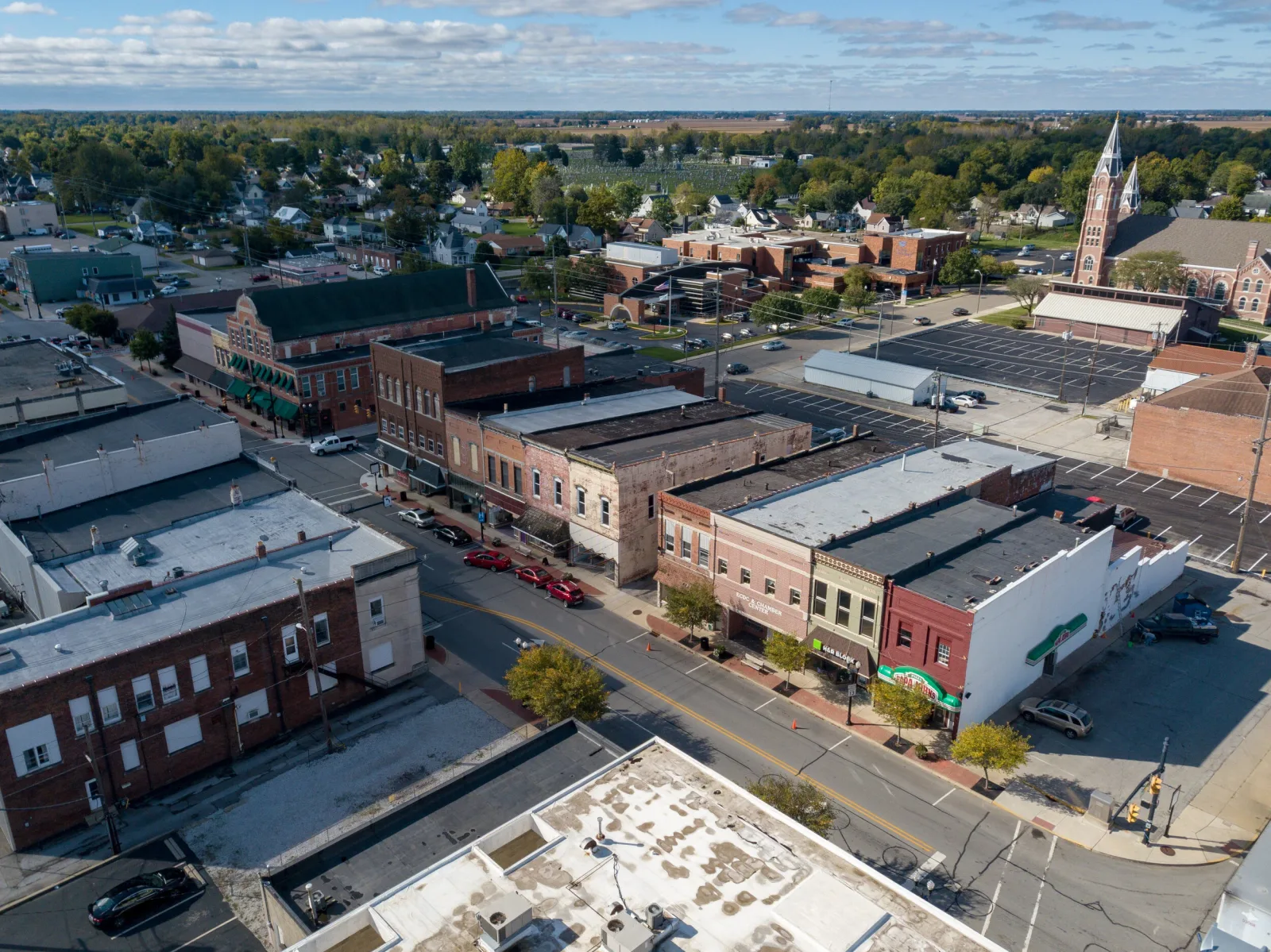
We handle single-family homes, rental duplexes, multi-family buildings, churches, and commercial storefronts throughout the area. Familiarity with local building stock - from century-old brick commercial blocks downtown to slab-on-grade ranches - shapes how each project is scoped and dried.
Seasonal Damage Patterns in Elwood
Winter (December - February)
- Burst pipes in crawl spaces, garages, and vacant properties during hard freezes
- Ice damming pushing meltwater under shingles and into ceilings
- Peak season for heating-related and space heater fires, plus smoke and soot spread through closed-up homes
Spring (March - May)
- Saturated soils and rising water tables driving flooded basement calls
- Sewage backups when storm volume overloads drainage systems
- Mold growth accelerating as humidity climbs and drying slows
Summer (June - August)
- High dew points feeding basement and crawl space mold
- AC condensate line clogs flooding closets and hallways
- Storm-driven roof leaks and wind damage from severe weather cells
Fall (September - November)
- Clogged gutters redirecting roof runoff against foundations
- First furnace startups producing smoke odors and, occasionally, flue-related fires
- Ideal window for moisture inspections before winter closes the house up
Housing Characteristics & Restoration Considerations
Elwood's housing stock skews older than the Indiana average, with a large share of homes built during the natural gas boom era and the mid-century decades that followed. That age directly changes how restoration is planned.
What We Commonly Encounter
- Fieldstone and hollow block basements - porous, prone to seepage, and slow to dry without targeted airflow and dehumidification
- Balloon-framed walls in pre-1930s homes, which let water and smoke travel vertically between floors with no fire blocking
- Plaster and lath that holds moisture far longer than drywall and requires careful evaluation before removal
- Cast iron and clay sewer laterals vulnerable to root intrusion and collapse, a frequent source of sewage backups
- Knob-and-tube or early wiring in unrenovated homes, raising both fire risk and safety steps during water work
- Unvented crawl spaces with exposed soil, a persistent mold and humidity source
- Post-1980 slab ranches and newer subdivisions where water travels laterally under flooring rather than draining down
How This Shapes the Work
- Moisture readings are taken in multiple wall cavities, not just at floor level, because older framing hides water high in the assembly.
- Asbestos and lead-safe protocols are considered before demolition on pre-1978 properties.
- Drying plans account for uninsulated foundations that pull humidity back into the structure.
- Soot cleaning is staged from the highest affected level down, since open stud bays in older homes carry smoke into attics.
Environmental Conditions & Damage Implications
Central Indiana's humid continental climate gives Elwood four distinct seasons and roughly 40 inches of annual precipitation - conditions that keep building materials cycling between wet and dry.
Local Conditions That Drive Damage
- Heavy clay and silt loam soils - poor infiltration means rainwater pools against foundations and pushes through block joints under hydrostatic pressure
- High summer dew points - indoor relative humidity above 60 percent supports mold on drywall paper, cardboard storage, and wood framing
- Shallow water tables in flat terrain near Duck Creek and Pipe Creek, which keep basements damp even without storm events
- Freeze-thaw cycling - repeated expansion cracks foundation walls and mortar joints, creating new water entry points each year
- Agricultural surroundings - field runoff can carry silt and organic matter into flooded basements, complicating cleanup
Restoration Implications
- Structural drying targets are set against local humidity, not generic benchmarks, so materials actually reach a stable moisture content.
- Any flood water contacting soil or sewer lines is treated as contaminated and handled with full containment and disinfection.
- Post-fire cleanup accounts for soot binding to surfaces faster in humid air, making prompt cleaning important to prevent permanent staining.
- Mold remediation always includes correcting the moisture source - grading, gutters, sump discharge, or vapor barriers - so the problem does not return the following season.
Basement Flooding, Sewer Backups, and Elwood's Aging Drainage Systems
More restoration calls in Elwood begin below grade than anywhere else in the house. Flat topography, clay soil, and older drainage infrastructure combine to send water toward basements during the heaviest rains of the year.
Why Elwood Basements Take On Water
- Clay soils shed water rather than absorb it, sending runoff toward the nearest low point
- Older laterals connecting to city mains crack, sag, or fill with roots over decades of service
- Downspouts discharging too close to the foundation saturate the soil directly against basement walls
- Sump pumps on a single circuit fail exactly when storms knock out power
- Finished basements built without vapor barriers trap moisture behind paneling and carpet pad
What Happens When We Arrive
- Safety and power assessment - electrical hazards are identified before any standing water is entered.
- Water categorization - clean groundwater, gray water, and sewage each require different protocols, PPE, and disposal.
- Extraction - truck-mounted and portable units remove standing water quickly.
- Controlled demolition - saturated carpet pad, insulation, and drywall below the wick line come out when they cannot be dried in place.
- Sanitizing - for sewage events, hard surfaces are cleaned and treated with antimicrobials, and porous contaminated materials are removed.
- Structural drying - air movers and commercial dehumidifiers run on a monitored schedule with daily moisture readings.
- Verification and rebuild - drying is confirmed with meter documentation before framing, insulation, drywall, flooring, and trim go back in.
Photos, moisture logs, and equipment records are captured throughout and shared with your insurance carrier. Between events, small changes make a difference: extending downspouts well away from the house, installing a battery backup sump pump, adding a backwater valve, and keeping stored belongings on shelving rather than the basement floor.





