
Damage Restoration in Greenfield, IN
- Damage Restoration Services Overview
- Common Damage Restoration Issues in Greenfield, Indiana
- Neighborhoods We Serve in Greenfield
- Seasonal Damage Patterns in Greenfield
- Housing Characteristics & Restoration Considerations
- Environmental Conditions & Damage Implications
- Emergency Response Timeline: What Happens in the First 24 Hours
Damage Restoration Services Overview
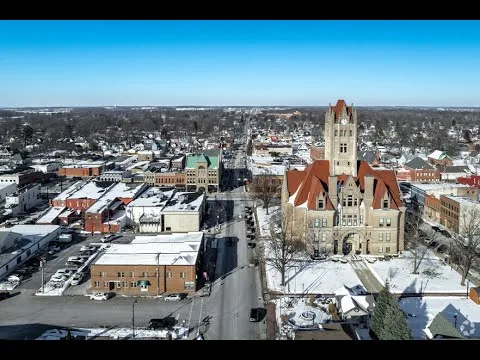
Damage rarely stays contained. A slow supply line leak behind a Greenfield kitchen wall can quietly saturate framing for weeks, and by the time the drywall stains, mold colonies have already taken hold and subfloor has begun to soften.
Delay turns a manageable cleanup into structural repair. Smoke residues become acidic and etch metal, glass, and finishes. Standing sewage soaks into porous materials that then must be removed rather than cleaned.
Midwest Remediation has served the greater Indianapolis area for more than three decades, responding 24/7, 365 days a year, to catastrophic events at homes and businesses in Hancock County.
- Water Damage Restoration - extraction, structural drying, moisture mapping, and monitoring until materials return to dry standard.
- Flooded Basement - pump-out, contents triage, subsurface drying, and treatment of block and poured walls.
- Sewage Cleanup - containment, removal of contaminated porous materials, antimicrobial application, and odor control.
- Fire Damage Restoration - board-up, debris removal, structural cleaning, and coordinated rebuild.
- Smoke Damage Restoration - soot removal, HVAC cleaning, thermal fogging, and contents restoration.
- Mold Removal - containment barriers, negative air, HEPA filtration, and moisture source correction.
Greenfield property owners benefit from local crews, insurance documentation support, and a single team handling mitigation through rebuild. Call (317) 826-0940 or request a free estimate.
Common Damage Restoration Issues in Greenfield, Indiana
Greenfield sits along Brandywine Creek in a flat, clay-heavy stretch of central Indiana. Water drains slowly here, and that reality drives much of the damage we see.
Local Causes We Respond To Most
- Heavy spring rain overwhelming sump pumps in basements near Brandywine Creek and its tributaries
- Combined storm and sanitary loads backing sewage into floor drains and basement bathrooms
- Frozen and burst pipes in unheated crawl spaces, garages, and older uninsulated walls
- Failed water heaters, washing machine hoses, and refrigerator supply lines
- Kitchen grease fires and cooking smoke that migrates through ductwork into every room
- Wood stove, fireplace, and space heater incidents during long Indiana winters
- Roof and siding damage from straight-line winds and hail that lets water into attics
Warning Signs Worth Acting On
- A musty smell in the basement or near HVAC returns that never fully clears
- Efflorescence, white chalky powder, on foundation block walls
- Buckling laminate, cupping hardwood, or tile that sounds hollow underfoot
- Peeling paint or bubbling drywall tape at baseboard height
- Gurgling drains or slow toilets, often an early sign of a main line problem
- Soot streaks above outlets and on ceiling corners after any fire, even a small one
- Recurring allergy symptoms that ease when occupants leave the house
Any of these signs deserves a moisture inspection before cosmetic repairs begin. Painting over a stain hides the symptom while the source keeps working.
Neighborhoods We Serve in Greenfield
Our crews cover all of Greenfield and the surrounding Hancock County communities, including established in-town streets and newer subdivisions on the edges of the city.
- Downtown Greenfield and the historic district near the Hancock County Courthouse
- Riley Park and the older neighborhoods bordering Brandywine Creek
- Neighborhoods along North State Street, West Main Street, and East Main Street
- Subdivisions off New Road, Franklin Street, and Morristown Pike
- Areas near Greenfield-Central High School and Weston Elementary
- Newer developments on the west side toward the Mt. Comfort corridor
We also respond throughout the surrounding region - New Palestine, Fortville, McCordsville, Maxwell, Charlottesville, Wilkinson, Cumberland, and the greater Indianapolis metro. Proximity matters after a loss, because extraction that begins within hours often saves flooring, cabinetry, and drywall that would otherwise be demolished.
Seasonal Damage Patterns in Greenfield
Damage in central Indiana follows a predictable rhythm. Knowing the pattern helps homeowners get ahead of it.
- December through February: Frozen and burst pipes dominate. Furnace, fireplace, and space heater fires spike, along with smoke damage from puffbacks in oil and gas systems.
- March through May: Peak season for flooded basements. Saturated clay soil, snowmelt, and repeated storm systems overwhelm sump pumps and push groundwater through foundation cracks. Sewer backups rise with rainfall totals.
- June through August: Humidity climbs and mold growth accelerates in basements, crawl spaces, and closets. Severe thunderstorms bring wind-driven rain, hail, and lightning-related fires. Air conditioner condensate line clogs cause quiet ceiling leaks.
- September through November: Leaf-clogged gutters and downspouts redirect water toward foundations. Heating systems restart and burn accumulated dust, producing odor complaints. Grilling and holiday cooking increase kitchen fire calls.
Two transitions deserve extra attention: the first hard freeze and the first week of steady spring rain. Both reliably generate emergency calls across Greenfield.
Housing Characteristics & Restoration Considerations
Greenfield's housing stock spans well over a century. That range means no two restoration plans look alike.
Older Homes Near Downtown and Riley Park
- Balloon framing lets water and smoke travel vertically between floors with no fire blocking
- Plaster and lath hold moisture longer than drywall and require specialized drying
- Stone and unsealed block foundations wick groundwater during wet spring months
- Original hardwood floors are often salvageable with rapid extraction and mat drying systems
- Knob-and-tube remnants and older wiring raise fire risk and complicate post-fire assessment
Mid-Century and 1970s-1990s Homes
- Finished basements with paneling, carpet pad, and framed walls trap moisture behind surfaces
- Cast iron and galvanized drain lines corrode and contribute to sewage backups
- Aging sump pump systems without battery backup fail during storm-related power outages
- Crawl spaces with plastic vapor barriers or none at all breed mold under floor joists
Newer Subdivisions
- Tighter building envelopes hold humidity and smoke odor inside longer
- Engineered wood subfloor and OSB swell quickly and permanently when saturated
- Second-floor laundry rooms send supply line failures down through ceilings
- Multi-zone HVAC systems distribute soot and mold spores across the whole footprint
Our technicians document construction type and material composition before drying begins, because a plaster wall, a poured basement, and an OSB subfloor each need a different approach.
Environmental Conditions & Damage Implications
Greenfield's environment works against drying and in favor of mold. Understanding local conditions shapes how equipment gets deployed.
Climate
- Humid continental climate with hot, muggy summers and freeze-thaw winters
- Roughly 40 inches of annual precipitation, concentrated in spring and early summer
- Summer indoor humidity routinely exceeds the 60 percent threshold where mold thrives
- Repeated freeze-thaw cycles widen foundation cracks year over year
Soil and Groundwater
- Glacial till with heavy clay content drains slowly and holds water against foundations
- Clay expands when wet and contracts when dry, stressing basement walls and footings
- Flat terrain across much of Hancock County limits natural runoff away from structures
- Shallow water tables in low-lying areas near Brandywine Creek push water through slab joints
Air Quality and Indoor Effects
- Agricultural dust and seasonal pollen load HVAC filters, worsening post-fire particulate spread
- Smoke residues bond more aggressively to surfaces in humid conditions
- Sewage contamination in warm weather produces bacterial growth and odor within hours
- Radon-prone soils in the region mean basement work should account for existing mitigation systems
Because ambient humidity is so high locally, open-window drying rarely works. Controlled dehumidification with monitored moisture readings is the reliable path to a dry structure.
Emergency Response Timeline: What Happens in the First 24 Hours
Speed is the single biggest factor in how much a Greenfield property owner loses. Water migrates within minutes, and microbial growth can begin within 24 to 48 hours under the right conditions.
What You Should Do Before Crews Arrive
- Shut off the water at the main valve if the source is a supply line
- Cut power to affected areas at the breaker if it can be done safely
- Stay out of any space with standing sewage or structural fire damage
- Photograph everything for your insurance claim before moving items
- Move small valuables and documents to a dry, unaffected room
- Do not run household fans through smoke-damaged areas, which spreads soot
Our Response Sequence
- Call intake and dispatch - we answer 24/7, 365 days a year at (317) 826-0940 and route the nearest available crew.
- Safety and scope assessment - technicians identify hazards, categorize water or contamination, and map moisture with meters and thermal imaging.
- Containment and stabilization - board-up, tarping, containment barriers, and negative air machines where mold or sewage is present.
- Extraction and removal - truck-mounted extraction, pump-out for flooded basements, controlled demolition of unsalvageable porous materials.
- Cleaning and treatment - antimicrobial application, soot removal, HVAC cleaning, and odor neutralization.
- Structural drying - air movers and dehumidifiers placed to a calculated load, with daily moisture readings logged.
- Documentation and rebuild - readings and photos supplied for the claim, then reconstruction to pre-loss condition.
For Greenfield businesses, we phase the work so unaffected areas can reopen while restoration continues elsewhere. Request a free estimate and we will build a containment and reopening plan around your operation.





