Damage Restoration in Fond du Lac County, WI
- Damage Restoration Services Overview
- Common Damage Restoration Issues in Fond du Lac County, Wisconsin
- Neighborhoods We Serve in Fond du Lac County
- Seasonal Damage Patterns in Fond du Lac County
- Housing Characteristics & Restoration Considerations
- Environmental Conditions & Damage Implications
- Why 24/7 Local Response Matters After a Fond du Lac County Emergency
Damage Restoration Services Overview
When a pipe bursts on a January night or smoke rolls through a kitchen, the fastest way to protect your property is a trained restoration crew with the right equipment already loaded on the truck. Fond du Lac County homeowners and business owners have access to certified teams that handle the full arc of recovery - from the first extraction pass to the final coat of paint.
Services available across the county include:
- Water Damage Restoration - extraction, structural drying, moisture mapping, and documentation for insurance claims
- Flooded Basement Cleanup - sump pump failures, foundation seepage, storm surge, and frozen supply lines
- Sewage Cleanup - safe removal of Category 3 contaminated water, disinfection, and disposal of porous materials
- Fire Damage Restoration - board-up, debris removal, soot cleaning, contents pack-out, and rebuild coordination
- Smoke Damage Restoration - odor neutralization, HVAC cleaning, and treatment of walls, textiles, and hard surfaces
- Mold Removal - containment, HEPA filtration, affected material removal, and moisture source correction
The benefit of moving quickly is measurable. Drywall that dries within the first day or two often stays in place. Soot removed before it acidifies leaves fixtures salvageable. Mold addressed at the first musty odor rarely becomes a whole-basement project. Companies serving the area - including SERVPRO of Fond du Lac, Paul Davis Restoration, and family-owned JG Restoration - keep technicians on call around the clock because emergencies rarely arrive during business hours.
Common Damage Restoration Issues in Fond du Lac County, Wisconsin
Sitting at the southern tip of Lake Winnebago, this county experiences a mix of lake-effect moisture, hard freezes, and spring runoff that pushes water into places it does not belong. The problems repeat year after year with predictable patterns.
Water and Basement Problems
- Frozen and burst supply lines in unheated crawlspaces, garages, and older stone foundations
- Sump pump failure during power outages caused by summer thunderstorms and winter ice
- Hydrostatic pressure forcing groundwater through basement floor cracks during spring thaw
- Backed-up floor drains and lateral lines in older neighborhoods with clay sewer pipe
- Failed water heaters, washing machine hoses, and ice maker lines
Fire and Smoke Problems
- Heating season equipment - furnaces, wood stoves, and space heaters running nonstop from November through March
- Cooking fires that leave grease-based soot films across cabinets and ceilings
- Chimney and flue buildup in century-old farmhouses across the rural townships
- Lightning strikes and electrical faults during severe storm season
Warning Signs Worth Acting On
- Musty or earthy odor in a basement, especially after rain
- Bubbling paint, cupping hardwood, or a soft spot in drywall near the floor
- Slow floor drains or gurgling toilets - often the first hint of a sewer line problem
- Persistent smoke smell weeks after a small fire, which usually means soot is inside the HVAC system
- Rust rings on furnace or water heater bases
Neighborhoods We Serve in Fond du Lac County
Coverage extends across the county's cities, villages, and rural townships, including:
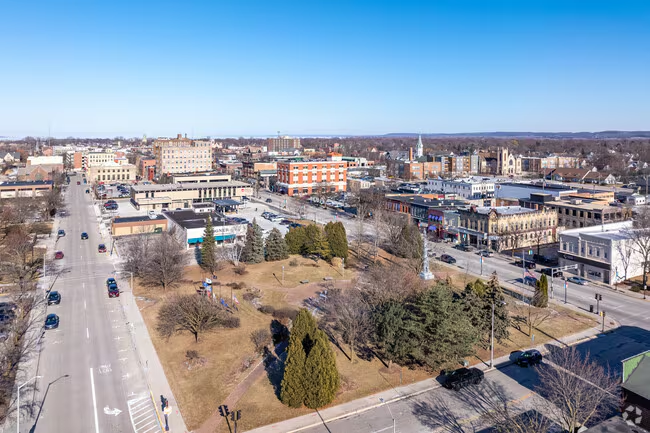
- City of Fond du Lac - including the historic near-downtown districts, Lakeside Park area, the west side near Rolling Meadows, and neighborhoods along Johnson Street and Main Street
- North Fond du Lac and the Winnebago shoreline communities
- Ripon - college-area rentals and older Victorian housing stock
- Waupun, Campbellsport, Oakfield, Rosendale, and Brandon
- Eden, Mount Calvary, St. Cloud, Fairwater, and Van Dyne
- Rural townships including Taycheedah, Empire, Byron, Ashford, Lamartine, and Friendship
Farm properties in the Kettle Moraine foothills and lakefront homes near Winnebago and Lake De Neveu each bring different challenges, from outbuilding fires to shoreline groundwater intrusion. Local crews know the road network well enough to reach outlying townships quickly, which matters when standing water is spreading by the hour.
Seasonal Damage Patterns in Fond du Lac County
Restoration demand here follows the Wisconsin calendar closely. Knowing what season brings helps homeowners prepare before the call becomes an emergency.
- December through February - Peak season for frozen and burst pipes, ice dam leaks along roof edges, and heating-related fires. Smoke damage calls climb as furnaces, fireplaces, and wood stoves run continuously.
- March and April - Snowmelt combines with saturated clay soil and rising water tables. Flooded basements, sump pump overload, and sewer backups dominate. Mold begins growing in spaces that got wet in winter and never fully dried.
- May through July - Severe thunderstorms bring wind damage, roof leaks, lightning-caused fires, and power outages that knock sump pumps offline. Storm-related flooding is common in low-lying areas near the Fond du Lac River.
- August and September - Humidity peaks. Mold removal calls rise sharply in basements, crawlspaces, and closed-up vacation properties near the lake.
- October and November - Transitional risk. First freezes catch unwinterized hose bibs and irrigation lines, while early furnace startups reveal cracked heat exchangers and dust-burn smoke odors.
Housing Characteristics & Restoration Considerations
Fond du Lac County housing skews older than the national average, with a large share of homes built before 1960 and a meaningful number of pre-1940 farmhouses and city bungalows. That age profile shapes every restoration decision.
What Older Construction Means for Restoration
- Stone and rubble foundations - porous, irregular, and prone to seepage. Drying requires longer dehumidification cycles than poured concrete.
- Plaster and lath walls - hold moisture behind the surface. Technicians often use cavity drying systems rather than removing intact plaster.
- Balloon framing - open wall cavities let smoke, soot, and water travel from the basement to the attic. Inspection has to extend well beyond the visible damage.
- Clay and cast iron sewer laterals - vulnerable to root intrusion and collapse, a frequent source of sewage backups in city neighborhoods.
- Knob-and-tube or early wiring - a persistent fire risk in unrenovated attics and additions.
- Asbestos and lead paint - common in materials from this era, requiring proper testing before demolition during fire or water restoration.
Newer Homes Have Their Own Issues
- Tighter building envelopes trap humidity, feeding mold growth when drying is incomplete
- Finished basements with carpet, drywall, and framed walls hide water for weeks
- Engineered flooring and MDF trim swell permanently once saturated
- Complex HVAC systems distribute smoke and mold spores throughout the structure
Agricultural properties add another layer - outbuildings, grain storage, and equipment sheds present fire loads and contamination concerns that residential-only crews may not anticipate.
Environmental Conditions & Damage Implications
The county's physical setting drives much of the moisture-related damage that restoration teams address.
Climate and Humidity
- Humid continental climate with cold winters and warm, muggy summers
- Roughly 32 inches of annual precipitation, plus significant seasonal snowfall
- Summer dew points routinely support mold growth in unconditioned basements
- Deep frost penetration stresses buried water and sewer lines each winter
Soil and Groundwater
- Heavy clay and glacial till soils drain slowly, holding water against foundation walls
- Shallow dolomite bedrock in the eastern townships creates high water tables and fast groundwater movement
- Proximity to Lake Winnebago and the Fond du Lac River raises basement water levels during high-water periods
- Karst-influenced areas near the Niagara Escarpment allow contaminants to travel quickly, making sewage cleanup and disinfection especially important
Air and Water Quality Factors
- Hard, mineral-rich groundwater accelerates corrosion in supply lines and water heaters
- Agricultural runoff can contribute to contamination in flood water, requiring Category 3 handling protocols
- Winter's closed-up interiors concentrate smoke odor and mold spores, worsening symptoms for anyone with asthma or allergies
These conditions mean drying targets and clearance standards used elsewhere do not always apply. Local technicians calibrate dehumidification to regional humidity loads and verify results with moisture meters rather than assuming a structure is dry because surfaces feel dry.
Why 24/7 Local Response Matters After a Fond du Lac County Emergency
Damage does not pause overnight. A sewer backup at 2 a.m. spreads bacteria across a finished basement while the household sleeps. Soot left on chrome and aluminum begins etching within hours. Water that sat through a weekend becomes a mold problem instead of a drying project. That is why restoration companies serving the area - SERVPRO of Fond du Lac, Paul Davis Restoration, and JG Restoration among them - staff around-the-clock dispatch.
What Fast Local Response Delivers
- Immediate stabilization - water extraction, board-up, tarping, and power isolation to stop damage from spreading
- Same-day equipment placement - air movers, dehumidifiers, and HEPA air scrubbers set before secondary damage begins
- Contamination control - containment barriers and negative air pressure for sewage and mold work, protecting unaffected rooms
- Thorough documentation - moisture readings, photos, and material inventories that support the insurance claim
- Rebuild coordination - a single point of contact through drying, cleaning, and reconstruction
The Local Knowledge Advantage
- Familiarity with city of Fond du Lac and Waupun building departments, permitting, and inspection expectations
- Understanding of which neighborhoods have aging clay laterals prone to backup
- Experience drying stone foundations and plaster walls common in Ripon and older Fond du Lac housing
- Relationships with local plumbers, electricians, and roofers who can respond the same day
- Awareness of rural access challenges in Ashford, Auburn, and Eden during winter storms
Beyond the technical work, there is the human side. Families displaced by fire or sewage are dealing with disruption, lost belongings, and uncertainty. Crews rooted in this community treat homes and contents accordingly - carefully cleaning what can be saved, communicating clearly about what cannot, and keeping the process moving so life can return to normal.