
Damage Restoration in Huntingburg, IN
- Damage Restoration Services Overview
- Common Damage Restoration Issues in Huntingburg, Indiana
- Neighborhoods We Serve in Huntingburg
- Seasonal Damage Patterns in Huntingburg
- Housing Characteristics & Restoration Considerations
- Environmental Conditions & Damage Implications
- Sump Pumps, Sewer Backups, and Basement Protection in Huntingburg
Damage Restoration Services Overview
Water that sits for a weekend rarely stays a water problem. Within days, drywall wicks moisture upward, subfloors swell, and mold colonies take hold behind baseboards - turning a contained loss into a structural repair. Fire and smoke follow the same pattern, as acidic soot etches glass, metal, and finishes with every hour it remains.
Huntingburg property owners have access to a full slate of restoration services designed to stop that progression early:
- Water Damage Restoration - extraction, structural drying, and moisture mapping after burst pipes, appliance failures, and roof leaks
- Flooded Basement - pump-out, content removal, and dehumidification for below-grade spaces along the Patoka River watershed
- Sewage Cleanup - biohazard containment, removal of porous materials, and antimicrobial treatment after backups
- Fire Damage Restoration - board-up, debris removal, soot cleaning, and structural repair
- Smoke Damage Restoration - odor neutralization, HVAC decontamination, and surface-by-surface soot removal
- Mold Removal - inspection, containment barriers, HEPA filtration, and safe material disposal
The benefits for Dubois County homeowners are practical: less material replaced, fewer displaced nights, stronger insurance documentation, and healthier indoor air for families with children, older adults, or respiratory sensitivities.
Common Damage Restoration Issues in Huntingburg, Indiana
Huntingburg sits in southern Indiana's humid continental zone, where heavy spring rain, clay-heavy soils, and older housing stock combine into predictable restoration patterns. The Patoka River corridor and its tributaries influence groundwater levels across much of the area.
Frequent Causes of Loss
- Saturated clay soil pressing against foundation walls, forcing seepage through cracks and cove joints
- Sump pump failure during multi-day rain events or power outages
- Municipal and private sewer line surcharge that pushes wastewater back through floor drains
- Frozen and burst supply lines in crawl spaces and unheated additions during January cold snaps
- Wood stove, fireplace, and space heater fires during peak heating months
- Kitchen grease fires that spread smoke through open floor plans and return-air ducts
- Hidden mold behind kitchen cabinets, under vinyl flooring, and inside crawl space insulation
Warning Signs Worth Acting On
- A musty smell that intensifies after rain or when the HVAC cycles on
- Efflorescence - white chalky residue - on basement block walls
- Floor drains gurgling when a washing machine drains
- Tile grout darkening or bubbling paint near baseboards
- Lingering smoke odor that returns on humid days after a small kitchen fire
- Cupping hardwood planks or soft spots underfoot near exterior walls
Any one of these signals moisture or contamination that has already moved beyond the visible surface.
Neighborhoods We Serve in Huntingburg
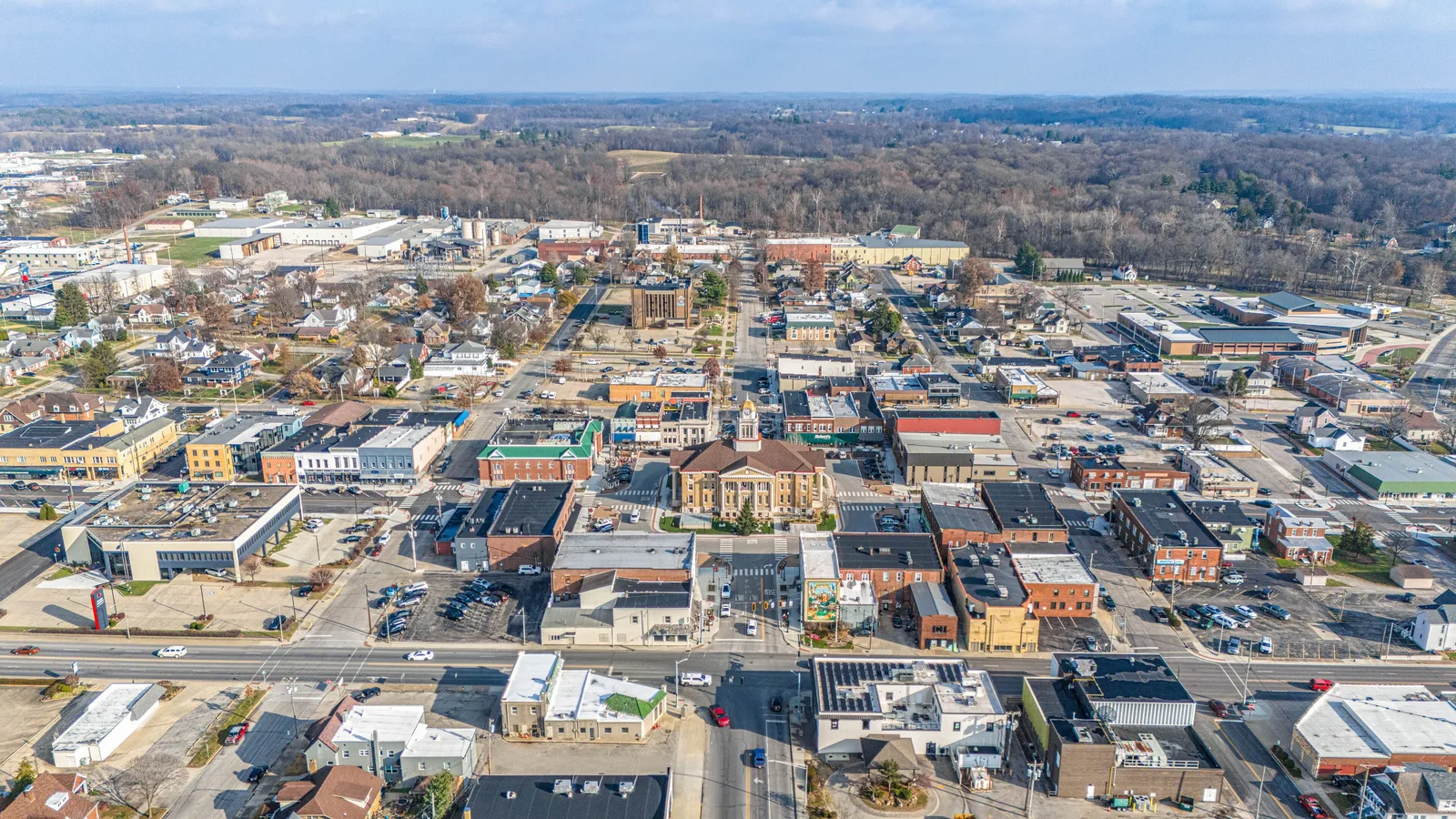
Coverage spans Huntingburg's older core near Fourth Street and the historic downtown district, the residential blocks surrounding League Stadium and Market Street, newer subdivisions on the north and east edges of town, and rural properties along County Road routes toward the Patoka bottoms.
Service extends throughout Dubois County and neighboring communities, including:
- Jasper, Ferdinand, Holland, and Dubois
- Celestine, Saint Anthony, Saint Meinrad, and Schnellville
- Dale, Stendal, Velpen, and Otwell
- Bristow, Eckerty, French Lick, and West Baden Springs
- Petersburg, Oakland City, Loogootee, Montgomery, and Cannelburg
- Shoals, Monroe City, and Vincennes
- Chandler, Elberfeld, Lynnville, Gentryville, Tennyson, Newburgh, and Evansville
Farm properties, church buildings, downtown commercial storefronts, and rental housing all receive the same response process as single-family homes.
Seasonal Damage Patterns in Huntingburg
Winter (December - February)
- Burst pipes in crawl spaces, garages, and exterior walls during hard freezes
- Peak season for heating-related fire and smoke damage
- Ice damming on low-slope roofs pushing water into ceilings
Spring (March - May)
- Highest volume of flooded basements as thaw meets heavy rainfall
- Sewer backups when storm volume overwhelms drainage capacity
- Mold growth accelerating in previously wet materials
Summer (June - August)
- Humidity above 70 percent feeding mold in basements and crawl spaces
- Storm-driven roof leaks from severe thunderstorms and straight-line winds
- Air conditioning condensate line clogs saturating ceilings and closets
Fall (September - November)
- Clogged gutters routing water toward foundations
- First-use furnace and flue fires as heating systems restart
- Smoke odor complaints tied to fireplaces and outdoor burning
Scheduling sump pump tests in February and dryer vent cleaning in October heads off two of the most common calls.
Housing Characteristics & Restoration Considerations
Huntingburg's housing reflects its heritage as a furniture and brick-manufacturing town. Many homes near the historic district date to the late 1800s and early 1900s, with newer construction filling in from the 1960s onward.
Construction Types and What They Mean
- Balloon-framed Victorians and four-squares - open wall cavities let water and smoke travel from basement to attic, requiring cavity drying and interior wall inspection
- Local brick and stone foundations - porous masonry holds moisture long after surface water is gone, extending drying timelines
- Post-war ranches with block basements - cove joint seepage is the leading source of basement flooding
- Homes with vented crawl spaces - persistent ground moisture makes them the most common mold discovery point
- 1990s and newer subdivisions - engineered subfloors and OSB sheathing lose structural integrity quickly when saturated
Material-Specific Concerns
- Plaster and lath in older homes requires slower, monitored drying to avoid cracking
- Original hardwood floors may be salvageable with mat drying systems if addressed within the first day or two
- Knob-and-tube or aged wiring near a fire or water event needs electrical evaluation before restoration begins
- Pre-1980 homes may contain asbestos flooring or insulation, requiring testing before demolition
- Finished basements with carpet and paneling almost always need porous materials removed after sewage exposure
Documenting materials and moisture readings up front supports both the repair plan and the insurance claim.
Environmental Conditions & Damage Implications
Southern Indiana's climate creates conditions that both cause damage and complicate its repair. Annual rainfall in the Huntingburg area typically exceeds 45 inches, concentrated in spring and early summer.
Climate and Moisture
- Summer dew points regularly sit in the upper 60s and low 70s, meaning outside air alone cannot dry a wet structure
- Freeze-thaw cycling from December through March widens foundation and mortar cracks each year
- Long humid stretches keep crawl space wood moisture content near the threshold where mold begins colonizing
Soil and Groundwater
- Silt loam over dense clay subsoil drains slowly, holding water against foundation walls
- Low-lying parcels near the Patoka River and its creeks experience seasonally high water tables
- Expansive clay movement stresses footing drains, sewer laterals, and basement floors
Water, Air, and Site Factors
- Hard water is common regionally, contributing to water heater and supply line failures over time
- Rural properties on septic systems face backup risks when drain fields saturate after heavy rain
- Agricultural dust and pollen load indoor air, so post-fire HEPA filtration and duct cleaning matter for occupant comfort
- Well-water properties may need water quality testing after any sewage or flood contamination event
Restoration plans built around these conditions rely on sealed containment, controlled dehumidification, and moisture verification rather than assumptions about drying time.
Sump Pumps, Sewer Backups, and Basement Protection in Huntingburg
Basement losses account for a large share of restoration work across Dubois County. The combination of clay soil, older sewer laterals, and finished lower levels makes prevention worth real attention.
How a Basement Flood Response Unfolds
- Safety assessment - power is cut to affected circuits and standing water is categorized as clean, gray, or sewage-contaminated
- Extraction - submersible pumps and truck-mounted units remove standing water
- Material triage - carpet pad, saturated drywall, and contaminated porous items are removed and documented
- Cleaning and disinfection - hard surfaces are washed and treated with antimicrobial agents, especially after sewage exposure
- Structural drying - air movers and low-grain refrigerant dehumidifiers run until moisture meters confirm dry standards
- Verification and rebuild - readings are logged daily, then framing, flooring, and finishes are restored
Preventive Steps for Local Homeowners
- Install a battery backup or water-powered secondary sump pump - most failures happen during storm outages
- Test the primary pump quarterly by pouring water into the pit
- Add a backwater valve on the sewer lateral if your home has experienced a backup
- Extend downspouts at least six feet from the foundation and regrade soil to slope away
- Keep a dehumidifier running in the basement from May through September and hold relative humidity below 55 percent
- Seal visible cove joint and wall cracks before spring rains arrive
- Have sewer laterals camera-inspected if the home predates 1970 or has mature trees near the line
When to Call Immediately
- Any water containing sewage - this requires trained handling and protective equipment
- Water that has stood longer than 24 hours
- Moisture reaching insulation, ductwork, or electrical components
- Visible mold covering more than a small surface area
Fast, documented response protects both the structure and the claim - and keeps a wet basement from becoming a mold remediation project weeks later.





