
Damage Restoration in Yorktown, IN
- Damage Restoration Services Overview
- Common Damage Restoration Issues in Yorktown, Indiana
- Neighborhoods We Serve in Yorktown
- Seasonal Damage Patterns in Yorktown
- Housing Characteristics & Restoration Considerations
- Environmental Conditions & Damage Implications
- Emergency Response and the First 24 Hours After Flooding in Yorktown
Damage Restoration Services Overview
You come home after a spring storm, open the basement door, and hear water before you see it. Two inches across the floor, boxes floating, the furnace pilot out - and the smell of something that is not clean water coming up from the floor drain. That moment happens more often than most Yorktown homeowners expect, and what you do in the first few hours shapes the entire repair.
Full-service restoration in Yorktown covers the whole range of property emergencies:
- Water Damage Restoration - burst supply lines, failed water heaters, roof leaks, appliance overflows and storm intrusion
- Flooded Basement - sump pump failures, hydrostatic pressure through block walls, window well and floor drain backups
- Sewage Cleanup - sanitary line backups, septic surcharge and Category 3 contamination requiring full biohazard protocols
- Fire Damage Restoration - structural cleaning, debris removal, board-up and content recovery after kitchen, chimney or electrical fires
- Smoke Damage Restoration - soot removal, thermal fogging, HVAC decontamination and odor neutralization
- Mold Removal - containment, HEPA filtration, antimicrobial treatment and removal of porous materials past saving
The benefit for Yorktown residents is simple: one crew handles extraction, drying, cleaning, deodorizing and rebuilding, so damage does not quietly turn into mold behind the drywall.
Common Damage Restoration Issues in Yorktown, Indiana
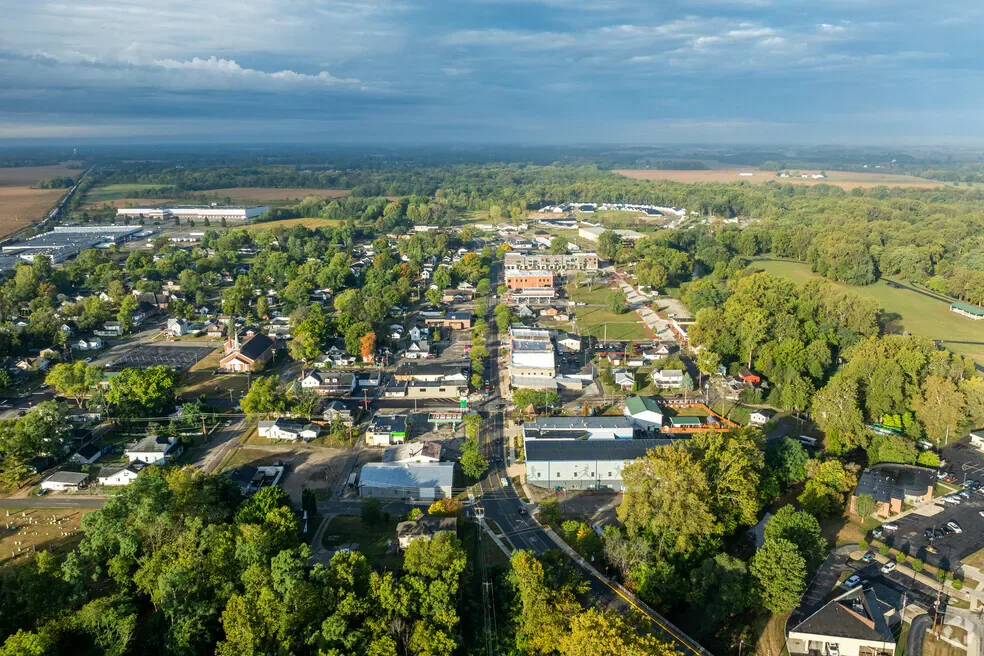
Yorktown sits along the White River in Delaware County, and river-adjacent geography drives much of the local damage picture. Historic flooding has pushed water into homes, businesses and public buildings here - the Yorktown Public Library lost thousands of books, computers and portions of its building to floodwater, and town-wide cleanup stretched on well after the river receded. Basements take the first hit almost every time.
Local conditions that repeatedly cause property damage:
- River and creek backwater during heavy rain events, pushing groundwater against foundation walls
- Heavy clay soils that hold water rather than draining, raising hydrostatic pressure on block basements
- Combined and aging sewer laterals that surcharge during downpours and send sewage back through basement drains
- Frozen and burst pipes in crawl spaces, garages and unheated additions during January and February cold snaps
- Space heaters, wood stoves and chimney fires during long Indiana winters
- Summer humidity that keeps damp materials from ever fully drying, feeding mold growth
Warning signs worth acting on immediately:
- Efflorescence, white chalky streaks or dark staining low on basement walls
- A musty odor that gets stronger when the HVAC system runs
- Floor drains that gurgle or drain slowly during rainstorms
- Cupping hardwood, bubbling paint or soft baseboards
- Yellow-brown soot film on ceilings, light fixtures and above outlets after any fire
- Allergy symptoms that improve when you leave the house
Neighborhoods We Serve in Yorktown
Response covers the town limits and the surrounding Delaware County countryside, including:
- Downtown Yorktown and the Canal Street corridor near the Cardinal Greenway
- Morrow's Meadow and adjacent residential streets close to Buck Creek
- Newer subdivisions along West Smith Street and Nebo Road
- Homes off County Road 600 W and the White River floodplain properties
- Mount Pleasant Township and Daleville-area residences
- Chesterfield, Gaston, Selma and western Muncie neighborhoods
- Rural acreage properties on septic systems outside town
Familiarity with these areas matters. Crews already know which streets sit low, which blocks have older clay sewer laterals, and where hauling equipment down a narrow basement stairwell requires different gear. That local knowledge shortens the gap between your call and the first extraction hose running.
Seasonal Damage Patterns in Yorktown
Damage in Delaware County follows a fairly predictable annual rhythm:
- December - February: Frozen and burst pipes, ice dams forcing meltwater under shingles, furnace puff-backs coating rooms in soot, chimney and space heater fires. Holiday cooking fires spike around late November and December.
- March - April: Peak flooded basement season. Snowmelt combines with spring rain, saturated clay soil sheds water toward foundations, and sump pumps run continuously until they fail.
- May - June: Severe thunderstorms and straight-line winds bring roof damage, storm water intrusion and sewage backups when systems surcharge.
- July - August: Mold season. High humidity plus air conditioning condensation means any material still damp from spring begins colonizing. Crawl space mold complaints climb sharply.
- September - October: Remnant tropical moisture, plus the first heating-system startups that reveal cracked heat exchangers and dust-and-smoke odor issues.
- November: Early freezes catch unprotected hose bibs and crawl space plumbing.
Scheduling sump pump checks in February and HVAC and dryer vent cleaning in October prevents a large share of these calls.
Housing Characteristics & Restoration Considerations
Yorktown's housing stock spans more than a century, and each era brings its own restoration challenges.
Older homes near downtown
- Poured or stone-and-mortar foundations with fieldstone or hollow block basement walls that wick moisture
- Plaster over wood lath, which holds water far longer than drywall and complicates drying
- Balloon framing that lets smoke and heat travel vertically through wall cavities during a fire
- Possible asbestos in floor tile, pipe wrap and mastic, and lead paint in pre-1978 homes - both require testing before demolition
- Original clay sewer laterals vulnerable to root intrusion and backups
Mid-century ranches and split-levels
- Finished basements with paneling, carpet and framed walls that trap water behind the surface
- Crawl spaces with exposed dirt floors and minimal vapor barrier, a common mold source
- Ductwork running through basements, spreading soot and mold spores house-wide
Newer subdivision construction
- Tight building envelopes that hold humidity in after a water loss
- Engineered flooring and OSB subfloor that swell permanently once saturated
- PEX and CPVC supply lines with fittings that fail without warning
Restoration plans adjust accordingly - controlled demolition and injection drying for plaster walls, containment and encapsulation for crawl spaces, and duct cleaning any time smoke or mold has reached the HVAC system.
Environmental Conditions & Damage Implications
Yorktown's climate and geology work against dry buildings for much of the year.
- Rainfall: Roughly 40-plus inches annually, heavily weighted toward spring and early summer, with intense short-duration downpours that overwhelm gutters and drains.
- Humidity: Summer dew points regularly climb into the 60s and 70s, meaning outdoor air alone will not dry a wet basement. Dehumidification equipment and controlled airflow are required.
- Freeze-thaw cycling: Repeated freezing widens foundation cracks and mortar joints each winter, creating new water entry paths.
- Soil: Glacial till with high clay content across Delaware County drains slowly and expands when wet, pressing against basement walls.
- Water table: Elevated near the White River and Buck Creek, keeping perimeter drains and sump systems under constant load.
- Hard water: Mineral-rich supply accelerates water heater corrosion and pinhole leaks in older copper lines.
The practical effect on restoration work: drying targets are set by moisture meter readings, not by appearance. Mold in this environment can begin within 24 to 48 hours of a water event, so containment goes up early. After a fire, humid conditions accelerate acidic soot etching on metal, glass and finishes, which is why soot removal and corrosion-inhibiting treatment start before rebuilding. Contaminated floodwater from river or sewer sources is treated as Category 3 throughout, with removal of affected porous materials rather than attempted salvage.
Emergency Response and the First 24 Hours After Flooding in Yorktown
When the White River rises or a sewer line surcharges, damage compounds by the hour. Water migrates under cabinets and into wall cavities within minutes, drywall wicks moisture upward, and microbial growth can start inside two days. Speed is the single largest factor in how much of your home survives.
What happens when you call
- Immediate phone triage - guidance on shutting off water, gas or electricity safely before crews arrive
- Rapid dispatch - trucks staged locally so travel across Yorktown and Delaware County stays short
- Safety and category assessment - determining whether the water is clean, gray or sewage-contaminated, and whether the structure is safe to enter
- Extraction - truck-mounted and portable units pull standing water from basements, carpet and subfloor
- Controlled demolition - removing saturated drywall, insulation, padding and contaminated porous materials
- Drying and dehumidification - air movers, LGR dehumidifiers and daily moisture readings until materials hit dry standard
- Cleaning and sanitizing - antimicrobial application, HEPA vacuuming, soot and odor treatment where fire is involved
- Documentation - photos, moisture logs and scope notes formatted for your insurance adjuster
- Reconstruction - drywall, flooring, trim and paint to return the space to pre-loss condition
What you can do before crews arrive
- Keep everyone out of standing water where electrical service may be energized
- Do not run a shop vac on sewage or flood water without protective equipment
- Lift furniture legs onto foil or blocks to prevent staining
- Photograph everything for your claim
- Leave soot alone - wiping it dry grinds particles deeper into surfaces
Around-the-clock availability matters in a town where storms arrive overnight and basements fill before sunrise.





