
Damage Restoration in Garrett, IN
- Damage Restoration Services Overview
- Common Damage Restoration Issues in Garrett, Indiana
- Neighborhoods We Serve in Garrett
- Seasonal Damage Patterns in Garrett
- Housing Characteristics & Restoration Considerations
- Environmental Conditions & Damage Implications
- Sump Pumps, Sewer Backups, and Basement Protection in Garrett
Damage Restoration Services Overview
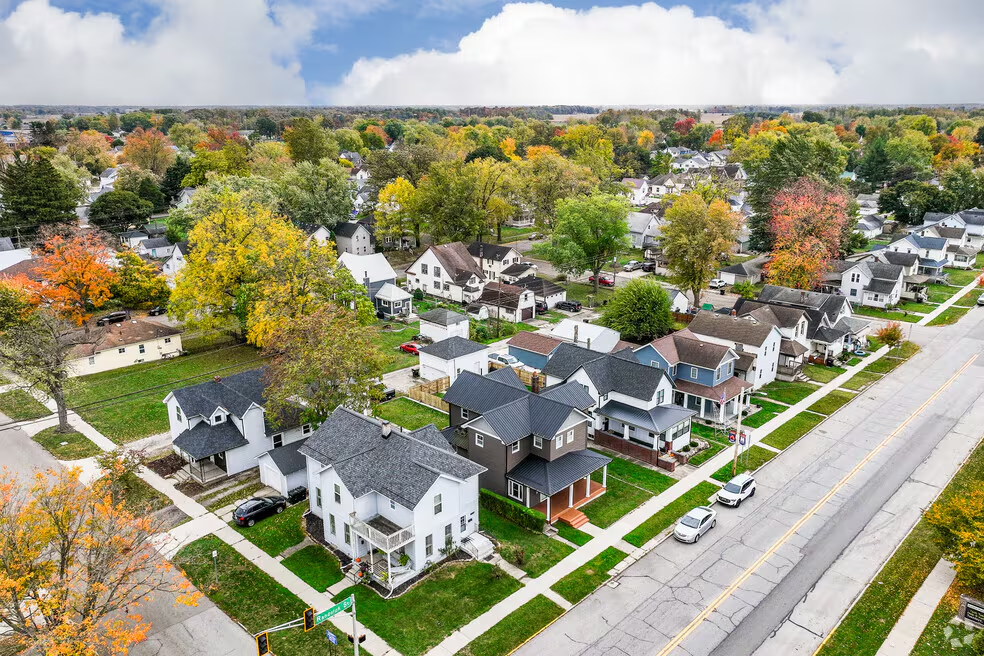
Discovering water spreading across your basement floor or smelling smoke long after a fire has been extinguished puts Garrett homeowners in an unsettling position. Property damage rarely announces itself, and the hours immediately following an incident shape how much of your home and belongings can be saved.
Restoration work in DeKalb County covers a connected group of specialties, each addressing a different form of loss:
- Water Damage Restoration - extraction, structural drying, and moisture mapping after burst pipes, appliance failures, roof leaks, or storm intrusion
- Flooded Basement Cleanup - pumping standing water, drying foundation walls and slabs, and salvaging stored contents
- Sewage Cleanup - safe removal of contaminated water, disinfection of affected surfaces, and disposal of porous materials that cannot be sanitized
- Fire Damage Restoration - debris removal, structural stabilization, soot cleanup, and rebuilding of damaged assemblies
- Smoke Damage Restoration - odor neutralization, HVAC and duct cleaning, and treatment of surfaces holding residue
- Mold Removal - containment, controlled removal of colonized materials, and correction of the moisture source feeding growth
Benefits for Garrett residents extend past cosmetics. Fast, methodical response limits secondary damage to framing and drywall, reduces the chance of mold taking hold, protects indoor air quality, and produces the documentation insurance carriers expect when reviewing a claim.
Common Damage Restoration Issues in Garrett, Indiana
Garrett's flat terrain, aging municipal infrastructure, and heavy freeze-thaw cycles create a predictable set of restoration calls year after year. Most losses trace back to water arriving somewhere it was never meant to go.
Frequent Causes of Loss
- Spring snowmelt and thunderstorm runoff saturating soil around foundations, forcing water through cracks and cove joints
- Sump pump failures during power outages when storms roll across northeast Indiana
- Frozen and split supply lines in crawl spaces, exterior walls, and unheated garages during January and February
- Sanitary sewer backups when combined flow overwhelms older lateral lines connected to Garrett's system
- Kitchen and cooking fires, plus heating equipment and space heater incidents during long heating seasons
- Lightning strikes and electrical faults in older knob-and-tube or early wiring still present in some pre-war homes
Warning Signs Worth Acting On
- Efflorescence, white chalky streaks, or dark staining along basement block walls
- A persistent musty odor in the lower level that strengthens after rain
- Buckled or cupped hardwood, soft spots in subfloor, or bubbling paint
- Gurgling floor drains or slow-draining fixtures signaling a partial sewer blockage
- Yellow-brown staining that reappears on ceilings after cleaning - a hallmark of smoke residue rather than water
- Lingering campfire odor weeks after a small kitchen fire, indicating residue trapped in ductwork or insulation
Catching any of these early usually means a smaller scope, less demolition, and a shorter disruption to daily life.
Neighborhoods We Serve in Garrett
Coverage spans the full city limits and reaches well into the surrounding DeKalb County countryside.
- Downtown Garrett along Randolph Street and the historic Cowan Street corridor
- Older residential blocks near the railroad heritage district and Garrett Middle and High School
- Newer subdivisions on the north and west edges of town off CR 60 and CR 27
- Homes surrounding Eastside Park and the municipal pool area
- Rural properties along Bethel Road, CR 11A, and the farmsteads toward Bear Lake
Service also extends to neighboring communities including Auburn, Altona, Corunna, Avilla, Waterloo, Butler, Kendallville, and St. Joe. Familiarity with each area's drainage patterns, housing stock, and utility layout means crews arrive knowing what to expect - whether that is a century-old brick foundation near the rail yard or a modern poured wall in a newer development.
Seasonal Damage Patterns in Garrett
Northeast Indiana's four distinct seasons each bring their own restoration workload, and knowing the calendar helps homeowners prepare before trouble hits.
- December through February - frozen pipe bursts dominate. Extended subzero stretches split supply lines in exterior walls and crawl spaces. Heating equipment and holiday cooking drive a rise in fire and smoke damage calls.
- March through May - snowmelt combines with spring rainfall to saturate ground around foundations. Flooded basements and sump pump failures peak, and sewer backups follow heavy downpours.
- June through August - severe thunderstorms bring wind-driven rain, roof damage, and power outages that disable sump systems. Humidity climbs, and mold growth accelerates in damp basements and poorly ventilated crawl spaces.
- September through November - the first furnace startups reveal cracked heat exchangers and dust ignition odors. Falling leaves clog gutters and downspouts, redirecting water toward foundations. Mold discovered during fall cleaning is common after a humid summer.
Water damage and mold remain year-round possibilities, since appliance hoses, water heaters, and supply valves fail regardless of the forecast.
Housing Characteristics & Restoration Considerations
Garrett's housing stock skews older than the national average, with a large share of homes built during the railroad boom of the late 1800s through the mid-twentieth century. That age directly shapes how restoration is approached.
Common Construction Features and Their Effects
- Fieldstone and concrete block foundations - porous and prone to lateral seepage, making basement drying slower and requiring careful monitoring for hidden moisture behind finished walls
- Plaster over wood lath - holds water far longer than drywall and traps smoke residue in its texture, often needing specialized cleaning rather than replacement
- Balloon-frame walls - open cavities allow water, smoke, and fire to travel vertically between floors, so inspection must extend beyond the visible damage
- Cast iron and clay sewer laterals - susceptible to root intrusion and joint separation, a leading cause of sewage backups in older neighborhoods
- Finished basements added decades after construction - carpet, paneling, and framing installed directly against masonry create ideal mold conditions once wet
- Original hardwood over plank subfloor - salvageable with prompt drying but quickly lost when water sits
Newer construction on the outskirts brings its own considerations. Engineered joists lose strength quickly in a fire, tighter building envelopes trap smoke odor and humidity, and vinyl plank flooring can conceal saturated underlayment. Crews adjust drying equipment placement, containment strategy, and demolition scope based on which era of home they are working in.
Environmental Conditions & Damage Implications
Local climate and ground conditions influence how quickly damage spreads and how restoration must be executed in Garrett.
Climate
- Roughly 38 inches of annual rainfall plus significant lake-effect snow from the Great Lakes system
- Summer dew points regularly in the upper 60s, pushing indoor relative humidity above the 60 percent threshold where mold thrives
- More than 100 freeze-thaw cycles per year, widening foundation cracks and stressing plumbing
Soil and Groundwater
- Glacial till with heavy clay content across much of DeKalb County drains slowly and holds water against foundation walls
- Elevated hydrostatic pressure after prolonged rain pushes moisture through block joints and floor cracks
- Seasonally high water tables in low-lying areas keep sump pumps cycling for weeks at a time
Water and Air Quality
- Hard water with high mineral content leaves scale that shortens the life of water heaters and supply valves, a common failure point
- Agricultural activity nearby raises seasonal particulate and pollen levels, which combine with smoke residue to worsen indoor air quality after a fire
- Tight winter sealing concentrates odors and spores, making air scrubbing and duct cleaning an important part of both mold and smoke projects
Because of these conditions, drying targets are set to local seasonal norms rather than generic benchmarks, and dehumidification typically runs longer than in drier climates.
Sump Pumps, Sewer Backups, and Basement Protection in Garrett
The single most common restoration call in Garrett involves a basement - and most of those calls trace back to a sump system or sewer lateral that could not keep up. Understanding the local drainage picture helps homeowners reduce their risk substantially.
Why Garrett Basements Flood
- Clay-heavy soil holds stormwater near the foundation instead of letting it percolate away
- Many homes rely on a single pump with no battery backup, leaving them defenseless during storm-related outages
- Older drain tile has silted in or collapsed, so water never reaches the pit
- Downspouts discharging within a few feet of the wall recirculate roof runoff straight back to the footing
- Aging clay laterals under mature trees develop root masses that block flow during peak use
Practical Steps Homeowners Can Take
- Test the sump pump each spring and fall by pouring water into the pit and confirming it cycles
- Add a battery or water-powered backup pump before storm season
- Extend downspouts at least six to ten feet from the foundation and regrade soil to slope away
- Install a backwater valve on the sewer lateral if the home has a history of backups
- Keep stored items off the floor on shelving or pallets rather than in cardboard on concrete
- Have laterals camera-inspected periodically if the home predates 1970
What Happens When Water Still Wins
Clean water from a failed pump follows a different protocol than sewage. Category 3 contamination requires containment, removal of affected drywall and insulation, antimicrobial treatment, and disposal of porous contents - work that protects your family's health as much as the structure. Crews familiar with Garrett's block foundations know to check behind finished walls, inside stud cavities, and under stair landings where moisture hides and mold takes root within days. Documentation is captured throughout with moisture readings and photographs, giving you a clear record for your insurance carrier and a clear path back to a dry, safe home.





