Damage Restoration in McLean County, IL
- Damage Restoration Services Overview
- Common Damage Restoration Issues in McLean County, Illinois
- Neighborhoods We Serve in McLean County
- Seasonal Damage Patterns in McLean County
- Housing Characteristics & Restoration Considerations
- Environmental Conditions & Damage Implications
- From Emergency Call to Final Walkthrough: How Restoration Works in Bloomington-Normal
Damage Restoration Services Overview
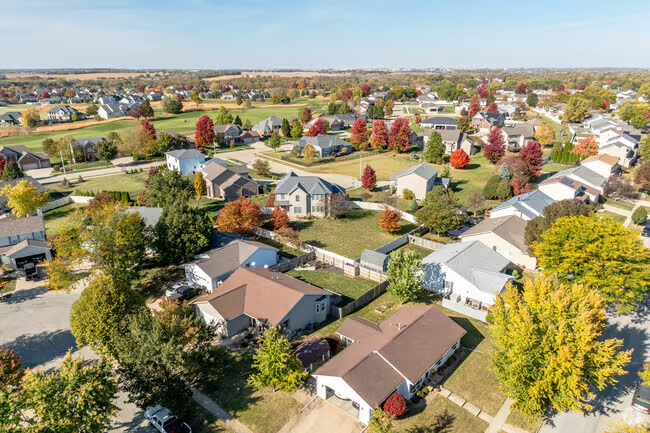
McLean County sits in the heart of central Illinois, where flat prairie farmland, heavy clay soils, and a genuine four-season climate combine to create restoration challenges you simply don't see elsewhere. Bloomington-Normal properties face everything from spring flash flooding and summer derecho winds to winter ice storms that split pipes and overload aging drainage systems.
Property owners across the county rely on a full range of restoration disciplines, each addressing a different failure point in the home:
- Water Damage Restoration - extraction, structural drying, and moisture mapping after pipe breaks, appliance failures, and storm intrusion
- Flooded Basement - pump-outs, sump failure response, and drying of below-grade living space common in older Bloomington homes
- Sewage Cleanup - safe removal of Category 3 contamination from backups, septic failures, and overloaded municipal lines
- Fire Damage Restoration - structural stabilization, debris removal, soot cleaning, and content recovery
- Smoke Damage Restoration - odor neutralization, HVAC decontamination, and treatment of residues that travel far beyond the burn area
- Mold Removal - containment, remediation, and moisture-source correction in crawl spaces, attics, and finished basements
The benefit of coordinated response is simple: one team handles the emergency, the drying, the cleaning, and the rebuild conversation - so damage doesn't quietly turn into a secondary mold problem weeks later.
Common Damage Restoration Issues in McLean County, Illinois
Local geography drives most of the damage patterns here. Central Illinois clay soil sheds water poorly, so saturated ground pushes moisture against foundation walls instead of draining away.
Frequent Causes of Loss
- Sump pump failure during spring rain events, especially in homes without battery backup
- Foundation seepage through hairline cracks and cove joints in poured or block basements
- Frozen and burst supply lines in unheated crawl spaces, garages, and exterior walls
- Sanitary sewer backups when heavy rainfall overwhelms combined or older municipal lines
- Ice dams and roof failures from the freezing rain events common to this transition zone
- Electrical and cooking fires, plus space heater incidents during long heating seasons
- Storm-driven wind damage from spring and early summer severe weather
Warning Signs Worth Acting On
- Musty odor in a basement or crawl space that lingers after dry weather
- Efflorescence - white chalky residue - on foundation block
- Buckling laminate, cupping hardwood, or soft drywall at the baseline
- Slow floor drains or gurgling fixtures, an early sewer backup indicator
- Sooty film on window glass, lampshades, or HVAC registers after a small fire
- Persistent smoke odor that returns when the furnace or air conditioner cycles
- Visible growth behind furniture placed against exterior walls
Catching any of these early usually keeps a small drying project from becoming a full demolition and mold remediation job.
Neighborhoods We Serve in McLean County
Coverage spans the twin cities and the surrounding farm communities that make up the county.
- Bloomington - Old Town historic district, Founders' Grove, Eagle Crest, White Oaks, Fox Creek, and the east side commercial corridors
- Normal - the Illinois State University area, Uptown Normal, Ironwood, Savannah Green, and Northpoint
- Smaller communities - Hudson, Towanda, Lexington, Chenoa, Gridley, Danvers, Carlock, Stanford, Heyworth, Downs, LeRoy, Bellflower, Saybrook, Colfax, Cooksville, Anchor, Arrowsmith, and McLean
- Surrounding areas - Gibson City, Pontiac, and portions of southeast Woodford County
Rural properties often depend on private wells and septic systems, which shifts the priorities during sewage cleanup and flooded basement work. Campus-area rentals near ISU bring their own concerns, including student-occupancy water losses and shared-wall smoke migration in multi-unit buildings.
Seasonal Damage Patterns in McLean County
Spring (March - May)
- Snowmelt plus prairie rainfall saturates clay soil, producing peak flooded basement volume
- Sump pumps run continuously and fail under load
- Sewer backups spike during high-intensity storm cells
Summer (June - August)
- Severe thunderstorms, hail, and straight-line winds open roofs to water intrusion
- High dew points and humid basements accelerate mold colonization
- Air conditioning condensate line clogs cause slow, hidden water damage
Fall (September - November)
- Clogged gutters and downspouts redirect roof runoff toward foundations
- Heating systems fire up for the first time, releasing dust and triggering furnace puff-backs
- Mold discovered during pre-winter crawl space inspections
Winter (December - February)
- Ice storms and freezing rain damage trees, power lines, and building systems
- Frozen pipe breaks produce sudden, high-volume water losses
- Fire and smoke damage rises with space heaters, fireplaces, and holiday cooking
- Ice dams force meltwater under shingles into ceilings and wall cavities
Housing Characteristics & Restoration Considerations
McLean County housing stock is unusually varied, and construction era dictates almost everything about how a restoration project unfolds.
Pre-1940 Homes - Old Town Bloomington and Historic Cores
- Victorian-era detailing, plaster and lath walls, and original woodwork that require gentle soot cleaning rather than aggressive abrasion
- Stone or brick foundations with mortar joints that wick groundwater
- Balloon framing that lets smoke and fire travel vertically between floors unchecked
- Possible asbestos and lead-era materials requiring careful handling during demolition
Mid-Century Homes (1950s - 1970s)
- Block basements and crawl spaces prone to cove joint seepage
- Cast iron and clay sewer laterals vulnerable to root intrusion and collapse
- Original electrical panels that contribute to fire risk
Modern Subdivisions and Campus-Area Construction
- Finished basements with carpet, drywall, and stored belongings - high-loss areas during flooding
- Tight building envelopes that trap humidity and support mold growth
- Engineered flooring and MDF trim that swell quickly and rarely dry in place
- Multi-unit buildings where one unit's water loss affects several neighbors
Restoration planning accounts for these differences from the first walkthrough - selecting drying equipment, containment methods, and cleaning agents that match the materials actually in the structure.
Environmental Conditions & Damage Implications
The environmental profile of central Illinois shapes how quickly damage spreads and how long drying takes.
Climate
- Humid continental pattern with hot, muggy summers and cold, snow-and-ice winters
- Bloomington's position in a weather transition zone brings freezing rain events that stress building systems
- Summer dew points regularly push indoor relative humidity into mold-friendly territory
Soil and Drainage
- Deep, dense prairie clay holds water against foundations rather than draining it away
- Flat terrain limits natural runoff, extending how long ground stays saturated
- Hydrostatic pressure forces moisture through cracks, floor drains, and cove joints
Water and Air Quality
- Hard water is common, contributing to appliance supply line and water heater failures
- Rural septic systems can surcharge during heavy rain, creating Category 3 sewage cleanup situations
- Agricultural dust and seasonal pollen load HVAC systems, which then circulate mold spores and smoke residue throughout a home
The practical implication: drying protocols here need aggressive dehumidification, not just air movement. Wet clay soil surrounding a foundation continues feeding moisture into a basement for days after the rain stops, and structural drying plans account for that ongoing load rather than assuming a single-event dry-down.
From Emergency Call to Final Walkthrough: How Restoration Works in Bloomington-Normal
The worst outcome after a loss is a patchwork of contractors - one company extracts, another cleans, a third handles rebuild - with nobody accountable for the moisture left behind. A single-source restoration process solves that.
The Start-to-Finish Sequence
- Emergency contact and dispatch - crews mobilize to Bloomington, Normal, and outlying communities around the clock
- Damage assessment - moisture meters, thermal imaging, and air sampling establish the true scope, including hidden saturation in wall cavities and under flooring
- Safety and containment - utilities addressed, contaminated zones sealed, negative air pressure established for sewage and mold work
- Water extraction and pump-out - standing water removed from flooded basements before secondary damage sets in
- Contaminated material removal - unsalvageable carpet, pad, drywall, and porous contents documented and discarded per IICRC standards
- Structural drying - air movers and commercial dehumidifiers set to targeted readings, with daily monitoring logs
- Cleaning and deodorization - soot and smoke residue removed by surface type, HVAC decontaminated, odors neutralized at the molecular level rather than masked
- Antimicrobial treatment - applied to affected assemblies to interrupt mold growth
- Content restoration - salvageable belongings inventoried, cleaned, and stored
- Reconstruction and final verification - repairs completed, moisture readings confirmed at dry standard, walkthrough with the homeowner
Why Local Matters Here
- Familiarity with McLean County drainage behavior, clay soil moisture retention, and typical basement construction
- Documentation prepared with insurance carriers and adjusters in mind
- IICRC-certified technicians trained on both historic and modern building materials
- Connections throughout the Bloomington-Normal community, including local trade and disaster-response organizations
The result is a property returned to pre-loss condition with the underlying moisture source corrected - not just the visible damage covered up.