Damage Restoration in Sangamon County, IL
- Damage Restoration Services Overview
- Common Damage Restoration Issues in Sangamon County, Illinois
- Neighborhoods We Serve in Sangamon County
- Seasonal Damage Patterns in Sangamon County
- Seasonal Damage Patterns in Sangamon County
- Housing Characteristics & Restoration Considerations
- Environmental Conditions & Damage Implications
- Insurance Documentation and Full-Scope Recovery for Sangamon County Property Owners
Damage Restoration Services Overview
Water spreads through drywall, subfloor, and insulation within minutes, and smoke residues start etching into metal and glass within hours. In Sangamon County, where basements, older housing stock, and heavy prairie storms intersect, the gap between discovery and response often decides whether materials are dried and saved or demolished and replaced.
Restoration work here covers a connected set of emergencies, each requiring different equipment and handling:
- Water Damage Restoration - extraction, structural drying, and moisture mapping after burst supply lines, appliance failures, roof leaks, or storm intrusion.
- Flooded Basement - pump-out, sump and drain tile assessment, and drying of finished lower levels common across Springfield subdivisions.
- Sewage Cleanup - Category 3 contamination response with containment, removal of porous materials, and antimicrobial treatment.
- Fire Damage Restoration - board-up, debris removal, structural cleaning, and coordination of rebuild work.
- Smoke Damage Restoration - soot removal from surfaces and contents, HVAC cleaning, and odor neutralization at the molecular level.
- Mold Removal - containment, HEPA filtration, affected material removal, and correction of the moisture source feeding growth.
The benefit for property owners is continuity: one crew documenting conditions, drying the structure, cleaning contents, and supporting the insurance file from first call through final walkthrough.
Common Damage Restoration Issues in Sangamon County, Illinois
Central Illinois sits in a corridor where spring thunderstorm complexes, summer humidity, and hard winter freezes each produce their own category of loss. Local topography compounds the problem - flat terrain around Springfield and the Sangamon River basin drains slowly, pushing groundwater against foundation walls.
Frequent Causes of Loss
- Heavy rainfall overwhelming sump pumps and window wells, producing flooded basements in a single night
- Combined and aging sanitary sewer lines backing up during saturation events, creating sewage cleanup emergencies
- Frozen and burst supply lines in unheated crawl spaces, garages, and vacant properties during January cold snaps
- Kitchen and electrical fires in older homes with dated wiring, followed by widespread smoke migration
- Hidden plumbing leaks behind cabinetry that feed mold colonies for months before discovery
- Wind-driven rain and hail damaging roofs, allowing water into attics and ceiling cavities
Warning Signs Worth Acting On
- Musty or earthy odors in a basement, closet, or laundry area that never fully clear
- Cupping hardwood, bubbling paint, or drywall that feels soft near the baseboard
- Efflorescence - chalky white mineral deposits - on block or poured foundation walls
- Gurgling floor drains or slow-emptying tubs, both early indicators of a sewer line problem
- Soot film returning on walls and ceilings after cleaning, showing residue still trapped in HVAC ductwork
- Allergy-like symptoms that improve when occupants leave the building
Catching any of these early narrows the scope of work considerably and keeps a repairable issue from becoming a full reconstruction project.
Neighborhoods We Serve in Sangamon County
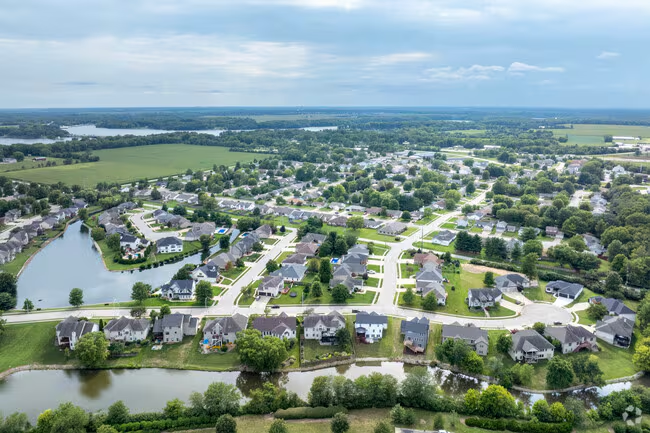
Response covers the full county footprint, from dense urban blocks to rural acreages served by private wells and septic systems.
- Springfield - including Downtown, Enos Park, Vinegar Hill, Aristocracy Hill, Iles Park, Southeast Springfield, Panther Creek, Piper Glen, and the West Side corridors near Chatham Road and Veterans Parkway
- Chatham and Glenarm - newer subdivisions with finished lower levels and sump systems
- Rochester and Riverton - properties near the Sangamon River floodplain
- Sherman, Williamsville, and Andrew - growing residential corridors along I-55
- Auburn, Divernon, Pawnee, and Thayer - southern county communities with older housing stock
- New Berlin, Pleasant Plains, Loami, and Cantrall - western and northern rural districts
- Grandview, Leland Grove, Jerome, and Southern View - established village communities inside greater Springfield
Surrounding areas in Morgan, Cass, Macoupin, Montgomery, Logan, and Christian counties fall within reach for larger commercial and multi-property events.
Seasonal Damage Patterns in Sangamon County
Seasonal Damage Patterns in Sangamon County
Damage in central Illinois follows a fairly predictable annual rhythm, which helps property owners plan preventive maintenance.
- December through February - Frozen pipe breaks dominate. Ice dams push meltwater under shingles into ceilings. Furnace, space heater, and fireplace use drives a seasonal peak in fire damage restoration and smoke damage restoration calls.
- March through May - Snowmelt combines with spring thunderstorms and saturated clay soils. This is prime season for flooded basements, sump pump failures, and sewer backups when systems reach capacity.
- June through August - Humidity above 70 percent and derecho-style wind events define summer. Mold removal requests climb sharply, particularly in basements and behind vinyl wallcoverings. Storm-driven roof damage brings water into upper floors.
- September through November - A quieter stretch used for inspection and correction. Clogged gutters and grading problems surface during fall rains, and early heating system startups reveal soot and puff-back issues.
Two windows deserve extra attention: late February, when freeze-thaw cycling stresses foundations and plumbing simultaneously, and mid-summer, when a two-day power outage can shut down a sump pump and flood a lower level before anyone notices.
Housing Characteristics & Restoration Considerations
Sangamon County's building stock spans more than 150 years, and construction era drives nearly every restoration decision made on site.
Common Construction Types
- Pre-1940 homes in Enos Park, Aristocracy Hill, and older village centers - balloon framing, plaster and lath, brick or limestone foundations, and original wood floors
- Post-war ranches from the 1950s and 1960s - concrete block basements, hardwood under carpet, and often original cast iron drain lines
- 1980s-2000s subdivisions in Chatham, Sherman, and West Springfield - poured concrete foundations, finished basements, engineered flooring, and vinyl siding
- Rural farmhouses and outbuildings - crawl spaces, private septic systems, and well water supplies
How Age Shapes the Work
- Balloon-framed walls let smoke and fire travel vertically between floors, so smoke damage restoration requires cavity inspection, not just surface cleaning.
- Plaster holds water far longer than drywall and often dries in place with targeted airflow rather than being removed.
- Pre-1980 materials may contain asbestos or lead paint, requiring testing before demolition on water and fire losses.
- Block foundations wick moisture through mortar joints, making basement mold removal a matter of vapor control as much as cleaning.
- Finished basements with carpet pad, insulated stud walls, and drop ceilings hide moisture - thermal imaging and moisture meters locate it without unnecessary tear-out.
- Cast iron and clay sewer laterals in older neighborhoods crack and root-intrude, raising sewage cleanup frequency.
Environmental Conditions & Damage Implications
The local environment does more than set the weather - it determines how fast materials fail and how aggressively microbial growth takes hold.
Climate and Moisture
- Roughly 36-38 inches of annual precipitation, with the heaviest totals falling in spring and early summer
- Summer dew points regularly in the upper 60s and low 70s, pushing indoor relative humidity past the 60 percent threshold where mold thrives
- Winter lows below zero during Arctic outbreaks, sufficient to freeze pipes in exterior walls within hours
- Frequent freeze-thaw cycling that opens hairline cracks in foundations and basement floors
Soil and Groundwater
- Dense glacial till and clay-rich prairie soils drain slowly and hold water against foundation walls after storms
- Expansive clay swells when wet, applying lateral pressure that widens existing cracks and creates new seepage paths
- Shallow water tables in areas near the Sangamon River and Lake Springfield keep sump systems running heavily
What This Means for Restoration
- Drying plans must account for high outdoor humidity - dehumidification carries more of the load than open windows and fans.
- Mold removal without exterior grading, downspout, or drain tile correction tends to produce repeat growth.
- Sewage cleanup in saturated soil conditions requires confirming the line is clear before reoccupancy, since backups often recur during the same storm cycle.
- Fire and smoke residues bond faster in humid air, making prompt cleaning and odor treatment more effective than delayed work.
Insurance Documentation and Full-Scope Recovery for Sangamon County Property Owners
Most people calling about a flooded basement or house fire are dealing with two problems at once: the physical damage and the claim. Handled separately, the two work against each other - materials get thrown out before they are photographed, moisture readings never get logged, and the adjuster receives an incomplete file that slows the settlement.
How a Start-to-Finish Project Runs
- Emergency contact and dispatch - crews mobilize around the clock across Springfield, Chatham, Rochester, Auburn, and the outlying villages.
- Site assessment and safety check - power, gas, and structural hazards evaluated first; contamination category established for any water or sewage event.
- Documentation - photographs, moisture maps, room sketches, and a written scope created before any material is removed.
- Stabilization - extraction, pump-out, board-up, roof tarping, and containment barriers to stop damage from spreading.
- Removal and cleaning - unsalvageable porous materials taken out, hard surfaces cleaned, soot and residue addressed with the right chemistry for each substrate.
- Structural drying - air movers and dehumidifiers placed to a calculated plan, with daily readings recorded until materials reach dry standard.
- Contents handling - furniture, electronics, documents, and keepsakes inventoried, packed out where needed, cleaned or restored off site, and returned.
- Mold and odor verification - clearance testing, HEPA filtration, and thermal or hydroxyl treatment for lingering smoke odor.
- Reconstruction - drywall, flooring, trim, paint, and cabinetry restored to pre-loss condition.
- Final walkthrough - documentation package delivered to the property owner and carrier.
Working with a single contractor across all ten steps keeps the timeline tight, prevents duplicate billing disputes, and means the person who dried the structure is the same one accountable for the finished result.